
This is the guide for your first commercial real estate purchase. Not your fifth. Not a $20M syndication. Your first deal, almost always under $2M, often owner-occupied, financed through a local bank or SBA 504. If you already own multiple commercial buildings, you're in the wrong place. Head to the complete commercial real estate investing guide instead.
If you want to go deeper, I break down real commercial real estate deals every week on The Commercial Real Estate Investor Podcast.
I bought my first four office buildings in Nashville in 2019 and have walked dozens of first-time CRE buyers through their own deals since. The investors who do well aren't the ones who read the most books. They're the ones who know exactly what numbers a deal has to hit before they make an offer. Below: the four-number screener you'll use on every deal you look at, the financing path for first-time buyers, and the underwriting walk-through for a $1.2M first deal.
- What "commercial real estate" actually means
- 5 ways a first commercial deal is different from residential
- Choose your investment strategy
- Which asset class for deal #1?
- The 4 numbers every first deal must hit
- Owner-occupied vs investment-only
- Financing your first commercial deal
- First deal screener (interactive calculator)
- Tax basics: depreciation, cost seg, 1031
- Where to find your first deal
- Your A-team: who you need before you close
- Your 90-day closing timeline
- Due diligence: the 7 checks that matter
- 5 first-deal mistakes I see investors make
- "How do I buy commercial with no money?"
- Worked example: a $1.2M first deal
Here's the full path to buying your first commercial property. Each step is covered in depth below.
What "commercial real estate" actually means
For most first-time buyers, "commercial" just means "not a single-family rental." It's a little more specific than that. Commercial real estate is property held to generate income from businesses or 5+ residential units, financed under business-loan rules instead of consumer mortgage rules. The major property types:
- Multifamily (5+ units) - apartments and small condo buildings.
- Office - from a converted bungalow to a downtown tower.
- Retail - single-tenant Starbucks pads, multi-tenant strip centers, larger anchored centers.
- Industrial / Flex - warehouses, light industrial, distribution, IOS (industrial outdoor storage).
- Hospitality - hotels, motels, increasingly short-term rentals.
- Specialty - self-storage, medical, mixed-use, mobile home parks, condo hotels, and so on.
For your first deal, I'd bias toward asset types where the math is simpler and the financing is more available: small multifamily, multi-tenant retail, or owner-occupied office or flex. Save the niche stuff (hotels, IOS, medical) for deal #2 or #3 once you understand the fundamentals.
5 ways a first commercial deal is different from residential
If you've owned a rental house or two, you know roughly how that game works. Commercial breaks most of those rules. Here are the differences that catch first-timers off guard, in plain terms:
The biggest mental shift: in residential, you buy a house and rent it out. In commercial, you buy a cash flow stream, and the building is just the vehicle for the cash flow. That's why valuation runs on income, not comps. And it's why a property with strong leases at undermarket rent can be worth substantially more than its "comparable sale" price.
Choose your investment strategy
For a first commercial deal, you have a handful of viable strategies. Each fundamentally changes what asset you target, what financing you use, and what your day-to-day looks like:
- Owner-occupied. You own a business that needs space, so you buy the building and lease space back to your own company. SBA 504 financing gets you in for 10-15% down at very competitive long-term rates. Easiest first deal because the cash flow is your business already, and rent expense converts into equity buildup. Covered in detail below.
- Stabilized cash flow. You buy a property with existing tenants on multi-year leases. Predictable cash flow, easier to underwrite, lower risk. Most first-time pure investors should start here.
- Value-add (BRRRR). You buy below market because something is broken: vacant suites, deferred maintenance, undermarket rents, or expiring leases. You fix it, lease it up, and either refinance to pull equity out or sell. Higher returns, higher risk, and it requires construction and leasing knowledge. My personal favorite once you have a stabilized deal or two under your belt.
- Passive (LP investing). You commit capital as a limited partner in a syndication or fund. You don't run anything. Returns are lower than direct ownership, but you're not learning a new job. Useful if your equity is ready but your operational time isn't.
- Development / ground-up. You buy raw land and build something on it. Highest returns, highest risk, longest timeline. Almost never the right first move unless you're a contractor or developer by trade.
- Land banking and speculative hold. You buy land in a path of development and wait for value to come to you. Patient capital. Generates no cash flow. More of a sidecar strategy than a first deal.
- Fix-and-flip / wholesaling. Common in residential, much harder in commercial because of longer marketing times, more complex financing, and far fewer comparable buyers. Possible but not first-deal friendly.
For most first-time buyers I work with, the answer is owner-occupied OR a stabilized small multi-tenant property. Both have predictable cash flow, achievable financing, and reasonable downside if you do your homework.
Which asset class for deal #1?
Once you've picked a strategy, the next question is what kind of building. Here's a scoring matrix of how the main asset classes stack up for a first-time buyer:
Best first-deal asset classes: small multifamily and multi-tenant retail. Predictable, financeable, and the underwriting maps cleanly onto the 4 core numbers we'll cover next.
Worst first-deal asset classes: hospitality and ground-up development. These are different business models entirely - you're not just owning real estate, you're operating a business. Save them for deal #3 or later.
The 4 numbers every first deal must hit
Forget price per square foot for a minute. These four numbers will tell you within 60 seconds whether a deal is worth a deeper look:
1. Net Operating Income (NOI)
NOI = annual gross income - annual operating expenses, before debt service and before income tax. Operating expenses include property taxes, insurance, maintenance, management, utilities not reimbursed by tenants, and reserves. NOI does not include the mortgage payment, capital improvements, depreciation, or your personal taxes.
NOI is the single most important number in commercial real estate. Almost every other metric is derived from it.
2. Cap Rate
Cap rate = NOI ÷ purchase price. It's the unlevered yield on the asset at today's NOI. A 7% cap rate means a $1,000,000 property generates $70,000 of NOI annually before debt. Cap rates vary by market, asset class, age, and tenant quality. In most Sun Belt markets, you'll see retail at 6-8%, office at 7-9%, multifamily at 5-6.5%, and industrial at 6-7.5% as of early 2026.
For a full primer on cap rates, see my guide to commercial real estate cap rates.
3. Cash-on-Cash Return
Cash-on-Cash = annual cash flow after debt service ÷ total cash invested. This is the actual return you're getting on the money you put into the deal. It's a leveraged number, so it should be higher than the cap rate. A 7% cap rate property with reasonable financing often produces a 6-10% cash-on-cash return.
4. Debt Service Coverage Ratio (DSCR)
DSCR = NOI ÷ annual debt service. Lenders use DSCR as their primary filter. Most commercial lenders want DSCR of 1.20-1.25 minimum, with 1.30+ preferred. A 1.25 DSCR means NOI covers debt service 1.25 times, leaving 25% cushion for vacancy and surprises. Below 1.20, you're not getting financed at conventional terms.
If a listing says "8% cap rate" but you run the numbers and the actual cap rate is 6.2%, the broker is either using stale rents, optimistic occupancy, or "pro forma" NOI that assumes you'll raise rents to market. Always underwrite to in-place NOI first. Then, separately, run a pro forma showing what's possible. That's where the upside is, but you don't buy pro forma value - you buy in-place value.
Owner-occupied vs investment-only
A distinction first-time CRE buyers consistently miss: are you buying the building for your own business to occupy, or to rent out to other tenants? The path is materially different.
If you're owner-occupied
- SBA 504 or SBA 7(a) financing is available with 10-15% down at very competitive long-term fixed rates because the loan is partially government-backed.
- Your business must occupy at least 51% of the building at closing (and over the loan term for SBA 504 specifically).
- Your business income IS the cash flow analysis - DSCR is calculated on your business, not third-party tenants.
- You essentially convert rent expense into mortgage payments plus equity buildup. Most small business owners I work with are shocked at the math when they run it.
- Excess space (the other 49% or less) becomes investment property - you collect rent from tenants in those suites.
- SBA underwriting takes longer (90-150 days from offer to close) and requires more documentation.
If you're investment-only
- Conventional commercial lending: 25-35% down, 5-10 year balloon, 20-25 year amortization.
- DSCR rules are driven by the property's existing rent roll - tenant quality and lease term matter enormously.
- You're underwriting purely on return on investment, with no business-income shortcut.
- Faster close (60-90 days) but more equity required.
Which should you do? If you own a business that currently pays rent, run the SBA 504 owner-occupied path before doing anything else. The math almost always wins. If you don't own a business that will occupy 51%+, you're investment-only and your starting point is a small multi-tenant property with existing leases.
Financing your first commercial deal
Commercial financing works fundamentally differently from residential. Three categories of lenders will quote your first deal:
- Local and regional banks. Your best bet for first-time buyers under $5M. They portfolio the loan, can be flexible, and want a real relationship. Expect 25-30% down, 6.5-8% rates, 5-7 year balloons amortized over 20-25 years, full recourse, and a personal guarantee.
- SBA 504 and SBA 7(a). Game-changers for owner-occupied commercial real estate. SBA 504 can get you in for 10-15% down with very competitive long-term rates because the loan is partially government-backed. Catch: your business must occupy at least 51% of the building, and the underwriting takes longer.
- Life insurance companies, CMBS, and agency (Fannie/Freddie). These come into play above $2-3M and especially above $5M. Often non-recourse, longer term, lower rates - but more rigid on covenants and prepayment.
For your first deal, plan on a local bank loan with 25-30% down unless you're owner-occupying (then push hard for SBA 504). Get pre-qualified at two banks before you start touring properties so you know what you can actually close.
What you need to qualify
- Personal financial statement (SREO - schedule of real estate owned, net worth, liquidity)
- Two to three years of tax returns (personal and any operating businesses)
- Liquidity equal to roughly 6-12 months of debt service post-closing
- Net worth typically equal to or greater than the loan amount
- The property's last 12-24 months of operating statements and rent roll
First deal screener
Run any property you're considering through this screener to get an immediate read on whether it's worth a deeper look. This is your 60-second filter, not a full underwriting. For the full work-up (multi-year cash flows, IRR, exit value, sensitivity), graduate to the free Deal Analyzer.
Run the numbers in 60 seconds
Punch in the basics from any listing. Get cap rate, cash flow, DSCR, and a health check.
What this screener does and doesn't do: The math here is exact for the inputs you provide (cap rate, DSCR, monthly debt service via standard amortization, cash-on-cash, monthly and annual cash flow). The health-check labels and the cap-rate context bands are heuristics based on typical Sun Belt commercial markets and current lender criteria. Actual market cap rates vary by submarket, asset condition, and tenant quality. Use this to decide if a deal is worth a deeper look, then run the full underwriting in the Deal Analyzer.
Tax basics: depreciation, cost seg, and 1031 exchanges
Three tax concepts will affect your first commercial deal more than most first-time buyers realize. This is a primer, not tax advice - get a CPA who specializes in real estate before you close.
Depreciation
Commercial buildings are depreciated over 39 years (residential rentals get 27.5 years). On a $1M commercial building, that's roughly $25,600/year of non-cash depreciation expense that shelters your cash flow from income taxes. Even on a property generating real positive cash flow, you may show a paper loss for tax purposes - and that paper loss can offset other taxable income depending on your activity status.
Cost segregation
Instead of depreciating the entire property over 39 years, a cost segregation study identifies building components (lighting, HVAC, parking lot, signage, landscaping, certain finishes) that can be depreciated over 5, 7, or 15 years. This accelerates depreciation dramatically in the early years - often producing six-figure paper losses on a $1M+ property in year one. Most worthwhile on properties above $500K with substantial improvements. A cost seg study typically pays for itself many times over in the first year of ownership.
1031 exchange
When you sell an investment property, you can defer capital gains taxes by reinvesting the proceeds into a "like-kind" property within strict IRS timelines: 45 days to identify the replacement property, 180 days to close on it. The chain can continue indefinitely. This is how many commercial real estate investors compound wealth tax-deferred for decades. If you've got appreciated single-family rentals or land, a 1031 into your first commercial property is often the smartest move - you put significantly more equity to work without paying capital gains.
Underwriting your first deal without understanding the tax angle. A property that looks like break-even cash flow can be substantially positive on an after-tax basis once depreciation kicks in. Conversely, a deal that looks great pre-tax can be a problem if you're hit with unexpected depreciation recapture or passive-loss rules. Get a CPA in the conversation before you sign the PSA.
Where to find your first deal
You have four basic sources, in roughly increasing order of difficulty and quality:
- Public listing platforms. Crexi, LoopNet, CommercialSearch. Wide selection, lots of competition, and listings are usually marketed at peak prices. Good for getting reps underwriting deals; harder to find true bargains.
- Local broker mailing lists. Identify the 3-5 best brokers in your target submarket and asset type. Get on their lists. Reply to every blast they send with a quick "what do you think of this one?" Brokers feed deals to the people who show up and ask intelligent questions.
- Off-market through relationships. Network at local real estate investing groups, attend lender lunches, and tell every CPA and attorney you meet that you're a buyer. Off-market deals often have less competition, but they require you to actually be in market, not just searching online.
- Distressed and value-add. Tax-sale lists, distressed listings, broken-down 1031 exchanges, and old listings that have sat for 90+ days. Higher work, sometimes higher reward. Not where I'd start as a first-time buyer unless you have a contractor in your corner. For a deeper dive, see how to find commercial real estate deals.
If you're shopping for your first commercial property in Middle Tennessee, browse commercial real estate for sale in Nashville — The Cauble Group's active listings include properties across every price range and asset class, including first-time-buyer-friendly opportunities under $2M.
Your A-team: who you need before you close
Commercial deals have more moving parts than residential, and the cost of getting any one of them wrong is much higher. You don't need to hire all of these from day one, but you do need to know who you're calling when each phase hits:
- Commercial broker who specializes in your asset class and market. They source deals, run comps, and quarterback your offer-and-counter process.
- Commercial real estate attorney who reviews and negotiates your purchase and sale agreement, leases, and loan documents.
- Commercial lender or two. Get pre-qualified before you make an offer; pre-qualified buyers win deals when sellers see multiple LOIs.
- CPA familiar with cost segregation and 1031 exchanges. The wrong tax decision on your first deal can cost you years of cash flow.
- Commercial property manager (or yourself if you're owner-occupying). Even if you self-manage, get a manager's quote so your underwriting includes a real management line item.
- Commercial contractor for capex estimates, lease-up build-outs, and ongoing maintenance pricing.
Your 90-day closing timeline
From signed letter of intent to keys in your hand, expect 60-120 days for a conventional commercial deal. SBA 504 transactions typically run 90-150 days. Here's what's happening week by week so you know whether your deal is on schedule or slipping:
The biggest variables: lender speed (a slow bank can add 30 days) and surprises in due diligence (a Phase I that triggers a Phase II, a title issue, a tenant who won't sign an estoppel, an environmental concern that needs remediation). Build buffer into your contingency dates - don't promise a hard closing date on day 30 of a 90-day deal.
Due diligence: the 7 checks that matter
Once you have a property under contract, your due diligence period (typically 30-60 days) is when you verify every assumption. The seven checks every first-time buyer needs:
- Rent roll and estoppels. Confirm that the rents on the offering memorandum match the actual signed leases and that tenants confirm the terms in writing (estoppel certificates).
- Trailing-12 operating statements. Compare them to the broker's pro forma. Where do they differ?
- Title and survey. Confirm clear title, identify easements, encroachments, and any deed restrictions.
- Phase I Environmental. Required by virtually every commercial lender. Verifies no known contamination on the site.
- Zoning and entitlements. Confirm the current use is conforming and that any planned changes are permitted.
- Property condition report. A commercial contractor or PCA professional walks the building and flags near-term CapEx (roof, HVAC, parking lot).
- Insurance quote. Pull a real quote before closing. Premiums can vary wildly by property type and location and they directly hit your NOI.
5 first-deal mistakes I see investors make
Patterns I've watched derail first-time buyers across hundreds of conversations:
- Buying on pro forma, not in-place NOI. The broker shows you a 9% cap rate. You buy. Six months in, the rents the OM showed never actually existed and your cap rate is closer to 5%. Always underwrite in-place first, upside second.
- Underestimating CapEx. Commercial buildings have expensive systems: roofs, HVAC units, parking lot replacement, sprinkler systems. Build a reserve into your underwriting (typically $0.10-0.30 per SF per year on top of operating expenses).
- Tenant concentration risk. A single tenant generating 80%+ of NOI is one bankruptcy away from a 100% vacant building. First deals are safest when income is spread across 3+ tenants or when the single tenant has investment-grade credit.
- Buying outside their expertise. Trying to buy a hotel as your first deal because the cap rate looks attractive on paper. Hotels operate differently from triple-net retail. Stay close to what you understand.
- Skipping the commercial-specialized professionals. Using your residential agent, your buddy's general-practice attorney, or your home-loan lender will cost you more than the savings in fees. Hire specialists.
"How do I buy commercial property with no money?"
You can't, not really. But you can buy it with other people's money, which is the actual question. Five paths, in roughly increasing order of complexity:
- Seller financing. The seller carries part or all of the purchase price as a note. Most useful when the seller wants steady income, has owned the property a long time, and doesn't need a lump sum.
- SBA 504 owner-occupied. If your business will occupy 51%+ of the building, you can get in for 10-15% down at very competitive rates. Easily the best "low-down-payment" structure available for first-time CRE buyers.
- Joint venture with a money partner. You bring the deal and sweat equity; they bring the equity. Common splits are 30/70 to 50/50 with various preferred returns. Document it ruthlessly with an attorney.
- Syndication. Raise equity from multiple investors and act as the general partner. Significant legal lift (Reg D filings, PPMs, securities compliance) - not where most first-timers start.
- 1031 exchange leverage. If you have appreciated SFR or land equity, a 1031 into a commercial property can let you put much more equity to work without paying capital gains taxes.
"No money down" gurus on YouTube oversimplify all of this. Sellers want certainty of close. Partners want experience. Lenders want skin in the game. Even with creative structuring, expect to put up something on your first deal - if not equity, then sweat, a personal guarantee, and a real reputation on the line.
Worked example: a $1.2M first deal
A first-time investor is looking at a 3-tenant strip retail building in suburban Nashville. Purchase price $1,200,000. In-place NOI $90,000 (a 7.50% cap rate). 25% down ($300,000), 7% rate, 25-year amortization. The bank wants a 1.20 DSCR minimum.
Annual debt service on $900,000 at 7% over 25 years is roughly $76,225. NOI of $90,000 against $76,225 of debt service is a DSCR of 1.18. Slightly under the bank's threshold. The deal as-priced won't close at conventional terms.
The investor has three levers. Lever 1: push price down to $1,150,000 (cap rate moves to 7.83%, DSCR rises to 1.23). Lever 2: bring an extra $40K to closing (down payment moves to 28.3%, debt drops, DSCR rises). Lever 3: find an SBA 504 option if they'll owner-occupy. Sticking to in-place NOI and not "fixing" the deal with a pro forma rent assumption is what separates a first-time buyer from a someone-else's-problem buyer.
Key takeaways
- Commercial valuation is income-based. NOI ÷ cap rate is the price-discovery formula. Comps matter much less than they do in residential.
- Four numbers tell you if a deal is real: NOI, cap rate, cash-on-cash, and DSCR. Below 1.20 DSCR, conventional lenders walk.
- Plan on 25-30% down unless you qualify for SBA 504 (owner-occupied, 10-15%). Have 6-12 months of debt service in liquidity post-closing.
- Underwrite in-place NOI first, pro forma second. Most first-time-buyer disasters are caused by paying for upside that never materializes.
- Hire commercial-specialized professionals. Broker, attorney, lender, CPA, property manager, contractor. The cost of getting any one of them wrong dwarfs the savings.
- Tenant concentration is the silent killer. A single tenant doing 80% of NOI is one bankruptcy away from a 100% vacant building.
Frequently asked questions
The most common questions I get from first-time commercial buyers.
How do you buy commercial real estate for the first time?
Buying commercial real estate for the first time follows a predictable sequence: pick an asset class and market, learn the four core metrics (NOI, cap rate, cash-on-cash, DSCR), get pre-qualified with two commercial lenders, build a team of commercial-specialized professionals (broker, attorney, lender, CPA, property manager, contractor), find a deal through public listings or broker relationships, underwrite to in-place NOI, perform due diligence over 30-60 days, and close. Plan on 25-30% down at most conventional lenders, or 10-15% down via SBA 504 if you'll owner-occupy.
What credit score and down payment do you need for commercial real estate?
Most commercial lenders look at the property's debt service coverage ratio (DSCR) first and the borrower's credit second. Typical down payment is 25-30% for conventional commercial loans, and 10-15% for SBA 504 (owner-occupied). Lenders typically want a 1.20-1.25 minimum DSCR, personal credit above 680, net worth roughly equal to or greater than the loan amount, and 6-12 months of debt service in liquid reserves after closing.
What is a good cap rate for commercial real estate?
Cap rates vary by asset class and market. In most Sun Belt markets as of 2026, typical ranges are: multifamily 5.0-6.5%, retail 6.0-8.0%, office 7.0-9.0%, industrial 6.0-7.5%, self-storage 5.5-7.0%, and hospitality 7.5-10.0%. A higher cap rate signals more risk or upside; a lower cap rate signals a stabilized, in-demand asset. Always compare cap rate against in-place NOI rather than pro forma NOI.
What are the steps to buying a commercial property?
The major steps are: choose an asset class and market, get pre-qualified with commercial lenders, build a team of specialists, source deals through brokers and listings, screen each deal against cap rate / cash-on-cash / DSCR thresholds, make a letter of intent (LOI), negotiate a purchase and sale agreement, conduct due diligence (rent roll, T-12, title, environmental, zoning, property condition), finalize loan documents, and close. Total time from offer to close is typically 60-120 days.
Can you buy commercial property with no money down?
Not really, but you can buy commercial property with other people's money. The five common paths: seller financing where the seller carries part or all of the note, SBA 504 for owner-occupied deals (10-15% down), joint ventures with money partners, syndication (raising equity from multiple investors as the general partner), and 1031 exchanges that roll appreciated equity into the commercial deal. Each path requires sweat, a personal guarantee, or a real track record - true zero-down deals are rare and risky.
What is DSCR in commercial real estate?
DSCR is the debt service coverage ratio, calculated as Net Operating Income divided by annual debt service. Most commercial lenders require a DSCR of 1.20-1.25 minimum, with 1.30+ preferred. A DSCR of 1.25 means NOI covers debt service 1.25 times, leaving a 25% cushion for vacancy and surprises. Below 1.20, conventional commercial lenders typically reject the deal.
How is commercial real estate valued?
Commercial real estate is primarily valued using the income capitalization method: Value = NOI divided by cap rate. Comparable sales are used as a secondary check, especially in less-liquid markets and for unique properties. Unlike residential, where comps drive value, commercial valuation reflects the income stream the building produces. Properties with stronger leases, longer terms, and better tenant credit command lower cap rates (higher values) for the same NOI.
What is the difference between residential and commercial real estate?
Residential is valued on comps; commercial is valued on income (NOI / cap rate). Residential financing is 30-year fixed with 0-20% down; commercial is typically 25-30% down with a 5-10 year balloon amortized over 20-25 years. Residential underwriting focuses on borrower credit and income; commercial focuses on the property's DSCR plus the borrower. Residential leases are gross and one year; commercial leases are NNN, MG, or FSG and typically 3-10+ years. Tenant risk in residential is many small risks; in commercial it's a few large risks (concentration).
Underwriting a real deal right now?
Run the screener above for a quick read, then use the free Deal Analyzer for the full underwriting. If you're serious about your first deal, join the CRE Accelerator and learn the entire system from market analysis to closing.







About The Author:
Tyler Cauble, Founder & President of The Cauble Group, is a commercial real estate broker and investor based in East Nashville. He’s the best selling author of Open for Business: The Insider’s Guide to Leasing Commercial Real Estate and has focused his career on serving commercial real estate investors as a board member for the Real Estate Investors of Nashville. Learn more at www.TylerCauble.com
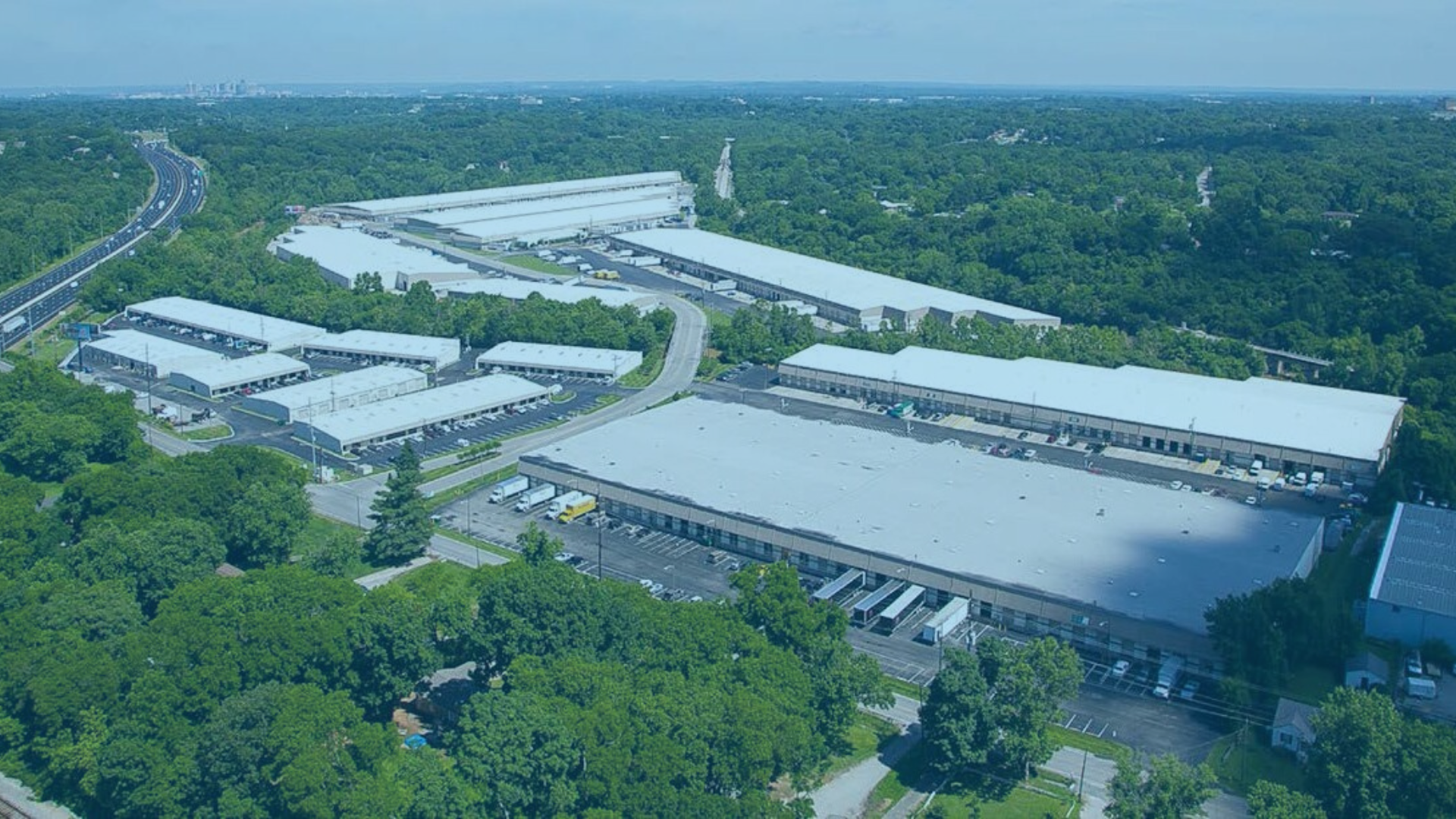
Most will take existing sites with either deferred maintenance, high vacancy, or a combination of both - but some investors will actually take raw land and reimagine what could be on that site.