I’m going to show you how to get started in commercial real estate investing with 5 steps to buying your first property. In fact, it’s the same strategy that I used in 2019 to acquire 4 office buildings here in Nashville.
So, if you’re interested in commercial real estate investing, you’re going to love this step-by-step guide.
You've been looking at commercial real estate for a year, maybe longer, running numbers and watching videos, waiting to feel ready. And nothing's happening. I did that, too, for 18 months. Then, in February of 2019, I wired $575,000 to a title company and closed on my first commercial property, a former community bank in a Nashville suburb that two different buyers had already walked away from.
For the next year, I questioned whether I had just made the biggest mistake of my life.
Today, I'm going to show you exactly how that deal worked. The real numbers, the two-offer negotiation that got me $175,000 off the list price, the $20,000 mistake that hit me two months after closing, and the one thing that actually separates people who buy their first commercial property from people who just keep looking at them. It's not capital. It's not market knowledge. It's not even finding the right deal. It's something else entirely.
I'm Tyler Cauble. I've been in commercial real estate investing since 2013, but I didn't actually start investing until 2019, after founding my own commercial brokerage here in Nashville. Since then, I've acquired over 2 million square feet of industrial, retail, and office properties, developed a 42-unit townhome community, and built a boutique hotel called Salt Ranch.
But in 2019? I was a 25-year-old broker. There's a reason they call them brokers, because they're broke. I had commission checks, not a cash pile. And the story I'm about to tell you is the deal that changed everything for me. Not because it was perfect, but because it was real, messy, stressful, and ultimately the best financial decision I've ever made.
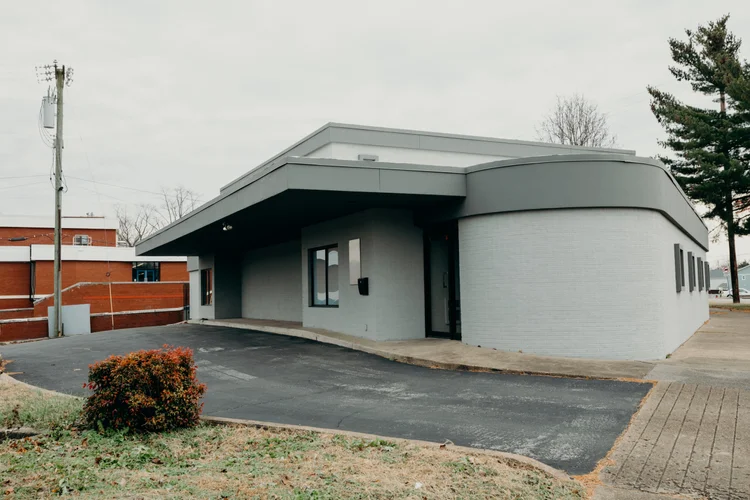
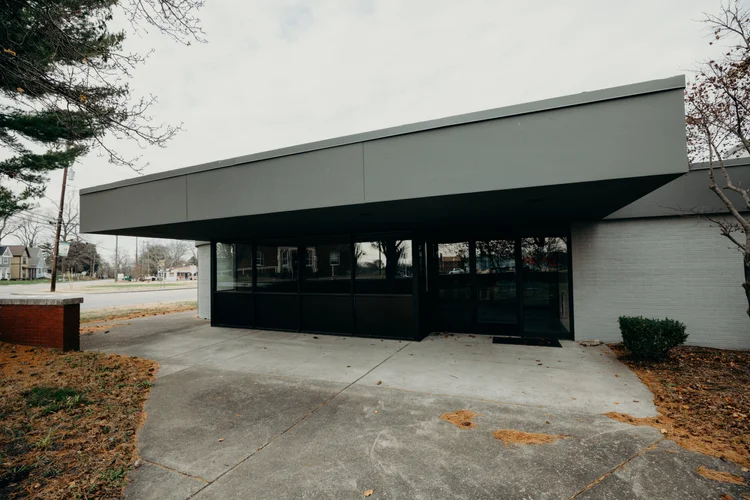
1100 Old Hickory Blvd, Old Hickory, Tennessee. The former bank building I purchased for $575,000.
Here's the part that still makes me smile. I didn't find this deal on LoopNet. I didn't cold call the owner. I didn't drive a farm area for six months until I got lucky. I actually had the building on my own listing board.
Remember those two buyers who walked away? They were my buyers. I was the broker who brought them to this building. Both of them went under contract, and both of those deals fell apart in due diligence. The first client walked because they couldn't get their funding together. The second walked for the same reason.
And each time the deal fell through, the seller got a little more nervous. The property sat for a little longer. The list price of $750,000 started to feel a little less defensible. By the time the second contract died, I'd been staring at this building for half a year. I knew the building. I knew the market. I knew the seller's situation. And most importantly, I knew the deal was there if someone could actually close it.
This is how a lot of first-time buyers find deals, by the way. They don't stumble onto some off-market unicorn. They stay close to the market, pay attention to what's sitting, and recognize when a motivated seller is running out of patience. If you're actively looking for deals, I wrote a whole guide on how to find commercial real estate deals that breaks down exactly where to look.
The Two-Offer Negotiation That Saved Me $175,000
I didn't just submit an offer. I submitted two. Same buyer, same property, two options for the seller to pick from.
Option One: $650,000. Standard contract, financing contingency, inspection contingency, 30-day due diligence period. On paper, the bigger number.
Option Two: $575,000. No contingencies. No financing out. No inspection out. Close in 60 days. Clean as a whistle.
Think about what that does to a seller who has already watched two deals blow up in due diligence. On paper, $650,000 is the bigger number. But a seller who's seen two contracts die isn't necessarily seeing the bigger number anymore. They're seeing another buyer who might walk away in three weeks. They're seeing uncertainty.
The $575,000 offer? Uncertainty goes to zero. Money is money. Time is time. And a closed deal in 60 days beats a maybe deal in 90.
"When you're buying with enough information, the no-contingency offer is one of the most powerful tools in commercial real estate."
- Tyler Cauble
The seller took Option Two. I saved $175,000 off the list price because I understood the seller's pain better than anyone else in the market. That's what commercial real estate underwriting is really about: not just running numbers on a spreadsheet, but understanding the human being on the other side of the transaction.
The Real Numbers and How I Structured the Capital Stack
The Deal by the Numbers
$750K
List Price
$575K
Closing Price
$97/SF
Price Per Foot
$740K
Exit Value
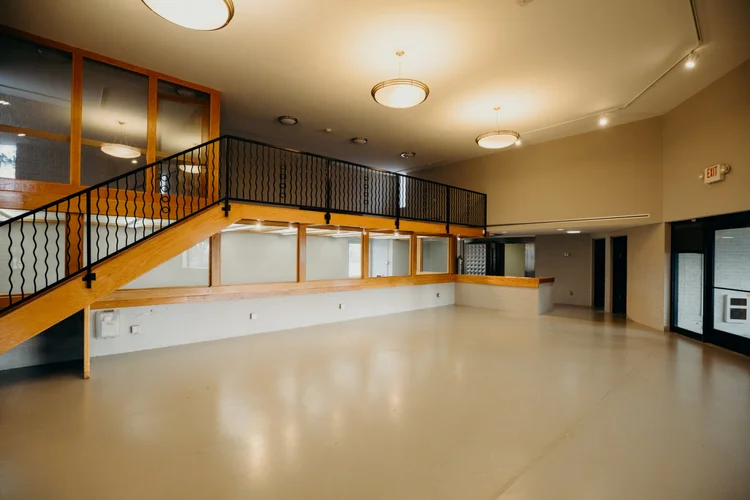
The renovated interior of 1100 Old Hickory. This was a former bank that needed creative build-out to attract tenants.
Here's how I actually paid for a $575,000 building at 25 years old with commission checks and not much else.
I financed it conventionally at about 80% loan-to-value. The bank gave me $460,000 and I needed to bring roughly $115,000 in down payment plus closing costs. The only problem: I didn't have anywhere near $115,000 in my bank account.
So here's how I closed it:
$460,000: conventional bank loan at 80% LTV. Standard commercial mortgage.
$100,000: investor equity from two investors at $50,000 each. One was a friend, one was a client I'd been working with and building trust over a couple of years. Both wrote me checks because I had already shown them I knew this specific building, this specific market, and this specific deal inside and out. I wasn't pitching a business plan. I was pitching a building they could drive to and touch.
$125,000: line of credit. This is the piece most people don't talk about. I had a line of credit that I could draw on for the remaining gap plus working capital. The LOC is the secret weapon of early commercial investors. It covers the gaps that your proforma didn't plan for, and trust me, there will be gaps.
~$18,000: my own money. That was the check I wrote at the closing table, and at 25 it was the biggest check I'd ever written by a factor of probably four. Between the investors and my $18K, we had the down payment covered.
This is where the story gets honest. I made three mistakes on this deal, and every single one of them cost me real money.
Mistake #1: I didn't scope the HVAC. Two months after closing, one of the HVAC units died. That was a $20,000 replacement I hadn't budgeted for. If I had scoped the mechanicals properly before closing, I could have either negotiated a credit from the seller or adjusted the purchase price. Instead, it came straight out of my pocket. Lesson: always, always get a full mechanical inspection, even if you're waiving your inspection contingency. Know what you're buying.
Mistake #2: I underestimated vacancy carry. Both suites were vacant at close. I'd built my proforma assuming I'd have a tenant signed within about 180 days and paying rent that year. In reality, it took us nearly a full year to get those suites leased. Market rent was there. Demand was there. But the space was a former bank, it was kind of wonky, it needed some buildout, and good tenants take their time. Every extra month of vacancy is debt service, utilities, and insurance coming straight out of your pocket. Lesson: double your vacancy assumptions. If you think it'll take 3 months to lease up, model 6. If your deal still works with 6 months of vacancy on every empty suite, you've got a real deal.
Mistake #3: My proforma was too optimistic. This is the big one. I assumed best-case rents, best-case lease-up timing, and best-case expenses. Every number in my model was the good scenario. And when reality hit, every single line item was a little worse than projected, and those little misses compound fast. Lesson: stress test everything. Run worst-case scenarios on your deal analysis. If your deal only works in the best case, it's not a deal, it's a gamble.
The Part Nobody Tells You About Your First Deal
I'm not being dramatic here. In the first six months after I closed, and definitely the night before, I did not sleep well. I'd wake up at 2 a.m. thinking about the roof. Thinking about the HVAC unit I just had to replace and hoping it wouldn't go out again. Thinking about whether I overpaid. Thinking about the $100,000 I owed to investors I'd never taken on capital from before.
That feeling doesn't go away just because you read another book or listen to another podcast.
It goes away because you see the building deposit the rent check month after month. You see the vacant suite lease up. You see the line of credit balance starting to come down. You see the appraisal come in substantially higher than what you paid. And then you sit there after about 12 months and realize: oh, this kind of actually works. I like it.
And then you want to go do it again. In fact, that year I bought three more buildings just because I bought that one.
"Your first deal doesn't have to make you rich. It doesn't have to get you a 30% IRR. It has to prove to you and your own brain that you can own commercial real estate and not have everything blow up."
- Tyler Cauble
The Exit: $575,000 In, $740,000 Out
The building that turned $575,000 into $740,000 in about two years.
A couple years in, one of my partners committed a massive amount of fraud. I didn't want the asset locked up in an FBI investigation for years. So I went to my largest tenant and told them they should buy the building and owner occupy it. They could get an SBA loan at a rate I couldn't touch, and they were willing to pay me real money for the space they'd been renting. In fact, their mortgage was almost equivalent to the rent they were paying me.
So we sold the building to the tenant for roughly $740,000. Do the math: $575,000 all in, $740,000 out, plus two years of operating income. The investors got their 8% return paid out over a two-month disbursement window. Everyone got what they were promised, and I walked away with enough capital and enough confidence to go buy the next one.
But the real return wasn't financial. It was the three buildings I bought that same year just because I had the confidence from closing on that first one. That's the moment. That's the only thing your first deal actually has to do for you. It doesn't have to make you rich. It has to prove to you and your own brain that you can own commercial real estate and not have everything blow up.
The One Thing That Actually Matters
Here's what I know after doing this for years now. The one thing that separates people who actually buy their first commercial property investment from people who spend years just looking at them is not capital, not market knowledge, and not finding the perfect deal.
It's the willingness to act before you feel ready.
I wasn't ready when I wired that $575,000. I was terrified. I'd never owned a commercial building. I'd never raised investor capital. I'd never managed a property that big. But I had done enough homework on that specific deal that I could make a decision, even if it scared me.
Your first deal doesn't have to be perfect. It doesn't have to be the deal of the century. It has to be the deal that gets you off the sidelines.
If you've been watching videos and running numbers for months (or years) and you still feel like you're not ready, I get it. That's exactly where I was. But "ready" doesn't come from more analysis. It comes from doing the thing. And the sooner you do the thing, the sooner you realize that the fear was always bigger than the reality.
If you want a roadmap, start with my guide on how to buy your first commercial property. It walks through the full process step by step, including the parts I had to learn the hard way.
Key Takeaways
The two-offer strategy is powerful. Giving a motivated seller a clean, no-contingency option alongside a higher-priced contingent offer lets them choose certainty. I saved $175,000 this way.
Creative capital stacks make deals possible. Bank loan, investor equity, a line of credit, and personal capital. You don't need $575,000 in your bank account to buy a $575,000 building.
Always scope the mechanicals. A $20,000 HVAC surprise two months after closing is money you'll never get back. Inspect everything, even if you're waiving contingencies.
Double your vacancy assumptions. If you think it'll take 3 months to lease, model 6. If your deal still works, it's a real deal.
Stress test your proforma. Best-case numbers are fantasies. Run worst-case scenarios and make sure you can survive them.
Your first deal just has to prove it works. $575,000 in, $740,000 out, three more buildings that same year. The confidence is the real return.
Watch the full video above where I walk through every detail of this deal, including the sleepless nights, the actual closing documents mindset, and the exact moment I knew commercial real estate was going to change my life.
Ready to Buy Your First Commercial Property?
The CRE Accelerator is the step-by-step system I wish I'd had at 25. Build your buy box, structure your capital stack, and walk through live deals with me so you don't make the same mistakes I did.
Chad Acerboni isn't a full-time real estate investor. He's a tech sales executive who's been quietly building a portfolio on the side, one intentional move at a time. And his latest move? Selling his apartment complex, paying zero taxes on the sale via a 1031 exchange, and closing on a 30,000 square foot mixed-use commercial building for $2.1 million. The appraisal already came back higher than his purchase price.
When it comes to planning for retirement, every decision counts.
But don’t worry, for there is a game-changing tool that can set you on the path to a secure financial future – the Individual Retirement Account (IRA). This investment account is a treasure trove of tax advantages, designed specifically for saving towards your golden years.
There’s a nearly endless amount of knowledge and experience you need to master in order to become a successful commercial real estate investor. Is there another way?
Commercial real estate marketing questions? Looking for a job in our industry? Are apartments a good investment for the future? In this curated article, our sources answer these questions (and more)!
Active or passive commercial real estate investing? Choose carefully, because the road you pick will affect your life more than almost any other decision you’ll ever make …
Where should you – a commercial real estate investor – do business in 2022? There is no definitive answer to that question, but there are some BIG clues to guide you
Here’s a list of our best YouTube videos from 2021. If you can truly absorb the lessons in these 10 videos, you’ll possess a solid education on commercial real estate investing, then it’s just a matter of pulling the trigger!
Here’s a list of our best articles of 2021 from our blog. There’s a lot to digest here (together, they’re close to making a whole course!), so buckle up and enjoy …
If you are new to commercial real estate investing and lack the money to pay cash for an opportunity, you still have the option of acquiring one through various funding sources. That’s one of the most attractive aspects of investing in commercial real estate - using someone else’s money!
If you are new to commercial real estate investing and lack the money to pay cash for an opportunity, you still have the option of acquiring one through various funding sources. That’s one of the most attractive aspects of investing in commercial real estate - using someone else’s money!
If you are new to commercial real estate investing and lack the money to pay cash for an opportunity, you still have the option of acquiring one through various funding sources. That’s one of the most attractive aspects of investing in commercial real estate - using someone else’s money!
If you are new to commercial real estate investing and lack the money to pay cash for an opportunity, you still have the option of acquiring one through various funding sources. That’s one of the most attractive aspects of investing in commercial real estate - using someone else’s money!
If you are new to commercial real estate investing and lack the money to pay cash for an opportunity, you still have the option of acquiring one through various funding sources. That’s one of the most attractive aspects of investing in commercial real estate - using someone else’s money!
If you are new to commercial real estate investing and lack the money to pay cash for an opportunity, you still have the option of acquiring one through various funding sources. That’s one of the most attractive aspects of investing in commercial real estate - using someone else’s money!
If you are new to commercial real estate investing and lack the money to pay cash for an opportunity, you still have the option of acquiring one through various funding sources. That’s one of the most attractive aspects of investing in commercial real estate - using someone else’s money!
If you are new to commercial real estate investing and lack the money to pay cash for an opportunity, you still have the option of acquiring one through various funding sources. That’s one of the most attractive aspects of investing in commercial real estate - using someone else’s money!











![Step by Step: Commercial Real Estate Due Diligence [With Checklist]](https://images.squarespace-cdn.com/content/v1/5c115fec9d5abbba78a23c93/1608577160826-IDO8MX36BH413U3AOCL4/Commercial+Real+Estate+Due+Diligence+BANNER-01.jpg)