
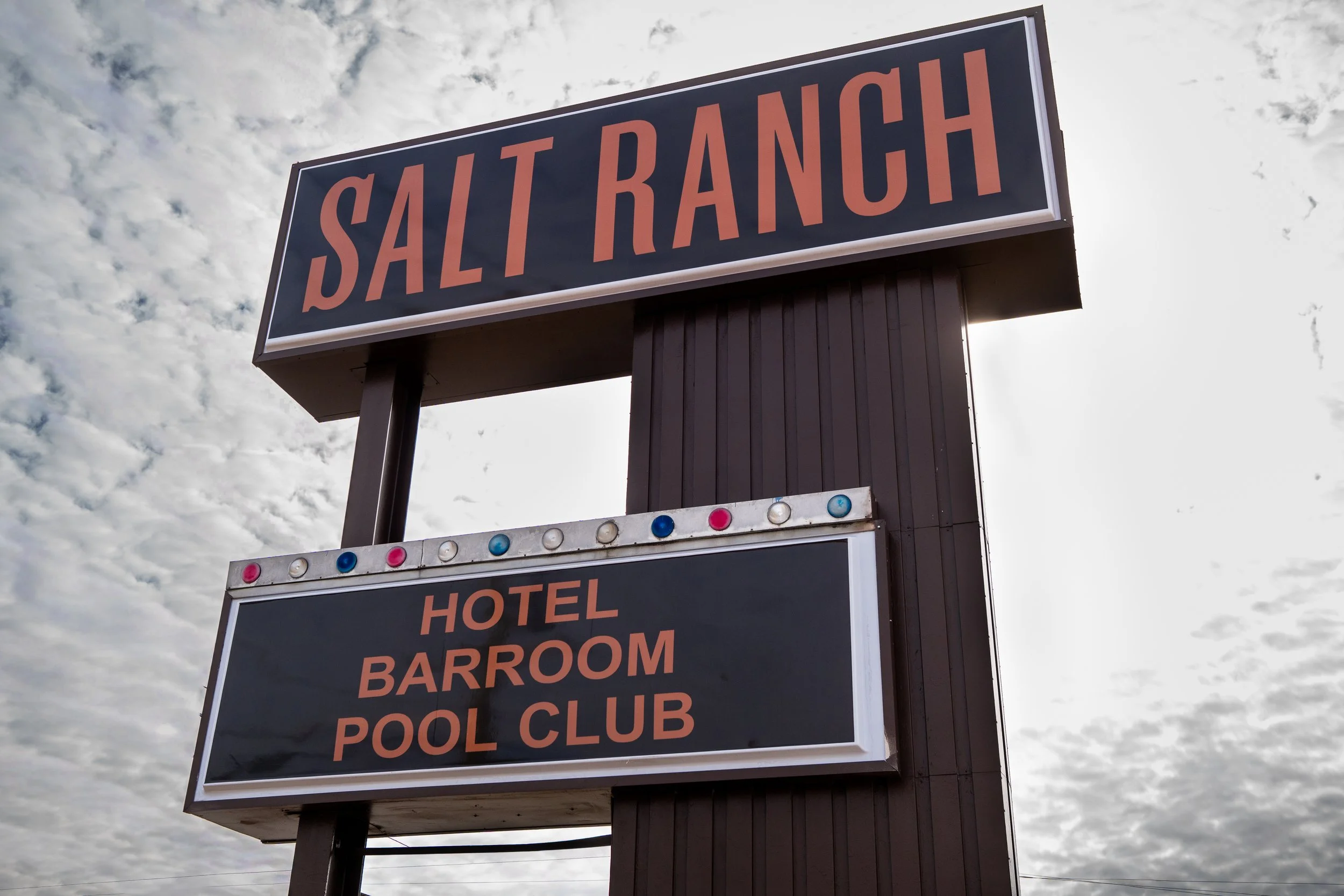
When I tell people that over 50 lenders said no to financing Salt Ranch, they usually think I'm exaggerating. I'm not. Hotel financing is one of the most difficult parts of any hotel development project, and if you're trying to do it without a flag (meaning no Hilton, Marriott, or other brand name attached), it gets exponentially harder.
This is the second post in my series about building Salt Ranch, a 48-room boutique hotel in East Nashville. If you haven't read the first post, start there for the full origin story. In this post, I'm going to break down exactly how I financed this project, what I learned about hotel financing along the way, and what I'd do differently next time.
Why Hotel Financing Is So Different from Other Commercial Real Estate
I've financed plenty of commercial real estate deals. Office buildings, retail spaces, development projects. None of them prepared me for what hotel financing looks like.
Here's why it's different. With a traditional commercial real estate investment, you typically have tenants with leases. The lender can look at those leases, calculate the income, and underwrite the deal based on predictable cash flow. A hotel doesn't work that way. There are no tenants. There are no leases. Your "tenants" check in and check out every couple of days, and your revenue fluctuates with seasons, events, the economy, and a hundred other factors.
That makes hotels inherently riskier in a lender's eyes. And when you add "boutique" and "independent" to the description, meaning no national brand backing you up, most lenders don't even want to have the conversation.
The reality is that hotel financing requires a completely different approach than financing an office building or apartment complex. You need to understand hospitality-specific metrics like RevPAR, ADR, and occupancy projections. You need a detailed feasibility study. And you need to be ready for a much longer, much more painful process than you'd expect.
The Acquisition: Hard Money Got the Deal Done
Let me walk you through how the financing actually played out for Salt Ranch.
We negotiated the purchase of the property, an old roadside motel called the Congress Inn on Dickerson Pike, for $3 million. That came out to roughly $1.25 million per acre, which was right in line with comps. I actually got it for about $1 million less than what we believed it was worth.
But here's the problem: The sellers wanted a quick close at that price and I couldn't secure a traditional bank loan in time to close. I was talking to lenders, but the underwriting process for all types of commercial real estate takes time. Banks want feasibility studies, market analyses, management agreements, and detailed construction budgets before they'll even consider a term sheet.
So I went with hard money to close the acquisition.
Hard money is expensive. The interest rates are significantly higher than conventional financing, and the terms are shorter. But it gave me two things I needed: speed and certainty of close. The seller wasn't going to wait around while I spent six months getting a bank comfortable with the deal. And because I had negotiated the property at a solid discount, the numbers still worked even with the higher carrying costs.
If you're considering hotel financing for your own project, here's my advice: don't be afraid of hard money as a bridge tool. It's not a long-term solution by any means (make sure you have a quick way to refinance out of it), but it can be the difference between getting the deal and losing it to someone else.
50 Lenders Said No: What I Learned About Hotel Construction Loans
Once we owned the property, the next challenge was securing a hotel construction loan to fund the renovation. This is where things got really tough.
I talked to over 50 lenders. Banks, credit unions, CMBS lenders, debt funds, SBA lenders. You name it, I pitched them. And the vast majority said no.
The objections fell into a few categories:
"We don't lend on independent hotels." This was the most common one. Most lenders want a flag. A Hilton or Marriott gives them comfort because there's a national reservation system, brand standards, and a track record they can underwrite against. An independent boutique hotel with no brand? That's a much harder sell. They see it as unproven. I also wasn’t willing to consider putting a flag on this hotel - I wanted something local and “East Nashville,” not corporate.
"The borrower doesn't have hotel operating experience." Fair point. I had a strong track record in commercial real estate, but I had never operated a hotel. Some lenders couldn't get past that, even though we had plans to bring on a professional management company. We ended up getting around this in many cases because I brought in a partner with over 30 years of hotel experience.
"The market is too risky right now." We were going through this process during a period of rising interest rates and economic uncertainty. Some lenders that might have said yes in 2019 just weren't lending on hospitality deals at all. Remember, we were still coming out of COVID and the lending environment hadn’t fully recoverd.
"The renovation scope is too complex." A ground-up hotel construction loan is actually easier to underwrite than a renovation in some ways. With new construction, everything is known. With a renovation, especially on buildings from the 1800s and 1950s, there are unknowns that make lenders nervous. And lenders are always looking at these deals from a “how do I protect my downside in any case” point of view.
How We Finally Secured Construction Financing
After months of pitching, getting rejected, tweaking our approach, and pitching again, we finally secured our construction financing in mid-2022.
The key was finding a lender who understood the boutique hotel space and was comfortable with the story. Not every lender evaluates deals the same way. Some are purely numbers-driven. Others are willing to look at the bigger picture: the location, the market opportunity, the team, the vision.
Our lender has been incredible to work with through the entire process. When construction delays from the permitting process pushed our timeline, they worked with us on extending the interest-only period rather than calling the loan. That's the kind of partnership you need on a project like this.
A few things that helped us get to yes:
A professional hotel management company. We partnered with Remington Hospitality before we even started talking to construction lenders. Having a management agreement with an experienced operator gave lenders confidence that the hotel would be run by people who know the business, even if I personally hadn't operated one before.
A detailed feasibility study. We had consultants with national boutique hotel experience analyze the Nashville market, our specific location, comparable properties, and projected performance. The data showed a clear gap in the market for a boutique hotel concept in East Nashville.
Strong equity position. Because we acquired the property below market value, we had built-in equity from day one. That, combined with our investor capital (which we ended up using to pay for the land free and clear), gave us a loan-to-cost ratio that lenders could work with.
A compelling story. At the end of the day, people lend to people. Our pitch wasn't just about numbers. It was about the vision for Salt Ranch, the gap in the market, and why this specific team could execute it.
The Investor Side: Raising Capital for a Hotel Project
Hotel financing isn't just about debt. You also need equity. For Salt Ranch, we raised capital from private investors who believed in the project and the team.
I've raised money for commercial real estate deals before, but raising for a hotel is different. Investors ask different questions. They want to understand the hospitality market, the competitive set, the revenue projections, and the management structure. It's a more sophisticated conversation than raising for a straightforward office or retail acquisition.
The investors who came into Salt Ranch did so because they trusted the process and the team. They understood it was a longer-term project with higher complexity but also higher potential returns. And I'm grateful that they stuck with us through the construction delays and timeline extensions. That kind of investor patience is invaluable.
If you're thinking about raising capital for a hotel project, my biggest piece of advice is this: be transparent from the start about the risks and the timeline. Hotel development projects almost always take longer and cost more than you initially project. Your investors need to know that going in. Under-promise and over-deliver, not the other way around.
What I'd Do Differently with Hotel Financing
Looking back on the financing journey for Salt Ranch, there are a few things I'd change if I were doing it again.
I'd start the construction lending process earlier. I underestimated how long hotel construction loan underwriting takes. It's not like getting a loan on an office building. Start talking to lenders before you even close on the property if you can.
I'd build the management relationship even sooner. Having Remington on board was critical to getting our construction loan. If I could go back, I'd lock down the management agreement before I even started the acquisition process. It makes every subsequent conversation with lenders easier.
I'd budget more conservatively from the start. Our original scope came in at $17 million. We eventually scaled back to around $10 million. If I had designed it as a $10 million project from the beginning, it would have simplified the financing conversations and saved significant time on redesign.
I'd focus on fewer, better-fit lenders. Talking to 50 lenders sounds impressive, but honestly, probably about 40 of them were never going to say yes. I could have saved a lot of time by qualifying lenders more aggressively upfront and focusing my energy on the ones that actually had appetite for this type of deal.
Key Takeaways on Hotel Financing
Hotel financing is fundamentally different from other commercial real estate financing. The lack of long-term leases, the operational complexity, and the revenue volatility make it a harder asset class to finance. Accept that reality and plan accordingly.
Hard money has a place in your capital stack. It's not ideal for the long term, but as a bridge to close quickly, it can be the tool that gets you the deal. Just make sure your numbers work with the higher carrying costs.
A hotel construction loan requires more preparation than you think. Feasibility studies, management agreements, detailed budgets, market analysis. Have all of this ready before you start shopping for debt.
The right lender matters as much as the right terms. You want a lending partner who will work with you when things don't go according to plan. Because in hotel development, things never go exactly according to plan.
Transparency with investors is non-negotiable. Set realistic expectations about timeline, budget, and risk. Your investors will thank you for it when the inevitable surprises come up.
This post is part of the Salt Ranch Series, documenting the full story of building a boutique hotel in Nashville from finding the deal to financing, design, construction, and opening day.
Read the Full Salt Ranch Series:
How to Finance a Boutique Hotel (You Are Here)
Boutique Hotel Design: How We Turned a 1950s Motel into Salt Ranch
How to Build a Hotel: The Development Timeline Nobody Talks About
How to Start a Boutique Hotel: Lessons from Building Salt Ranch
Want to learn how to find and finance deals like Salt Ranch? Book a call to learn about the CRE Accelerator, my step-by-step program for building your commercial real estate portfolio.