
Seller financing in commercial real estate lets you buy a building with the owner acting as your bank, often with less money down and more flexible terms than a traditional bank loan.
In this episode I walk through how a seller note works, which sellers will actually say yes, the terms you can negotiate, and how to pitch it so the seller sees a win.
Get the free Deal Analysis Toolkit to run your own numbers: tylercauble.com/toolkit
Work with me: accelerator.crecentral.com/sellerfinancing
Key Takeaways
How a seller note works, including the down payment, the promissory note and deed of trust secured by the property, and the balloon payment you'll cover by refinancing or selling.
The best candidates are longtime owners who own the building free and clear, and you can check county records and ask what's driving the sale before you make an offer.
The five terms you can negotiate (price, down payment, interest rate, amortization or interest only period, and the balloon term) move together, so you can give on one to get what you need on another.
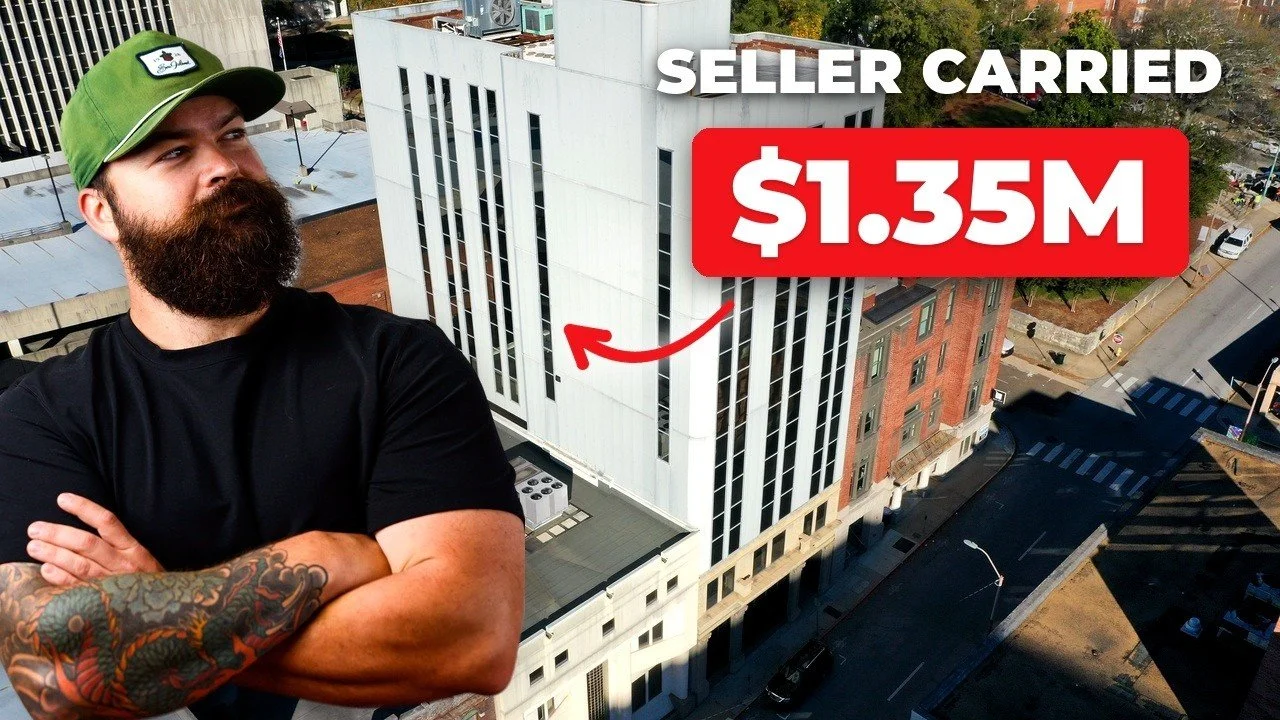
Real examples, including my Newell Tower deal in Chattanooga, which we bought with a $1.35 million seller note and later sold for $4.5 million while carrying a $2.65 million note ourselves, plus an Accelerator member's $1.25 million mixed use deal financed with a $900,000 seller note.
Pitch it as a win for the owner with two offers, one cash price and a better price with seller financing, and plan for the balloon on day one so you don't stack more leverage than the building can support.
Chapters
00:00 Why Banks Aren't Your Only Lender
01:03 What Seller Financing Is and How a Seller Note Works
02:03 Which Sellers Will Actually Say Yes
03:13 How to Find Out If a Seller Can Finance
03:33 Newell Tower and the Vacant Building Utility Bill
04:15 The Five Terms You Can Negotiate
05:28 A Simple Seller Financing Example
06:04 Newell Tower: Bought and Sold With Seller Financing
07:00 An Accelerator Member's Mixed-Use Deal
07:31 How to Pitch Seller Financing to an Owner
09:06 Brokers, Off-Market Deals, and LoopNet
09:48 Banks and SBA Loans Compared
10:35 The Mistake That Turns a Good Deal Into a Disaster


About Your Host:
Tyler Cauble, Founder & President of The Cauble Group, is a commercial real estate broker and investor based in East Nashville. He’s the best selling author of Open for Business: The Insider’s Guide to Leasing Commercial Real Estate and has focused his career on serving commercial real estate investors.
Tyler Cauble
If you own a few rentals and you're trying to buy your first commercial building, you've probably hit the same wall that I see over and over again. The bank wants 25 or 30 percent down, and the rate isn't great, and the deal you like just doesn't quite pencil. But there's actually a lender out there that a lot of investors never think to ask, and that's the person selling you the building. In commercial real estate, owners carry the note all the time, especially the ones who bought decades ago and own the property free and clear. I absolutely love this strategy. I've bought a building on seller financing. I've sold one on the same way, and I've also watched a lot of our accelerator members use it to close deals that banks would never ever touch. So, in this video, I'm going to show you exactly how seller financing in commercial real estate works. You'll learn which sellers will actually say yes, the five terms that you can and should negotiate, how to pitch it so that the seller actually sees it as a win, and the one mistake that turns a great deal into a disaster five years later. Seller financing means that the seller acts as the bank. You give them a down payment. They hold a promissory note that is then secured by the property, and you make payments to them instead of to a lender. At the end of the term, there's usually what's called a balloon payment, which is when you pay off whatever is left. Normally by either refinancing the property or by selling it, the paperwork functions a lot like a true bank loan. There's a note, there's a deed of trust, and the seller's attorney or your attorney will draft all of this. Most people don't understand seller financing, but it's super easy to set up. It also doesn't have to be all or nothing. The seller can carry 100% of the debt, or they can carry just a smaller piece in second position behind a traditional bank. On one of our deals from back in 2023, the seller carried 10% of the purchase price in a second position. We could have pushed for more, but that would have increased our risk on the deal. So we brought in a capital partner and decided to keep the rest of our cash in reserves. Now, not every seller can do this, so make sure that you fully understand what their situation is first. The best candidates are longtime owners with a lower basis in the property, and they probably own the building free and clear. If they bought it 30 years ago for 150 grand and now they're asking 900 $1,000, they probably paid it off a long time ago, and their carry costs aren't much, if anything at all. They can wait, and they can take payments. Another good one is the owner who also runs a business in the building and is about to retire. They're thinking, "I need a million dollars." But what they really need is income that they can rely on, and a seller financing deal can give them just that. Who likely won't do it? Well, a seller who's already losing money on the building, or one that has a big loan on it. There's just no chance of a seller carryback there because they need the cash to pay off their lender. Unless you guys decide to bring enough cash to the table to pay off their note, and then they can sell or finance the rest. But sometimes it gets pretty complicated. So how do you find out if a seller might be able to finance a deal for you? Well, first pull the county records, see what they paid, when they bought it and whether there's a mortgage recorded, then talk to the broker or the seller and ask what's driving the sale. You can also just straight up ask if they would be interested in doing seller financing. We bought a building in downtown Chattanooga called Newell Tower. It had been a county office building and a data center, and it was sitting completely vacant since the county had moved out about a year earlier. The seller was kind of desperate to close, so they gave us seller financing, and it worked out really well for both parties. Then we got the first utility bill, about $27,000.
Tyler Cauble
Keep in mind, this is a vacant building. They had spent close to $300,000 on utilities, while this building sat empty. We immediately shut everything off, and that bill went to zero. And if I had known what that building was costing them every month, maybe I could have negotiated a little bit harder. Now, every seller note comes down to five terms that you can really lean in on and negotiate: the price, the down payment, the interest rate, the amortization or interest-only period, and the term, which is when the loan balloons and comes due. The trick is that these levers move together, so you can give a little on one to get what you need on another. If you agree to pay the seller's full asking price, maybe ask for a lower interest rate or a smaller down payment in return. If you want a lower price, expect to give a little bit on something else, like a higher rate or a shorter balloon. And interest only can be a win for both parties. Your payment is lower as the buyer because you're only paying the interest, so you cash flow more, and the seller actually makes more money overall. Because they're collecting interest on the full balance of the note the whole time, instead of a balance that shrinks every month. And the beauty is that you can structure seller financing however you want. There's no rules, pretty much. You could say I'll pay you $3,000 a month, and 100% of it goes towards principal, and all of the interest just accrues until the balloon in five years, or you could pay full asking price with 5% interest only for 10 years. Here's a simple example. So, say a building is listed for $1.4 million, and it makes about $98,000 a year in net operating income. So that puts it at about a 7% cap rate. You offer 1.35 with a 10% down payment, 6% interest, a 30-year amortization, and a 7-year balloon, you'd be at about a 7.8% cash on cash with a 1.12 debt service coverage ratio, which, by the way, a bank would never approve, but that works in seller financing. And the seller collects about $72,500 a year in interest. Now let me show you how this plays out, starting with my own deal that I told you about from both sides of the table. So Newell Tower was a nine-story office tower plus a three-story annex building next door. It was about 41,000 square feet in downtown Chattanooga. We bought it in January of 2021 for 1.8 million dollars, the seller ended up carrying on a seller note 1.35 million dollars at 5% interest only with a five-year balloon. Pretty great terms. Then in October of 2022, we sold it for 4.5 million dollars. Now the buyer couldn't get bank financing, so we did it. We carried 2.65 million dollars at Wall Street Journal Prime plus one and a half percent with a 7.75 percent floor interest only, and the buyer paid off the note that we carried within a year. So we bought a deal on seller finance, and then we turned around and we sold the deal seller financing it ourselves. I just love that method. I've also coached many of our accelerator mastermind members through structuring their own seller finance deals this same way. One of our members actually just sold off a large portfolio and was looking for his next move, and he found an off-market mixed-use building. Really cool deal: five retail spaces, five apartments for 1.25 million dollars. The seller carried a $900,000 note at 5% interest only, and his down payment came from a 1031 exchange from some residential units that he had sold. Now, most investors that I talk to don't know how to properly pitch seller financing. They make it sound like it's a favor to them as a buyer, like they're really asking a lot of a seller. But for the seller, it's actually a pretty damn good deal too. So here's what I would tell an owner who maybe isn't an investor, if I was going through pitching them seller financing for the first time. First, the loan is secured by the property. If I ever default on payment, you can foreclose, take the building back, keep my down payment plus any payments or improvements or new leases that I've signed while I owned it.
Tyler Cauble
Second, you get an easy check every single month. That's income that you can rely on, and you don't have to go fix a roof or chase a tenant to get it. Third, taxes. If you've owned the building since 2006, your basis is probably next to nothing, and selling it for cash means a massive tax bill all at once. A note could actually spread that out over time and allow you to plan it out a little bit better. But definitely talk to your CPA about how that would work out for you specifically. Fourth, you make more total dollars. You're collecting interest on top of the price, so consider that total number over the full term of the loan. Then I would go and make two offers. So one for an outright purchase at a cash price that really works for me, and then one at a better price if they sell or finance it. Now they're choosing between you know two wins instead of just deciding to do you a favor. Now the toughest part of seller finance deals can be the broker. If there's a broker involved, they typically want to get paid their commission today, so they may never even tell the seller that there's a seller carry offer on the table, even if it's in the seller's best interests. Going after a listed property through an agent for seller financing is already an uphill battle, but it's definitely possible if you pitch it to them right. Also, they are essentially contractually obligated to present all offers to the owner, so don't feel worried about making them. Now, off market and direct to owner is where it really starts to open up. Now that said, people say LoopNet is where deals go to die, and because of that, you might be able to find some seller finance opportunities on there. But what about just going to a bank? Well, banks want that 25 to 30 percent down, and SBA can get you to about 10 percent down, but only if your business occupies the building. You actually need to occupy. 51% or more to get owner-occupied terms. The SBA won't fund a rental-only building. They won't waive your personal guarantee, and they'll probably put some prepayment penalties on you. We have a client going through this right now on our brokerage side, and he's had to extend his purchase and sale agreement about five or six times just to get his SBA loan lined up. SBA loans can be worth it, but it is a total pain. And by comparison, in a market like today, seller financing is a really easy pitch compared to SBA or traditional bank loans. Now, here's the mistake that I see more often than not: seller financing does not replace buying a good deal. Go back and rewatch that part again. You need to use seller financing and get a good deal for it to make sense. All right. So good terms can lie to you on your debt service coverage ratio. I mean, of course you can cover the payment, like we talked about that 1.12 times debt service coverage ratio earlier, because you structured it that way, but you might miss the fact that the deal isn't actually a good deal. And when you have to refinance it, and that balloon is coming up, and it hits in year five or seven or whenever you and the seller decide the term should end, a bank has to be willing to take out that note based on the building's real income. So make sure the deal still works. Plan for that balloon on day one. Use the note to fund your value add, lease up the space, and refinance it. Just don't stack as much leverage as you can just because you can. Make sure you keep your reserves. Seller financing is just one tool that should be in your tool belt if you're interested in getting into commercial real estate. If you want the rest of the toolbox for buying without a bank, watch this video next on creative financing strategies for commercial real estate.
Seller financing in commercial real estate lets you buy a building with the owner acting as your bank, often with less money down and more flexible terms than a traditional bank loan.
In this episode I walk through how a seller note works, which sellers will actually say yes, the terms you can negotiate, and how to pitch it so the seller sees a win.