
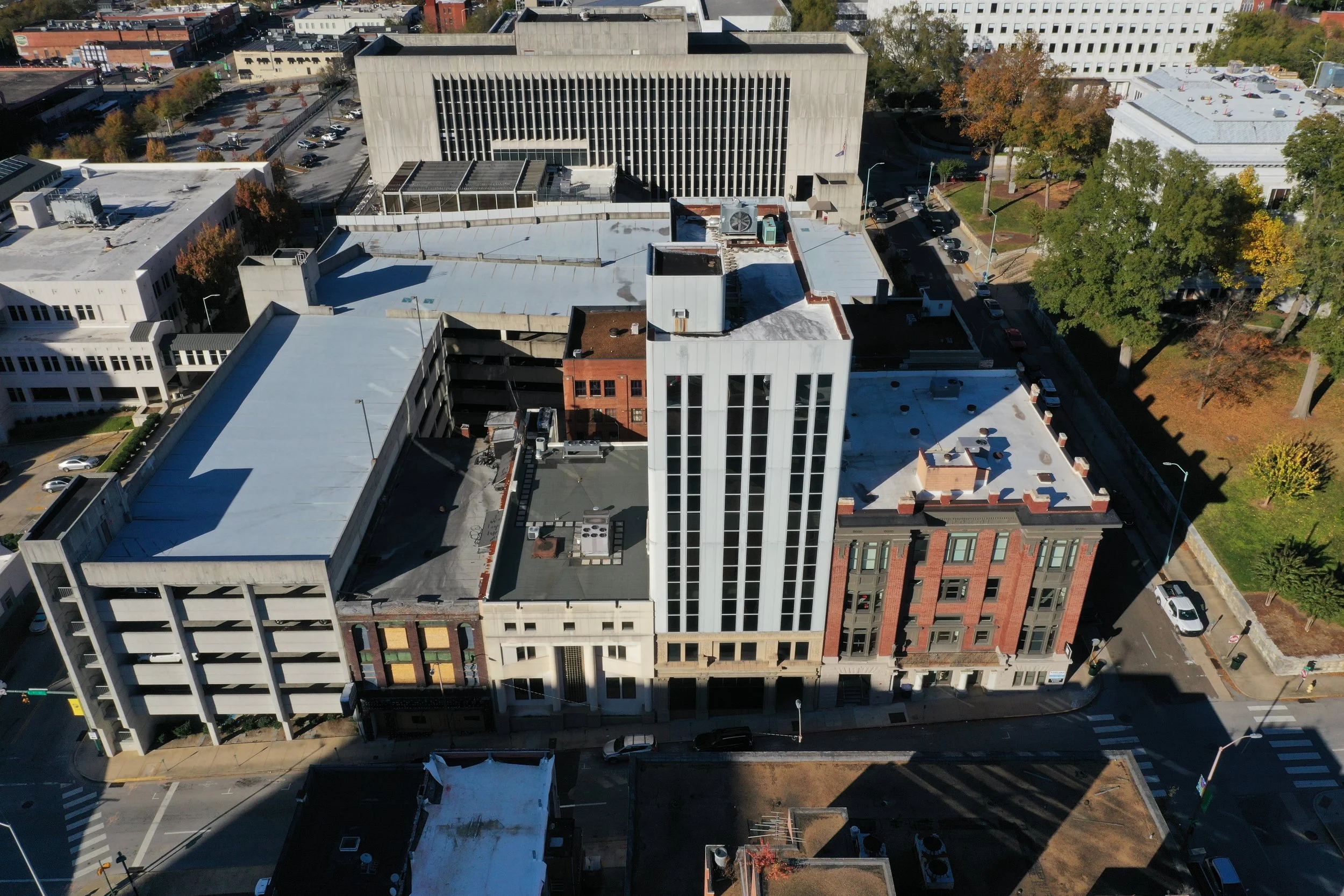
I turned an abandoned nine-story office tower into a $2.2 million payday in 15 months, and I didn't even finish the project. This is the full story of Newell Tower: how I found it off market through an Instagram story, how the bank backed out one week before closing and nearly killed the deal, how we pivoted from offices to apartments in one of the most ambitious office to residential conversion projects I've taken on, and how an unexpected text message led to one of the best exits of my career. If you want to learn how off market deals actually get done in commercial real estate investing, this is the case study you need to read.
In This Article
How I Found a $1.8M Deal Through an Instagram Story
The Building: A 1915 Hotel Turned Office Tower
The Bank Backed Out One Week Before Closing
The Pivot: From Offices to Micro Apartments
Renovation and the Realities of Office to Residential Conversion
The $4.6 Million Exit Nobody Saw Coming
What Came Next: From Newell Tower to Peerless Mill
Newell Tower: Deal Summary
15-month hold · 41,000 SF · Built 1915 · $41/SF at purchase
Bought For
$1.8M
All-In Basis
$2.4M
Sold For
$4.6M
Gross Profit
$2.2M
Returns matched 7-year projections in just 15 months
How I Found a $1.8M Deal Through an Instagram Story
I wasn't even looking for a deal in Chattanooga. Not seriously, anyway. I was driving down to Atlanta to check out some properties for another development project when I had a thought: I'm passing through Chattanooga, why not see if there are any off market deals worth looking at?
So I pulled out my phone and posted something super simple on Instagram Stories: "Driving through Chattanooga today. Anyone got any off market deals I should check out?" I might have had 15,000 or 20,000 followers at the time. Did I expect anything to come from it? Not really.
But this is why networking is everything in real estate. One of my followers saw the story and screenshotted it to a buddy in Chattanooga. That friend knew of three properties I should check out while we were driving through. A few hours later, I'm standing in downtown Chattanooga touring buildings I didn't even know existed that morning.
Two of them weren't great. But then I stepped into Newell Tower, a 41,000 square foot, nine-story building right in the heart of downtown. When I asked how much they wanted for it, I almost did a double take: $1.8 million. Less than $41 a square foot. If you know anything about commercial real estate, you know that's insanely cheap. I think we had it under contract literally the next week.
Before pulling the trigger, I did what every smart investor should do when buying commercial property in a new market. I sat down with city officials to understand zoning and development incentives. I talked to local real estate investors to gauge demand and potential exit strategies. And I met with business owners to see if office space was still needed in that area. Everything pointed to this being a killer deal. We just needed to figure out what to do with it.
The Building: A 1915 Hotel Turned Office Tower
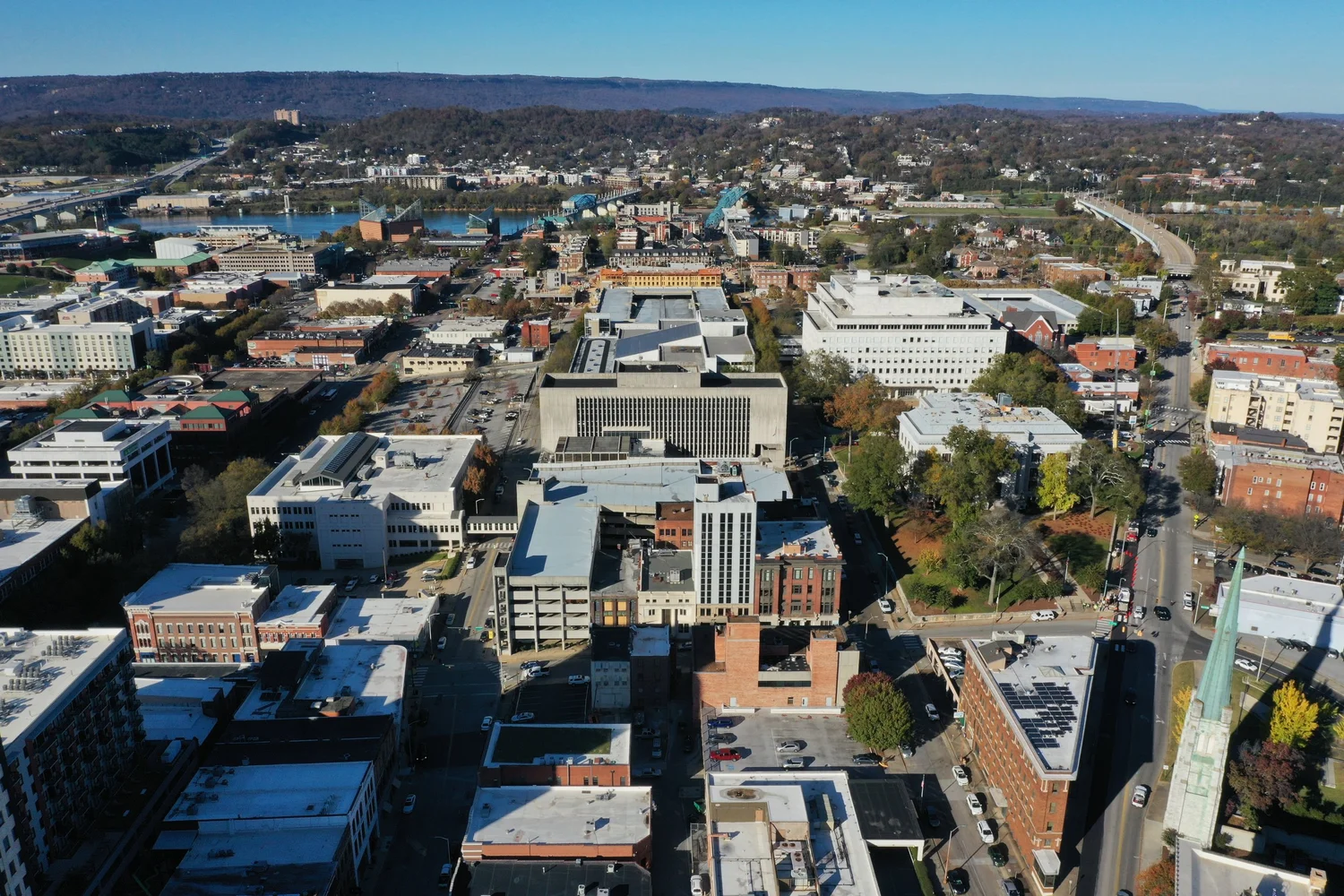
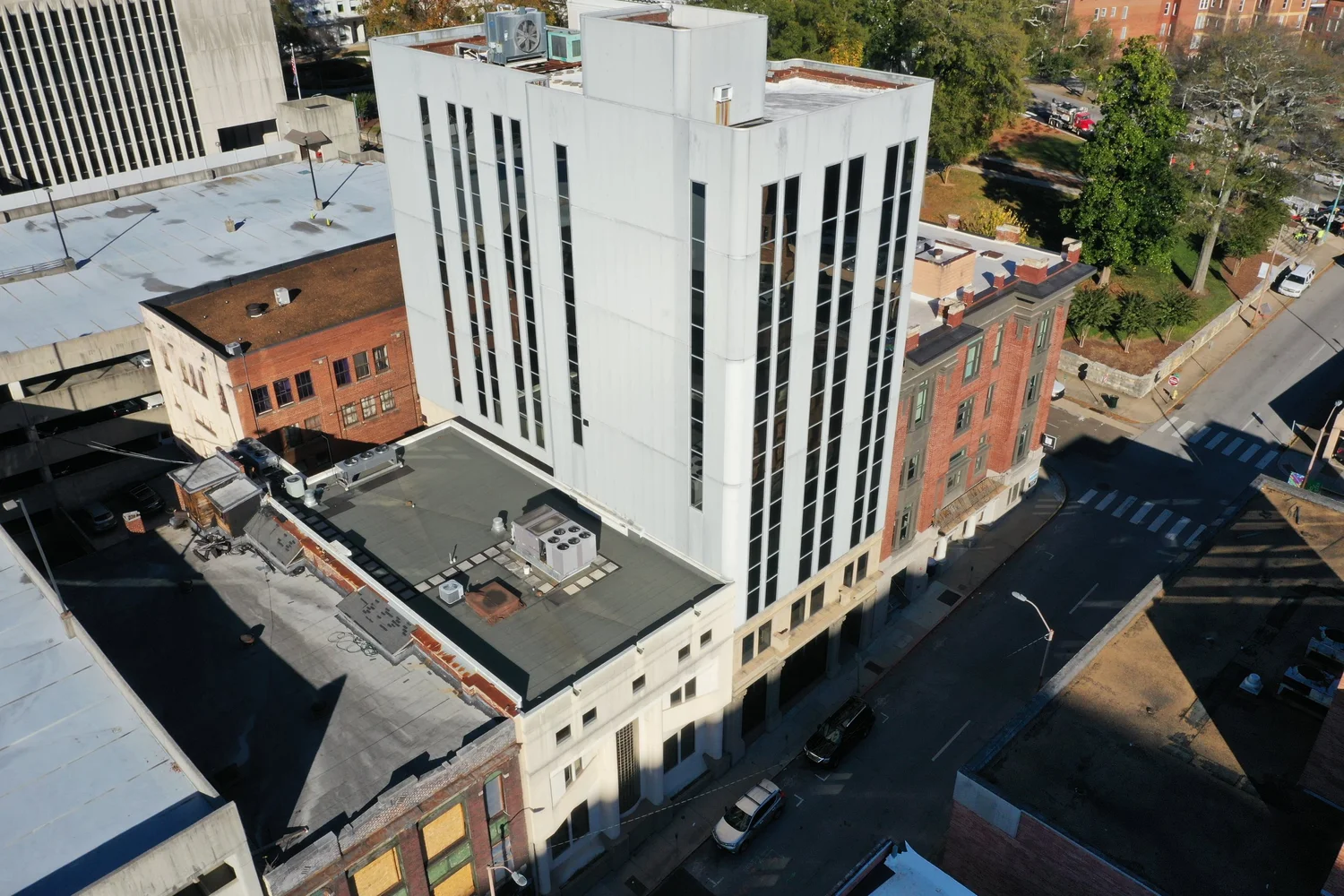
Newell Tower sits at 117 East 7th Street in downtown Chattanooga, just two or three blocks from the University of Tennessee at Chattanooga. It was originally built in 1915 as the Park Hotel, which is actually why so many of the rooms are smaller. That architectural quirk is what made it perfect for my development thesis.
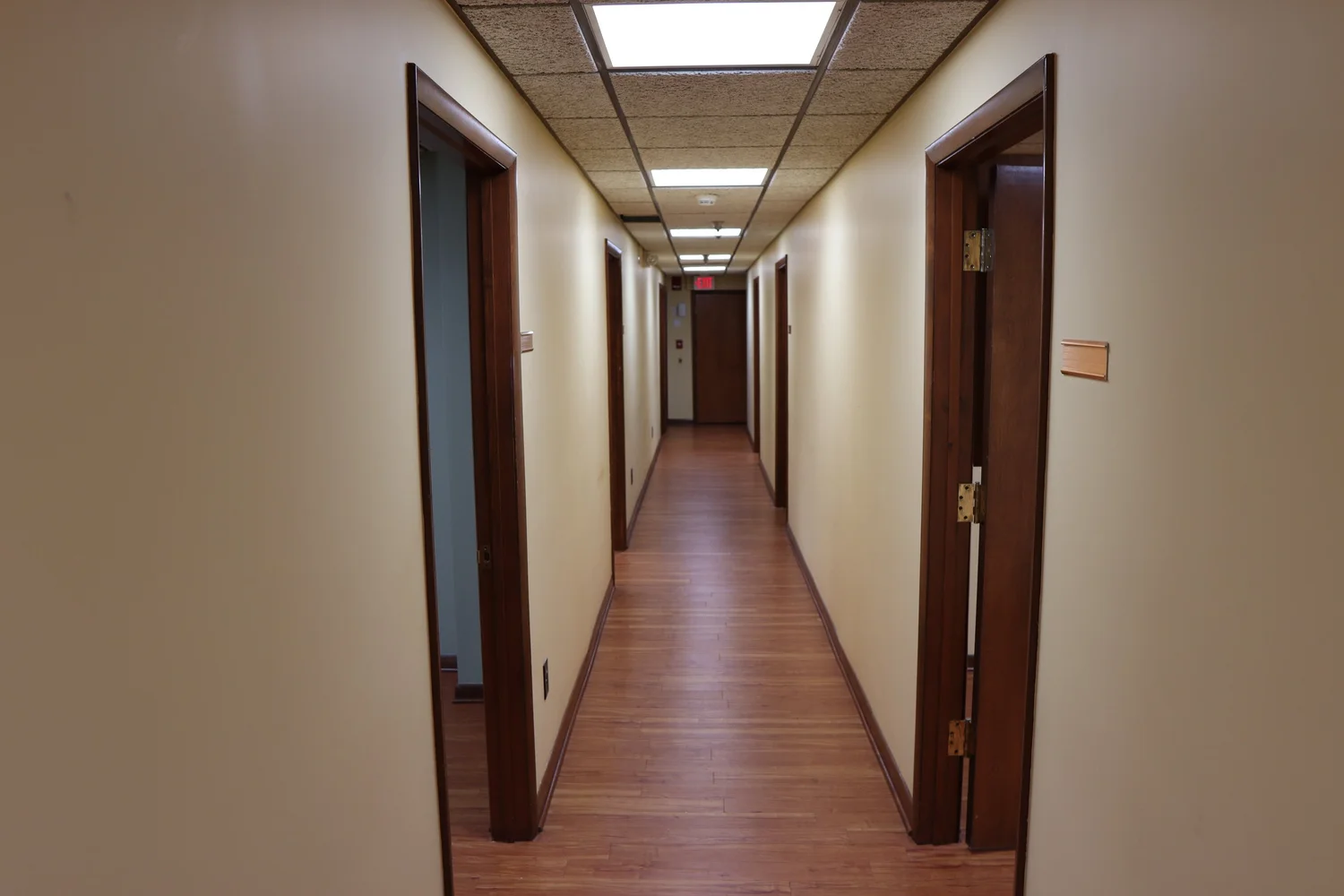
The building is nine stories with beautiful bones: original marble staircases, exposed brick walls, poured concrete floors, even a coal chute in the basement from the original heating system. At some point, the county bought it and converted it to offices. They reskinned the exterior and filled in most of the windows, which was a shame because from the upper floors you have a 360-degree view of every ridgeline in Chattanooga. The previous tenant was the county IT department, and they had left behind over $180,000 worth of electrical infrastructure.
There's also a three-story annex building attached that could potentially be expanded to 9 or even 12 stories. So the total development potential was massive for the price we were paying.
Now, Chattanooga itself is a fascinating market. It's about one-tenth the size of Nashville, maybe 200,000 people, but it has a technology boom happening that most investors aren't paying attention to. About 10 years ago, the city started installing fiber internet throughout the entire municipality and treats it as a public utility. They call it the "Gig City." For tech companies and startups that need high-powered internet, it's everywhere. The cost of living is low, it's walkable, and it's two hours from Nashville and two hours from Atlanta, which makes it an incredible distribution hub for manufacturing companies.
"Back in the 1980s, Chattanooga was voted the dirtiest city in America. Businessmen would bring a second white button-down to work because the first one would be gray by lunchtime from all the soot. Going there now, you would never think that. They've done an incredible job of redeveloping."
- Tyler Cauble
The Bank Backed Out One Week Before Closing
Here's something every real estate investor needs to understand: you don't need millions of dollars in your bank account to do big deals. You need the right strategy for raising capital. Instead of using all my own money, I raised capital through a real estate syndication in $50,000 to $100,000 chunks from other investors. This let me take down a much bigger deal than I could have done on my own, minimized my personal risk, and gave investors a solid return while I kept equity in the deal. I then secured a bank loan to cover the rest.
Everything was moving forward smoothly. We were set to close. And then, one week before closing, the bank pulled out.
I was stunned. I've closed a lot of deals and this had never happened to me before. The craziest part was that this was the same bank that had financed another project of mine, one that was wildly successful. They already knew me, knew how I operated, and had already approved this deal.
Now I'm in a serious bind. I had over $100,000 in earnest money on the line, my own personal funds, and if I didn't close, that money was gone. We had one week to come up with an entirely new financing strategy or lose the deal and our money.
So we scrambled. And that's when I saw an opportunity. I went to the seller and said, "Look, the bank just pulled out. I still want to close on this deal. Let's talk about seller financing." After a couple of rounds of negotiation, we agreed on a 5% interest-only loan for 5 years directly from the seller. They just became the bank on the deal.
And you know what? That financing actually turned out significantly better than the bank loan would have been. Lower interest rate, no bank underwriting headaches, more flexibility on terms, and interest-only payments for five years. My partners in Texas (shout out Stephanie) literally ran to Bank of America right before the wire cutoff to get all the money transferred on closing day. It was that close.
There was one more layer to the deal structure that made it especially attractive for our investors. We set the investment up as an Opportunity Zone fund. Chattanooga had several federally designated Opportunity Zones, and Newell Tower sat right in one. That meant our investors could defer and potentially reduce their capital gains taxes by parking those gains into the project. It's one of the most powerful tax advantages in commercial real estate, and if you're looking at deals in economically developing areas, understanding how to leverage OZ funds can be a game changer.
"When the bank says no, you still need to find a way to get to a yes. That's why you always have a backup plan in commercial real estate."
- Tyler Cauble
The Pivot: From Offices to Micro Apartments
Our original plan was pretty straightforward: renovate the building and lease it as micro office space for entrepreneurs and startups. I'd done this successfully on another project during the pandemic, and the price per square foot was so low that even leasing at below-market rates would give us a solid return. Since the rooms were already small from the hotel days, they were perfectly laid out for one to five person businesses.
But then we discovered something that changed everything. Just two blocks away from Newell Tower, we found a micro apartment complex renting tiny 300-square-foot units for twice the per-square-foot rent of the average market in Nashville. And where was it located? Right down the street from the University of Tennessee at Chattanooga.
That was a huge light bulb moment. Students, young professionals, people looking for affordable and efficient housing: there was clear demand for small, well-designed apartments. We also learned from lenders that the highest residential units in downtown Chattanooga at that time were on the fifth floor. We were going to have apartments on the eighth and ninth floor with vaulted ceilings and 360-degree views of every ridge in the city. That's a product nobody else was offering.
So we pivoted. The new plan became a true mixed-use value-add commercial real estate project: 35 micro-residential units on floors 2 through 9 (400 to 500 square foot studios and one-bedrooms targeting $1,200 a month), with a cafe and maker-creator space on the ground floor and a speakeasy bar in the basement. We kept the existing layout on the fourth floor because it was already perfectly suited for micro units, which saved us demo costs.
Now, we ended up scrapping those plans entirely before we sold. But the vision is what made the building so attractive to buyers. We had already done the hard work of reimagining what this building could become, getting the architectural plans drawn up, and starting the demo. The next owner was essentially buying a shovel-ready development project with a clear path to revenue.
Renovation and the Realities of Office to Residential Conversion
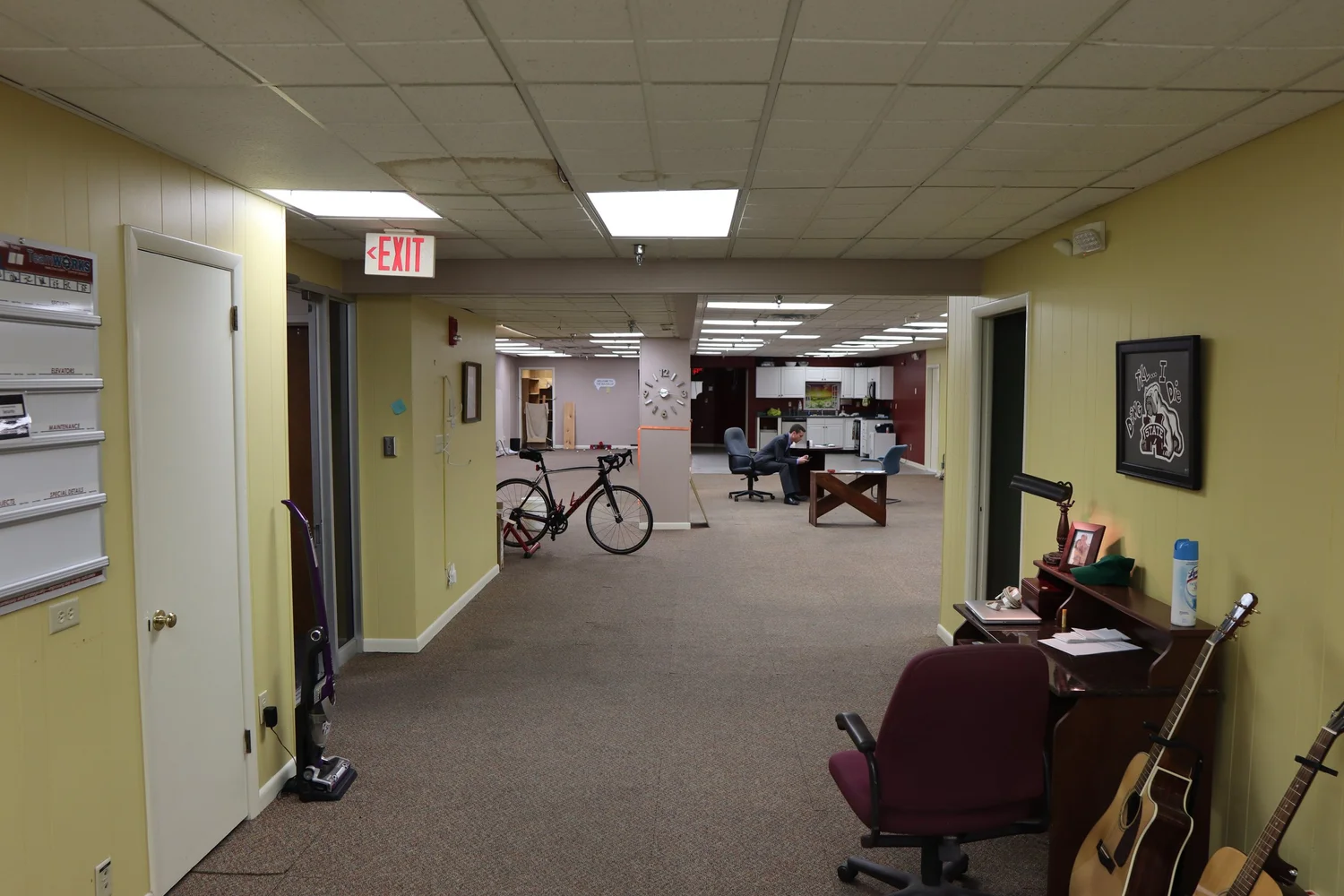
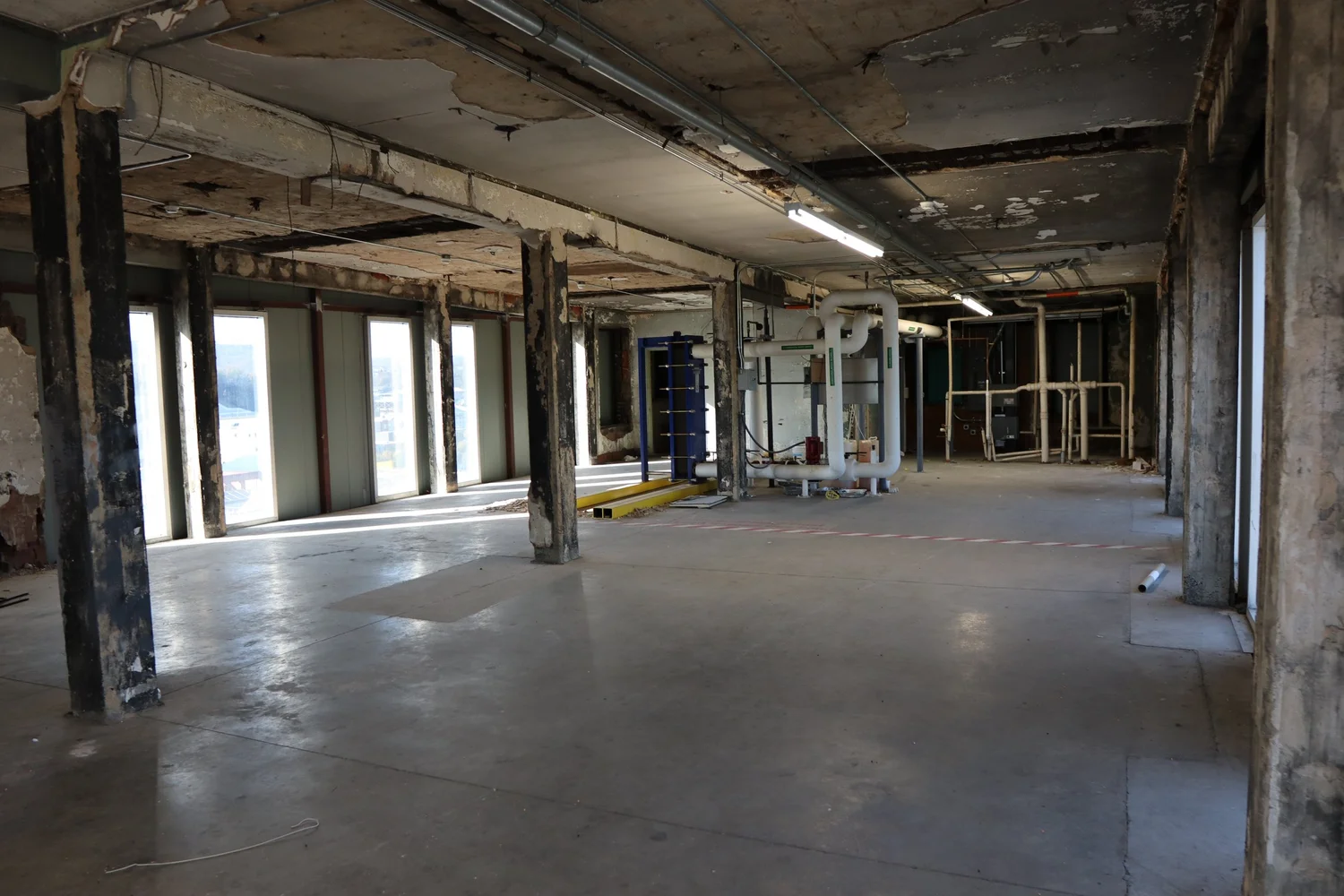
Here's where things got complicated. When you convert an office building into residential, it's not as simple as building out units and throwing in some appliances. The second you change the use of a building, you have to bring it up completely to modern code. For Newell Tower, that meant all new electrical, mechanical, and plumbing systems. Old office buildings weren't designed to handle dozens of kitchens and bathrooms. In office buildings, bathrooms are usually stacked in one location, while apartments need plumbing in every single unit. We also had to navigate city approvals for the change of use, which can take months if not years. Fortunately, we already had the right zoning.
One challenge that surprised us was the noise issue. If the entire building were apartments, the acoustics wouldn't matter as much. But because we had office floors adjacent to residential floors, we had to think carefully about sound transfer. Someone wearing heels on the concrete in an office above your apartment would reverberate through the floor. We spent a lot of time working through where to put carpet tile, how to handle the acoustical ceilings, and making sure the commercial floors were better soundproofed than the residential floors.
On the design side, we leaned into the building's 1915 character. We scraped the old plaster off the walls, threw a clear coat on the aged surfaces, and left the exposed brick and original textures for tenants to enjoy. We stained the concrete floors instead of installing carpet (which has to be replaced frequently). We left most of the ceilings exposed and switched from incandescent to LED lighting. The goal was selections that would maintain the longevity of the property while celebrating the history.
We also planned to tear out the windows that the county had filled in and bring daylight back into the apartments. The demo itself was brutal. Everything had to come down the stairs of a nine-story tower. No freight elevator, no easy way out. But watching the walls come down and seeing that beautiful exposed brick emerge, the original marble, those concrete floors: it was worth it.
All told, we spent about $600,000 on demolition, architectural plans, design, and carry costs over roughly 15 months. Our all-in basis on the project was approximately $2.4 million. This was a project that was going to take years and cost millions more to complete. We were all in.
And then everything changed again.
The $4.6 Million Exit Nobody Saw Coming
I didn't list the property. I didn't run ads. I wasn't even trying to sell it. But out of nowhere, I get a text. The guy on the other end had worked on this building before and was interested in buying it. His problem? He didn't even know it was available for sale. This is the power of off market deals: when a property isn't publicly listed, there's no bidding war, no competition, no sense of urgency. Buyers assume it's not an option until they hear otherwise.
So he asks me, "What would you sell it for?" I threw out a number I thought was high, one that I figured he'd push back on and move on from: $4.5 million. Instead, he instantly accepted it. And that's when I realized I should have asked for more. Pretty big lesson learned: always aim higher.
The buyer was under contract, but then the extensions started. They needed more time to close. Fine, we extended. Then they needed more time again. After a couple of extensions, we were starting to wonder if this buyer was seriously going to close or if they were just stringing us along. When you're in that position as the seller, you have to protect yourself.
So we told them: you can have another extension, but it's going to cost you. We had them put down an extra $100,000 as a nonrefundable deposit, and it wouldn't be applicable to the purchase price. That means even if they did close, that $100K was ours on top of the sale price. And if they walked away, we'd still pocket it. That's how you make sure a buyer has real skin in the game.
Even after that, the deal almost fell apart. The buyer continued to struggle getting their financing together. More delays, more excuses, more last-minute scrambling. At one point they even threatened to sue us if we didn't work with them. Here's a pro tip: when someone threatens legal action during a deal, you better have an A+ legal team in your corner. Fortunately, I did. We held firm, didn't budge, and forced them to close.
The Final Numbers
Purchase Price
$1,800,000
Total Invested
$2,400,000
Demo, plans, carry costs
Sale Price
$4,600,000
Gross Profit
$2,200,000
15-month hold period. Project never completed. Returns equaled our 7-year projections.
We also seller-financed a portion of the deal to the buyer, which meant we weren't just collecting a lump sum at closing. We had continued cash flow from interest payments coming in every month, and we built in a 3% prepayment penalty if they wanted to pay off the note early. When they eventually did pay it off, that penalty alone was nearly $80,000. That's the kind of deal structuring that separates experienced investors from beginners: you create multiple profit centers within a single transaction.
In 15 months, we achieved returns that our original projections said would take seven years. And we never even finished the project.
What Came Next: From Newell Tower to Peerless Mill
Here's the part of the story that still amazes me. The contractor who did the demolition work for Newell Tower came to me and said he knew of another off market opportunity. That conversation led directly to us purchasing Peerless Mill. No brokers ever touched either deal. One Instagram story snowballed into two major acquisitions, millions of dollars in value creation, and a whole new market for our portfolio. That's networking in commercial real estate.
What still amazes me is how the investors reacted. After the distributions went out, several of them reached out asking to roll their entire investment, gains and all, right back into the next project. That's when you know you did something right. When your investors don't just want their money back but want to put even more in, that's the highest compliment you can get as a syndicator. And it's exactly how you build a track record that lets you take on bigger and bigger deals over time.
5 Lessons From a $2.2 Million Deal
1. Find off market deals through your network. This entire deal started with a simple Instagram post. That's it. A quick story and it led to a multi-million dollar opportunity. Deals aren't on Zillow. They're not always on LoopNet or Crexi. Sometimes the best ones are in your network. If you're not out there talking to people, networking, and making connections, you could be missing out on the best deals in the game.
2. Raise capital to scale. If I had put all of my own money into this deal, I never would have been able to do it. But by raising capital in $50,000 to $100,000 chunks through a real estate syndication, I was able to take down a much bigger project without overextending myself. Investors are out there and they want to invest in these deals. Just let them know you raise capital for them.
3. Have a plan, but be ready to pivot. We went from offices to apartments to a full-out flip and sale. Every single pivot made us more money. Don't get emotionally attached to your original plan. If the numbers tell you to change course, listen to them. This is a game that's not governed by emotion. It's all about the numbers.
4. Negotiations are key. When the bank backed out, we didn't panic. We pivoted to seller financing and got better terms. When the buyer needed an extension, we didn't just agree. We made them put down $100,000 nonrefundable and non-applicable to the purchase price. The best investors don't just find great deals. They create them through negotiations.
5. Always do your due diligence in a new market. Chattanooga was my first deal outside Nashville. Before pulling the trigger, I met with city officials, local investors, and business owners. I learned about the fiber internet infrastructure, the startup ecosystem, and the residential demand near UTC. That research is what gave me the confidence to move fast when the opportunity presented itself.
Key Takeaways
Off market deals start with relationships. A single Instagram story led to a $2.2 million profit. Build your network, stay visible, and always let people know what you're looking for.
Seller financing can save a deal. When the bank backed out one week before closing, seller financing at 5% interest-only ended up being better than the original bank loan.
Office to residential conversion is complex but valuable. New MEP systems, code compliance, soundproofing, and city approvals are required, but the value creation potential is enormous.
Know when to sell. We achieved our 7-year projected returns in 15 months. When the numbers say take the win, take the win. Don't let ego keep you in a deal longer than the math supports.
Every deal opens the next one. The Newell Tower demo contractor introduced us to Peerless Mill. Your current project is always the pipeline for your next one.
Adaptive reuse rewards patience and creativity. A 1915 hotel turned county office building turned micro apartment development turned $4.6M sale. The best deals require you to see potential that others can't.
This case study is compiled from multiple videos on the Tyler Cauble YouTube channel documenting the entire Newell Tower journey from acquisition through sale. Want to see more real deal breakdowns? Subscribe and catch Office Hours live every Tuesday at 8:30 a.m. CST.
Want to Do Deals Like This?
Join the CRE Accelerator Mastermind for step-by-step coaching on finding off market deals, raising capital, underwriting projects, and building a commercial real estate portfolio.
Apply at CRECentral.comAbout Tyler Cauble
Tyler Cauble is a commercial real estate broker, investor, and developer based in Nashville, Tennessee. As the founder of The Cauble Group, he has acquired over 2 million square feet of industrial, retail, and office properties. Tyler is the author of Open for Business: The Insider's Guide to Leasing Commercial Real Estate and the host of the Commercial Real Estate Investor podcast. Through his CRE Accelerator mastermind at CRECentral.com, he coaches investors at every stage of their commercial real estate journey.