Market Predictions for 2022 with Nathan Weinberg
Nathan has always been a bit of a nomad. “I was born in St. Paul, MN, then lived in Seattle, Boise, Oakland and the Bay Area, Washington DC and Annapolis. All the moving around created a strong ability to adapt to my environment and connect with people”. Nathan started his professional career in the hospitality industry, working for Ritz Carlton and other luxury brands. At the end of 2008, Nathan’s wife was offered a job transfer to Nashville. He immediately fell in love with the city. “At that time, Nashville was just starting this “It City” transformation. It felt like the start of something big – and that was quite appealing.” Once settled in Nashville, Nathan felt the urge to switch things up, so he went into real estate. “It was the spring of 2009, and due to the economic recession, so many realtors were leaving the industry. Some people thought I was nuts to get into real estate. But it was the best time to really dig deep, hone my selling skills, and learn from the industry veterans who were sticking it out.” Fast forward a few years to when Nathan teamed up with his business partner, Steve Mabee. They started as a real estate team and then quickly moved into development, with a specific focus on urban infill. They could see the immediate need for their new business. While focusing on infill development, primarily on the east side of Nashville, Nathan continued working with clients on buying and selling their homes. In 2017, Nathan and Steve launched Greenline Property Management with the opening of their first apartment building, The Volta, in Inglewood. With their focus on infill development, residential sales and now commercial development, Nathan and Steve opened their own brokerage, MW Real Estate Co, with Steve’s brother Davey in May 2017.
Self storage is one of the best asset classes out there, but most investors leave the biggest gains on the table. They buy a facility, raise rents, run it a little better, and call it a day.
That works. It just doesn’t get you to a 5x return. The real money is in adding units. In this episode I sit down with Jamie from Storage Designer to walk through a 105-unit facility we bought in Madison, just outside Nashville, for about $1.7M. It came with extra land, truck parking, and a couple of vacant lots already graded and ready to go. We pull up real CAD designs and work through three different layouts live, weighing unit count against truck access, customer experience, and code. Then we run the numbers.
Most commercial real estate investors are fishing the same picked-over pool on Crexi and LoopNet, then wondering why nothing pencils. The best deals never get there. In this episode I'm breaking down the three channels off-market CRE deals actually live in, why brokers preview the good ones to a small list of buyers before any listing site sees them, and a real deal from inside the CRE Accelerator: a $1.5M off-market RV park that's projected to be worth over $5M after a turnaround. The seller never listed it. No broker ever marketed it.
A member of ours found it through direct outreach to the owner. If you're an active investor who keeps losing bids on listed deals or feels like everything you see is already overpriced, this one's for you.
In February 2019, I wired $575,000 to a title company and closed on my first commercial property. A former community bank in a Nashville suburb that two different buyers had already walked away from. For the next year, I questioned whether I'd just made the biggest mistake of my life.
Most investors hear "1031 exchange" and immediately think the same thing:
Avoid capital gains taxes.
And while that's true, it's also why so many investors use the strategy incorrectly.
A 1031 exchange is one of the most powerful wealth-building tools in real estate, but it should be part of a long-term portfolio strategy, not a last-minute reaction when you're getting ready to sell a property.
Before most investors ever make an offer, they convince themselves there are no deals left.
The market is too competitive.
Prices are too high.
Everything worth buying is already gone.
So in this Office Hours session, I decided to test that theory.
Ray Smith built a portfolio of 100 single-family rentals paying him 35% a year. He's a year and a half into a three-year plan to sell every single one.
This conversation is the most honest take I've heard on what it actually costs a residential investor to make the jump into commercial.
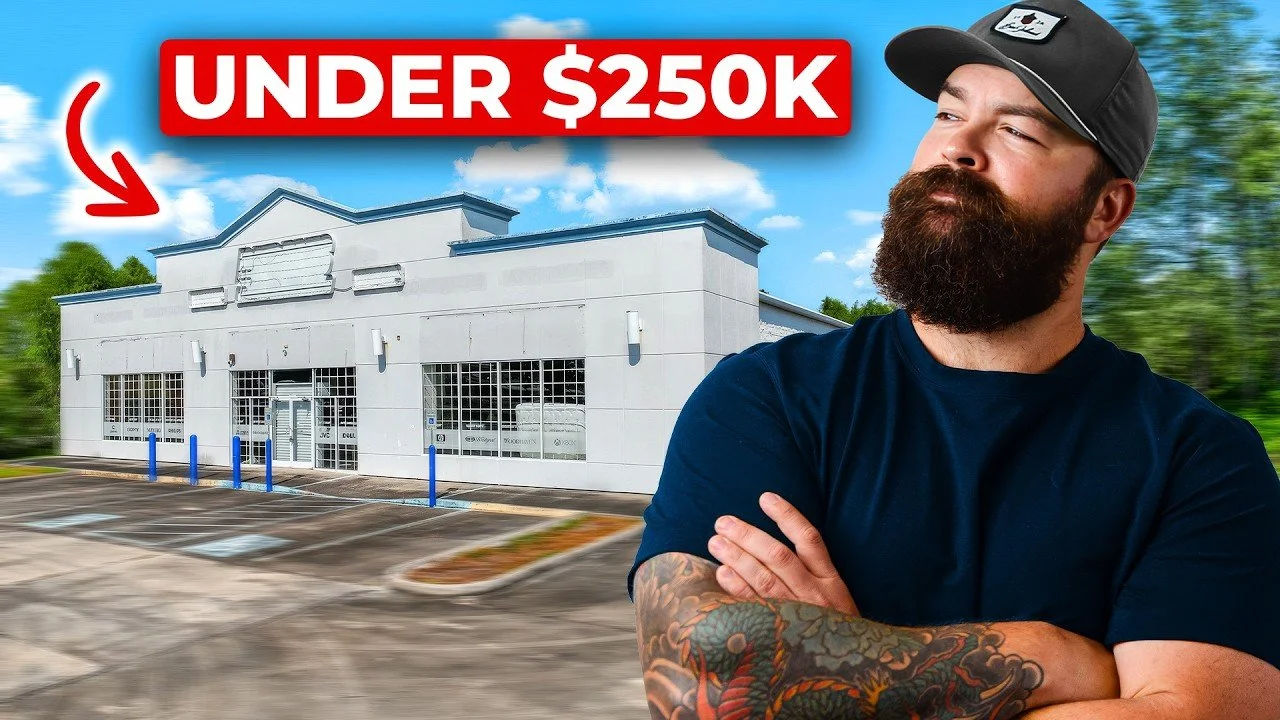
Chris Thorndike bought a rundown $400K warehouse in Gainesville, Florida and converted it into six micro retail suites. Over 120 people applied to rent the six spaces. It has not had a single vacancy in two and a half years. Most investors would have moved on and gone hunting for the next deal. Chris almost did too. Then he looked a little closer at what he already owned.
Most high earners don’t have an income problem.
They have a tax problem.
And commercial real estate investors play by a completely different set of rules.
In this week’s Office Hours, I break down one of the most powerful tax strategies in real estate: cost segregation. Not the surface-level version people throw around online, but how it actually works in practice and why investors use it to create massive first-year tax savings.
If you've been waiting for the right time to buy commercial real estate, this is it - join the CRE Accelerator Mastermind and I'll help you make it happen: https://accelerator.crecentral.com/OO I'm Selling Everything: https://www.youtube.com/watch?v=YJx58bOo5g0 Graham Stephan just made the case for commercial real estate and I don't think he realized he did it. In his recent video "I'm Selling Everything," Graham walked through exactly why he's exiting his entire LA rental portfolio: 4-5% cash flow on equity, the $400 permit fee to replace a $500 fence, the constant "background noise" of being a residential landlord, and a California regulatory environment that's actively pushing capital out of housing.
Most investors focus on making more money. Sophisticated real estate investors focus on keeping more of it.
In this episode, we break down the tax strategies commercial real estate investors use to build long-term wealth while legally minimizing taxes. From depreciation and cost segregation to 1031 exchanges and refinancing strategies, this conversation covers the exact framework many high-net-worth investors use to compound their portfolios faster.