
The Hidden Economics Behind Parking Lots
Most investors overlook one of the simplest and most profitable business models in commercial real estate: monetizing land.
In 2008, Chicago sold the rights to 36,000 parking meters for $1.15 billion. By 2025, the buyers had already collected every dollar back, plus roughly $500 million in profit, with decades of revenue still ahead. The city did not realize it was sitting on a land based cash flow machine.That deal is a clear reminder of a bigger truth in CRE. Some of the most boring properties quietly outperform the flashy ones.
In this video, we break down how simple asphalt lots, parking meters, and industrial outdoor storage evolved into billion dollar assets, and why these land only plays keep winning. Low maintenance. Captive demand. Strong margins. Steady cash flow today, plus long term appreciation in the dirt underneath.
If you are chasing stability, simplicity, and upside tied to scarcity and inflation, land monetization deserves a serious look. The opportunity is not in reinventing real estate. It is in charging for land everyone else ignores.
Get commercial real estate coaching, courses, and community to jumpstart your investment journey over at CRE Central: www.crecentral.com
Key Takeaways:
Chicago’s 2008 parking meter deal resulted in lost long-term revenue for the city, with investors earning profits and retaining rights for decades.
Monroe Carroll, Sr.’s initiative to monetize underused railroad land in the 1950s evolved into Central Parking, benefiting from legal requirements and the car boom.
The parking lot industry grew due to high operating margins, captive demand, and minimal maintenance, drawing attention from Wall Street and institutional investors.
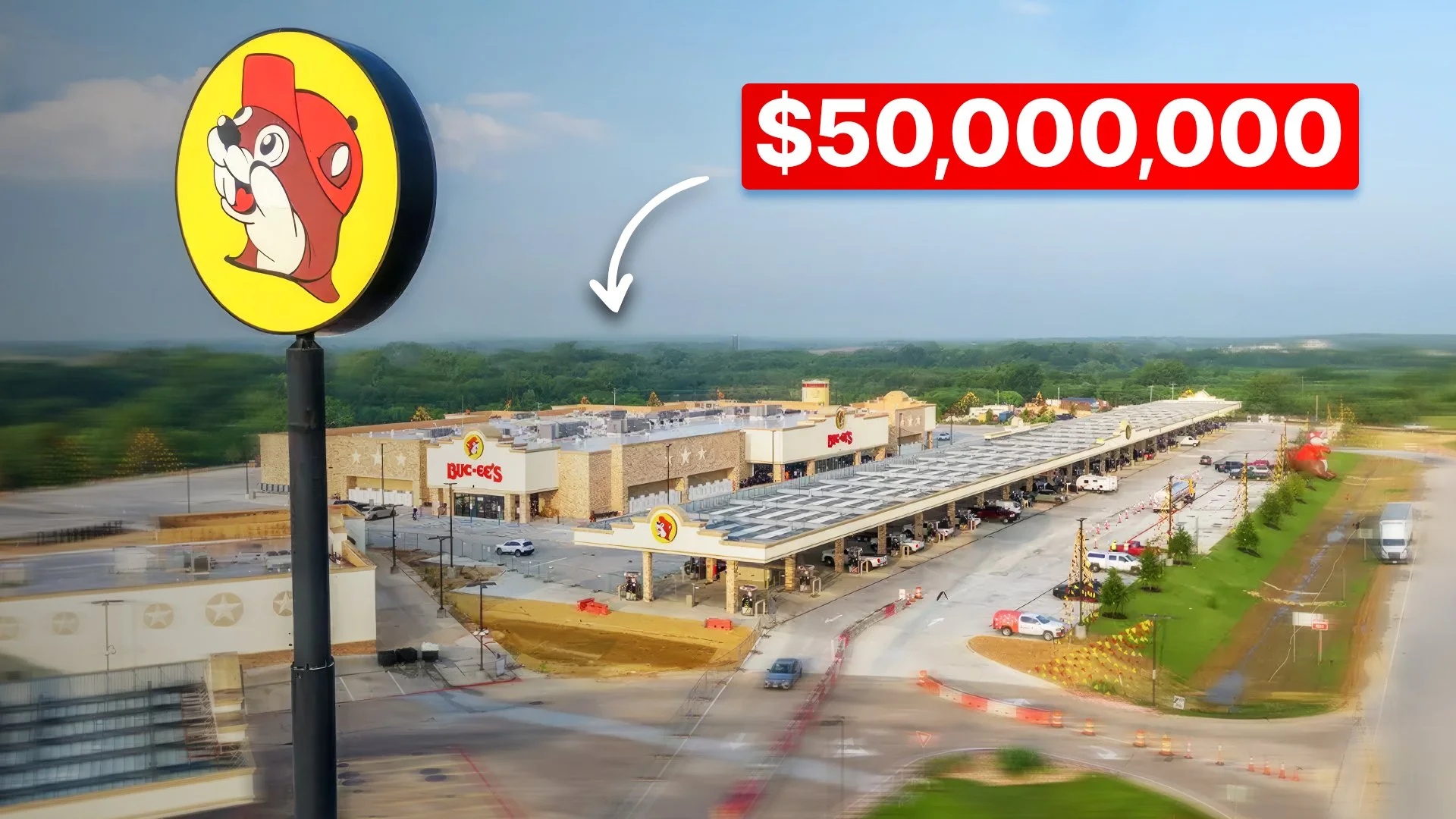
The business model has expanded into industrial outdoor storage, supported by trends like e-commerce growth and infrastructure investment, resulting in surging demand and rental rates.
Operators have adapted to changes such as ride-sharing and eliminated parking minimums by introducing new uses: EV charging hubs, multi-purpose lots, and last-mile logistics.
The enduring insight: overlooked, low-competition “boring” businesses (like parking lots and storage yards) can offer stable, significant long-term returns for savvy investors.


About Your Host:
Tyler Cauble, Founder & President of The Cauble Group, is a commercial real estate broker and investor based in East Nashville. He’s the best selling author of Open for Business: The Insider’s Guide to Leasing Commercial Real Estate and has focused his career on serving commercial real estate investors.
Episode Transcript:
Tyler Cauble 0:00
Tyler Cauble 0:00
In 2008 Chicago sold the rights to 36,000 parking meters for $1.15
Speaker 1 0:07
billion NBC five investigates wanted to know just how much has the city lost out on this deal. The city gave up
Tyler Cauble 0:13
more than seven decades of revenue. At the time, city officials celebrated the windfall. They sold it to address the deficit in their budget and avoid the need to raise property taxes, but they're not celebrating anymore. By 2025 those investors had collected every dollar back, plus $500 million in profit, with 60 years still left to collect, Chicago got absolutely fleeced. Those officials completely underestimated the business that they were sitting on. So how did blank asphalt and coin operated meters become one of the most lucrative investments in modern American history? The answer starts in Nashville, Tennessee, in 1952 with an office worker who just wanted to make some extra money on the side. You
Tyler Cauble 1:06
Monroe Carroll, Sr, was an office worker for the Nashville, Chattanooga and St Louis railway. When he saw an opportunity in the 1950s that boring office job gave him something valuable, access the railroad owned land all over the country, properties in downtown areas that weren't being fully utilized, surplus land that they just weren't doing anything with. Carroll had a simple thought, what if I lease some of that land and charge people to park on it? In the early 1950s he leased a piece of railroad property in downtown Nashville and operated it as a parking lot. Business was good enough that he brought in Roy Dennis, another railroad employee, with the same access to the same surplus land. Together, they leased more railroad properties, large parking lots in St Louis, Atlanta and Nashville. They named their little side venture central parking now, Carroll didn't know it at the time, but his timing was about to become perfect, because the US government was about to hand him and every other parking lot operator in America an incredible gift. In 1956 President Eisenhower's Federal Highway Act unleashed what became known as a freeway building frenzy that fundamentally restructured how Americans lived, worked. Car ownership exploded. Highways connected every major city. Suburbanization took off, and cities had no idea what to do with all of these cars. Cities started writing parking minimums, two parking spaces required per apartment, one space per 200 square feet of retail, four spaces per 1000 square feet of restaurant space. They literally made it illegal to build anything without providing massive amounts of parking. America would eventually build about 2 billion parking spots, seven for every car on the road. Overnight parking went from nice to have to legally required. Think about what this meant for someone like Carol, he stumbled into a side business that the government had just made mandatory. Every new building needed parking demand was guaranteed by law. By 1967 the business had grown enough that Carroll's son Monroe Jr left his job as an electrical engineer at the duck river electric cooperative to join central parking full time. But here's the thing that matters most, Carol didn't have some unique insight about parking patterns or urban planning. He was just a railroad guy who looked at the surplus land his employer owned and thought, I could charge people money to use this. That's it. That's the whole insight, access to an underutilized asset, plus a willingness to monetize. And that exact same opportunity was sitting in front of hundreds of other operators all across America. They just needed to look at the land nobody else wanted and ask, can I charge for this? That's why parking businesses quietly grew through the 60s and 70s, and then exploded into empires by the 1980s standard parking in Chicago, lazy parking in the northeast, Ace parking in San Diego, and central parking in Nashville. Most Americans had never heard of any of them, but Wall Street was starting to pay attention, because parking lots had economics that most real estate investors were completely missing. Here's what most investors missed. They saw parking lots as unglamorous, overlooked real estate think about it from their perspective, you're competing with free street parking. Your product is literally just empty space. Real estate developers looked at parking lots the way that you might look at a lemonade stand, cute, maybe profitable for a kid, but not serious money. They completely misunderstood the economics. Here's what those early parking operators discovered. A surface parking lot requires almost zero maintenance, no roof that needs replacing, no HVAC. Systems breaking down. No tenants calling about plumbing issues. You pay it, lines on asphalt once every few years. That's basically it. The operating margins were exceptional. Industry data shows net operating income margins of 60 to 70% on well run facilities. Compare that to apartment buildings at 30 to 40% or restaurants at 10 to 15% but here's where it gets interesting. You could raise prices constantly because parking operates as a captive market with limited supply. If you work downtown and there are only three garages near your office, you have to use one of them. You can't exactly work from your car, so operators like Central parking would acquire a garage near major office buildings and gradually raise rates $10 becomes 12, becomes 15, becomes 20. What are people going to do? Not go to work by 1992 central parking was operating 225,000 spaces globally, running garages at London's Heathrow Airport and Malaysia's Petronas Towers Monroe Carroll Jr's pre tax income grew from $270,000 in 1980 to $3.6 million by 1991 according to company records, by 1996 the company posted revenues of $143
Tyler Cauble 6:24
million the year after they went public. Most Tennesseans had never heard of them, or any other parking lot operator for that matter, but Wall Street was already paying attention, because parking lots had one more advantage that nobody was talking about. Here's what made parking lots brilliant from an investment standpoint, they were making money today while waiting to make even more money tomorrow. Let me explain how this worked. Say you buy a surface lot in downtown Nashville for $2 million in 1985 you charge for parking and net about $200,000 a year after expenses. That's a solid 10% annual return. But that lot is sitting on land that is getting more and more valuable every single year. Eventually, someone is going to want to build a high rise on it, and when they do, that $2 million lot might sell for 1020, or even $50 million depending on the city. So parking lots became this perfect asset class. You're collecting cash every day from parking fees while you're sitting on appreciating real estate and waiting for the highest offer. Wall Street loved this. Private Equity love this by the 2000s major deals started happening. A private equity firm took central parking private in 2007 investment funds started buying garages across the country. One industry report described it perfectly. Parking facilities offer stable, recurring, defensive cash flows linked to inflation through price increases. Translation. It's a cash machine that gets more valuable in good times and in bad times, but around 2018 some investors started asking a different question, what if we applied this same model to something other than cars? Look around any major city today and you'll see them, fence lots filled with shipping containers, truck yards packed with semi trailers, construction and equipment yards. They look like parking lots because that's exactly what they are welcome to industrial outdoor storage, or as the industry calls it, iOS, and it's become a $200 billion asset class that most people have never heard of. Here's what happened. Around 2018 investors noticed two massive trends colliding. First e commerce was exploding. Online shopping surged to 16% of all retail sales, a 33% jump from pre pandemic levels. All those Amazon packages need warehouses, but more importantly, they need places to park delivery trucks. Amazon FedEx ups, they all needed staging areas for their fleets, places to park hundreds of vans overnight, places to swap trailers around. Second, the US government passed a $1.2 trillion infrastructure bill. Suddenly, construction companies had more work than they could handle. But where do you store excavators between jobs? Where do you keep pallets of pipes and materials you need outdoor storage lots. So demand for these industrial parking lots went through the roof. But just like with car parking in the 1950s cities didn't want them. They didn't want open air truck yards in their neighborhoods, zoning made it nearly impossible to build new ones. Supply was completely restricted while demand was exploding. The result, vacancy rates dropped below 3% by 2022 essentially zero availability. Rents jumped 30% from late 2019 to mid 2023 according to industry data in the most coveted locations, rents are up 100 23% since 2020 and the economics that made car parking so profitable they also applied here. Low operating costs. It's just land and a fence, minimal maintenance, no buildings to fix, triple net leases, tenants pay all the expenses. Captive customers. Logistics companies need these yards. Industry data shows iOS properties trading at Cap rates of six to 8% a meaningful yield premium over traditional warehouses, which were trading closer to four or 5% so institutional money flooded in. JP Morgan committed one and a half billion dollars through a joint venture TPG and Angelo Gordon announced over a billion dollars in commitments, even Middle Eastern sovereign wealth funds started buying us truck yards, the parking lot business had evolved. It wasn't just about cars anymore. It was about applying the same fundamental insight, find empty land, charge people to park their stuff there, collect cash while the land appreciates. But this raises an obvious question is the parking lot gold rush over what happens when ride sharing replaces car ownership, when electric vehicles change everything, or when cities eliminate parking requirements? Here's what everyone worried about in 2015 Uber and Lyft are going to kill parking lots, and they were partially right. One parking operator in San Diego reported significant drops, hotel parking down five to 10% restaurant valet down 25% nightclub valet down 50% people were taking Ubers instead of parking. Cities started eliminating parking minimums. San Jose, California, a city of 1 million people, completely abolished parking requirements in 2022 California, soon after, passed a statewide law banning such requirements near transit. The narrative was clear, parking lots were dying, but the best operators saw something different. They weren't thinking about the past of parking lots. They were thinking about what parking lots could become. Look at what's happening now. First, EV charging hubs, every parking lot in America could become an electric vehicle charging station. Fleet operators need places to charge hundreds of delivery vans overnight that requires parking lots with massive electrical capacity. Some operators are installing solar canopies that both provide shade and generate electricity, creating two revenue streams from the same space second, multi use optimization. Parking lots that serve office workers by day now host farmers markets on weekends. Some lease space to food trucks at night. Others are adding last mile distribution lockers for Package pickup. One company reef technology, backed by Softbank, went on a spree leasing urban parking lots and garages to host ghost kitchens and micro fulfillment centers. The lot itself becomes a platform for multiple revenue streams. Third, and here's the irony, as cities eliminate parking minimums and stop building new parking the existing parking lots become infinitely more valuable. It's simple supply and demand. If a city stops adding parking but keeps adding people and businesses, the parking that remains can charge whatever it wants. The investors who bought in early like that Chicago parking meter deal, they're not worried about ride sharing or electric vehicles, because the fundamental economics haven't changed. People and businesses still need to park things, whether that's cars, trucks, equipment or shipping containers, and land in the right location with the right flexibility will always command a premium. But here's the critical insight, the reason parking lots became billion dollar businesses. Was never about the parking it was about understanding a pattern that most investors miss. The most boring businesses serving the most basic needs with the least competition often make the most money. Monroe Carroll in the early 1950s didn't invent anything. He didn't disrupt anything. He just had access to surplus railroad land, and he was willing to charge people to use it. That's it. While everyone else chased prestigious real estate, office towers, shopping malls, luxury apartments. He monetized asphalt and painted lines on it, while Wall Street chased tech stocks and hedge funds. A few investors bought parking meters and truck yards, the unsexy, overlooked corners of the economy, that's where they built their fortunes. Because wealth doesn't hide in the hottest places. It doesn't hide in whatever CNBC is talking about this week. It hides in the boring, forgettable businesses that solve simple problems and face almost no competition, parking lots, storage yards, laundromats, self storage facilities, cell tower sites. These aren't get rich quick businesses. They're Get Rich Slowly by solving an obvious problem that everyone takes for granted businesses. So next time you're in a parking lot, look around because someone owns it, and chances are the. Making a hell of a lot more money than you think. If this kind of thinking clicks with you, if you're starting to see how something as boring as a parking lot can turn into a cash flow machine, that's exactly what I teach inside the CRE accelerator. It's my commercial real estate mastermind, where I work directly with investors who want to start buying commercial properties. Step by step, we break down real deals, learn how to underwrite them, and build portfolios that actually create time freedom, not just another job, because the next boring opportunity that changes your life probably isn't hiding on Wall Street. It's sitting right there in your city behind a chain link fence, waiting for somebody who knows how to spot him. If you want to learn how, check out the CRE accelerator, you'll find that link in the description below.
Two identical commercial spaces. Same size, same property type, but one is worth $97,222 more because of how the lease is structured.
One rents for $14/SF triple net, while the other brings in $18/SF gross. You'd think the higher rent means a better investment, right?
Not necessarily.