
If You Can’t Find Deals, This Is Probably Why | Office Hours
If you can’t find good deals right now, it’s probably not the market.
It’s probably your filter.
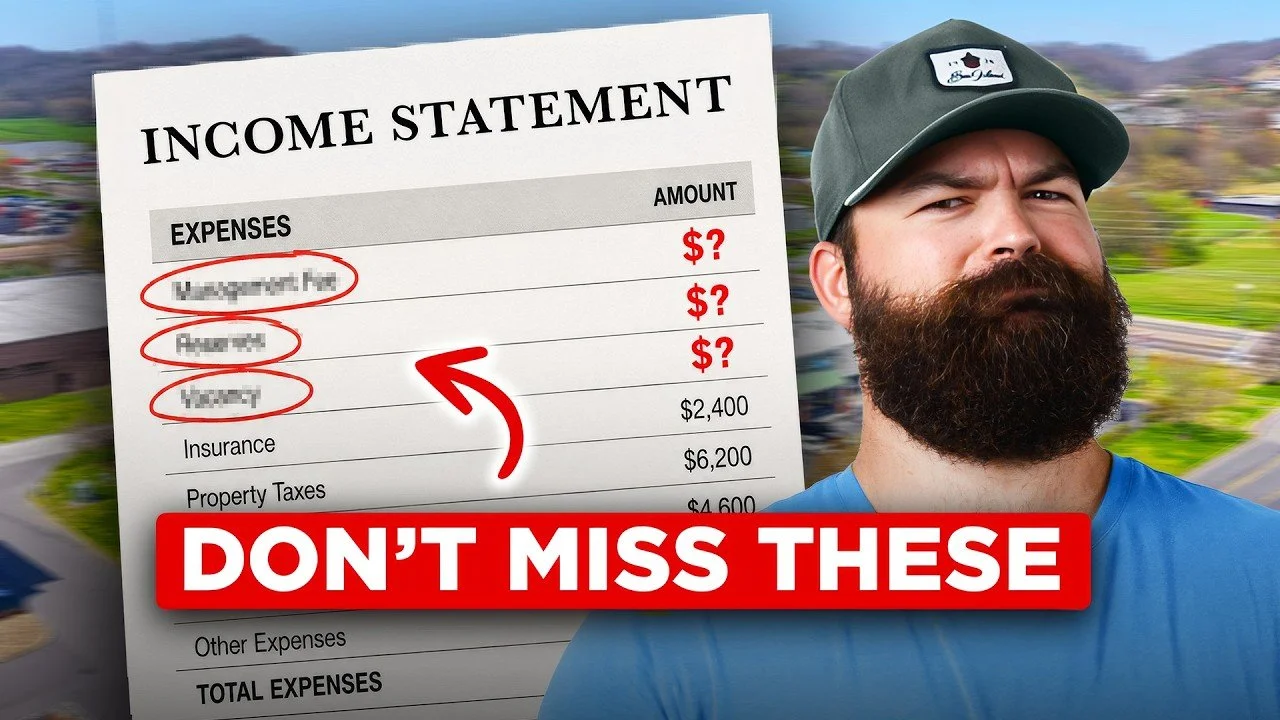
Most investors say they “want a deal” but they don’t have a defined Buy Box, clear red flags, or a fast way to screen opportunities. So they chase everything, underwrite endlessly, and burn out before they ever submit an LOI.
In this video, I’ll walk you through the exact deal filter system I use and teach inside the CRE Accelerator:
How to build a detailed Buy Box that brokers actually respect
Why your red flag list is just as important as your criteria
My 60-second “back of napkin” math to instantly spot real opportunities
How to narrow 100 deals down to the 1 to 5 that are actually worth underwriting
When you don’t define what you’re buying, you end up analyzing everything. That is the fastest way to stall out.
But when you get specific with asset type, size, location, cap rate targets, and deal killers, brokers start taking you seriously and you stop wasting time on properties that were never a fit to begin with.
If you’re tired of scrolling LoopNet and wondering why nothing works, this will show you how to tighten your criteria, move faster, and focus only on deals that match your goals.
Let’s get to work.
Get commercial real estate coaching, courses, and community to jumpstart your investment journey over at CRE Central: www.crecentral.com
Key Takeaways:
It is rarely the market. Most investors struggle because they look at everything instead of defining what they actually want.
Asset type, size, location, zoning, cap rate targets, tenant profile, and condition. The more specific you are, the more seriously brokers will take you.
A strong investor knows what they will not buy. If a deal hits a hard stop, walk away. There will always be another opportunity.
The goal is to shrink thousands of potential properties down to a focused list you can actively pursue.
Use simple back-of-napkin numbers to determine if rents and cap rates can realistically support your return targets. If it fails the quick test, move on.
You only need to fully analyze a handful each year. A strong filter helps you cut 100 opportunities down to the 1 to 5 that actually deserve your time.
When you present brokers with a clear Buy Box, you look like a closer, not a tire kicker. That alone increases the quality of deals you receive.


About Your Host:
Tyler Cauble, Founder & President of The Cauble Group, is a commercial real estate broker and investor based in East Nashville. He’s the best selling author of Open for Business: The Insider’s Guide to Leasing Commercial Real Estate and has focused his career on serving commercial real estate investors.
Episode Transcript:
Tyler Cauble 0:00
This episode of the commercial real estate investor podcast is brought to you by my cre accelerator mastermind, where you'll get access to my step by step investment blueprint, essentially a library of resources on how to invest in commercial real estate. You'll get connected to a supportive community of other commercial real estate investors that are doing projects just like you. You'll get personalized coaching and feedback from me every step of the way. Go to www.crecentral.com to learn more. If you feel like you're doing everything right and you're still not finding good commercial real estate deals, it's probably not the market. It's probably not because there's no good deals out there. It's probably because, not because interest rates are too high. Today, we're going to be breaking down why I see a lot of investors, especially obviously newer commercial real estate investors, getting stuck when they are getting into commercial real estate, and it's really because they don't have a deal filter, they're kind of going off on this shiny object syndrome and looking at literally any and every commercial deal that they can find on loop net or crack C or whatever. And not that there's anything wrong with using those websites to go and find deals. But if you're not filtering these down using a process that has proven to work time and time again no matter the industry, right? I mean, it's this works in mergers and acquisitions too. You're you're not going to find any deals. You're going to get burnt out. You're going to get tired of underwriting. You're never going to submit letters of intent, and you're never going to buy a commercial property. So I'm going to walk you guys today on this episode of office hours through my deal filter system. This is the same system that I teach to members of the CRE accelerator mastermind. I'll walk you guys through what is and what is a Buy Box. Everybody should have a Buy Box. It should be detailed. And I'm going to give you an example of Chris Thorn dykes. He's got an excellent Buy Box, both in a PDF and on his website. So you'll see both of those today. I'm going to talk about the red flag list. It is just as important on that Buy Box to have what you are not going to buy. Both for, you know, brokers to just not send you deals that way. But also, this is a list that you are going to stand by. If it is a red flag and a red one, it's 99 green flags and one red flag comes up. You should say no to that deal. We're going to talk about that today, and then I'm going to run you guys through my back of napkin numbers. You may have heard me talk about this before, but this is my deal filter system, the buy box, the red flags, and then my back of napkin numbers. I can run that math in less than 60 seconds to determine whether or not I should spend any more time on a deal, even if it checks all of my boxes. All right, that's a little bit of a teaser for today. Welcome back to office hours. This is our weekly episode where we go live on Tuesdays, 8:30am central standard time here on YouTube to answer your questions. I get a lot of emails. I get a lot of DMS from you all asking me, Hey, is this a good deal? How do I break into the industry? How do I go about? You know, become, should I become a broker, or should I get into property management? Should I go work for a developer? This is where I answer all of those questions, because if you have that question, chances are good somebody else does too. So feel free to jump in the comments, so let me know what questions you guys have today. We'll definitely be getting to those as well. Deborah is saying, can't wait to hear the new info. Thanks for your knowledge, absolutely. Deborah, thanks for being here. Really glad, glad to have you guys. I'm going to do things backwards today. I'll give some updates on me personally at the end, instead of diving into that here at the beginning, let's go ahead and get into the deal filter system. So what is a Buy Box? Well, a Buy Box is a list of criteria that determines what you are willing to buy. If you have not specified. I mean, it's like going on a road trip and not really figuring out where you're going. Like, what's the destination? How do you know which direction to go? Right? Sure you can kind of go anywhere, and you can have a fun road trip, but it's not going to be as productive if you said, Okay, I'm going from Nashville to Texas. What's the most efficient route to get there? When we're investing, we want the most efficient means by which we're going to deploy our capital, right? Because that's how we're going to get the best returns. So a Buy Box is your criteria, which is, you know, hey, what type of assets am I going to invest in? Is it industrial? Is it office? Is it retail? Is it hospitality, you know? I mean, hey, maybe it's multifamily. But if you're, if you're wanting to invest in multifamily, you're obviously on the wrong show. It could be the size I want to buy. Something that's five to 10,000 square feet, it could be the zip codes in which you are looking to invest in. There are all sorts of different ways that you can actually create a Buy Box. There's no one perfect Buy Box or one way to do this. It's just a simple way of narrowing down your search. Because look, if I looked for all industrial properties in. Middle Tennessee, we're pulling up 1000s and 1000s of properties, everything from something, you know, a 1200 square foot, you know, shack that was built in the 1960s on 10 acres of land, all the way to 150,000 plus square feet, brand new class, a construction with three tenants in it, right? Yeah, sure. They're both industrial. Those are two very, very, very, very different types of deals, right? So you need to narrow that down. All right, let's pull up Chris's Buy Box. I'm going to walk you guys through what a great buy box is. So this is his PDF. All right, this is what he submits to brokers to other property owners so that they can have this on hand as they're going out and finding deals, so that they know exactly what they need to be putting in front of Chris. It says, what I'm buying. He's looking for retail and service flex. His target location is within 20 miles of three to 605, by the way, if you're in Gainesville, Florida, and you have any deals, reach out to Chris, right? There's a QR code at the bottom of this. Send him some deals. I'm sure he'd love that. Zoning must allow for home, health and professional service businesses, building criteria size, minimum 3000 square feet, with a maximum of 20,000 square feet, right? So obviously, he's willing to go smaller on the retail side, which he specifies here, and larger on the warehouse side, because if you're going for a 20,000 square foot retail building, that's going to be substantially more expensive than a 3000 square foot warehouse, right? So he's specifying that he's in Florida, so he wants to buy buildings that are concrete block or steel and that are moderate to heavy value add, right? He doesn't want to buy something that's brand new construction. You can see as we're going through this criteria, it is starting to eliminate more and more properties, all right, which is exactly what you want. You don't want to be shotgun marketing to 5000 assets. Here's the thing, at any given time, roughly 5% of the commercial buildings on whatever your list is are willing to trade. That doesn't mean that they'll actually sell. That just means that they're willing to entertain a conversation. So if you have 1000 properties on your list, roughly 50 of them are willing to have a conversation. All right, all you need is one of those 50 every single year. So 1000 properties is probably plenty, right? So try, I tell everybody, try and narrow your list down to between one and 3000 depending on how many properties you're trying to buy every year, right? And now you know that list. You can give it to brokers. You can have them cold call. You can hire a VA to make the cold calls for you. You can send them mailers. There's all sorts of things that you can do, all right, but this is, this is on the more active side, the buy box, though. You can just give it to all the brokers. Go out and find every single broker that you possibly can and just give them your Buy Box. All right. Cap rate. He's looking for something that's a seven to 8% after stabilization. So why is that important? Well, if he is buying something that's, let's say, 19 miles away from the zip code that he's in, right? So it still checks his Buy Box, but it's in the middle of nowhere. And after stabilization, he's only able to get a local credit tenant, and it's going to be a 9% cap rate, you know, on sale like who would buy a 7% cap rate deal in the middle of nowhere with a local tenant, probably not going to be worth it for him. He prefers his buildings to be vacant if there is anything in there. He wants triple net full service if the utilities are shared. And then look at this. He's got the his hard stops and deal killers. So these are the red flags that are probably going to kill a deal, maybe not necessarily, right off the bat, if it's just one of these flags, but I typically say like, Hey, if it, if any of these red flags come up, you should probably consider killing the deal. Right? That's the whole point of having Buy Box criteria is that you're not going to bend it for every deal that comes across your desk, because I promise there are so many deals out there, so many deals out there. You don't need to bend your rules to make one work. I promise you, if you learn how to look at and analyze deals, there's going to be plenty of opportunities out there. All right, so we've covered the buy box. He's got his red flags on this Buy Box. So this is basically step two of the deal filter system. All right.
Tyler Cauble 9:29
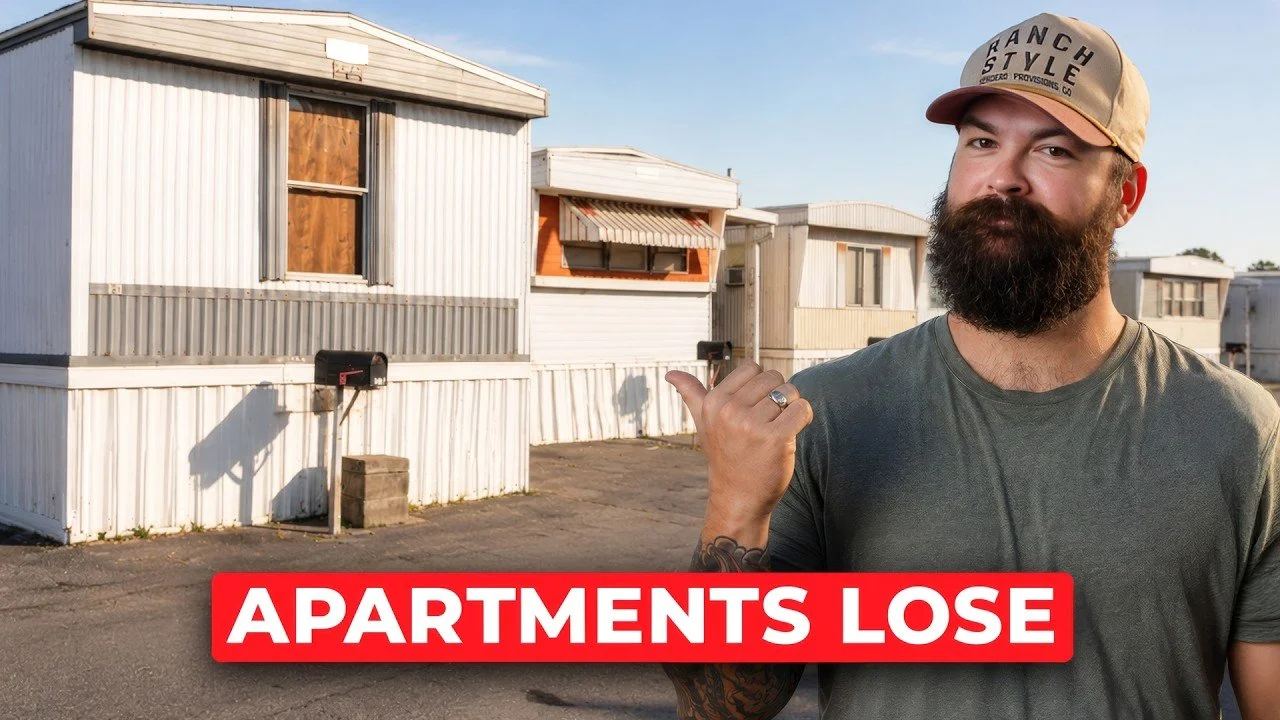
So his red flags include properties that are outside his radius, obviously, right? Chris doesn't want to look at a deal in Texas. He's in Gainesville, Florida. All right. Cap rate below eight and a half percent with no value add pathway. So he's willing to buy something stabilized, or a little more stabilized, maybe with tenants in place, as long as there is a way for him to add another tenant, increase rents right, increase that noi, and therefore increase the value of the property. He's wanting to actively create equity. We equity. We call that forced equity in commercial real estate, right? Because, you know, unlike residential where you have to wait for the cops in the neighborhood to go up in value, which is like three to 5% on average per year, there's some neighborhoods, of course, that will go up faster than that. In commercial real estate, if we just increase the noi, we can increase the value overnight. I mean, I had a deal that I bought, and I've talked about this before, but we bought it for $435,000 it was vacant, 2200 square foot retail building here in Nashville, a couple miles away from me, actually, here in East Nashville, and I bought this in 2020 we bought it for 435, I signed a lease before we closed, and the bank appraised it at $650,000 because we had that lease in place, nobody was paying me any money, yet the place still needed to be built out. But we had a lease, a legally binding contract, with a tenant who said they were going to pay us X amount of rent every single month, and that made the property worth over $200,000 more than what we were buying it for. All right, let's see major structural issues or full redevelopment projects. That's a lot of work. That's a lot of work to have to deal with. And I'll be honest with you, you know, we talk all the time like, should I get into ground up construction and development, or should I do value add? And in my opinion, I mean value add is absolutely the path to go. It's typically faster. Whoops, sorry guys, it's typically faster, and it's not nearly as much of a headache. And honestly, if you find the right deal, you can get just as good a returns, maybe a little bit lower. Obviously, because development, you're creating a substantial amount of value, but it's not going to take a whole lot of time. It's far less risk. I like the risk adjusted returns of value add more than I do development. He doesn't want to look at anything with that doesn't have access to city water or sewer. Ask Chris how he found that out and added that as a red flag to his criteria. By the way, this Buy Box, these red flags, these hard stop deal killers, it's a living document, right? He added that after the fact, because we were looking at a deal for him, where it made a lot, excuse me, it made a lot of sense, right? It checked all of his boxes when he started digging into it. It was a commercial property that was still on septic, which, like isn't permitted nowadays, obviously. As he started digging into it, the city said, Oh, you're going to have to run to have to run city water and sewer to this property, which was going to cost him hundreds of 1000s of dollars. So sometimes you can have very, very, very specific red flags, just depending on your experiences as an owner, right? He doesn't want to look at anything that has zoning restrictions on his target tenant uses and, of course, long term under market leases with no near term upside, right? We don't want something that's 10 years remaining on a lease that's, you know, 50% under market already, because there's just nothing that he can do there to increase that value. Now, here's what I think is really cool. All right, Chris has this on his website, so when he's talking to brokers, he will send them a PDF, and then he'll send them this link to his website, where they can actually click a button and submit a property to them. All right. You guys could do this as well, all right. And if you guys want to see his website, it's mcthorne properties.com and that's m, C, T, H, O, R, N, mcthorne properties.com so he just goes through his buy box here again, and he's actually got pictures on his website of buildings that he's done, and you just click Submit a property, and it takes you to a deal submission form. So pretty cool, very easy for him to share to his, you know, to his brokers, to other sellers, etc. So if you don't have something like this put together, you're not doing yourself any favors with brokers or with people that are out there searching for deals. What you don't want to be is the person that is going through talking to every single broker saying, I want to look at anything that you think is a deal. Well, so does every single other person that has put anything in front of them. All right. But when Chris presents this, his PDF, his Buy Box, you know, on his website, when he presents that to a broker, that broker is immediately going to go, Oh, wow. Okay, this guy knows what he's doing. And the more specific you are, the more you're going to seem like you know what you're doing, right? So they know. Okay, if I get a building that checks this criteria, Chris is the first person that I'm calling, right? Because he clearly has it together. He's clearly done this before. This isn't just a random on a whim. I want to go invest in commercial real estate today kind of thing. All right, so pretty big deal for you, if you're maybe struggling to build a relationship with brokers, put a Buy Box together. Make sure that you also include your red flags. And it's a good thing for you to sit down and think through anyway. What do you want to buy? What do you not want to buy? Like, fill a sign. Ethically, like I would add on my if I don't have a Buy Box, because I, you know, I don't know, I probably should, but we're willing to invest in a variety of deals, so I've never really felt like putting one together. I used to, well, that's not true. I used to have one that was very, very specific, and it's just evolved over the years. On my Buy Box, I would have zero vape shops. I cannot stand vape shops I don't like, you know, those, those like, basically not hard money lenders, but the like check advanced check cashing places. All they do is prey upon neighborhoods, right? So unless they have a short term lease and I can kick their asses out. I don't want those types of tenants in my property. That's more of a philosophical view, right? That isn't even necessarily a monetary reason to have on my Buy Box. So something to keep in mind there. Okay, so once we've gone through this criteria, somebody has submitted us a deal that we think makes sense, that's when I do my 62nd back of napkin math, and I'll show you guys on the whiteboard here what that actually looks like. All right, because it's, it's really simple, like, you don't have to do a full underwriting by any means to make this happen. All right. So what I'm going to do is, I'm going to take the purchase price, let's just say, for round numbers, it's a million dollars. All right, so we take a million dollars, let's look at the square footage, and let's just say it's 10,000 square feet. Again, we're going for very, very round numbers. The first thing I'm going to do is, I'm going to take the purchase price and divide it by the square foot to get my price per square foot, all right, which in this case is $100 per square foot. All right, super simple, right? All we had to do is get the purchase price per square foot. Now, if I was planning on doing any renovations or any tenant improvements, or I had to pay leasing commissions or something like that, I would add that to the purchase price, right? So, you know, plus additional fees, all right, that way you have your total cost all in, divided by the total square footage of the property. Now here's the thing, if I can get, I like to aim for a 12% cap rate on my deals, because I know that we can go out and get it. Some of y'all may say I'm fine with an 8% cap rate or a 10% cap rate. That's totally fine. Whatever your favorite cap rate is, whatever the cap rate is that you want to have this deal stabilized at when it is done, that is what you want to use. So I'm going to say a 12% cap rate times $100 per square foot, all right? That's going to give us $12 per square foot. That is the triple net rate that I need to get on that property to get the cap rate that I want. So if I'm looking at this deal and I'm buying it for a million dollars at six, it's completely vacant, right? It's 10,000 square feet, and I can take the suites, and I can lease them out for $12 per square foot, triple net, then it is a deal, right? That is something that is worth underwriting. That doesn't mean that it's 100% going to work, right? Because we know how nuanced underwriting can get with financing and other things like that, all right. But if all of the comparable properties in the area are leasing for 1213, $14 a square foot, I know that this is probably going to work. Now, if I compare this to other properties in the area, and they're getting $8 a square foot, triple net, well this probably isn't a deal. It's probably not going to work. I'd either have to accept lower returns or just pass on it and move on to the next one, right? So you could see, it's pretty simple, like my my deal filter criteria takes me all of about 30 seconds, maybe 60, depending on the intricacies of the deal.
Tyler Cauble 18:54
Now, at this point, you're not going to know the specific construction costs if you're doing construction, so just make an estimate, right? All you're trying to do is get relatively close to where you need to be in this situation to see if it's going to be worth taking to the next step and underwriting fully, right? Because if you guys were here for my 30 deals, 30 days, which, by the way, that playlist is still there. If you wanted to go in and watch me underwrite 30 random deals 30 days in a row, I take you through the full process of one, finding deals worth underwriting, and then two, going through the full underwriting process. It's a playlist that we have here on the YouTube channel. It's just called 30 deals, 30 days. Feel free to go check that out. But you can see, like some of those videos are 3045, 60 minutes long, of me diving into these deals, it can be very difficult for you to actually spend that much time on every single deal that you do, right? So I'm just trying to cut it down. I don't need to. I don't need to underwrite 100 deals. I need to underwrite one, maybe five. Five, all right, maybe five. But let's cut that 100 down to that five by using all of this criteria. We just want to filter it all right. And there's many ways that you can actually do that as well. I'm going to see if I can pull this up on the metro maps in Nashville and kind of show you guys how I would do it. So let me just go ahead and share my screen take you guys through this. So this is the the local tax records, right, like our Nashville GIS maps, and they've recently changed it. So bear with me as I'm going through and trying to filter down this criteria. Let's see here. So if I go to search, I can come over here to custom right? And and if you don't have a GIS system like this for your area, you can probably call your local tax assessor's office and tell them that you want this information. All right, I'm going to go by zip code first. Let's say I want 37206, and 37207 Those are both zip codes in East Nashville. Let's say that I want a minimum of one acre, all right. And then let's say that I want CS property, which is commercial services. There's all sorts of different types of commercial zonings in Nashville, but let's just do that one for now. Now, if I do that and I go to search, we can see how many properties are going to be in those two zip codes that check that criteria. They're over an acre, and there's zoned commercial services. It's probably not going to be very many. That's right, 187 records were found, all right. So I would take those 187 and I would say, You know what, I probably need more than that. So I would either expand the zoning code that I'm willing to accept. Maybe I'll take mixed use, limited mixed use, intensive mixed use, General, right? Because now I'm throwing in all sorts of mixed uses, maybe I'll throw in some more commercial services, right? There's you could see there, if you're watching on YouTube, how many different filters there are, and I would get that up to 1000 All right? And then look at this, you can export the table, export it to zoom right. I'll take that. I'll take all those mailing addresses, because it's going to have all the information on it, start sending them letters, all right. So that's, that's how you can actually actively use your buy box as you're going through this, which is really, really, really cool. All right, let's see batten is saying higher probability of actually closing a deal versus tire kickers. That's absolutely right. I mean, if you've got your buy box put together, all brokers care about is bringing deals to people. They're going to close them, all right, because they only get paid when a deal is closed. So the more put together that you look like as an investor, the more confident they will feel in getting a deal closed and therefore bringing you those deals, especially once you have a track record of closing deals, brokers gonna want to bring you deals left and right. It actually makes your life substantially easier, all right, so if a deal doesn't check your Buy Box, or it doesn't fit your criteria, or you just can't make it work. Share all of that feedback with them so that they at least know why that specific deal they shared with you didn't work. All right, let's see pinewater saying good morning, Tyler. Do you have any videos of underwriting mobile home and RV parks? Pinewater? I do not. We have members of the mastermind that do RV parks. I have underwritten mobile homes before. You would honestly underwrite it, just like an apartment complex RV parks would be, I would say you'd underwrite those closer to like a self storage facility, because you're going to be looking at daily rates and stuff like that, or maybe even a hotel. To be honest with you, I stay away from mobile homes. I know that there's a lot of investors that love them and they want to stay with them, and, you know, I just, I don't want to have to deal with a lot of the issues that come out of mobile homes. They can be great investments. Don't get me wrong, the ones that I have looked at have just wound up being nightmares, and we're really glad that we passed on them. So that's, that's kind of my criteria. They're just too intensive, like RV park campground, absolutely, I would invest in one of those. And you know, we're looking at some of that, you know, in the next year or two, but I would, you know, mobile homes, I stay away. Awesome. All right, guys, well, hopefully that was super helpful for you guys. Today. A couple of updates on my end. We are finally getting power at the self storage facility that we are building out in Chattanooga. As you guys may or may not know, it's 350 units. We've been working on it for quite some time. The local power board has just been miserable to deal with. I mean, we've been waiting to get power at the site for six months, which is crazy to say out loud, but there it is, you know. And so we're aiming, hopefully to be open here in the next 30 to 60 days. Everything else is done. Our signage is getting installed at the end of this month. So really excited to be making some progress there. The biggest news, though, you guys have been along for this ride for way too long. The hotel is finally opening March 23 salt ranch will be opening. The March 23 soft opening. Really, really excited for that. I'm back into, honestly, like, the fun part of working on a hotel again for a while there. I mean, and you guys can tell like I didn't do any updates, just because it was brutal. I mean, it was like, six or nine months of just dealing with problem after problem after problem on the construction side. You know, which happens on renovations. And it is what it is, but it dragged on for so long. We got, I got deal fatigue, you know? And that's something that a lot of people don't necessarily talk about when it comes to real estate investing, but you can absolutely get deal fatigue from working on something for too long, but now that we're out of the construction phase, and I'm getting to work on on more of the creative stuff, right? We're working with all local artists to source the murals and the photography and the artwork that we're going to have hanging up, and all of the different rooms, which I'm really proud of. It's going to be really, really neat. And again, it's authentically Nashville, right? There's a lot of creatives here, outside of the music industry that we want to celebrate. So it's been fun going through that process and working through that again and just seeing what it's actually going to be when we open up. So next time you're coming to Nashville, check out salt ranch. We'd love to host you. It's going to be a lot of fun. It's 48 rooms. The pool is going to be quite the hit this summer, for sure. I'm really looking forward to that, and definitely going to be celebrating my birthday there as well. So those are the updates that I have on my end. Appreciate you guys for joining us for this week's office hours, as always, Tuesday mornings, 8:30am Central Standard Time. You all tune in, ask your questions. I'll continue teaching you guys and running you through little tips that I have here and there. Appreciate you guys. We'll see in the next one. This episode of the commercial real estate investor podcast is brought to you by my cre accelerator mastermind, where you'll get access to my step by step investment blueprint, essentially a library of resources on how to invest in commercial real estate. You'll get connected to a supportive community of other commercial real estate investors that are doing projects just like you. You'll get personalized coaching and feedback from me every step of the way go to www.crecentral.com to learn more you.