
By Tyler Cauble, Founder of The Cauble Group · ~12 min read · Updated May 2026

In this guide
What Is Industrial Outdoor Storage?
Who Actually Rents IOS Properties
IOS Economics: Cap Rates, Rents, and Margins
Biggest Mistakes IOS Investors Make
If you've been hunting for an industrial play that doesn't require $20M to enter, low maintenance, and tenants who actually pay on time — you're looking for industrial outdoor storage.
Here's the definition, the numbers, and the answer to the "is this a real asset class" question all in one shot:
Industrial Outdoor Storage (IOS) at a glance
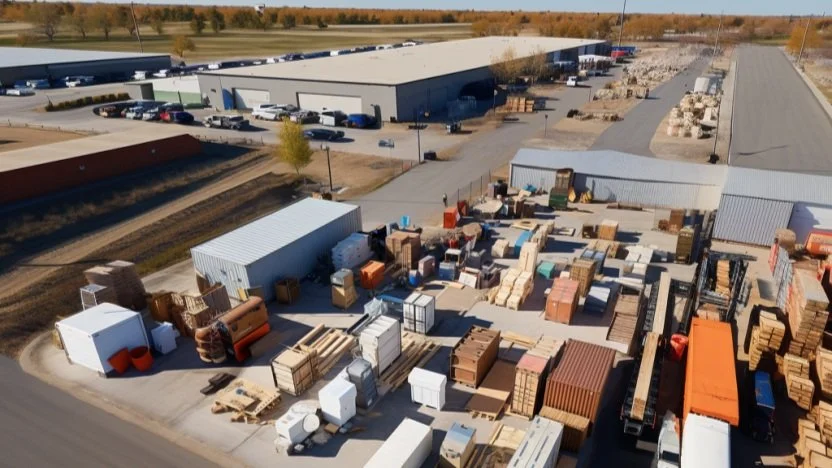
1. A fenced, paved (or graveled) outdoor yard used to store trucks, trailers, containers, construction materials, or equipment.
2. Typical rents: $0.50 to $2.00 per square foot per month — much higher per dollar invested than warehouses.
3. Typical cap rates: 6.5% to 9.0% in most markets. Trophy deals trade tighter, secondary markets trade wider.
4. Operating margins routinely hit 70%+ because there's almost no building to maintain.
5. The single biggest risk isn't the tenant — it's the zoning. Many municipalities are actively restricting new IOS supply.
That last point is the entire investment thesis. Demand is exploding (e-commerce, last-mile logistics, infrastructure spending). Supply is being actively choked off by zoning. When supply tightens against rising demand, rents go up. That's why institutions like Zenith, Alterra, and CrowdStreet started piling into IOS over the last three years — and why investors searching for outdoor industrial storage or industrial outdoor storage for sale are increasingly finding the pickings slim.
This is the complete guide. I've owned and operated IOS, I've underwritten dozens of these deals, and I've watched mom-and-pop yard owners 2-3x their cash flow in 18 months by just understanding what they had. Let's get into it.
Skip to: How to Invest in IOS →What Is Industrial Outdoor Storage?
Industrial outdoor storage (IOS) is a sub-asset class of industrial real estate — essentially the opposite of a warehouse: a fenced outdoor yard with little or no building, leased to tenants who need to store something large outside.
The "something large" is usually one of four things:
- Trucks and trailers (the biggest tenant category by far)
- Shipping containers
- Construction equipment and materials
- Vehicles, boats, RVs, or specialty equipment
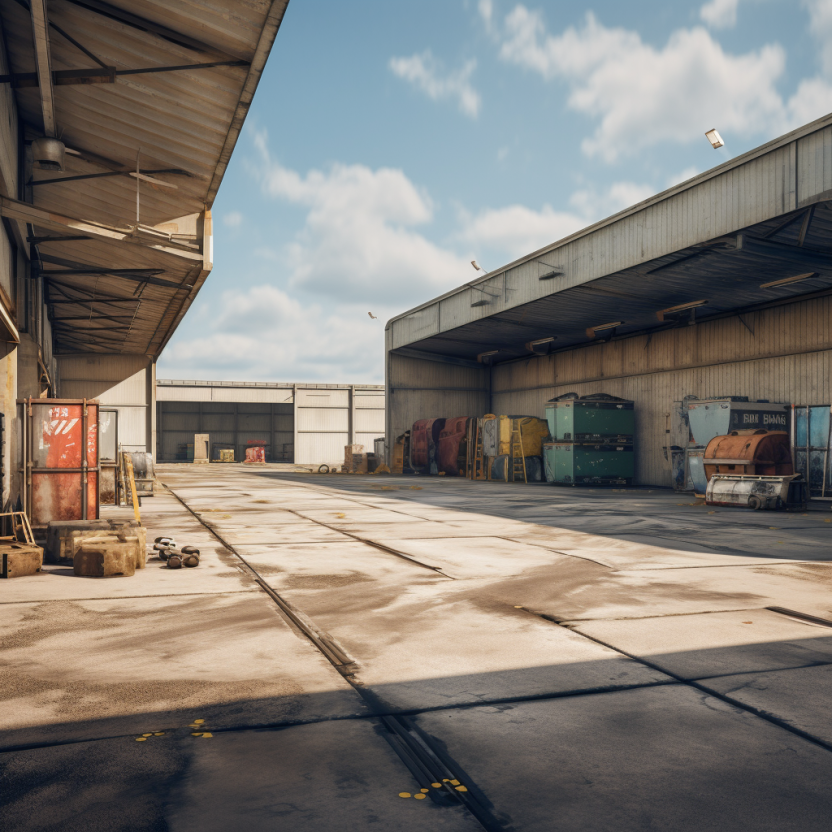
The physical site usually has a chain-link or wrought-iron fence, gravel or asphalt paving, a small office or guard shack (sometimes), and security lighting. That's it. No HVAC. No roof to leak. No tenant improvements to amortize. The simplicity is the whole point.
If you've ever driven past a yard full of semi-trailers behind a fence and thought "who owns that?" — that's IOS. The answer is increasingly: institutional capital that figured out the economics work better than warehouses.
The 4 Types of Industrial Outdoor Storage
Not all IOS is created equal. Each subcategory has different tenants, different rent structures, and different deal economics. Here are the four you need to know.
Type 1
Truck and Trailer Parking
The biggest IOS subcategory. Trucking companies, 3PLs, and fleet operators rent space to park tractors, trailers, and chassis. Spaces typically rent per stall ($75-$200/month per trailer slot) or per acre ($8,000-$20,000/month for a 2-5 acre yard, depending on the market).
Best markets: The Inland Empire (CA), Dallas-Fort Worth, Atlanta, Chicago, Houston, and Phoenix lead the pack. Any port-adjacent, intermodal, or major-interstate market works.
Type 2
Container Storage
Shipping container yards — typically rented to importers, exporters, and freight forwarders. Containers can be stacked 3-5 high, so the rent-per-square-foot is much higher than ground-only storage. The catch: stacking requires specialty equipment (top loaders, reach stackers), which means tenant quality matters more.
Best markets: Long Beach/Los Angeles, Savannah, Houston, Newark/NY, Norfolk, and inland container ports like Memphis, Kansas City, and Columbus.
Type 3
Construction Equipment + Materials Yards
Contractors, equipment rental companies, and material suppliers need somewhere to stage backhoes, concrete forms, pipe inventory, lumber, and aggregate. These tenants typically sign 1-5 year leases and are surprisingly sticky — moving 200 pieces of equipment is a giant pain.
Best markets: Growing Sunbelt metros — Nashville, Charlotte, Tampa, Austin, Phoenix, Raleigh — with active commercial and residential construction pipelines.
Type 4
Vehicle, Boat, and RV Storage
Sometimes lumped in with self-storage, sometimes considered IOS — vehicle and recreational storage yards lease individual slots to consumers and small businesses. Higher tenant churn than commercial IOS, but typically higher per-slot revenue and easier to fill. Parking lots are a related sub-category — see our deeper guide on parking lot investing.
Best markets: Suburban edges of major metros where residential lots are too small for boats and RVs.

Why IOS Is the Sneaky-Best Industrial Play Right Now
Three things are happening simultaneously, and they all push in the same direction:
1. Demand is structural, not cyclical. E-commerce growth means more last-mile delivery. More last-mile delivery means more tractor-trailer fleets. More fleets means more yards to park them. Add infrastructure spending, container imbalances from supply chain reshoring, and the trucking industry's ongoing fleet expansion — and you have a demand curve that doesn't really care what interest rates do.
2. Supply is being actively destroyed. Most cities don't want trailer yards. They're "ugly use." Municipalities are zoning IOS out of existence, prohibiting outdoor storage in new industrial parks, and pushing existing yards into amortization or non-conforming status. Existing IOS is becoming irreplaceable.
3. The math is better than warehouses. A warehouse costs $150-$250/SF to build. An IOS yard costs $15-$40/SF (mostly fencing, paving, lighting). You don't have to maintain a roof. You don't deal with HVAC. Operating expenses are typically 10-15% of gross rent vs. 25-35% for warehouses. That gap drops straight to NOI.
"Industrial outdoor storage is one of the few asset classes where supply is contracting while demand keeps growing. That's not a market — that's a setup."
Who Actually Rents IOS Properties
Knowing your tenant pool tells you almost everything about how to underwrite an IOS deal. Here's the breakdown of who's actually writing rent checks.
| Tenant Type | Typical Lease Length | Credit Quality |
|---|---|---|
| National trucking / 3PL | 3-10 years | Strong (often investment grade) |
| Regional carriers | 1-5 years | Variable — underwrite carefully |
| Construction / equipment rental | 1-5 years | Strong — sticky tenants |
| Container / freight forwarders | 1-3 years | Mixed |
| Owner-operator truckers | Month-to-month | Lower — manage like apartments |
| Vehicle / boat / RV storage | Month-to-month | Mixed — easy to enforce |
The dream deal is a 3-5 acre yard fully leased to a regional or national 3PL on a 5-10 year NNN lease. Long term, strong credit, predictable cash flow, zero day-to-day management. These trade tightest — high 5s to low 6s — because institutions are willing to pay up for that profile.
The wealth-building deal is the opposite: a yard full of small owner-operators and regional users on month-to-month or 1-year leases, paying well below market rent because the prior owner never raised rates. You buy at a 9 cap, push rents 20-30% over two years, and refinance or sell at a 7 cap. That's the typical value-add IOS playbook.
Want to invest alongside other CRE investors?
My CRE Accelerator program teaches investors how to find, underwrite, and close their first IOS deal — with weekly office hours, deal reviews, and a community of active operators.
Learn More About the Accelerator →IOS Economics: Cap Rates, Rents, and Margins
If you only remember three numbers from this article, remember these:
Rents
$0.50 to $2.00 per square foot per month — varies dramatically by market and tenant type. Port-adjacent container yards can hit $3+/SF/mo. Rural trailer yards might be $0.25/SF/mo.
Cap rates
6.5% to 9.0% for the typical IOS deal. Trophy properties (national tenant, infill location, long-term NNN) trade in the 5s. Value-add deals trade 8.5%+.
Operating margins
70-85% NOI margins are normal in IOS. There's almost nothing to maintain. Compare that to 60-70% for warehouses and 45-55% for office.
For more on how to calculate and interpret these returns, see our pillar guide on what is a cap rate in commercial real estate. And if you want to run the numbers on an actual IOS deal, our commercial real estate underwriting guide walks through the full underwriting model with a free calculator.
How to Find IOS Deals (Most People Get This Wrong)
Here's what most beginners do: they go to Crexi or LoopNet, type "industrial outdoor storage for sale" into the filter, and find seven listings nationwide priced like trophy assets. The good IOS deals are almost never listed that way.
Here's what actually works.

1. Search by zoning, not asset class
The best IOS deals aren't listed as IOS. They're listed as "industrial land," "I-2 zoned property," "outside storage permitted," or "contractor's yard." Pull every industrial-zoned listing in your market and read the descriptions yourself.
2. Drive the corridors
Find the truck routes, the rail-served corridors, and the port-adjacent industrial pockets in your market. Drive them. Note every fenced yard that looks owner-operated or under-managed. Then run ownership in the county assessor's records and start cold-calling.
3. Talk to local brokers (the right ones)
Industrial brokers who actually live in this asset class are rare. Most "industrial brokers" only do warehouses. The ones who do IOS — talk to them, build the relationship, and they'll bring you off-market deals because the institutional pipe-fitters can't move fast enough on smaller properties.
4. Watch for re-zoning targets
Older industrial properties getting upzoned to residential or mixed-use are often perfect IOS plays in their final years — buy at a steep discount, run them as IOS while you control the entitlement process, then sell at the higher use. This is sophisticated stuff but it's where the biggest returns are.
Looking at IOS deals in Middle Tennessee? See current Nashville commercial property listings — The Cauble Group represents IOS, industrial flex, and development land across the metro area, with active deals in Madison, East Nashville, and beyond.
How to Invest in Industrial Outdoor Storage
If you've never bought an IOS deal before, here's the honest walkthrough — including the parts most articles skip. I cover the full process in this video (about an hour, worth watching if you're getting serious):
The condensed playbook is this:
Step 1: Pick a market. Don't try to buy IOS in 12 cities. Pick one — ideally where you live or have boots on the ground — and become the most knowledgeable buyer in that market. The market should have either logistics infrastructure (port, intermodal, interstate), active construction (equipment yards), or zoning that's getting more restrictive (supply contracting).
Step 2: Get your underwriting model dialed in. Pull comps for both yard sale prices and yard rents. Build a model that compares IOS rent-per-acre to alternative uses for the same parcel. Stress-test for vacancy, rent growth, and exit cap rates. Don't skip the property tax reassessment — IOS property values are rising fast and assessors are catching up.
Step 3: Get pre-qualified for the right loan. IOS deals often confuse traditional lenders because there's no building to appraise. Look for lenders who actively underwrite land + improvements, or who already have IOS experience. SBA 504, life companies, and certain regional banks are your friends here.
Step 4: Tour, underwrite, offer. Be ready to move. Good IOS deals — especially off-market — get scooped up in days, not weeks. Have your team in place: attorney, environmental consultant, title, lender. The first deal takes the longest. By deal 3 you'll have a process.
Step 5: Operate or hire it out. If you're hands-on, IOS is one of the easiest properties to manage yourself. If you have multiple yards or you're scaling, hire a property manager who specializes in industrial. Don't use a residential property manager — they'll get eaten alive by trucking tenants.
A real-world example
Here's the kind of deal you're looking for, anonymized. I underwrote a 3.2-acre trailer yard in a Sunbelt market last year. The seller was an owner-operator who hadn't raised rents in four years — averaging $85 per trailer slot when the going market rate was $135. The yard had 38 trailer slots, all leased month-to-month to regional truckers.
We modeled buying at $1.85M (a 7.8% cap on in-place NOI), pushing rents to market over 24 months, and refinancing at a 6.5% cap. The numbers showed a 22% IRR over a 5-year hold. We didn't win the deal — someone outbid us by $200K — but the framework is the point: don't pay for tomorrow's NOI today, but underwrite to today's market rents and you'll find IOS deals that pencil even at current interest rates.
If you want to run a deal like this through a full underwriting model, our free commercial real estate underwriting calculator handles the math.
The Biggest Mistakes IOS Investors Make
I've watched plenty of new IOS investors stub their toe in the same five ways. None of these are deal killers — they're just expensive lessons you can skip.
1. Underestimating environmental risk. Trucks leak. Equipment leaks. If the yard has been operating for 30 years without environmental controls, soil contamination is a real possibility. Always get a Phase I environmental study. If anything's flagged, do a Phase II. Skipping this can cost you the entire deal value in remediation.
2. Buying a yard with the wrong zoning. If the property is "legal non-conforming" — meaning IOS use is grandfathered but no longer allowed — you have to confirm exactly what triggers a loss of that status. If a fire destroys the office, can you rebuild? If you go vacant for 6 months, do you lose the use entirely? Read the local code, talk to the city planner before you close.
3. Trusting in-place rents. Many IOS yards are owned by people who haven't raised rents in 5+ years. Don't underwrite to in-place — underwrite to market rent. Pull comps. Talk to other yard owners. Know what your tenants would pay if you raised rates 20%.
4. Skimping on the access road. A 50-foot Class 8 tractor-trailer needs a serious turning radius. If your yard can't accommodate it, you've eliminated half your tenant pool. Drive the access in a pickup truck the day of your tour. If it feels tight in a truck, it's unworkable for an 18-wheeler.
5. Forgetting about stormwater. Paved IOS yards generate huge runoff. Many jurisdictions are tightening stormwater requirements, and bringing an old yard into compliance can cost $50K-$500K. Always check the stormwater permit during due diligence.
Zoning: The Single Biggest Risk in IOS
Read this part twice. Zoning is the make-or-break variable in IOS investing.
Three flavors of zoning risk you need to understand before buying:
Risk 1: The use is grandfathered. The yard was permitted decades ago, but current zoning no longer allows outdoor storage. The use is "legal non-conforming." This usually means you can keep operating, but you can't expand the use, you may have specific rebuild restrictions, and going vacant beyond a certain period (often 6-12 months) can extinguish the use forever. This is the most common situation for older IOS properties.
Risk 2: The municipality is actively phasing out IOS. Some cities — particularly in California, the Northeast, and growing Sunbelt metros — have passed ordinances explicitly phasing out IOS over a 5-15 year window. If your property is in one of these jurisdictions, the exit isn't IOS at all — it's developing the parcel to a higher use before the deadline.
Risk 3: The yard never had proper permits to begin with. Some operations are flat-out unpermitted, running on the city's quiet tolerance. The seller hopes you won't notice. The city notices the moment you close and apply for a business license. Always confirm the use is legally established before you close, ideally through a written zoning verification letter from the city planner.
If you can get through this list and the zoning is solid, the rest of IOS underwriting is genuinely some of the simplest in commercial real estate. Get the zoning right and the deal usually works.
Related Podcast Episodes
If you'd rather listen than read, I've covered IOS from several angles on the Commercial Real Estate Investor Podcast. A few worth queuing up:
🎧 Ep. 172: How to Invest in Industrial Outdoor Storage with Ron Rohde — A deep dive with one of the best IOS attorneys in the country.
🎧 Ep. 176: I'm Buying Industrial Outdoor Storage in 2024 — Why I started actively buying IOS and the criteria I'm using.
🎧 Ep. 226: The Best Types of Industrial Real Estate for Beginners — Where IOS fits in the broader industrial picture.
🎧 Ep. 353: The Hidden Economics Behind Parking Lots — Parking lots as the underrated IOS subcategory.
Industrial Outdoor Storage FAQ
What is industrial outdoor storage?
Industrial outdoor storage (IOS) is commercial real estate consisting of a fenced outdoor yard — usually paved or graveled — used to store trucks, trailers, shipping containers, construction equipment, or vehicles. The property typically has minimal or no building, just security fencing, lighting, and a small office or guard shack.
What are the 4 types of IOS?
The four primary types are: (1) truck and trailer parking — the largest category, leased to trucking companies and 3PLs; (2) container storage — yards for shipping containers, often near ports; (3) construction equipment and materials yards — used by contractors and equipment rental companies; and (4) vehicle, boat, and RV storage — typically leased to consumers and small businesses.
What are typical IOS cap rates?
Typical IOS cap rates range from 6.5% to 9.0%. Trophy properties with national tenants on long-term NNN leases in infill locations trade in the high 5s to low 6s. Value-add IOS deals (below-market rents, short-term tenants, or some operational hair) trade at 8.5% or higher.
How much does industrial outdoor storage rent for?
IOS rents typically range from $0.50 to $2.00 per square foot per month, varying significantly by market and tenant type. Port-adjacent container yards can exceed $3.00/SF/month. Trailer parking is often quoted per stall ($75 to $200 per trailer per month) or per acre ($8,000 to $20,000 per acre per month).
Why is industrial outdoor storage so popular with investors?
IOS combines structural demand growth (e-commerce, last-mile logistics, infrastructure spending) with shrinking supply (most cities are zoning out new IOS). It also offers operating margins of 70-85% because there's almost no building to maintain — much higher than warehouses (60-70%) or office (45-55%). Institutional capital noticed this around 2021-2022 and has been allocating heavily ever since.
How much does it cost to develop an IOS yard?
IOS development costs range from $15 to $40 per square foot, primarily for fencing, paving (asphalt or compacted gravel), lighting, security, and stormwater infrastructure. This is dramatically lower than warehouse development at $150-$250 per square foot, which is why IOS yields-on-cost can be very attractive.
Is industrial outdoor storage the same as self-storage?
No. Self-storage is enclosed units rented primarily to consumers for personal goods — if you're interested in that asset class, see our guide on how to start a self-storage business. IOS is open outdoor space rented to commercial users for trucks, trailers, containers, or equipment. The tenant base, lease structure, and economics are completely different. Vehicle/boat/RV storage sits somewhere in between.
What's the biggest risk in IOS investing?
Zoning. Many municipalities are actively restricting or phasing out outdoor storage uses. Before buying, always verify the use is legally permitted (or properly grandfathered with no expiration trigger), get a written zoning verification letter from the city planner, and understand exactly what events could extinguish the use.
How do I finance an IOS deal?
IOS financing can be trickier than warehouse financing because there's minimal building for traditional lenders to appraise. Look for SBA 504 loans, life insurance companies, or regional banks with experience in industrial land. Loan-to-value ratios are typically 60-70% for stabilized IOS, vs. 70-75% for stabilized warehouses.
Can I invest in IOS passively?
Yes. Several IOS-focused syndicators (Zenith IOS, Alterra IOS, and others) raise capital from accredited investors to acquire IOS portfolios. CrowdStreet and similar platforms occasionally feature IOS deals. Passive IOS investing typically targets 8-12% annual cash-on-cash returns and 15-20% IRRs, though terms vary.
Key Takeaways
- IOS is a real, distinct asset class. Fenced outdoor yards used to store trucks, trailers, containers, or equipment — not a flavor of warehouse, not self-storage.
- Demand is rising, supply is shrinking. E-commerce and last-mile logistics are pushing demand up while cities zone out new IOS. That gap is the entire investment thesis.
- The economics are simpler than warehouses. Lower development cost, lower operating expenses, 70-85% NOI margins, and minimal building to maintain.
- Cap rates run 6.5-9.0%. Tighter for trophy deals, wider for value-add. Rents typically $0.50-$2.00/SF/month.
- Zoning is the make-or-break risk. Always verify legal use, understand grandfathering, and get a zoning verification letter before closing.
- The best deals are off-market. Listed IOS is overpriced. Find your edge through direct outreach to owner-operators, zoning research, and broker relationships.
Ready to underwrite your first IOS deal?
Use our free commercial real estate underwriting calculator to model IOS deals, stress-test your assumptions, and generate investor-ready returns in minutes.
Run a Free Deal Analysis →Have an IOS deal you're working on? Reach out — we underwrite IOS, broker IOS sales and leases, and consult with investors entering the space. Always happy to share a second set of eyes on a deal.