
The Most Profitable Real Estate You’re Not Thinking About
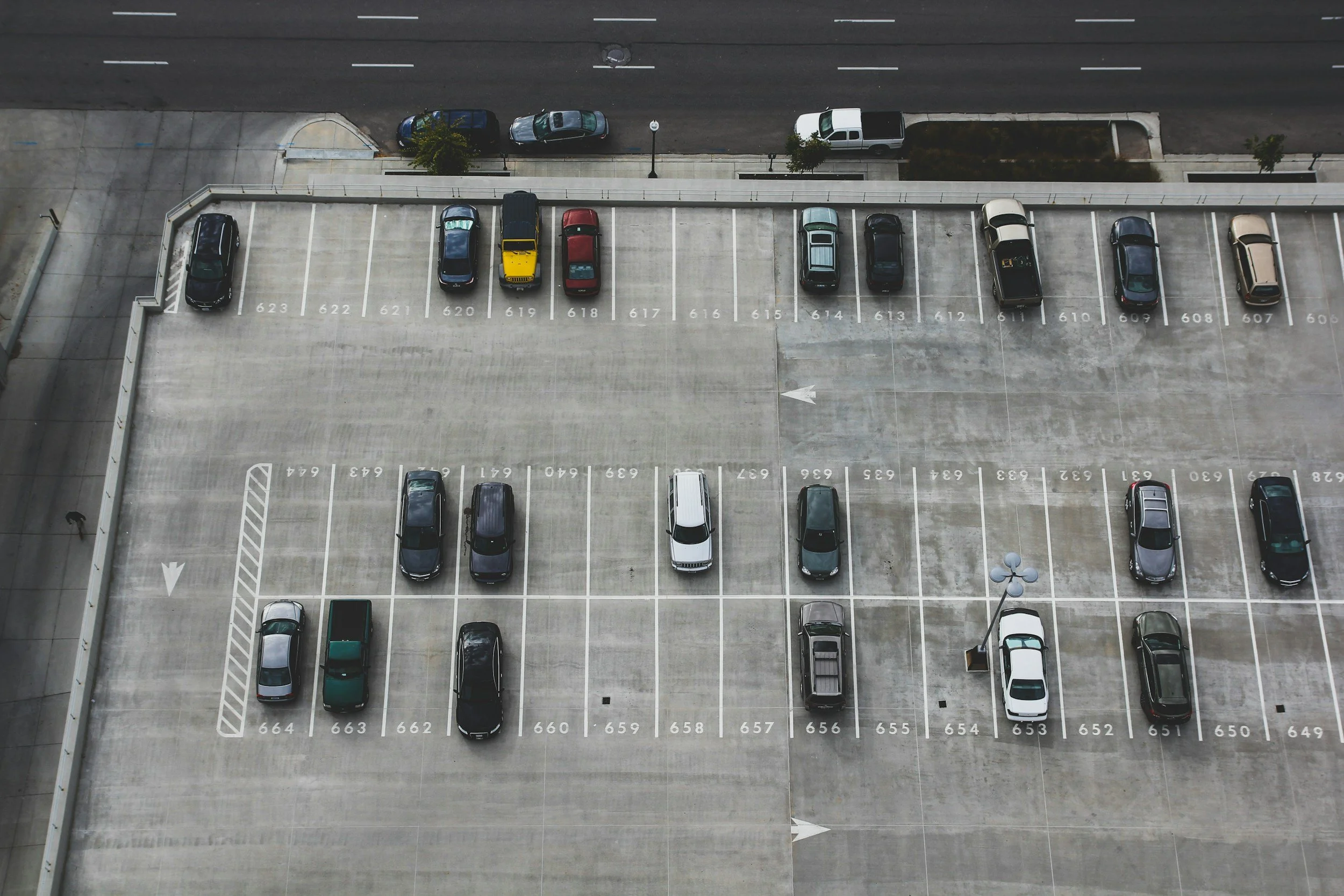
In 2008, the city of Chicago sold off the rights to 36,000 parking meters for $1.15 billion. At the time, officials praised it as a financial lifeline - a way to plug a massive budget deficit without raising property taxes. But by 2025, the investors behind that deal had already earned back every dollar… plus $500 million in profit. And the kicker? They still had 60 years left on the contract.
Chicago didn’t just lose out - it got absolutely fleeced.
This wasn’t a one-off oversight. It was a glaring case of what happens when institutional leaders misunderstand the quiet power of boring real estate. Because what looked like an outdated relic - coin-operated meters on slabs of city asphalt - turned out to be one of the most lucrative investments in modern American history.
But this story isn’t really about Chicago. It’s about the invisible empire that grew underneath America’s cities: parking lots, storage yards, fenced land, and the people who saw their value long before Wall Street did.
The investors who win in commercial real estate aren’t always the ones chasing the flashiest properties. They’re often the ones who ask the simplest question: “Can I charge rent on that?”
This is the story of how surplus land and painted asphalt built billion-dollar fortunes and how the exact same principle is quietly shaping the next wave of wealth in commercial real estate.

Property Background and Historical Highlights: The Accidental Empire of Parking
The story of modern parking as a commercial asset doesn’t begin in Chicago. It begins in 1950s Nashville with a railroad office worker named Monroe Carroll Sr.
Carroll wasn’t a real estate mogul. He didn’t have capital or a grand vision. What he did have was access. Working for the Nashville, Chattanooga, and St. Louis Railway, he realized the company owned large swaths of surplus land in prime downtown areas, land that was sitting idle.
So he did something nobody else thought to do: he leased a small parcel and turned it into a parking lot.
That single move marked the quiet birth of what would become Central Parking, a business that eventually expanded into major markets like St. Louis, Atlanta, and back home in Nashville. Carroll’s insight wasn’t driven by urban planning theory or traffic engineering. It was driven by basic logic: surplus land, growing car ownership, and a rising need for places to park.
Then came the windfall.
In 1956, President Eisenhower signed the Federal Highway Act, triggering the largest infrastructure boom in American history. Highways spread across the country, car ownership soared, and cities responded by enshrining parking minimums into law. Developers were suddenly required to provide parking - two spots per apartment, one for every 200 square feet of retail, four per thousand for restaurants.
Overnight, parking went from a convenience to a legal mandate. And operators like Carroll had stumbled into the most enviable kind of business: one with government-guaranteed demand and no need to create it.
As the industry matured through the ’60s and ’70s, Central Parking wasn’t alone. Other firms followed the same formula in their cities - Standard Parking in Chicago, LAZ in the Northeast, ACE in San Diego. These companies operated in obscurity, but by the 1980s, they were turning asphalt into empires.
And the economics were staggering.

Investment Challenges and Innovations: The Boring Goldmine No One Saw Coming
To most investors, parking lots seemed beneath consideration. They were simple, unglamorous, and faced obvious competition from free street parking. Developers treated them like lemonade stands, fine for side income, but not real assets.
That misunderstanding was exactly what gave early operators their edge.
Surface lots required almost no upkeep. No tenants to call about broken pipes. No HVAC systems. No elevators. You repainted lines every few years and collected cash. Net operating income margins? Often 60–70% on well-run facilities - nearly double the returns of apartment complexes, and five times higher than restaurants.
But the real innovation was pricing.
Because downtown parking was a captive market, owners could raise prices without losing customers. If you worked in an office building and there were only three nearby garages, your options were limited. You weren’t going to work from your car. $10 a day became $12, then $15, then $20 and people paid.
Then there was the sleeper value play: land appreciation.
Buy a lot in a growing downtown in 1985 for $2 million. Collect $200,000 annually in cash flow. Wait 20 years. That lot might be worth $20–50 million to a developer. Parking was cash today and a land play tomorrow. That dual upside, income and appreciation, made these properties irresistible to institutional investors once they caught on.
By the 2000s, private equity had entered the space. Central Parking was taken private. Wall Street reports called parking assets “stable, recurring, defensive cash flows linked to inflation.” Translation? This stuff prints money in both bull and bear markets.
And just when it seemed the opportunity might be saturated, a new twist emerged.
Investors started asking: What if we applied this exact model to other things that need to be parked?
Impact of Operational Changes: From Cars to Containers
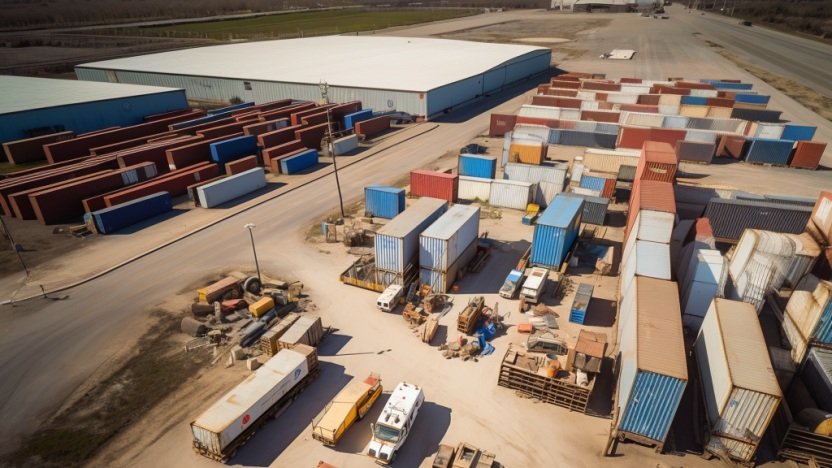
Around 2018, a new kind of investor began eyeing the same formula that built the parking empires. Only this time, they weren’t thinking about cars. They were thinking about containers.
Two macro forces collided to create a tidal wave of demand: the rise of e-commerce, and a historic infrastructure bill.
Amazon, FedEx, UPS, all of them needed more than warehouses. They needed outdoor space to stage, load, and park massive fleets of delivery vans. At the same time, construction companies flooded with new government contracts needed secure storage yards for equipment and materials between jobs.
Enter industrial outdoor storage: iOS.
These properties looked like parking lots because they were. But instead of serving commuters, they served logistics and construction. Demand surged. Supply didn’t. Cities didn’t want truck yards near neighborhoods. Zoning laws made new development nearly impossible.
As a result, vacancy rates in iOS dropped below 3% by 2022. Effectively zero.
Rents skyrocketed. From late 2019 to mid-2023, average iOS rents rose 30%. In prime locations, they were up 123% since 2020.
The economics mirrored the original parking model:
Low maintenance: Just land and fencing.
Triple net leases: Tenants pay taxes, insurance, and maintenance.
Captive customers: Logistics companies couldn’t function without these spaces.
While traditional warehouses traded at cap rates of 4–5%, iOS traded at 6–8%, a meaningful yield premium. Big money noticed. JP Morgan committed $1.5 billion. TPG and Angelo Gordon joined the rush. Even Middle Eastern sovereign wealth funds began buying U.S. truck yards.
It wasn’t about parking anymore. It was about applying the same insight:
“Find overlooked land. Charge rent. Collect cash while it appreciates.”
And just as iOS matured, new innovations in traditional parking began to emerge—driven by the exact threats that once signaled its demise.

The Heart of the Property: Reinventing the Asphalt Under Our Feet
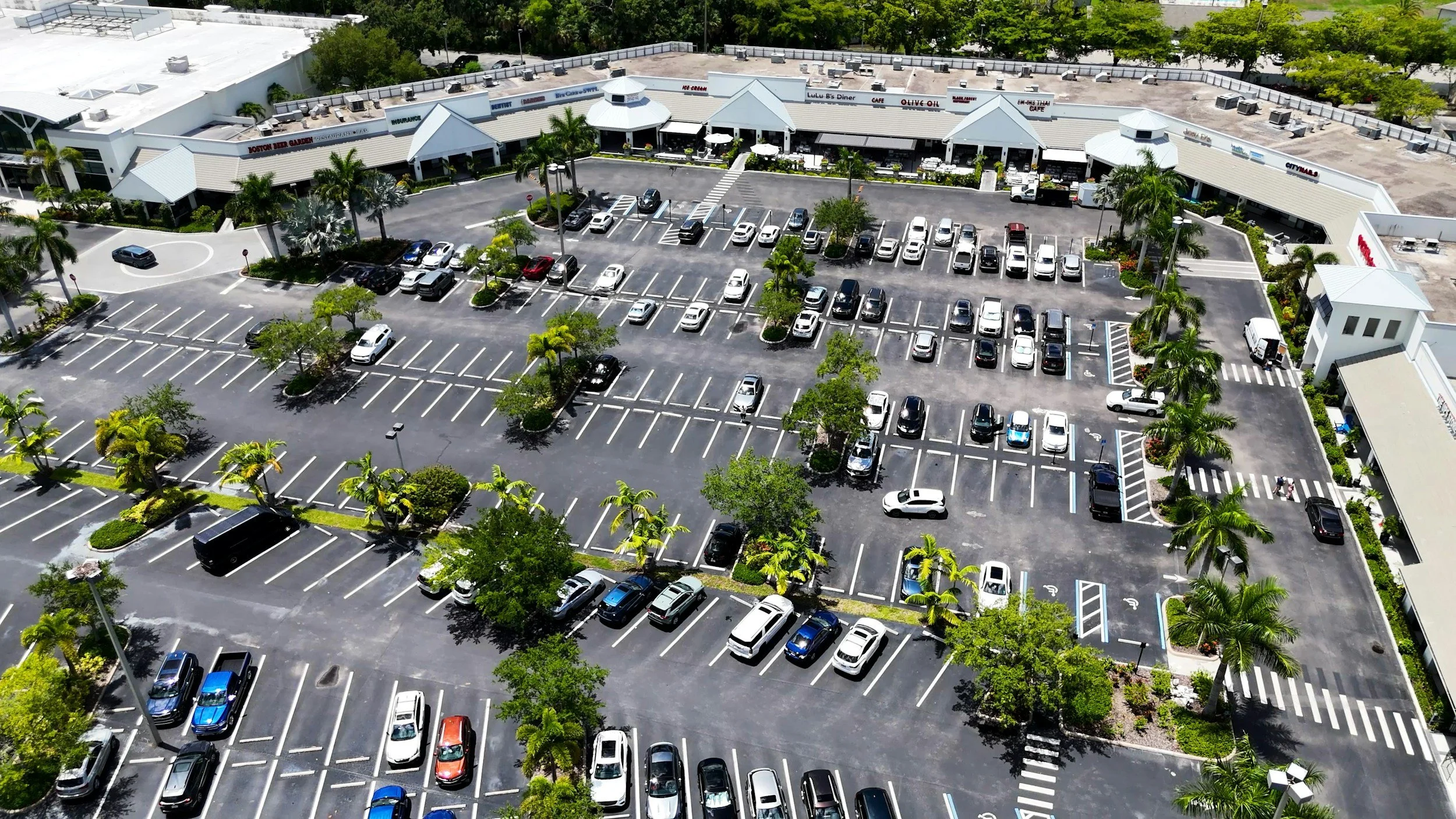
For years, critics warned that parking lots were dying. Ride-sharing apps like Uber and Lyft were eating into demand. Cities were removing parking minimums. EVs were changing transportation infrastructure.
And they were right. Partially.
Some operators saw declines. Hotel parking dropped 5–10%. Valet at restaurants and nightclubs cratered. Cities like San Jose and entire states like California eliminated parking mandates near transit.
But while traditional demand shifted, the best parking operators did what great investors always do: they adapted.
They asked a better question - not “How do we save parking lots?” but “What else can they become?”
New Uses, Same Asset
EV Charging Hubs:
Every delivery fleet converting to electric now needs a place to charge overnight. Parking lots with high electrical capacity are becoming EV infrastructure. Some owners are installing solar canopies—generating electricity while providing shade.Multi-Use Programming:
Lots that serve office workers by day host food trucks at night, farmers markets on weekends, and local events year-round. Others are adding last-mile distribution lockers or leasing to ghost kitchens.Scarcity as Value:
As cities eliminate parking minimums and stop building new parking, the existing supply becomes more valuable. Demand doesn’t vanish. It gets concentrated. The fewer the spaces, the more they’re worth.
Investors like the ones who backed the Chicago meter deal aren’t worried about EVs or Uber. Their cash flows are locked in, inflation-linked, and operating in constrained markets. As other properties grow more complex, these remain simple, stable, and increasingly adaptable.
The lesson? The most valuable part of a parking lot isn’t the pavement. It’s the flexibility.
Long-Term Vision and Legacy: Where the Real Wealth Hides
When Monroe Carroll Sr. leased that first scrap of railroad land in the 1950s, he wasn’t trying to build an empire. He simply saw land nobody else wanted, and he was willing to charge people to use it.
That same mindset built Central Parking, inspired Wall Street, and today is fueling the explosive growth of industrial outdoor storage, EV infrastructure, and reimagined urban land use.
And yet, the heart of this story isn’t about parking lots. It’s about pattern recognition.
The wealth didn’t come from flashy innovations. It came from boring, obvious solutions hiding in plain sight. Parking lots. Storage yards. Cell tower pads. Laundromats. Self-storage units.
These aren't "get rich quick" businesses. They're get-rich-slowly-by-solving-basic-problems businesses. They’re durable, low-competition, high-margin assets hiding in the corners of real estate most people overlook.
As a commercial real estate investor, this is the opportunity:
Not to chase the next hot trend, but to develop the lens that spots long-term value before the crowd does.
Because in commercial real estate, the most profitable deals aren’t always the sexiest. They’re often sitting behind a chain-link fence in your own city, waiting for someone with the vision to see asphalt not as an eyesore but as a platform.
So, next time you drive into a parking lot, pause and look around. Someone owns that land. And chances are, they’re making far more money than you think.

Want to Learn How to Spot These Deals?
This is exactly what we do inside the CRE Accelerator - an investor mastermind and education platform where we break down real deals, structure step-by-step strategies, and build portfolios that generate time freedom and real equity. No theory. Just real-world investing with the boring businesses that quietly build legacies.