
By Tyler Cauble, Founder of The Cauble Group · ~8 min read · Updated May 2026
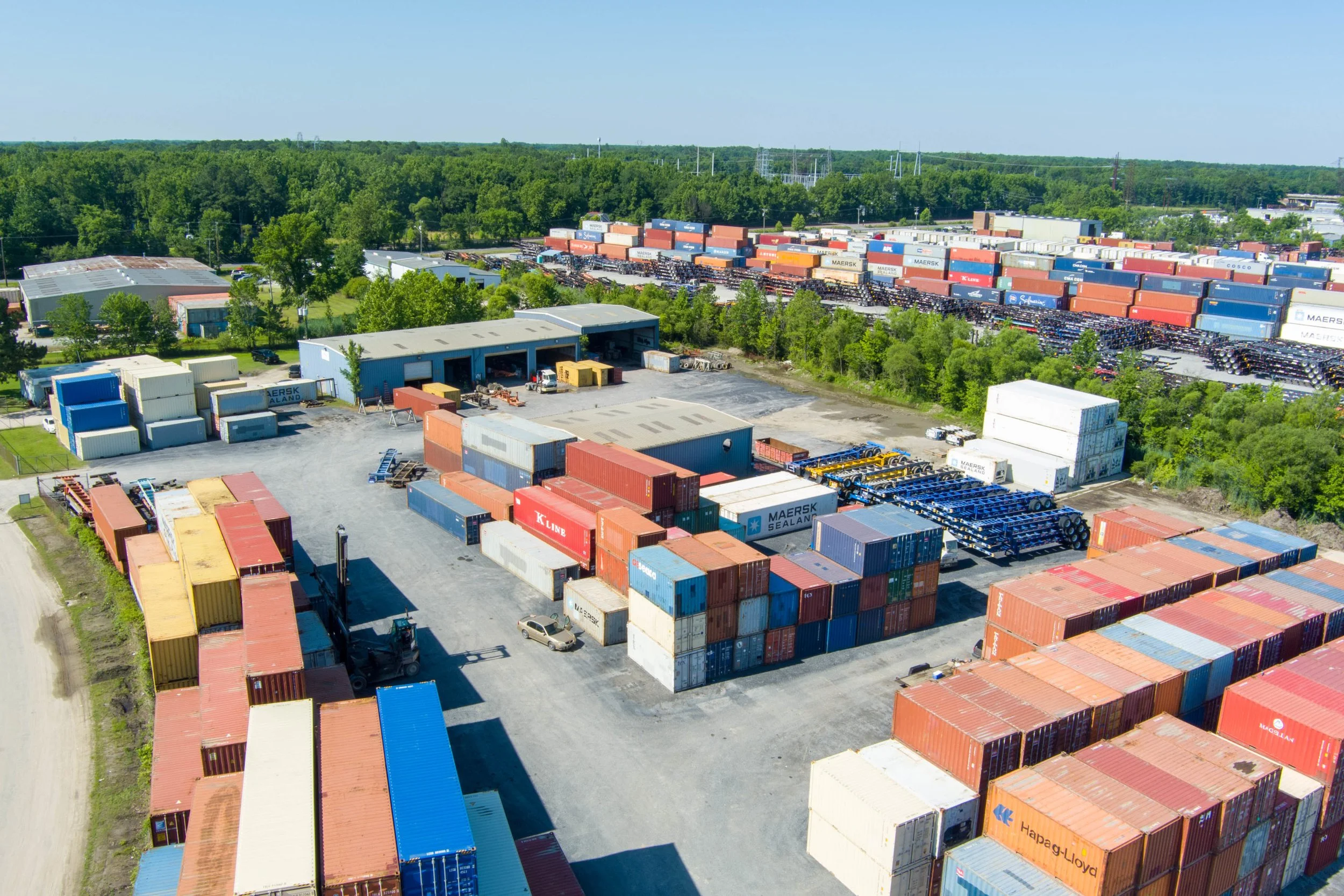
For a primer on the asset class itself — the four types of IOS, typical cap rates, and how the economics work — start with our pillar guide on what is industrial outdoor storage. This article focuses specifically on the market trends driving IOS adoption: who's buying, why now, and where this goes next.
Three years ago, almost nobody in institutional commercial real estate talked about industrial outdoor storage. Today, it's one of the most actively pursued asset classes in the country. Here's what changed — and what it means for investors.
The IOS market in five numbers:
The state of IOS in 2026
1. $10B+ in institutional capital has been raised for IOS strategies since 2022.
2. Cap rates have compressed roughly 100-200 bps since 2021 in primary markets.
3. IOS rents have grown 8-12% annually in top logistics markets — outpacing warehouse rent growth.
4. An estimated 90% of US municipalities have either restricted or are considering restricting new IOS supply.
5. The investable IOS universe is somewhere between $200B and $400B — and almost none of it is professionally owned.
That last point is the entire opportunity. A massive, fragmented, mom-and-pop asset class is being institutionalized in real time. The investors who understand the trends now have a 3-5 year head start on the ones who'll show up after the headlines.
The Macro Setup: Why Now
Several macro trends are converging to push IOS demand up at the exact same moment supply is being constrained. Each one would be meaningful on its own. Stacked together, they create the IOS thesis.
E-commerce growth. Online retail continues to grow faster than physical retail. Every e-commerce package eventually needs a truck and a trailer to deliver it. More volume = more trucks = more parking and staging yards.
Last-mile logistics. Same-day and next-day delivery has pushed distribution closer to consumers. That means smaller, more numerous distribution nodes — many of which need outdoor storage for trailers and equipment.
Supply chain reshoring. Companies are shifting production closer to US consumers, which means more domestic logistics infrastructure, more container handling at inland ports, and more equipment storage at construction sites.
Infrastructure spending. Federal infrastructure bills have unlocked massive construction pipelines for highways, bridges, utilities, and transit. All of which need contractor yards and equipment staging.
Fleet expansion. The US trucking industry has expanded its tractor and trailer fleet meaningfully over the past decade. Those vehicles need somewhere to park when they're not on the road.
Who's Buying IOS Right Now
Three years ago, the typical IOS buyer was a local operator who happened to own a trucking company and figured he might as well own the yard too. Today, the buyer mix looks completely different.
Dedicated IOS funds. Sponsors like Zenith IOS, Alterra IOS, Outdoor Industrial Logistics (OIL), and JP Morgan-backed platforms have raised hundreds of millions specifically for IOS portfolios. They're aggregating mom-and-pop yards into institutional portfolios.
Industrial REITs adding IOS allocation. Several public industrial REITs have started buying IOS to round out their portfolios. EastGroup, Rexford, and others have telegraphed IOS interest on earnings calls.
Private equity and family offices. The math on IOS — low capex, simple operations, growing demand — has attracted private capital looking for industrial exposure without the build-cost of warehouses.
Syndicators and crowdfunders. Platforms like CrowdStreet have started featuring IOS deals. Individual syndicators have raised on individual IOS yards and small portfolios.
The result: there's now competition for IOS deals that didn't exist three years ago. That's the primary driver of cap rate compression.
The Supply Squeeze: How Zoning Is Choking New IOS Supply
This is the trend that turns IOS from a "good asset class" into a "structurally tight asset class." Cities don't want trailer yards.
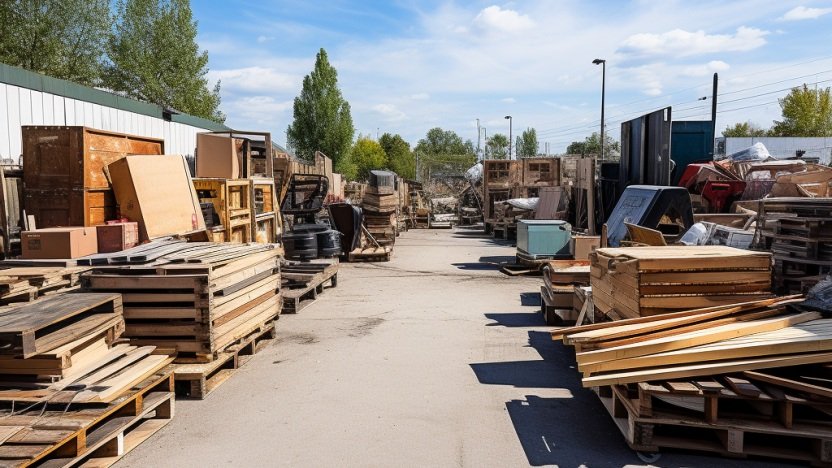
Trailer yards are visually unattractive (chain-link fences, gravel, parked trucks), generate truck traffic, and don't produce the tax revenue per acre that a warehouse, office park, or residential development does. So municipalities have been quietly — and not so quietly — zoning IOS out of existence.
Three patterns of supply destruction:
1. Prohibition in new industrial parks. Many newly-built industrial parks explicitly prohibit outdoor storage. The covenants and zoning say warehouses only. So even though there's "new industrial supply," none of it is IOS.
2. Active phase-outs of existing IOS. Cities including parts of California, the Northeast, and several Sunbelt metros have passed ordinances phasing out outdoor storage over 5-15 year windows. Existing IOS is grandfathered, but new IOS is prohibited.
3. Upzoning of industrial corridors. Industrial land near downtowns is increasingly being rezoned to residential or mixed-use. The IOS yards on those parcels often face the same fate as the surrounding industrial — converted to higher uses over time.
The combined effect: the supply of usable IOS land is shrinking in most growing metros, even as demand is rising. That's the textbook setup for sustained rent growth.
Rent Growth Trends
IOS rents have grown faster than most other CRE asset classes over the past five years. Several primary markets have seen 8-12% annual rent growth, with some land-constrained submarkets posting double-digit annual growth for multiple consecutive years.
The drivers:
- Below-market in-place rents. Many mom-and-pop owners hadn't raised rents in years. New institutional owners are pushing rents to actual market — meaning a wave of "catch-up" rent growth as the asset class institutionalizes.
- Limited tenant alternatives. Trucking and logistics tenants who need a specific location (port-adjacent, intermodal-adjacent) have few alternative options. They pay what the market demands.
- Supply contraction. As zoning tightens and existing yards convert to other uses, the remaining yards command premium pricing.
Will this rent growth continue at 8-12% annually? Probably not forever. Most institutional underwriters now model 4-6% annual rent growth on stabilized IOS, with the bigger upside coming from below-market value-add deals where rents can be pushed 30-50% over 24-36 months.
Cap Rate Compression: How Tight Will It Go?
In 2020, a stabilized IOS deal traded at 8-10% cap rates. By late 2024, that same deal in a primary market was trading at 6-7% cap rates. That's significant institutional re-rating in a short window.
Where do cap rates go from here?
The base case is that primary-market stabilized IOS continues to trade in the high 5s to low 7s, with trophy assets (national tenants, long-term NNN, infill locations) trading in the high 5s. Value-add IOS will continue to trade at 8-9% cap rates because the cash flow risk and execution work are real.
Cap rates won't compress to warehouse levels (low 5s) because IOS has higher tenant turnover risk, more zoning uncertainty, and a smaller buyer pool. But there's still meaningful compression upside in secondary markets where cap rates are 7.5-9% today.
For more on how cap rates work and why they compress in maturing asset classes, see our pillar on what is a cap rate in commercial real estate.
What This Means for Investors
If you're considering IOS — whether actively or passively — here's how the current market trends shape the opportunity.
The window for value-add IOS is still open. The institutional money is mostly focused on stabilized, infill, NNN-leased deals in primary markets. That leaves a huge pool of value-add IOS — older mom-and-pop yards in secondary markets, properties with below-market rents, deals with operational hair — where individual investors can still buy at 8.5%+ cap rates.
Smaller deals are less competitive. The dedicated IOS funds are mostly hunting $5M+ deals because their fund economics require it. Individual investors who can move on $1-3M deals face dramatically less competition.
Secondary markets are underserved. Tier 2 and tier 3 markets with growing logistics infrastructure but no institutional IOS presence offer the best risk-adjusted returns right now. Markets like Memphis, Indianapolis, Columbus, Kansas City, Greenville-Spartanburg, and many growing Sunbelt metros.
Zoning research is the new alpha. Markets where IOS supply is actively shrinking will see the biggest sustained rent growth. Markets where supply is still relatively elastic will see less. Understanding the zoning trajectory of your target market is now a real competitive edge.
Where IOS Goes From Here
Three predictions for the next 3-5 years:
1. Continued institutionalization. The fragmented, mom-and-pop ownership profile will gradually consolidate into institutional portfolios. By 2030, expect 30-40% of the investable IOS universe to be institutionally owned, up from less than 10% today.
2. Public market exposure. Expect at least one pure-play IOS REIT to go public in the next 3 years. Several private platforms are already at the scale that would support an IPO.
3. Rent growth normalization. The 8-12% annual rent growth of 2021-2024 is unsustainable. Expect rent growth to settle into a more normal 3-5% annual range as institutional ownership matures and pricing efficiency improves. The value-add catch-up rent growth opportunity remains, but on a shrinking pool of poorly-managed assets.
Ready to start investing in IOS?
Read our step-by-step playbook for how to invest in industrial outdoor storage, or use the free commercial real estate underwriting calculator to model an IOS deal in minutes.
Run a Free Deal Analysis →Key Takeaways
- Demand is structural. E-commerce, last-mile logistics, supply chain reshoring, infrastructure spending, and fleet expansion all push IOS demand higher.
- Supply is shrinking. Most cities are restricting new IOS supply, phasing out existing yards, or upzoning industrial land to higher uses.
- Institutional capital is here. $10B+ raised for IOS strategies since 2022 has fundamentally changed the buyer mix.
- Cap rates have compressed. Primary-market IOS now trades at 6-7%, with trophy assets in the high 5s. Secondary markets still trade 7.5-9%.
- Value-add window is still open. Below-market rents, smaller deals, and secondary markets offer the best risk-adjusted opportunities for individual investors.
- Zoning research is alpha. Markets where supply is actively shrinking will see the most sustained rent growth.
Want to Go Deeper on IOS?
If you want more on IOS from different angles, check out:
- 📖 What Is Industrial Outdoor Storage? The Complete IOS Investing Guide (the pillar)
- 📖 How to Invest in Industrial Outdoor Storage: Step-by-Step Playbook
- 📖 Parking Lot Investing (an IOS subcategory)
- 🎧 Ep. 172: How to Invest in IOS with Ron Rohde
- 🎧 Ep. 176: I'm Buying IOS in 2024
- 🎧 Ep. 353: The Hidden Economics Behind Parking Lots
Want to underwrite an IOS deal?
Model any IOS yard in minutes with our free commercial real estate underwriting calculator.
Run a Free Deal Analysis →Working on an IOS deal and want a second set of eyes? Reach out — we underwrite IOS, broker IOS sales and leases, and consult with investors entering the space.
Your buildout budget is probably off by six figures. Not off by a little. Off by enough to blow up a deal you just spent three weeks underwriting.