Why The Best Investors Focus on Commercial Real Estate Amenities
Amenity packages can make or break your real estate investment, so we’re covering Why the Top Commercial Real Estate Investors Focus on Amenities. The exponential growth of online ordering has caused a massive shift in the way we experience retail today. Retailers that refused to adapt to the new age have, unfortunately, fallen by the wayside. Commercial real estate investors and developers are all too aware of how these changes will impact their bottom line, too, and, they’re making moves to keep up. Amenities are one way that a project can stand apart in a sea of commercial real estate options. They catch the tenant’s eye, bring benefit to their employees and customers, and help curate a memorable experience which is crucial in today’s marketplace. Focusing on the best amenities possible was one of the most important real estate investment strategies for 2020 and 2021.
Most real estate investors chase cash flow. Here's why that's keeping you broke. In this video, I'm breaking down the strategy that's helped me build wealth way faster than the traditional buy-and-hold approach — and why almost nobody in the residential world talks about it. I'll walk you through real deals I've done, including:
A 9-story building in Chattanooga we turned into a $2.2M profit (equal to 7 years of cash flow — in one deal)
A $435K retail building I flipped for nearly $200K in profit by doing one thing: signing a lease
A dirt lot we rezoned and flipped for a $1M gain, then 1031 exchanged into passive income
The truth is, you're not choosing between cash flow OR appreciation forever. You do value-add first to build your capital base — then you can afford to invest for cash flow later. If you're starting with little to nothing, this is the strategy that changes everything.
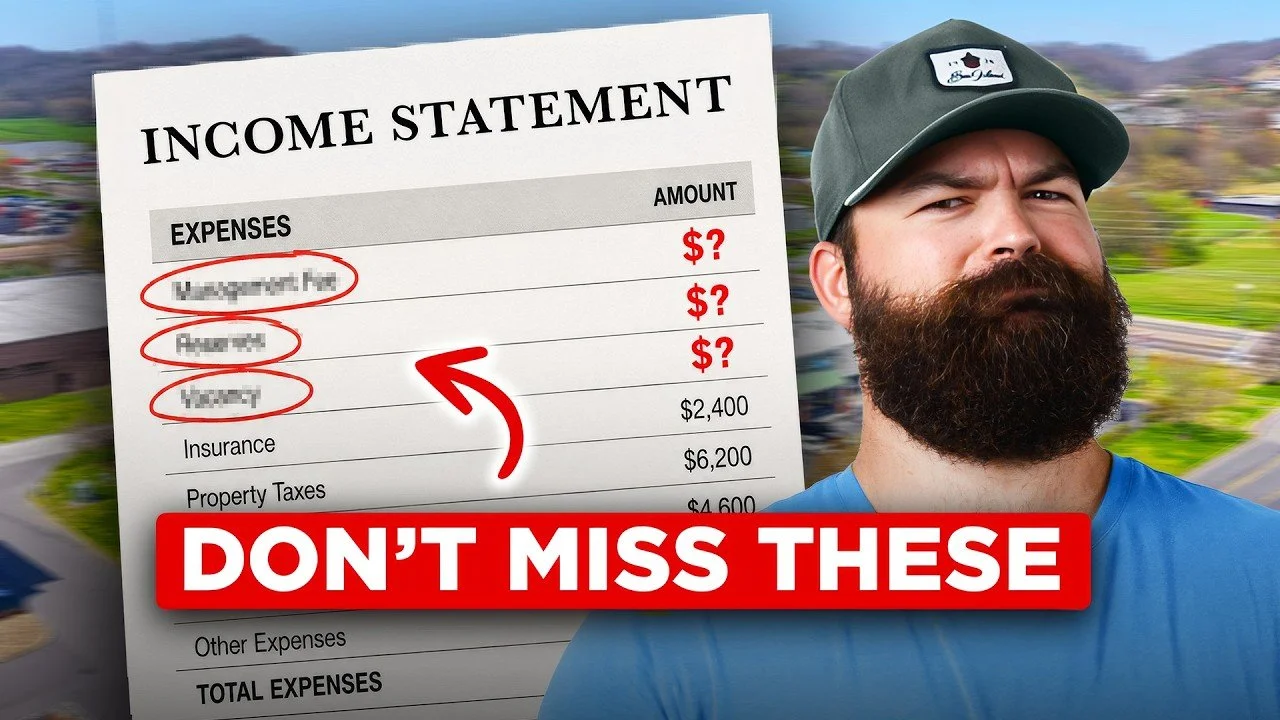
Underwriting is one of the most important skills a commercial real estate investor can develop.
It is what separates investors who guess from investors who understand exactly how a deal will perform before they buy it. A property may look great on the surface, but until you run the numbers and test your assumptions, you do not actually know if the deal works.
Most investors coming from the residential world make the same mistake when they start pursuing commercial deals: they try to write offers the same way they would on a house.
In residential real estate, the contract is the offer. You submit it, tie the property up, and start negotiating from there.
Commercial real estate doesn’t work like that.
Before attorneys ever touch the deal… before a purchase and sale agreement is drafted… and before anyone spends thousands of dollars on legal work, sophisticated buyers and sellers start with something much simpler: the Letter of Intent (LOI).
In this episode of Lessons Learned, Meg Epstein pulls back the curtain on what ground-up development really looks like when the wheels come off. A developer she invested with burned $1,000,000 on plans that didn’t pencil… and when the deal started falling apart, it escalated fast: subpoenas, legal threats, and a moment where it felt like everything she’d built could get wiped out overnight. Meg shares how she survived it, what she changed, and the business model she rebuilt afterward, including why chasing the “institutional” path can be a trap, why niche strategies win, and what it takes to keep your real estate business alive through a down cycle.
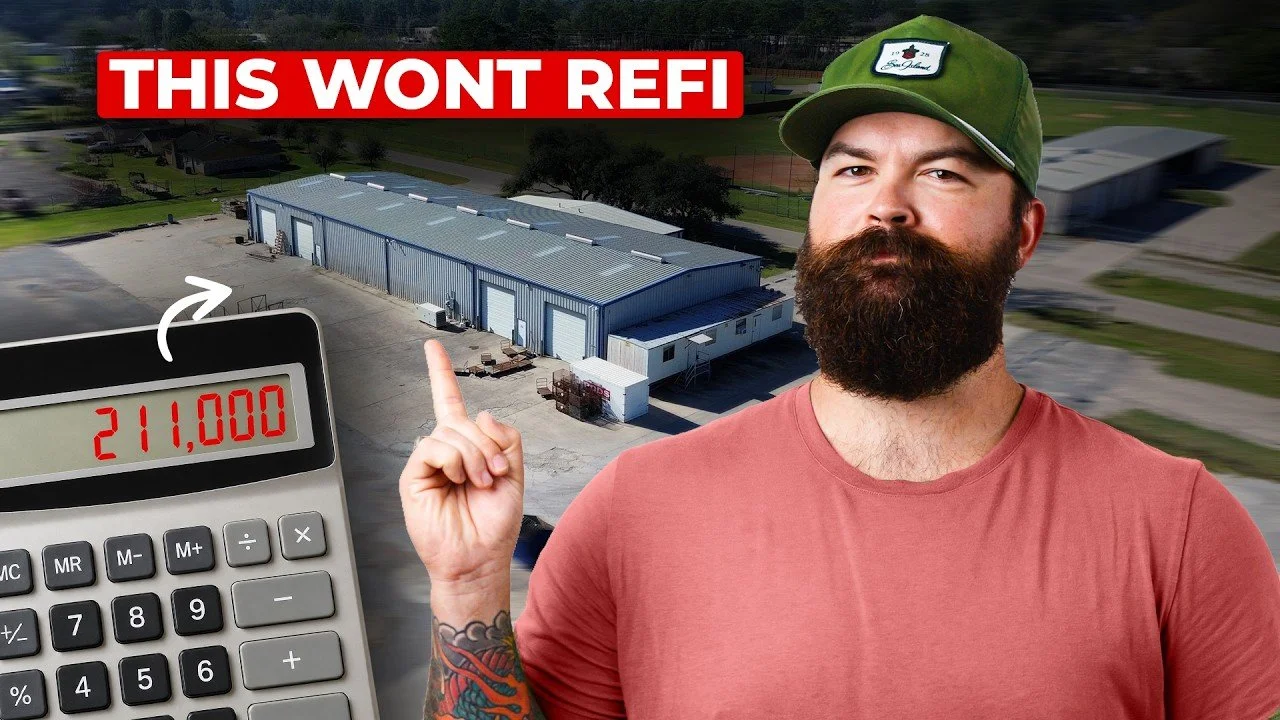
A vacant commercial building isn’t a problem — it’s a pricing puzzle.
Most investors either lowball and lose the deal, or overpay because they don’t know how to value a property with no income. But vacancy doesn’t mean the building is worthless. It just means you have to price it based on what it will earn, not what it’s earning today.
If you can’t find good deals right now, it’s probably not the market.
It’s probably your filter.
Most investors say they “want a deal” but they don’t have a defined Buy Box, clear red flags, or a fast way to screen opportunities. So they chase everything, underwrite endlessly, and burn out before they ever submit an LOI.
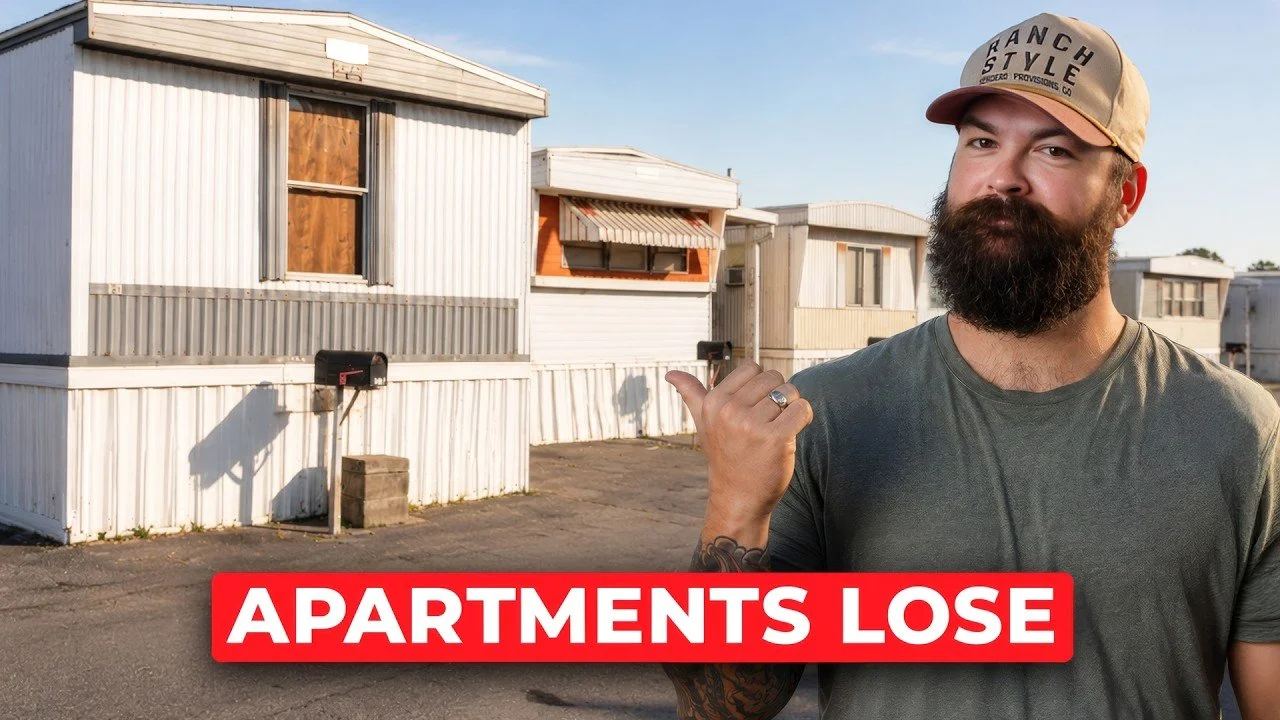
“Apartments are the safest path to financial freedom.”
But in today’s market, that belief could actually be holding you back.
In this week’s video, I sit down with Josh Friedenshon of Greenleaf Management—a friend and now business partner—who scaled to 4,000+ apartment units before making a bold move: selling off residential in 2018 and reinvesting into commercial real estate.
Stop investing in real estate for cash flow. It might be the very thing keeping you stuck.
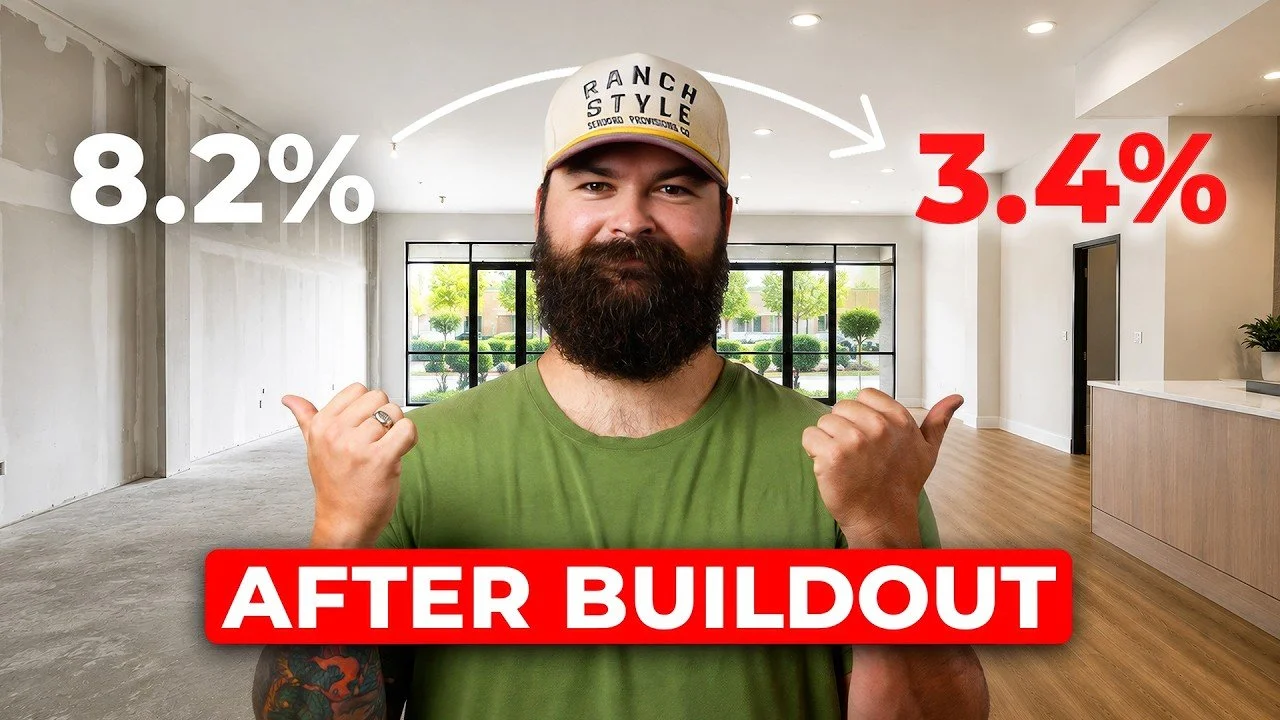
“Passive income” sounds great. Who doesn’t want mailbox money? But if you are early in your investing journey, chasing 8 to 10 percent cash on cash returns could actually be slowing your growth instead of accelerating it.
What you need first is not cash flow. It is equity.
What if the most distressed buildings in your market don’t look distressed at all?
Some of the best off-market deals never hit LoopNet. They don’t show up in broker chatter. And on paper, they look “occupied.”
But the lights tell a different story.
In this breakdown, I dive into a fascinating strategy investors are using to uncover hidden vacancy by analyzing something most people ignore: energy usage. By comparing reported occupancy to actual electricity and utility consumption, you can spot buildings that are quietly bleeding—long before the market catches on.
Why did Starbucks ignore the billion-dollar real estate playbook that made McDonald’s rich?
Ray Kroc built McDonald’s into a $40+ billion property empire by owning the land under his restaurants. Howard Schultz knew that strategy… and deliberately did the opposite.
About Your Host:
Tyler Cauble, Founder & President of The Cauble Group, is a commercial real estate broker and investor based in East Nashville. He’s the best selling author of Open for Business: The Insider’s Guide to Leasing Commercial Real Estate and has focused his career on serving commercial real estate investors as a board member for the Real Estate Investors of Nashville.