


Office space is any commercial real estate designed for businesses to work in, from a single private suite to an entire high-rise tower. But "office space" is really an umbrella term, and the differences underneath it, the type, the building class, how the square footage is measured, and how the lease is structured, are exactly what determine how much you pay and whether the space actually works for your business.
I've leased, owned, and brokered a lot of office space over the years, and the tenants who get the best deals are the ones who understand these fundamentals before they ever tour a building. So let's break it all down: what office space actually is, the different types and building classes, how it's measured and priced, and how to choose the right space in the 2026 market.
In This Article
The Main Types of Office Space
Office Building Classes: A, B, and C
How Office Space Is Measured (RSF, USF & Load Factor)
Leasing Office Space: What You Need to Know
What's Shaping the Office Market in 2026
Office Space by the Numbers (2026)
3 Classes
Buildings are graded A, B, or C by quality, age, and location
10-20%
Typical load factor added to usable space to get rentable SF
Flight to Quality
The defining trend: tenants trading up to better, amenity-rich space
What Is Office Space?
Office space is commercial property used by businesses to conduct administrative, professional, or knowledge work, think desks, meeting rooms, and private offices rather than manufacturing floors or retail storefronts. It's one of the four major commercial real estate asset classes, alongside retail, industrial, and multifamily, and it ranges from a small suite in a suburban strip to millions of square feet in a downtown skyscraper.
What makes office space its own category isn't just the use, it's how it's built, graded, measured, and leased. A law firm signing for a full floor of a Class A tower and a startup renting two rooms in a coworking space are both leasing "office space," but almost nothing about those two deals is the same. Understanding the categories below is how you figure out which kind of office space fits your business, and what you should actually be paying for it.
If you're weighing office space as an investment rather than a place to work, that's a different question with its own playbook, start with my guide to commercial real estate investing and the primer on the primary types of commercial real estate. This guide focuses on understanding office space itself.
The Main Types of Office Space
"Office space" covers a handful of distinct formats, each built for a different kind of tenant. Here are the ones you'll actually run into.
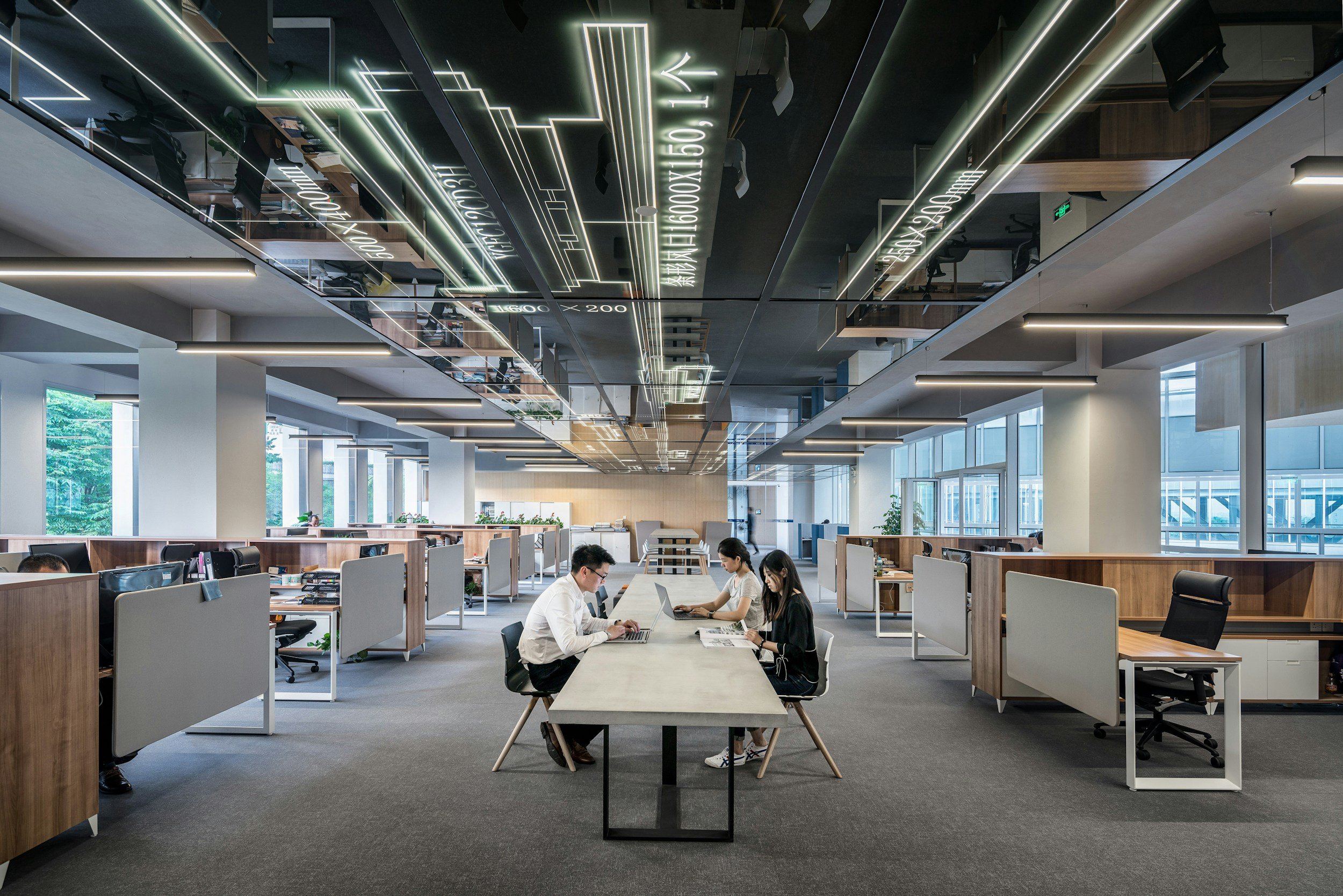
Traditional office space. The classic setup: private offices, conference rooms, a reception area, and a mix of open and closed workspace, leased directly from a landlord on a multi-year term. This is what most established businesses, law firms, accountants, agencies, occupy, and it gives you the most control over your layout and branding.
Creative / loft office space. Open floor plans, high ceilings, exposed brick or ductwork, and lots of natural light, often in converted warehouses or older industrial buildings. Tech companies, design studios, and creative agencies gravitate here because the aesthetic fits their culture and the open layout supports collaboration.
Coworking space. Shared, flexible office environments where you rent a desk, a private office, or a membership rather than signing a long lease. Coworking is ideal for freelancers, remote workers, and small or fast-growing teams that want flexibility and amenities without the commitment. If this sounds like your speed, here's my guide to Nashville coworking spaces.
Executive suites / office suites. Move-in-ready private offices, usually furnished, with shared amenities like reception, conference rooms, and internet bundled in, leased on shorter, simpler terms than traditional space. They're a great middle ground for a small business that wants a private, professional office without building one out. I've written a whole guide to affordable office suites in Nashville if you want to see how the format works.
Medical office space. Purpose-built for healthcare, dentists, clinics, specialists, with extra plumbing, reinforced floors, specialized HVAC, and layouts designed for exam rooms and patient flow. Medical office is its own niche because the build-out is expensive and the tenants tend to sign long, stable leases.
Flex space. A hybrid that blends office with warehouse or light-industrial, an office in front, functional space in back, all under one roof. It's popular with businesses that need both a professional face and operational space, and it's one of the most in-demand property types right now. Here's my complete guide to what flex space is and why demand is so strong.
Office Building Classes: A, B, and C
Beyond the type of space, every office building gets an informal grade, Class A, B, or C, that tells you where it sits in the market. There's no official governing body handing out these grades; they're a shorthand brokers and investors use based on a building's quality, age, location, and amenities. Here's how they break down.
Class A. The best buildings in a market, newer or recently renovated, prime locations, top-tier finishes, strong amenities (fitness centers, structured parking, modern systems), and professional management. They command the highest rents and attract credit tenants. If you want the nicest space and the prestige address, this is it, and you'll pay for it.
Class B. Solid, functional buildings that are a little older or in slightly less prime locations, well-maintained but without the premium finishes and amenities of Class A. This is the workhorse tier where a huge share of businesses land, because the rent is reasonable and the space is perfectly good. Class B is also where value-add investors love to play, buy it, renovate it, and push it toward Class A rents.
Class C. Older buildings, often 20-plus years old, in less desirable locations, with dated systems and finishes and fewer amenities. Rents are the lowest here, which makes Class C attractive to budget-conscious tenants and to investors betting on redevelopment or a neighborhood turning around. The trade-off is higher maintenance and less appeal to employees.
A building's class is driven by a mix of factors, its age and condition, the quality of its location and access, the finishes and amenities, the tenant roster, and how well it's managed. The same building can also carry different grades in different markets: a Class A building in a small town might only rate a Class B downtown.
How Office Space Is Measured (RSF, USF & Load Factor)
This is the part that trips up almost every first-time office tenant, and it's where you can quietly overpay if you don't understand it. Office space is measured in a few different ways, and the difference between them directly affects your rent.
Usable square footage (USF) is the space you actually occupy and control, your offices, your conference rooms, your work area. It's the space inside your four walls.
Rentable square footage (RSF) is what you actually pay rent on, and it's larger than your usable space. RSF includes your usable area plus your share of the building's common areas, lobbies, hallways, shared restrooms, elevator banks. In a multi-tenant building, you're paying for a slice of the space everyone shares.
Load factor (sometimes called the loss factor or add-on factor) is the percentage the landlord adds to your usable space to get your rentable space. If your usable area is 1,000 square feet and the load factor is 15%, your rentable square footage, the number your rent is calculated on, is 1,150. Load factors typically run 10% to 20%, and a high one can meaningfully raise your effective cost, so always ask what it is before you compare buildings.
The practical takeaway: when you compare two spaces, compare them on rentable square footage and ask for the load factor on each. A "cheaper" building with a 20% load factor can easily cost more than a "pricier" one at 10%. To run the actual numbers on a space you're considering, use my commercial real estate calculators to translate a rate per square foot into a real monthly cost.
Leasing Office Space: What You Need to Know
Once you know the type, class, and true size of a space, the lease is where the real money is decided. A few essentials every office tenant should understand.
Lease type determines what "rent" really means. Office leases are usually structured as full-service (gross), modified gross, or triple net (NNN), and the label completely changes what's included. A full-service lease bundles utilities, taxes, insurance, and maintenance into one number; a triple net lease makes you pay those separately on top of base rent. Two quotes can look identical and cost wildly different amounts depending on the structure. Here's my full breakdown of NNN, gross, and modified gross leases so you can compare deals apples to apples.
Watch for operating expenses and CAM. Beyond base rent, most office leases pass through a share of the building's operating costs, common area maintenance, property taxes, insurance. These can rise year to year, so understand what you're on the hook for. My guide to CAM charges covers how these work and what to negotiate.
Build-out and tenant improvements are negotiable. Almost no office space fits your business perfectly off the shelf, so you'll often negotiate a build-out and a tenant improvement allowance, money the landlord contributes toward finishing the space. This is one of the most valuable things you'll negotiate. Start with my guides to the commercial build-out process and tenant improvement allowances.
Term, escalations, and concessions matter as much as rate. A longer lease term usually earns you a bigger build-out allowance and more free rent, but locks you in. Annual rent escalations (often 2-3%) compound over the term. And in a tenant-friendly market, free rent and other concessions are very much on the table, if you ask.
What's Shaping the Office Market in 2026
The office market has changed more in the last few years than in the previous few decades, and if you're leasing or investing in office space in 2026, these are the forces you're navigating.
Hybrid work reset demand. Remote and hybrid work permanently changed how much office space companies need and how they use it. Many tenants have downsized their footprint, and the space they do keep is designed more for collaboration and meetings than for rows of assigned desks. That's left elevated vacancy in a lot of markets, which is generally good news for tenants negotiating a deal.
Flight to quality. This is the single biggest theme in office right now. With more options and softer demand, tenants are trading up, taking advantage of the market to move into nicer, better-amenitized Class A space, often for close to what they used to pay for Class B. Well-located, high-quality buildings are holding up; older, commodity space is struggling. It's a tale of two markets.
Amenities and employee experience drive decisions. Because companies now have to give people a reason to come in, the quality of a building's amenities, fitness, food, outdoor space, modern systems, and the surrounding neighborhood matters more than ever. Landlords are investing heavily here, and tenants are choosing space partly as a recruiting and retention tool.
Suburban and secondary markets are holding strong. Well-located suburban office and space in growing secondary markets, like a lot of what we see here in Nashville, has generally weathered the shift better than aging downtown towers in the biggest metros. Proximity to where employees actually live has become a real advantage.
How to Choose the Right Office Space
Pulling it all together, here's how I'd think about picking a space. Start with your real needs, how many people, what kind of work, how much growth you expect over the lease term, so you don't over- or under-lease. Match the format to your stage: a coworking membership or an executive suite for a small or new team, traditional or creative space once you need control and identity.
Then weigh class against budget honestly. Class A buys you prestige and amenities; Class B often delivers 90% of the function for meaningfully less. Location drives your commute, your client experience, and your ability to hire, so weight it heavily. Compare spaces on rentable square footage and load factor, not just the headline rate, and read the lease structure carefully so you know your true all-in cost. And negotiate everything, rate, term, escalations, free rent, and the build-out allowance are all in play, especially in today's market.
Most importantly, get a broker who represents you, not the landlord. Tenant representation typically costs you nothing (the landlord pays the commission) and a good broker will save you far more than that in the negotiation.
Frequently Asked Questions
What is considered office space?
Office space is commercial real estate used by businesses for administrative, professional, or knowledge work, private offices, conference rooms, and workspaces, as opposed to retail, industrial, or manufacturing space. It ranges from a single suite to an entire high-rise and is one of the four major commercial real estate asset classes.
What are the different types of office space?
The main types are traditional office space, creative or loft office space, coworking space, executive or office suites, medical office space, and flex space (a blend of office and warehouse). Each is built for a different kind of tenant and leased on different terms.
What are Class A, B, and C office buildings?
They're an informal grading of building quality. Class A buildings are the newest, best-located, and best-amenitized and command the highest rents. Class B buildings are solid, functional, and moderately priced. Class C buildings are older, in less desirable locations, and the most affordable. The grade reflects age, condition, location, amenities, and management.
What's the difference between usable and rentable square footage?
Usable square footage (USF) is the space you actually occupy inside your walls. Rentable square footage (RSF) is what you pay rent on, your usable space plus your share of the building's common areas. The percentage added to get from usable to rentable is the load factor, usually 10% to 20%.
How is office space rent calculated?
Office rent is typically quoted as an annual rate per rentable square foot. You multiply that rate by your rentable square footage and divide by 12 for a monthly figure. What's included depends on the lease type, a full-service lease bundles in operating costs, while a triple net (NNN) lease adds taxes, insurance, and maintenance on top of base rent.
Key Takeaways
Office space is an umbrella term. The type, building class, and lease structure underneath it are what actually determine cost and fit.
Know the formats: traditional, creative/loft, coworking, executive suites, medical, and flex, each fits a different stage and kind of business.
Class A, B, and C grade a building by quality, age, location, and amenities, and drive the rent you'll pay.
Compare on rentable square footage and load factor, not the headline rate, a high load factor can make a "cheaper" building cost more.
Everything is negotiable, especially in 2026's tenant-friendly market: rate, term, free rent, and the build-out allowance are all in play.
Want to go deeper on leasing, valuing, and investing in commercial property? Explore more guides on the commercial real estate investing hub.
Leasing your first office space?
Get my step-by-step blueprint, a community of active investors and operators, and personalized coaching inside the CRE Accelerator.
Learn About the CRE Accelerator




Your buildout budget is probably off by six figures. Not off by a little. Off by enough to blow up a deal you just spent three weeks underwriting.