
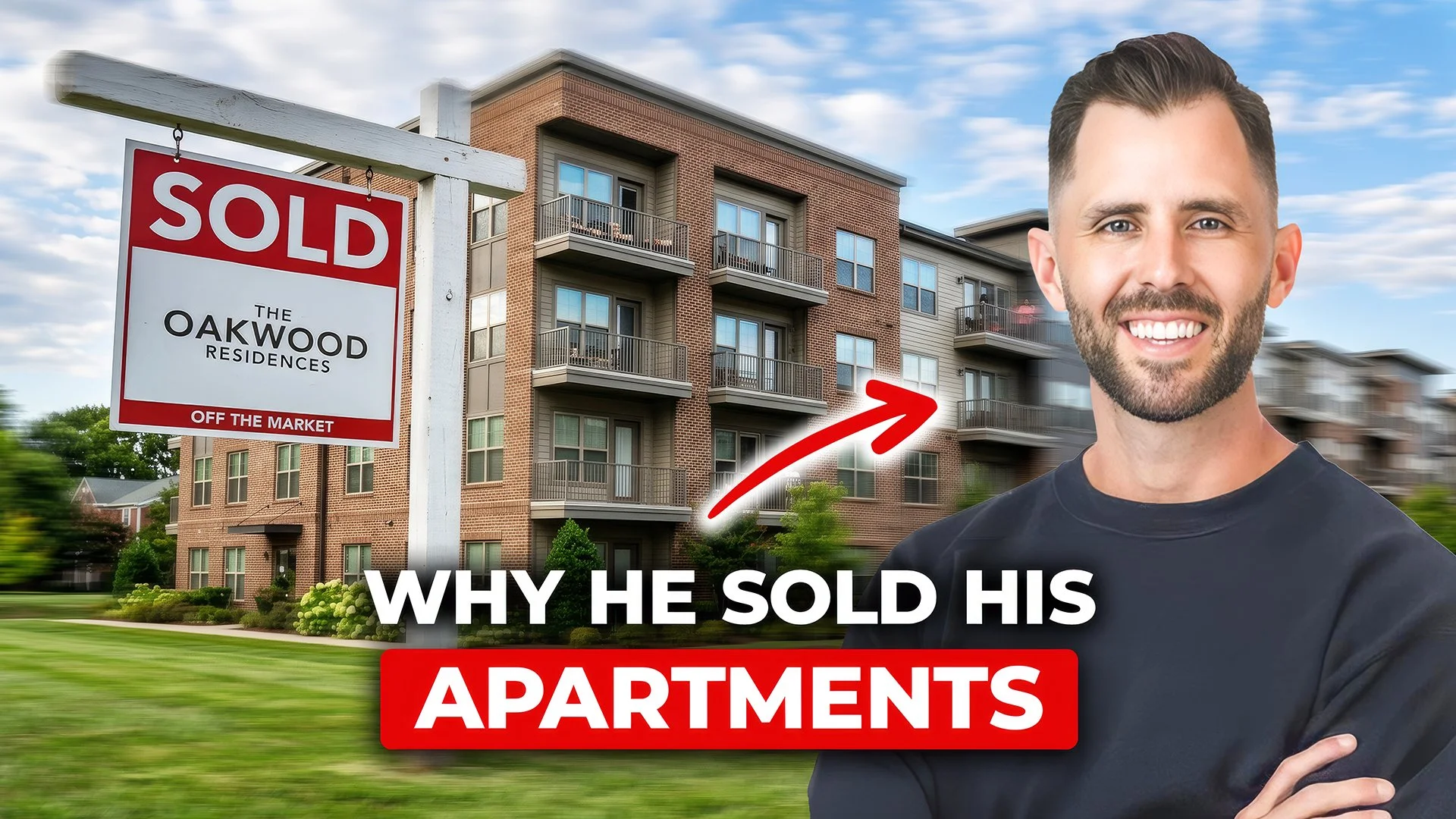
He Traded His Apartments for a Commercial Building and Made $100k
Chad Acerboni isn't a full-time real estate investor. He's a tech sales executive who's been quietly building a portfolio on the side — one intentional move at a time.
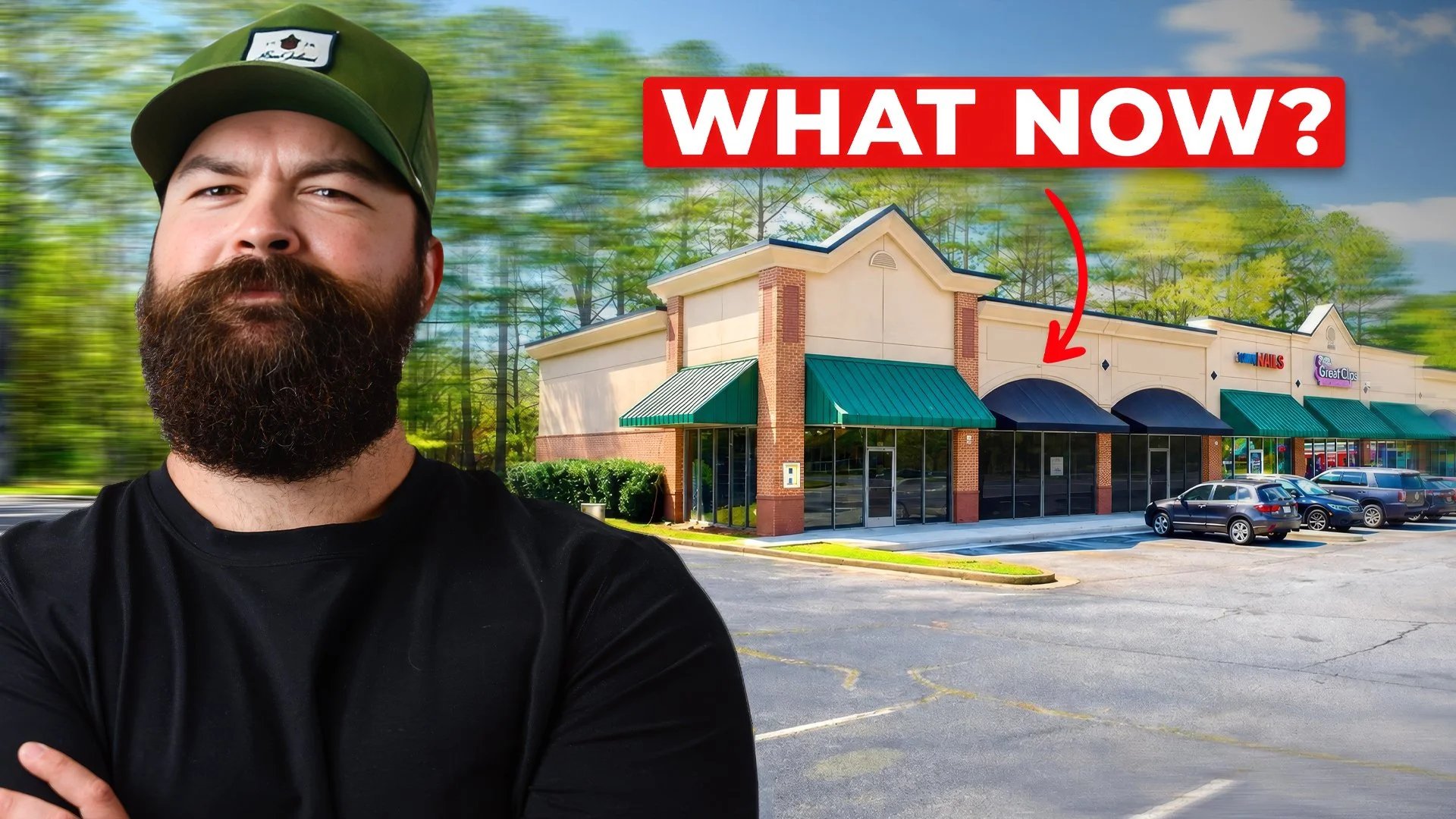
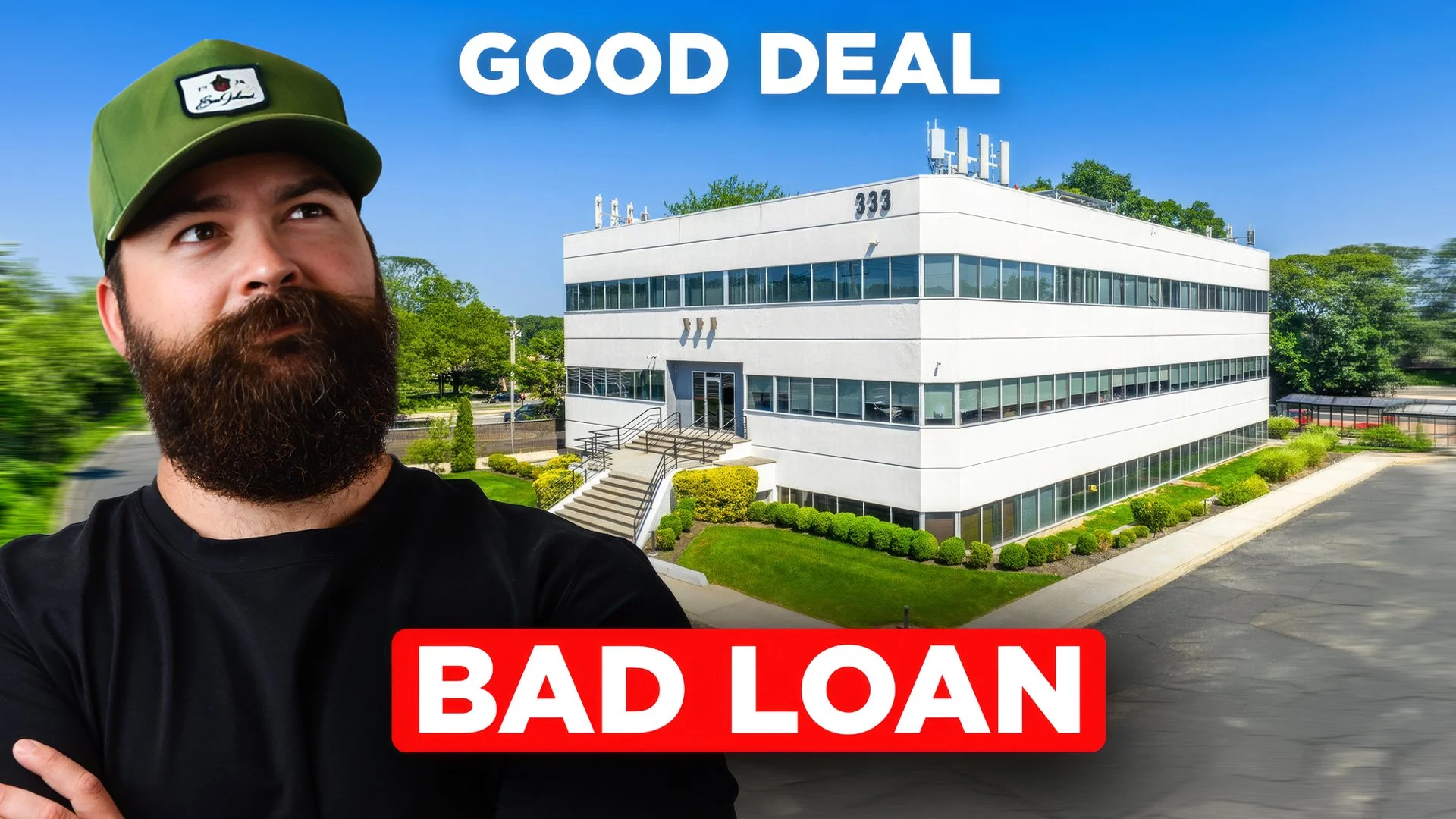
His latest move? Selling his apartment complex, paying zero taxes on the sale via a 1031 exchange, and closing on a 30,000 sq ft mixed-use commercial building for $2.1M. The appraisal already came back higher than his purchase price.
But the real money is in one vacant space. Once that's leased up, the building jumps from $2.1M to nearly $3M in value. Not from a renovation. Not from a major capital project. From a signature on a lease.
That's commercial real estate.
In this video, Chad breaks down the entire journey from his first small multifamily deal to executing a 1031 exchange into his first commercial property, including how he used AI to identify the right market, how an Uber driver accidentally confirmed the deal was worth pursuing, and how he underwrites every deal in three buckets: worst case, most likely, and best case.
Get commercial real estate coaching, courses, and community to jumpstart your investment journey over at CRE Central: www.crecentral.com
Key Takeaways:
Strategic Upgrade via 1031
Chad is selling his 4‑plex and using a 1031 exchange to buy a 30,000 sq ft mixed‑use commercial building, effectively trading up his “Monopoly pieces.”Day‑One Equity and Cash Flow
He put it under contract for $2.1M; it appraised at ~$2.2M, so he’s walking into ~$100k equity on day one, plus immediate cash flow from two existing tenants.Massive Upside from Vacancy
There’s one vacant space; after some TI and improvements, leasing it is projected to push the property’s value to around $2.9M–$3.1M within about a year.Disciplined, Worst‑Case‑First Underwriting
He underwrites every deal with worst / most‑likely / best‑case scenarios and only proceeds if the worst case nearly works, focusing on cap‑rate spread over interest rate and realistic expenses.Intentional Growth & Skill Transfer from Tech
He uses his tech sales skills (pipeline building, numbers, understanding the customer/market), combined with a very intentional, one‑step‑at‑a‑time mindset, to build long‑term wealth over 10–15 years rather than chasing quick wins.

About Your Host:
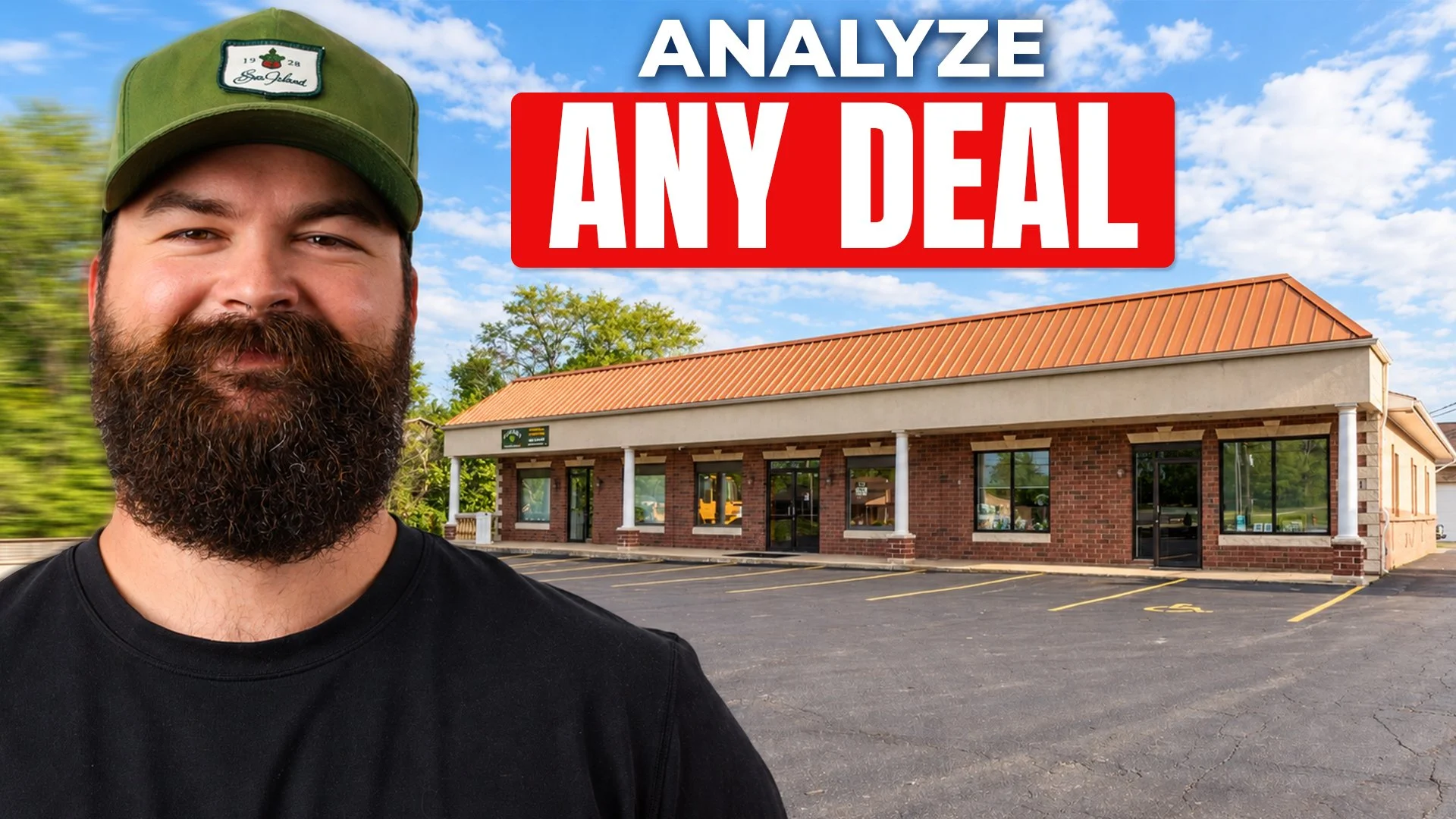
Tyler Cauble, Founder & President of The Cauble Group, is a commercial real estate broker and investor based in East Nashville. He’s the best selling author of Open for Business: The Insider’s Guide to Leasing Commercial Real Estate and has focused his career on serving commercial real estate investors.
Episode Transcript:
Tyler Cauble 0:00
I this episode of the commercial real estate investor podcast is brought to you by my cre accelerator mastermind, where you'll get access to my step by step investment blueprint, essentially a library of resources on how to invest in commercial real estate. You'll get connected to a supportive community of other commercial real estate investors that are doing projects just like you. You'll get personalized coaching and feedback from me every step of the way go to www.crecentral.com to learn more. Many of you all are sitting there today with portfolios of single family residential homes or multifamily apartment complexes and wondering, how do I transition from this skill set, from residential and multifamily into commercial? And today, we're sitting down with Chad atriboni, who has joined the CRA accelerator mastermind as of October. And as of today, we're recording this March 19, 2026 he's already in a 1031 exchange sold his apartment complex to buy a commercial deal up in the north. Really excited to be diving into this project with you today. Chad, that was a bit of a brief background on yourself, but tell us a little bit
Speaker 1 1:15
more about you. How'd you get started in real estate? Man, yeah, for sure. Thanks for having me on Tyler. So I got started probably about five years ago, roughly quick, high level overview of me. I'm actually in tech, so I'm an account executive for a large technology firm, and, you know, we were heavily based on Commission checks and and so I was taking those commission checks, and I was doing your normal investing and mutual funds, ETFs, and all those and all those beautiful, beautiful vehicles, and I was trying to figure out a way to diversify the portfolio. And and real estate, obviously, is always coming up, and it's back of mind. And a lot of people, my network and family, have done very well in real estate. So I'm like, All right, why don't we take one of these Commission checks and and go invest in a real estate property. And so about five years ago, I did a bunch of research and online and and just a lot of education, YouTube, university, if you want to call it, and I went out and bought a, bought a little, small multifamily property, and that was the first one that got me going. The first year, you know, I did a cash out refi on it. I was like, Wait, the bank's gonna pay me money back, tax free, because the area that I bought it in was appreciating very heavily, and, you know, rents were going up, and everything was was going out, fantastic. So I did a cash out refi in the first year. I'm like, wow, real estate's awesome. I took 50% of my capital back. My cash on cash return was still 30% I'm like, this is fantastic. How can I do more? And so since that time, kind of evolved. Over the past five years, I've been involved in multiple different things, from short term rentals, a lot of land development. We do horizontal land development, you know, buy 40 Acres, subdivide into 10 acre parcels, bring out some power, flip the lots, et cetera. And now I'm really trying to figure out ways to grow the portfolio and kind of play that monopoly game that you talk about, buy one exchange into another property, bigger, do the same thing, you know, and and grow it. So that's kind of, that's kind of where I got started, you know. And it's great for me, because I actually really love my tech job. But on this. I can do this on the side. Essentially, you got to be very diligent in regards to it, and that's where I am now. So me, I'm currently executing a 1031 exchange on on that first property that I originally bought into a mixed use commercial property. It's about 30,000 square feet, and we're under contract right now, and we're about to, you know, remove due diligence next week and close the first week, April.
Tyler Cauble 3:42
Congrats, man. It's really exciting to see. I mean, we've been working on this one for a little bit now, and having gone through the process from, you know, day one, like underwriting this, to, you know, hearing you come back from meeting with the tenants, you know, because you flew out there and met with everybody, tour the properties, and just your thoughts after that, it's been really cool. We'll dive into all that today. Okay, so you get this first multifamily property, why not go buy 20 more of those?
Speaker 1 4:09
Yeah, you know, I so one thing for me was, like, always cash flow. And, like, that's what I was chasing. Like, you know, is the cash flow. And so I got that, I got that thing going. I'm like, Okay, this is, this is pretty nice. And I'm like, How can I look at different avenues or asset classes that can produce a little bit more cash flow for me? Because in the multifamily, you know, to scale bigger, it's a little bit more difficult to get that cash flow so high, you need so many units, and then you might need to bring in some partners. And for me, I just like to operate kind of by myself, be nimble, that lone wolf, and just kind of be responsible for my own perspective and, like, my own little portfolio. So I wasn't really, I didn't really head out to, like, find and go, like, scale this because, like, again, I'm in tech, and I enjoy the job and and where I'm at there. So for me, it was, like, more I'm thinking. More of a wealth, like a long term perspective, like the viewpoint like, hey, in 1015, years, can I have this great job in tech? Have a portfolio, you know, well balanced portfolio of some stocks and, you know, mutual funds, all those beautiful things, but then build out this real estate portfolio in the background where I step back in 15 years and everything you know has certain come to a certain cultivation, or the certain point where I have a very well balanced portfolio. So I kind of, I kind of slowed it down, to be honest, because I just want to take that one monopoly piece, make it bigger into the next monopoly piece, and make it bigger into the next monopoly piece. Because I sometimes when I go a little too fast, I can mess up. So it was just about really slowing down to go fast and really building this thing out. And that's, that's kind of what's come to fruition. I took that first one, you know, and now we're transferring this 3000 square foot this next property. It's got three tenants in it, or it's got two tenants currently with one vacancy. And the upside is pretty tremendous. So, yeah, that's kind of, that was kind of the thought process around it for me, in regards to the
Tyler Cauble 6:06
way I think of things, what was your biggest learning curve coming from? You know, being in tech sales, getting into multifamily? Because I would imagine, right off the bat, there's some new things there that you probably hadn't experienced before.
Speaker 1 6:18
Yeah, I mean, so that's, a very good question, and I think a lot of it really translate, like what I do in tech, in the day to day translates over to Real Estate, like hunting. You got to find the right deals, right tech. You've got to build pipeline. You got to find customers. You got to understand your customer. Same to the markets in real estate, where are you going to buy? You know rule number one, location, location, location, super key, right? So I think that, like, those translated really well over to it. I think from like, the challenge perspective that that was understanding is all the nuances in the process, in the beginning of the transaction, is that that first phase and the second phase is like the stabilization of it, okay, our markets are here today. Where can we push those or our rents are here today. Where can we push those rents to? How can we be operationally efficient? Too for me, I buy all my properties out of state, so a property manager is extremely key for me. So understanding the property management and what these property managers are good at, and what Aren't they good at, you know, we were talking a little bit Tyler, you know, offline earlier today, I like more of a boutique firm, because they're like, I like the Bulldog. I like the Bulldog, but can be a puppy, right? The one that sees something and goes after it and fixes it right away and takes care. Because, to me, relationships are everything. So I think, I think, like, the biggest thing that I learned in in regards, kind of for coming from the tech sector. And you also have to know your numbers. I mean, numbers are everything. So when I underwrite a deal, I always kind of put it three buckets. I always do a worst case scenario. I always do a most likely and then I do, like a best case scenario. And so I'll underwrite everything on a on kind of like the worst case scenario. And for me, if it doesn't make sense, or close to making sense, the worst case scenario, I won't be, you know, generally, moving forward on the on those types of deals. So I think at the end of the day, from like, the learning standpoint, I've been lucky enough, in regards to kind of what the habits and the day to day in the tech field, they translate really well into real estate. And the thing that I love about the real estate is you have the opportunity to force the appreciation. Like, when I'm in tech, I can't, you know, what I sell, like a server for, or, you know, whatever product I'm selling, I sell it for a certain dollar amount with a real estate property, if we have some vision and some vacancies or some lease ups that we can do if, you know, if there's, if there's ways that we can improve that net up, net operating income to force appreciation. That was something that I really took affinity to. So, yeah, just kind of some, some feedback there.
Tyler Cauble 8:49
Yeah, what? What got you initially interested in commercial real estate?
Speaker 1 8:53
I think that point, I think that, you know, listening and just understanding, like I set time every morning and night to work on self development. Like that's a big characteristic that I that I've really instilled in myself, and is just learning. And so when you see the commercial real estate, and you see all these operators are out there, I mean, you hear it from everyone, the most millionaires are made by real estate. So I'm like, Okay, I gotta, I have to understand this game. And so when you looked at the commercial side of the house, and the ability to force that appreciation given a good business model, that's what really turned me on to it. And so that's where I start. That's where I started, kind of like in the small multifamily game, got my bearings. I didn't jump into the deep end too quick. I understood I under, kind of understood that process. I'm like, Okay, I got the hang of this. Now let's elevate the game, and let's go and get some commercial properties and take out some more risk. But now I have full knowledge on how to do it and execute it.
Tyler Cauble 9:49
You know, one thing that I've noticed about you is how intentional you are with how you approach everything which which is a really admirable quality for somebody to have. Because, you know, guys since China. Had joined back in October, every single call that we've had. The very last thing he always asks, no matter what kind of conversation we have, is, all right, what? What is my next steps? What am I doing now? Okay, here's the here's the two things you got to go do this week. And he comes back, and the first thing he does is report to me on the two things that you know. We said, Hey, these are your next steps. It's look at where he is. We're six months into it. He's already doing a 1031, exchange into his first commercial property.
Speaker 1 10:27
So being in I think, and that's where I think, you provide such great guidance. Tyler is, because you can look at all this stuff online, you can do these things. And that's where I make investments, like, in regards to self development, I do a lot of mentorship courses. I have a lot of mentors. You know, I'm in an area where there's a lot of heavy real estate hitters. I reach out, and this is like, you know, your network, you know, is really important. And so I look success. Success leaves clues. So I just look for the successful people you know, their their their track record, historically speaks for themselves. And I'm like, okay, these guys know what they're doing. And I'm like, All right, we have a conversation. And it's really simple, what's like, the one or two takeaways that I can get to the next step? And that's the one thing I think breaking it down is everyone wants to, like, see, like, the big picture, and it gets really stuck and like, Oh, I'm not there yet, or I haven't done this yet, when really, like, just taking one step at a time and moving the ball down the field is so critical, because a lot of people just don't take action because it's so overwhelming. So the way I think about it, my little brain, it's like, what's what's the first step, what's the next step? And I just keep doing that system systematically, and then the results will, you know, eventually come to fruition.
Tyler Cauble 11:38
That's all it takes. Is if you move the ball forward a little bit every single day, you're going to get to the end zone. Like, it's impossible for you not to, right? So there's always, you know, what's, what's the next little thing that I can be working on. I remember when we, when we first bought peerless mill, you know, outside of Chattanooga, it's 29 buildings. It's one and a half million square feet. Everybody was asking me, like, how do you take down a project like that. I was like, easy, one building at a time. Yeah, we're not gonna worry about one and a half million square feet, because I, you know, what if I had $100 million to spend, you know, I don't know that I'd be, I'd be in Nashville anymore. I might be down in the Dominican or something, but it's just one little building at a time. Yeah, man, come on. We got to keep growing this portfolio. We'll go take a
Speaker 1 12:23
vacation, for sure. And so, like, that's another thing, like, I've learned is, like two things, like, what is this teaching me? I always ask myself, like, what? What is this teaching me? It's not, it's not a it's not a loss to me, unless you learn. I try to really mitigate the downside. And I always ask myself, What is the worst case scenario in anything in life, whether it's your relationships, work, business, real estate, like, what is the worst case scenario here? And then I move based off that. So, like, we, if we're using the football analogy, I'm moving the ball down the field, I just got a first down, then all of a sudden, maybe I have a false start penalty, and I move back five yards. Okay, what did I learn from that, from that instance? And then how do I make sure I don't, don't do that again, right? And that's, that's what been with, like the real estate portfolio. And as we get things going here, and I think it's just like, it's so simple, but it's so hard. It's just like taking the action and kind of also understanding where you want to go. Like, I had this in my mind, this one property scale in the next property scale, into the next property and then just continue to go. And I had to, because I'm, I don't know, very a personality or like to get after it. It was difficult because, like, you don't when you're in the weeds, it's hard to see the higher level. But if you just keep doing it and aligning yourself, and have some processes to kind of just check in review the business on however you want to do it, quarterly by annually. Or annually. You kind of get the flywheel going and the ball rolling, and then all of a sudden, it just kind of starts to mount on itself. And it's really difficult today, because you see so many people touting these stories with success super fast. You got guys building on Claude and making millions of dollars. You know, with AI, you have all these stuff, but real estate is kind of just the slow, methodical play that if you stack your chips right and you do the right things, and you surround yourself with, like a good team, you know, it can generally, it can, you can generally morph pretty well.
Tyler Cauble 14:12
Yeah. I mean, here's the thing, wealth never builds fast. I think that there are some people that will get lucky and and they hit the lottery, and somebody builds the next Facebook. But like, look at nfts. I mean, remember when that took off? I had a bunch of buddies who were investing way too much money into that. And look at what happened with that. When things go up fast, they can come down really fast too. And that's what I love about real estate. Like, it's a it's a hard, tangible asset. It's kind of hard for it to lose a lot of its value, you know, which is sure, and when we talk
Speaker 1 14:41
about, like, I like, I'm trying to stay on a singular focus with the task, because, like, you know, I have the tech job, we have a family, we have everything going on. So I kind of asked myself each day, like, what's my most important task for, like, real estate that I need to work on today? And just make it very, very simple, and just break it down, and then, and. It, then you move the ball down the field.
Tyler Cauble 15:02
Yeah. So okay, so the first thing you did when we joined, we started talking about prepping your apartment complex for sale to maximize your exit price. It also is now a good time to sell, because, remember, we were going into the winter, and so we had a bunch of conversations around that. So talk to us about getting the apartment complex ready for sale. What was that process like? How did you work with your brokers? What was the approach?
Speaker 1 15:25
Yeah. So the first step, I was looking at my, you know, everyone generally knows, like ROI or cash on cash. I was looking, actually looking at my Roe, my return on equity. So my return on equity started to it was pretty much stabilized at that time, and I know it wasn't gonna go, go much more for another year or two years, because the market was kind of tapped, and this was, like, this was a four Plex we were trading out off of. And, you know, a four Plex, two to four units, they're based on general comps in the area, right? They're valued differently than a commercial building, or commercial like a big multifamily or whatever commercial asset you're looking at. So my Roe was essentially, kind of like stabilized for a year or two. So I'm like, All right, my either gonna move? Am I gonna go get in the uncomfortable waters and go do this 1031 exchange that everyone says is so great, but it also is so stressful, or do I just want to be complacent? I'm like, No, it's time for growth. So I listed it. I had to your point. It was towards the end of the year, and I was deciding, like, should we list it, or should we not list it? And I kind of thought to myself, and we had this conversation, and it's like, hey, we might be able to find a 1031 buyer, because it's end of Year guys looking for tax write offs or, you know, certain items. I might get one we listed it end of November, got an offer within a week for, funny enough, a 1031 buyer. So we got that under contract. They actually wanted to close faster. Which was, which was, you know, good, but I, but given me going into the 1031 I actually want to delay a little bit. So we delayed another 30 days till the end of January, because I wanted to go find a very sustainable property that I could trade into. So that's kind of like was the thought process around, you know, when should I list it? Why should I list it? And I think just, just to summarize this, my Roe was tapped, and then the timing and those two things kind of played into it. And the thing that I was thinking about, I was talking about risk or downside earlier, you know, the question was, all right, well, what if we list this thing and it doesn't, it doesn't sell? I'm fine. I was like, okay, worst case scenario, I pulled off the market. It's cash flowing, great, no problem. We'll go list it another six months. I have no issues.
Tyler Cauble 17:33
Yeah, I think it's really, like, a really important takeaway, right? There is to not let the end of the year scare you away from listing your property, because so many people think it's the end of the year, the holidays, nobody's going to be paying attention to it. Everybody's reconciling for the end of the year. They're planning for the next year. But there's a pretty fair amount of buyers out there that are in that 1031 exchange, because they ended up selling in September or October, and they've got to get it done. So it never hurts, especially if you've got a great asset, you've prepped it the right way. Just go ahead and take it to market, especially if you've got a great brokerage team. So Chad going from multifamily jumping into commercial, what were some of the biggest differences you found? You talked earlier about how important running the numbers and analyzing is. I'm sure underwriting is probably one of those things. But now that you've you've officially put your apartment complex under contract, and you're searching for these properties. What's What's going through your mind?
Speaker 1 18:30
Yeah, so what is the next property going to be just as good or even better? And so that's where kind of the skill sets or attributes we're talking about building the pipeline, so finding it, finding a next good deal, so I really was diligent in regards to finding a good market to go into. And that was like the thought process. And then the second one was, okay, underwriting the deal, and working with, you know, tools to make sure I'm underwriting this appropriately and get the numbers that I'm looking at these deals are, is a, you know, I'll call, call it a home run deal, or whatever you want to dub it. So that was, and that was that took a lot of work and a lot of due diligence on the weekends leverage AI heavily to find certain markets. Because to me, markets are very critical, because I want to be in markets that are, have good businesses, have good growth, and all these things so leveraging like chat, GPT, grok, whatever tool you want to use. And I picked out two to three markets, and then I would look out for the top brokers in those markets. During this time period, I would see guys who have listings. I would reach out to insurance agents, because insurance agents are really well connected, and they have a very good purview of who Good, good brokers are, and not so much good brokers. So the property that we're buying right now was actually referred to me by an insurance agent. And he's like, Hey, you're at your I was looking at another property. I'm like, I might pull the trigger on this one looks interesting. He's like, it does look interesting, but I think you should reach out to this. Broker. He knows the market really well. He he has line of sight to everything. Call him, give him, give him a ring. Called him. It was fantastic. He gave me insight. He's like, Dude, don't touch this property. I got a couple you want to look at. Take a look at these. And then we dove into them. Started underwriting the deals, taking a look at them, and then, and then found one, and we're moving forward. How did you
Tyler Cauble 20:22
get comfortable with the underwriting process? Because I've found that that is the biggest, yeah, biggest differences between residential, multifamily and commercial is that the underwriting is totally different. So, so talk to us about the practice.
Speaker 1 20:35
Yeah, practice, practice, practice. And you know, you're not for I think the first time, it took me, like, an hour and a half to underwrite some deals with everything that goes into it. And but I think just the practice and overall comfortability of getting it, you know, the expenses. Expenses are everything on a commercial property. You know, you have gross leases modified gross you have triple net leases. You have all those types of leases that go into it, and then what's real versus what's not real. Because a lot of these OMS that you get, or these marketing brochures that these brokers put together, you know, you look at it, the operating expense ratio is like 10% you're like, 10% how is this building up? Operating at 10% that's, you know, the most effective team possible. And it's on, like, a modified gross you're like, how is that possible? And the only way I could understand that stuff was by just doing research and understanding it. So like I was able to, after, you know, putting in hours and hours of work and underwriting these in these models, I was able to really, kind of assess very quickly what's good and then what's not good.
Tyler Cauble 21:36
What was it about this deal that you're, that you've identified for your 1031 that you're, you know, going out of due diligence next week. What was it about that one that stood out to you? And said, Okay, this is a deal worth pursuing.
Speaker 1 21:46
Yeah. So it was in the market that I identified. So if I take it step by step, I used, I used AI, and I put in very specific prompts, I want a certain market with certain business growth, population growth, construction going in the air, building in the area, and so like, when I did it, like this, this region I'm going to there is a within a mile of the property, there is a brand new MLS soccer stadium that's going to host a minor league soccer team. There's a university that's very successful that's right next to it. Then within a mile a half, there's a 12,000 seat amphitheater that's being built by it's backed by a PE firm that's already hosting, like Mumford and Sons and and vans like that, artists like that. So I'm like, okay, that's, that's, that's great. That's number one. So I looked at, like, the market economics at first. The second phase was like, okay, the asset class, this asset class was on a commercial property. And so in my filters, when I was searching, I would be very specific. So you know, the cap rate. I would look at the cap rate, and when I would do filter, like I always filter, I got, I got an idea of how much my loan was going to be. I started talking to local banks. And if you're investing out of state, you know, finding a local bank is really key for you, because a lot of banks won't generally lend to out of state investors because you're not there. So I was able to get in touch with a local bank. I was like, Hey, give me an idea about an interest rate. And they gave me kind of like a ballpark of an interest rate. And then I would look at properties that had a couple basis points spread from the interest rate to the cap rate, because the cap rate is obviously, you know, if what you buy a property for in cash, that's the general return. So I looked at like properties with a certain cap rate. And this property was, we were buying at an 8.1% cap rate. And that was, you know, my loan was 6.3 so I know right away, right there, if those numbers are correct, I had somewhat of a good deal. And I was buying on in place income, not future or pro forma income, right, which we see a lot of the time as well. So when I'm looking at this property, it's, you know, it's 30,000 square feet. They have the one tenant's a coffee shop. One tenant is 20,000 square feet of office space. Leads to a multi billion dollar power tool manufacturing company. And then we have a vacancy. We have a vacant space. So in this vacant space, there's tremendous upside to it, because I'm buying at an 8.1% cap rate. I'm gonna be cash flowing on day one. And then also we have upside, because we're going to put a little TI and some improvements in into the vacancy, and we're going to lease that puppy out, and everything above that is going to be all cash. So that was kind of like the thought process around it, in regards to to how I went about it?
Tyler Cauble 24:24
Yeah, that's tough to beat, man. I mean, when you that's what I love about commercial real estate, especially in this size range, this price range, you can find good deals like that that will cash flow day one. But we're like you were talking about earlier, you can force that value and create a substantial amount of equity. Day one, just by going out, finding a tenant, signing a new lease, talking about creating substantial equity. Day one, we know what you you've got it under contract for, and today or this week, you got your appraisal back, you talked to us about what you ended up putting it under contract for, and the difference. Difference between that
Speaker 1 25:00
and the appraisal? Yeah, yeah, for sure. So we just got, we just got the appraisal back. We're under contract for 2.1 million currently. Right now, appraisal came back at 2.2 and some change, so we're already kind of walking into some equity on day one. And then once we get it leased in, at least out and up and with a tenant, it's going to be around $2.9 million and what think we'll be able to execute that within about the first year, hopefully, and go from there. And that's kind of like on a on a decent, you know, decent estimate. I think hopefully we'll be able to do better. But as I told you the beginning, worst case scenario, most likely and best case scenario will be trending somewhere in that 2.9 to say, $3.1 million and that's like the power to your question earlier, Tyler, and what you just said, the power of commercial real estate. I can't do that with the stock, you know, I can't do that with crypto. I can't do that with a lot of these vestments people go after. So for me, when I step back, and why I'm so happy I got into this journey is like, you know, I want to balance portfolio, and so I have those now, the, you know, the stocks and everything like that, those are rock and roll, and I'm stabilized. Because one question I always ask, worst case scenario, I don't want to put my family at risk. I don't want to put us to risk. But I'm also trying to build some wealth for my family moving forward and like so when I got, when I look at that, and look at the commercial real estate aspect. That vehicle that that it can, it hits all those marks on everything that we just that we discussed, and there's no other vehicle like that that I personally have seen you have business you can do. You can buy some businesses. Do you know the kind of merger acquisition thing too, and make things better, but that's I just love the commercial real estate side.
Tyler Cauble 26:39
Yeah, I love the business too, because you can, you can get in. You could typically cash flow more. You can create more value. The problem is you got to actively work on it. You know, manage it, manage the people. I mean, the great thing about this, like, day one, you're walking into $100,000 of equity. I mean, if you're, if you're bringing 25% down, you've already made 20% on your money just to buy the property, which is unbelievable. And then once you sign the lease, once you sign a piece of paper, like we're not even talking about you having to bring in a substantial amount of, you know, capital to fully redo this property, or to add this space on. It's already sitting there. It just needs to be filled by a tenant that's almost a million dollars in equity, pretty exciting. I want to know this before, before we close it out, you went up there, you sat down, you met with the tenants. You messaged me while you were sitting in the coffee shop, just talking about the things that you were hearing. What's that kind of talk to us about your gorilla approach, learning what was going on with the building, learning what was going on in the neighborhood. Because there were, I feel like you had a lot of observations as you were walking around the property.
Speaker 1 27:46
Absolutely. Yeah, so, and I think if we take it a step back, like everyone, like a lot of people, I'm located in Southern California, and, like, I'll tell people, like, you know, I invest in real estate. Like, oh, where I'm like, out of state. Like, you invest out of state. Like, how do you do that? Like, how do you like, inside like, you can't really wrap your mind around it, but to your point, you kind of need of need to take that guerrilla approach. You got to be willing to fly there. So, like, one thing that I do right is, like, I in regards to the markets, like, I like to tie the family into it, and things that I personally like to do. So like, this property, it's got cool college town, great football around it. So like, I see myself, I don't want to get on a plane and be like, oh shit, I got to go out here. Like, I like, I want to go to places that, like, I can, I can enjoy. And so that's kind of like, like, the precursor, if anyone's thinking about out of state, because, you know, if you are in SoCal cap, rates are 234, percent. You don't cash flow, and it's very difficult outside, like, all the landlord stuff you got to deal with all that. You know, that's a different topic, so that that was kind of like the approach to that. But I think from the gorilla approach once, you know, I get there and I have a, you know, I go out, try to go out, like once a quarter, but going there to your point, and sitting like I sat in the coffee shop for two full days worked, and I just, I sat back and just and just observed, and I heard multiple conversations of like people, you know, oh my gosh. I didn't know you. You come here. We come here all the time. Oh my gosh. I love this coffee shop. And then you can see the foot traffic that comes in, and you get a real, live look at exactly what's happening. I went to restaurants around the area. Hey, do you know about this, this coffee shop over here? Oh my gosh, I do. Yeah. My Uber driver on the way there I land in the airport, my Uber driver and I are striking up a conversation. One thing leads to another. He goes like, you know, what are you doing here? I'm like, Oh, I'm looking at some looking at some real estate. He goes, Oh, whereabouts? I'm like, oh, you know, over here in this area, he's like, Oh, the coffee shop. I'm like, yeah. He's like, I go to church with the owner. I'm like, seriously? He's like, Oh, yeah, I one of my friends lives in the building above. I'm like, No way. How long has he lived there? He's lived there for like, seven years. Does he like it? Yet he loves it. Okay, cool. And so, like that data you don't get from, you know, being an out of state investor just sitting on your computer. So it only solidifies, you know, my affinity for the asset and gets. Me real time, feedback around it. You sit there like just sitting there all day. You see the people that walk by. I know the bus stop when a bus comes. You know, with it, with the bus stop down, down the way, the walkability through everything, talking to other people in other businesses, it's just, it's the value get from that is so tremendous that if you're not doing it, it doesn't help you. And then getting in front of the tenants, most importantly, so when I'm out there, you know, I set up full days, I met the tenants, I met the property management company, I met some other brokers in the area, and then I met other property management companies too, because I'm, you know, taking taking a look at things, and everyone gives you a different perspective. But the great feedback that I always got was this asset is in such a great area, and there was really nothing negative to say. So and you do it like, when you you can kind of do live interviews, essentially, with people in the market that don't even know that you're buying it, and you're just getting real feedback. It's, it's like, it's like looking Google review, but real time.
Tyler Cauble 31:03
I love it, man. I mean, this has been a great conversation, talking about the intentionality behind every move that you've made, getting into this, utilizing AI and tools and practicing and doing the research. I mean, come on, if you're not big on the research and you got to use AI, it's phenomenal for doing that. And then, of course, the things that you cannot learn from a spreadsheet, just go sit in the coffee shop. You know you'll pick up on so much. Chad, this was a great conversation, man. Thank you for coming on and sharing it. If anybody listening wants to follow along with what you're doing with this property or buying other commercial properties, where can they find you?
Speaker 1 31:41
Yeah, I mean, shoot just shoot me. Trying to stay out. I'm trying to limit social media right now, but my my Instagram is chaverick. It's like Maverick, but chaveric, C, H, A, B, E, R, I, C, K, just shoot me. Shoot me a message there and I can help you out. There. You go.
Tyler Cauble 31:59
Love it, man. Thanks for joining us, guys, y'all have a good one. We'll see you in the next one. This episode of the commercial real estate investor podcast is brought to you by my cre accelerator mastermind, where you'll get access to my step by step investment blueprint, essentially a library of resources on how to invest in commercial real estate, you'll get connected to a supportive community of other commercial real estate investors that are doing projects just like you. You'll get personalized coaching and feedback from me every step of the way. Go to www.crecentral.com to learn more you.
Two identical commercial spaces. Same size, same property type, but one is worth $97,222 more because of how the lease is structured.
One rents for $14/SF triple net, while the other brings in $18/SF gross. You'd think the higher rent means a better investment, right?
Not necessarily.