
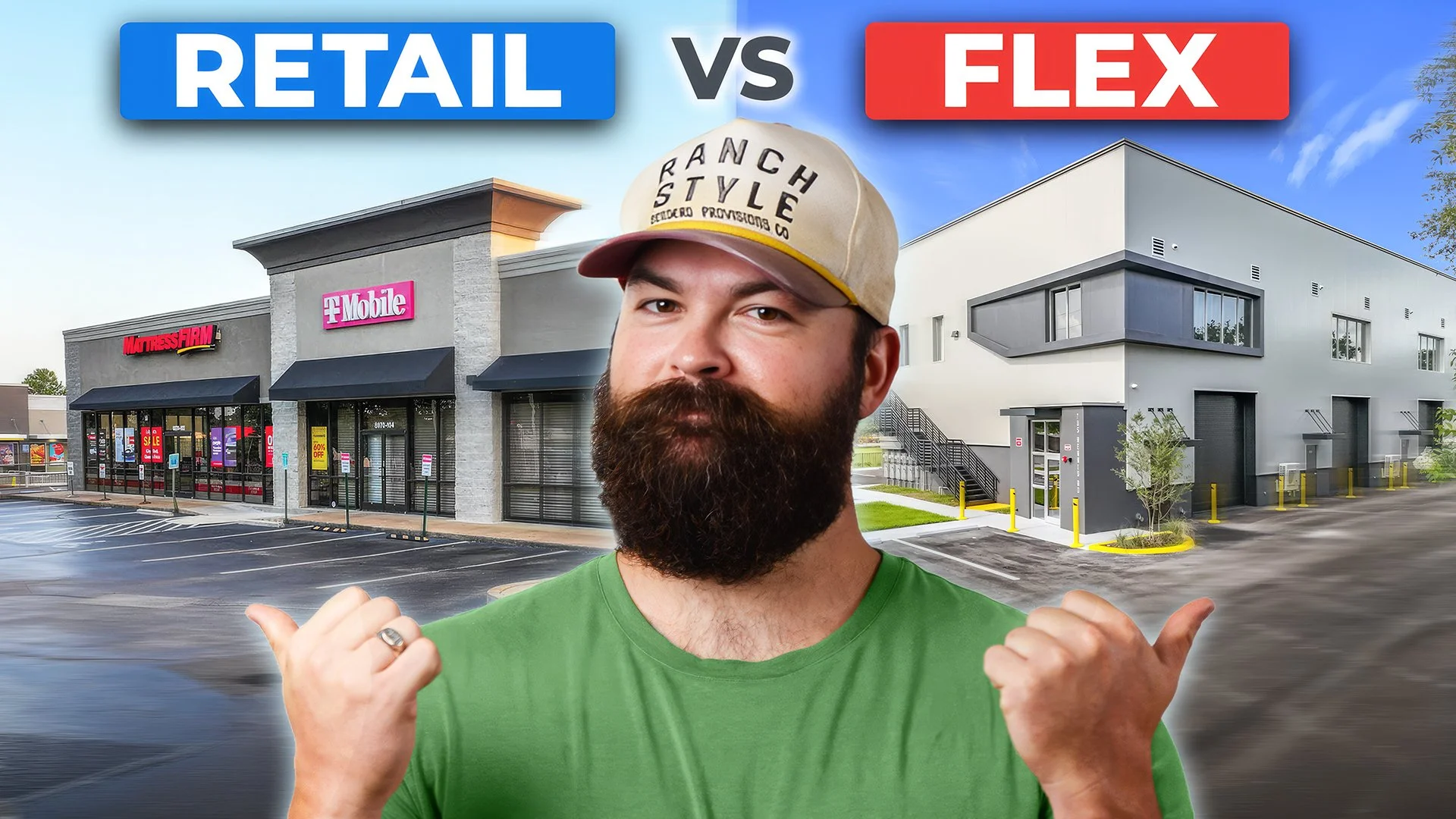
Will Retail Outperform Flex in 2026? | Office Hours
The asset class you’re probably driving past every single day might just be one of the best opportunities heading into 2026. It’s not what most people expect.
For years, flex and industrial have dominated the conversation. But right now, retail is quietly setting up for a strong run, backed by low new supply, stable vacancy, and renewed investor interest.
In this Office Hours session, I’m breaking down why retail is back on the radar and how to actually approach deals in today’s market:
Why low retail development is creating opportunity
The types of retail assets outperforming right now
How to evaluate a strip center (live underwriting example)
Where flex still wins and where retail might pull ahead
We’ll also walk through a real deal step by step so you can see exactly how to analyze it, spot value-add potential, and decide whether it’s worth pursuing.
If you’ve been focused on flex, this might challenge your assumptions and open up a new lane of opportunity.
Get commercial real estate coaching, courses, and community to jumpstart your investment journey over at CRE Central: www.crecentral.com
Key Takeaways:
Why Retail Looks Attractive for 2026
Retail is poised to outperform, especially vs. flex/industrial, due to:
Very low new development (only ~30M sq ft projected in 2026, ~70% single-tenant).
Steady demand and low vacancies (around 5% vacancy, which aligns with typical underwriting assumptions).
The U.S. is overbuilt on retail overall, but the type of new retail has shifted:
Less big-box expansion.
More mixed-use and smaller retail footprints.
Investor sentiment is bullish:
Cap rates have stabilized.
Transaction volume is above pre-pandemic levels.
Example: A Blackstone affiliate bought a $432M grocery-anchored portfolio, signaling strong conviction in retail.
Retail’s Fundamentals & Evolution
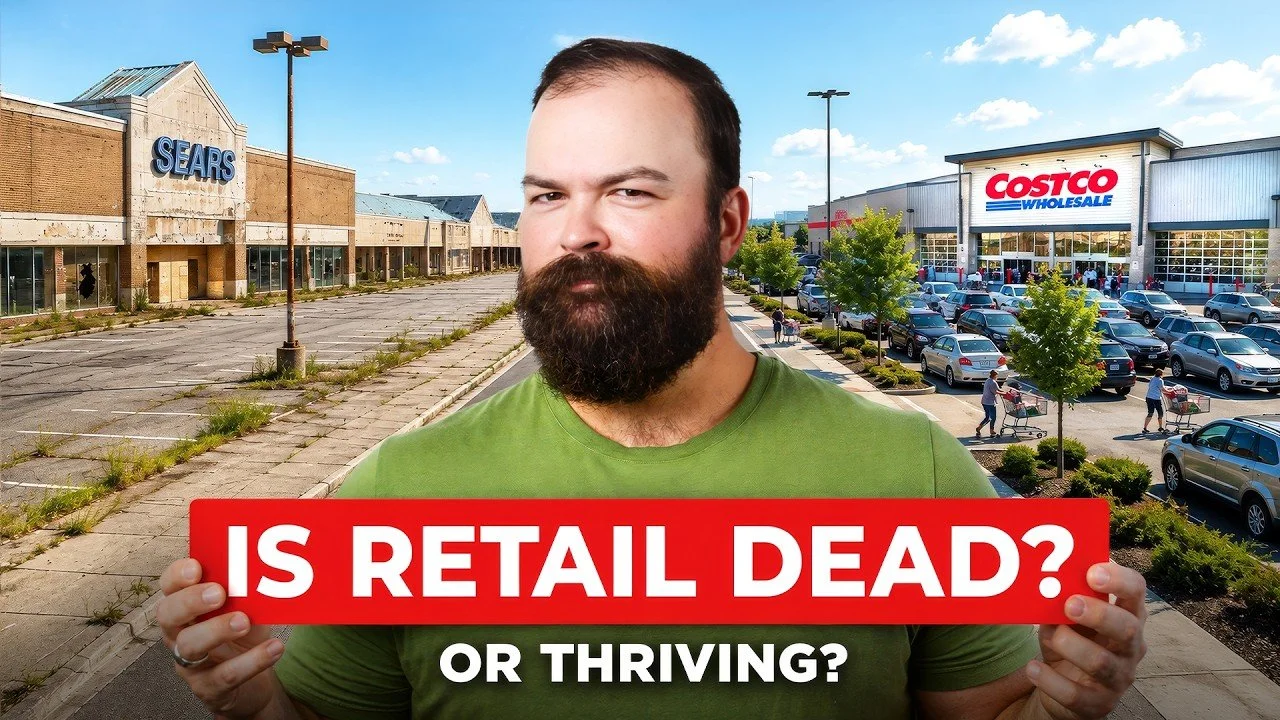
E-commerce and Amazon did not kill physical retail, but forced:
Some brands to adapt (e.g., Best Buy).
Others to disappear (e.g., Circuit City).
Successful retail is becoming more experiential:
People still want to touch/try/see products in person.
In-person shopping often beats the friction of returns from online purchases.
Neighborhood Strip Centers: The Sweet Spot
Unanchored / neighborhood strip centers (10k–50k sq ft) are increasingly attractive:
High occupancy, steady rent growth, strong investor interest.
Adaptive tenant mix and easier to manage turnover.
Tyler’s own portfolio of neighborhood retail:
Collected ~92–93% of rents during the pandemic by working flexibly with tenants.
Demonstrates resilience of well-located neighborhood retail.
Market Data & Tenants to Watch
Store openings (ex‑restaurants) projected to grow 1.4% in 2026.
Restaurant openings projected to grow 1.8%.
Tenants/brands to watch:
H‑E‑B, Michaels, Walmart, Dillard’s, Pop Mart, 7 Brew, Dave’s Hot Chicken, HomeGoods, EOS Fitness, Chuck E. Cheese.
Markets to watch (for retail strength and rent growth):
Salt Lake City, Reno (NV), Indianapolis, Raleigh–Durham, Tampa–St. Pete.
Forecast average rent growth ~1.5%, but value‑add deals can outperform this via:
Under-market rents.
Older centers with room for modernization and repositioning.
How Tyler Analyzes a Retail Deal (Key Lessons)
Using a Walmart shadow‑anchored strip center near Hopkinsville (~32.6k sq ft, asking $5.613M, ~7–9% cap depending on inputs):
Quick back-of-the-napkin test:
Purchase price per sq ft × 10% ≈ rent per sq ft needed for a 10% cap.
At $171/sq ft, that’s ~$17/sq ft NNN.
Financials from the OM:
Gross income ≈ $19.41/sq ft.
NOI ≈ $15.47/sq ft → roughly $4/sq ft in expenses.
Mix of NNN and gross/modified gross leases → value‑add by converting more to NNN.
Modeling assumptions & challenges:
Various scenarios on LTV (70–75%), interest rate (~6–6.5%), and rent bumps (1–5%/yr).
With current pricing and debt costs, IRR initially comes out too low vs. a 15% target.
To hit target returns, you either need:
Lower purchase price, or
Stronger rent growth / re‑leasing at higher rates, or
Some combination of both.
But:
Even at today’s terms, the deal can cash flow reasonably:
Around 6–7% cash‑on‑cash in year one at higher equity (e.g., 50% down).
Debt service coverage can be acceptable (~1.2x+) at some leverage levels.
With modest rent increases (e.g., ~$1/sq ft more), the value jump can be large when capitalized at market cap rates.
Practical Investing Takeaways
Retail vs. Flex:
Flex is “easy” and forgiving for beginners.
Retail is more nuanced (demographics, visibility, traffic counts, parking).
But if you buy existing, stabilized centers, much of that risk has already been “tested by the market.”
Follow the big players:
Watch where Chick‑fil‑A, Starbucks, major grocers, and big PE firms (e.g., Blackstone) are putting money.
They’ve already paid for the best data and analysis—you can ride their coattails.
Value-add retail playbook:
Target existing strip centers, especially near strong anchors (or shadow‑anchored).
Look for:
Under‑market rents.
Non‑NNN leases you can convert.
Short‑term leases you can roll to higher rates.
Small rent bumps across multiple tenants can dramatically increase property value.
Tyler’s Projects & Next Steps
Salt Ranch boutique hotel in Nashville:
Opening planned for April 1, 2026.
He’s currently working through fire inspections and final permits.
He’s written a six‑part blog series documenting the entire Salt Ranch journey (finding the deal, vendors, mistakes, etc.).
Office Hours:
He’ll be live again next Tuesday, 8:30am Central, for Q&A on deals, breaking into CRE, and strategy.
Want the full guide to flex space? Read our complete guide: What Is Flex Space? The Complete Guide to Investing, Leasing & Development


About Your Host:
Tyler Cauble, Founder & President of The Cauble Group, is a commercial real estate broker and investor based in East Nashville. He’s the best selling author of Open for Business: The Insider’s Guide to Leasing Commercial Real Estate and has focused his career on serving commercial real estate investors.
Episode Transcript:
Tyler Cauble 0:00
Tyler Cauble 0:00
This episode of the commercial real estate investor podcast is brought to you by my cre accelerator mastermind, where you'll get access to my step by step investment blueprint, essentially a library of resources on how to invest in commercial real estate. You'll get connected to a supportive community of other commercial real estate investors that are doing projects just like you. You'll get personalized coaching and feedback from me every step of the way. Go to www.crecentral.com to learn more. The asset class that you guys are driving past every single day might just be hands down the best asset class to be buying in 2026 That's right, retail. It's the first time that we've talked about retail in this way in a long time. Not that retail has ever been bad, but it hasn't been as exciting as industrial or flex. And there's a lot of reasons for that, right? There's been a lot of demand, almost no supply going into the flex space. So everybody's been talking about that. But what I'm actually most excited about in 2026 is going to be retail, and I'm going to show you the data today as to why. We are also going to look into a property as well. We'll go find one on crexie and underwrite it and see what we can do it that way. You guys can understand how to look at and approach these retail deals. Welcome back to the commercial real estate investor podcast. My name is Tyler Cobble. I'm your host. We're live from the cobble group Studios here in Nashville, Tennessee for office hours. This is where I go live and answer your questions. I get a lot of questions from you guys, mostly on Instagram, about deals that you're working on or situations that you're in. You want to get my feedback, you want to hop on a call. You want to go out to coffee with me. And while I would love to do that with every single one of you, and oftentimes, I still do whenever I can. I mean, hey, guys, got to drink coffee, right? I typically don't have the time to just hop on calls. I mean, I've been, you know, 12 hours a day over at the hotel getting that ready to open on April 1. So that's why we do this. I go live. Any questions you have, we will answer them. We'll dive into everything that you want to talk about. Okay, let's dive into a couple of articles on this first and talk about why I think retail is actually probably the most interesting asset class for 2026 I mean, one, you know, let's, let's, let's take a step back. Retail has historically been one of the more sought after classes when it comes to commercial real estate investing. One, because it's very easy for a lot of people to understand. Two, it's not as, I don't know, behind the scenes, maybe, as you might say, industrial is like, there's kind of a sexiness factor to having these shopping centers and cool businesses and things that impact the community. It's very easy as real estate investors, for us to see why those businesses would continue to be successful, because we drive past them every day and we spend money at the nail salon and we spend money at the dry cleaners and we go grocery shopping, whatever, right? So a lot of reasons as to why retail is coming back. But 10 years ago, ish, give or take, maybe 15. At this point really, you know, the rise of Amazon and E commerce really started chipping away at consumer sentiment around retail, not necessarily sales. It wasn't. E commerce really hasn't taken a huge chunk of sales from physical retail stores, but there were some brands that were better suited to survive the E commerce arrival and some that just weren't. And we've seen brands like Best Buy completely shift their model and stay around, and we've seen other brands like Circuit City go by the wayside. Maybe Circuit City was slightly on the way out before them, but you get my point. Now, a lot of these brands are focused on E commerce, driving traffic into their stores, or they're creating this environment where it's more experiential. You want to go to the store because you want to touch, feel, see, smell, whatever it is, try it on. I mean, look as a guy, like going and buying shoes online. I can't I just, I mean, I'm sure women have the same problem. I can't trust that that shoe is going to fit my foot. And then here's the thing when it arrives, if it doesn't fit now I have to go through the whole process of shipping it back. I would rather just stop in by the store. That's, you know, maybe, maybe that's just me. This is from the CRE daily retail outlook 2026, market stability holds amid low development. When you have these news outlets talking about how little development there is in a certain asset class? There's two things to keep in mind. One, there's obviously a reason there's low development, right? It could be because of demand, or it could be maybe the fact that people just aren't paying attention to retail or it. It has completely shifted. In my opinion, it's a little bit of both. We way over built retail. I mean, if you look, you know, per capita, per square foot of retail, the United States has more retail than any other country in the world, by far, like it's way too much. But we've also shifted the type of retail that we're building now you're seeing a lot more commonly these, these mixed use buildings, smaller retail, not necessarily these big box anchor retailers, you know, they're just not expanding quite as much so in a low development environment, that means any existing assets. So if you're a value add investor, existing assets have a lot of potential to ride that wave and continue to go up in value, because if you have low supply and you still have demand from retailers, then rates will start to go up. Right? Simple supply demand curve, all right, they're saying retail vacancies hold steady near 5% and 2025 5% is nothing. That's great. You know, 5% average retail vacancies, to me, is great because that's basically what you're going to underwrite in any of your deals. Anyway, assuming you're going to have some sort of vacancy, at some point, it's going to be 5% so yeah, we saw retail vacancy get as low as, you know, the high twos maybe, maybe two and a half percent closer to the pandemic, but 5% is more normalized. Retail development will hit a record low in 2026 with only 30 million square feet expected, 70% of which is single tenant. That's crazy. That means that 70% like 30 million square feet is already an unbelievably low amount of retail square footage to be built, but for 70% of that to be single tenant, which we're talking like Starbucks, right? We're talking about a Walmart, right, standalone type of deals. That's that leaves almost no room for strip centers and multi tenant retail to be expanding or taking up any of that market share. And so again, I look at that and I go, Okay, there's an opportunity to have these smaller, multi tenant retail strip centers, because not a lot of them are being built, so the ones that are existing are going to be more valuable. Rising consumer debt levels are mitigated by income growth and record high savings supporting steady retail spending and investor sentiment remains bullish as cap rates stabilize and transaction volume stays above pre pandemic averages. Black Stone just bought or an affiliate of them just bought a $432 million Portfolio down in, I think mostly Texas, $432 million I think it was $110 million in equity. The rest was in debt. That's a pretty wild amount of money for a private equity firm that is one of the smartest, most intelligent investors in the world to be making a bet like that. All right, $432 million now that's grocery anchored, and we're gonna get into a little bit of the different types of retail as well that you can expect as you're going through this process. But that's a pretty big investment into retail. And as I like to say, follow the big guys, right. Let them spend all of the money on the analyst. Let them spend all of the money doing the research. You know, don't try and figure out where the next corridor is going to be. Figure out where the next Chick fil A is going to be. Go figure out where the next Starbucks is going. Right. Just follow those companies, because they have all the team. They have all the money in the world to be spending on that kind of stuff. You get to just ride their waves. All right. This one is from Matthews. They're saying no anchor, no problem. All right. We were just talking about how grocery anchored shopping centers are, apparently, really high on the radar for Blackstone. What will be this on anchored strip centers, those smaller, convenience driven retail properties. These are the ones that are in your neighborhood. By the way, 10,000 to 50,000 square feet are stealing the spotlight in 25 this was written in September. They might not have the big name grocery chain or anchor tenant, but they're more than holding their own. With tight retail supply and resilient consumer spending, these centers are commanding high occupancy, steady rent growth and increased investor interest once seen as a secondary retail type, their adaptability neighborhood focused tenant mix and ability to handle turnover with ease have redefined them as a dynamic core retail asset.
Tyler Cauble 9:36
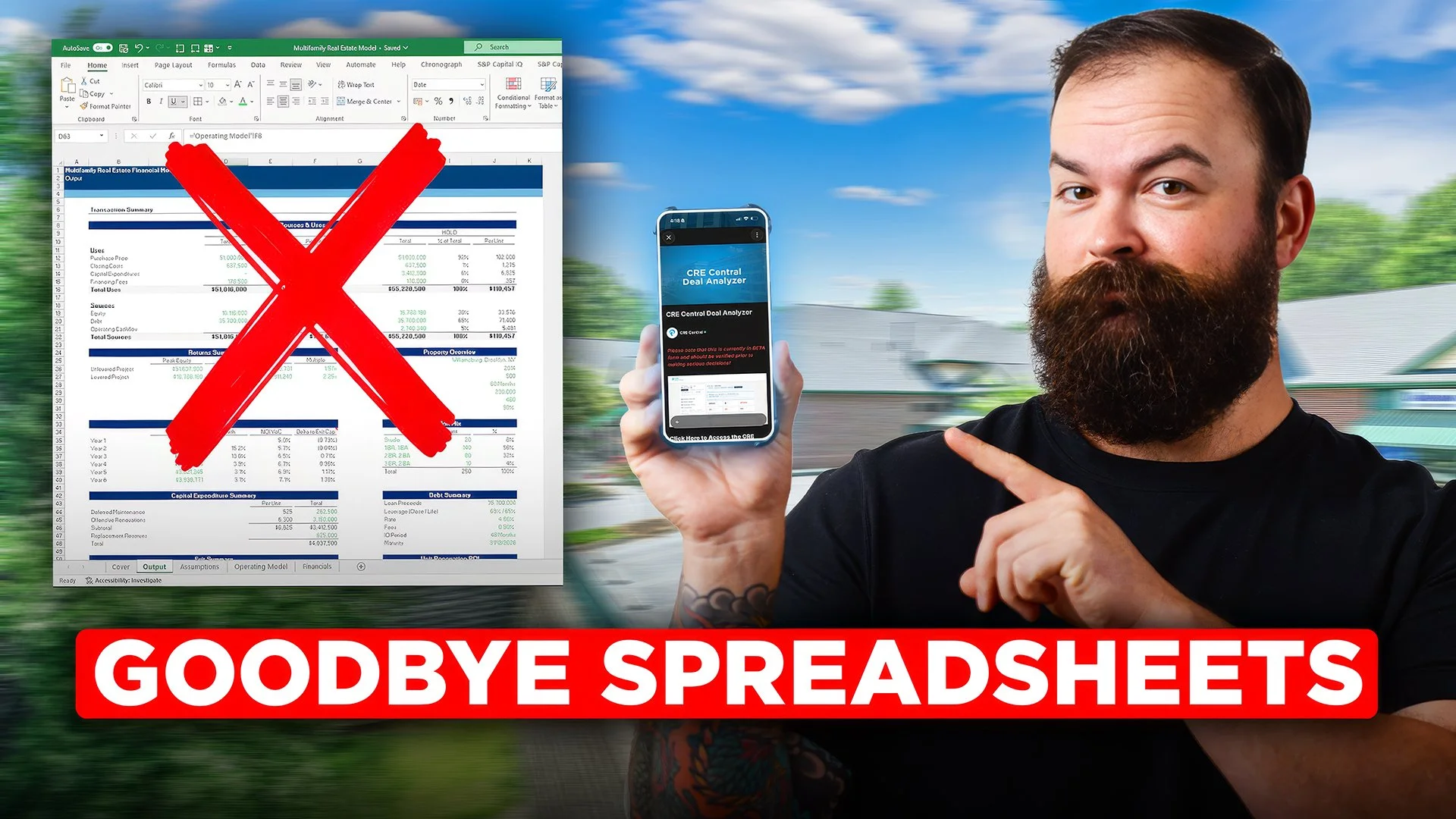
I love the neighborhood strip center. You know, we have several 100,000 square feet of of retail in our portfolio. And one of the biggest questions that I get when I evangelize retail is, okay, well, Tyler, what happened during the pandemic? Remember all of these, all of these tenants were coming out and saying, we're not going to pay rent. We're not going to deal with. US, blah, blah, blah, you know, deal with it to the landlords. We collected, I think over 92 or 93% of our rents throughout the pandemic, because we worked with all of our tenants, we made sure that that, you know, they were taken care of, and that they had what they needed, and we were flexible where we could be. And so despite the shutdowns, despite the pandemic, we were still collecting a pretty significant amount of our rents. So these neighborhood retail, which is that that's what we have. This neighborhood retail is pretty resilient as well when it comes to these types of changes, all right. Now, this one's from ICSC. I like this one because we're going to get into some of the tenants that they are keeping an eye on. This is 11 retail real estate prediction predictions for 2026 let's see they're saying store openings, excluding restaurants, will grow 1.4% in 2026 forecast for restaurants jumps to 1.8% so it sounds like a lot of people are interested in opening up restaurants right now. Here's the retail tenants to watch, H, E, B, Michaels, Walmart, Dillards, pop Mart seven brew, Dave's hot chicken, Home Goods, Eos, fitness and Chuck E Cheese. The fact that Chuck E Cheese is on this list is mind blowing to me. I can't believe Chuck E Cheese is making a comeback. I have started seeing, however, billboards around Nashville for Chuck E Cheese, seven brews popping up everywhere. I mean, it's the nice thing about these smaller, single tenant QSR deals. They can take tiny, little parcels. It doesn't cost them a whole lot to build. It doesn't take too much time to throw these little things up. They can do them pretty quick. So seven brew has been expanding like crazy. Biggest retail markets to watch, Salt Lake City, Reno, Nevada, Indianapolis, Raleigh, Durham, Tampa, St, Pete, and they're expecting average rent growths of about one and a half percent this year. So which is not bad, right? I mean, of course, we as investors don't really want to get into a value add situation where we're only able to raise our rents by one and a half percent. But this is you got to keep in mind, this is also taking into account a lot of newer construction. So if you built something last year or two years ago, and you're looking you have a vacancy, and now you're trying to raise your rents, it's only going to go by about one and a half percent. But if you're buying something that is value add, there's tenants existing, it's been around for 20 or 30 years, you still might be able to raise your rents by 567, 10% depending on how you are actually approaching and looking at that. So there's, there's the data behind it. It's not just an opinion that I have. It's not just something that I woke up today and thought, You know what, I'm going to go tell everybody to buy retail, because I just feel like saying that I love retail. You guys know that I've had retail in my portfolio for quite some time. It's always performed incredibly well, and it's, it's typically one of the first things that I actually tell people to buy flex, of course. I mean, come on, Flex is so easy, it's hard to mess up flex, which is why I like it as a first time investment for new commercial real estate investors, retail can be a little more nuanced, for sure, right? I mean, they care more about demographics. They care more about, you know, what are the traffic counts? They care more about visibility, right? You have to think about these things. But that being said, if you're going into an existing shopping center, a lot of that has already been figured out for you. If you have 50% vacancy, clearly one of those things is wrong, and you need to reformat how you're pitching that site. If it's 80 or 90% occupied tenants have been there for a long time. Well, clearly, it gets the right traffic, it's visible, it's probably got enough parking. The nice thing about retail is that the market will typically determine whether or not the project will work. So again, unless you're you really need to worry about all that. If you're building new construction retail, you still need to take it into consideration if you're buying something existing and doing value add, but it's not as big of a deal. It's not going to be as crucial for you to parse through every single line item in a demographics report. All right, okay, let's get to this and talk about analyzing a deal. And we're going to use, I kind of showed this a little bit a little bit a couple weeks ago. We're going to use my new the new software that we developed for the accelerator, just because I can go through it so much faster. If you want access to it, you have to be a member of the mastermind. I'm sorry. Otherwise you can just go through a spreadsheet. So I was looking on correction before we went live. You can see I just, I'm right here outside of Nashville. It looks like we found something right outside of Hopkinsville for 5.6 million. All I did was come in here and I set my cap rate minimum to 7% and then I turned my deal filter on for multi tenant. And then this popped up, right so they can be relatively easy to say to find. You can also see, here's another one at a 7.7% cap rate. It's 8.2 million. Now, depending on your market, you can also find much smaller deals. You can see, we're barely outside of Nashville. If I wanted to find smaller strip center retail deals, just start expanding through Kentucky through Alabama, through Georgia. You'd find some, for sure. So let's look at this one, Walmart shadow anchored shopping center. So what that means is that this is a little strip center that's adjacent to a Walmart. So it's not actually, you know, touching the Walmart. It's not actually in the same parking lot as the Walmart, but you can see, you know, the Walmart is right next door to it, which is great, right? That means that Walmart's going to be bringing in a whole bunch of traffic. And that's what all of these smaller retail tenants want. They want somebody else bringing in the traffic for them. Man, these photos are really blown out. It's really, really bright whenever, I think, whenever I look at that and I see somebody has overexposed photos in their listing, to me, it just says you're kind of trying to hide something, because you don't want anybody to see the details. So maybe the maybe the shopping center is in a little worse shape than we're gonna be able to really account for today, but we shall see. So the perch, the asking price is 5.6 million. It's about 32 and a half 1000 square feet, sits on four and a half acres. They're asking $171 a foot. Now you guys know, running my back of napkin calculation, right? If I want to get a 10% cap rate, I multiply the $171 a foot purchase price by 10% that gives me $17 a foot triple net. If I can get $17 a square foot, triple net on this retail building. It's a great deal like it's really worth underwriting. Now, the nice thing about this, we already know the asking cap rate. We already know the noi, so I have to really dig into that too much. But if you don't have that, which in many cases, you don't, that's how you do it. You just run a quick little 10% okay, so this looks like a pretty interesting shopping center, good size, Nice parking lot. Looks like a pretty decent location, considering the fact that it's right next to Walmart. We're talking about barely an hour outside of Nashville. So you know that could actually be doable if we actually wanted to buy this financial analysis. They really, really got detailed on this financial analysis. If you're listening on the podcast, it literally just shows the price, the price per square foot, the cap rate and the total return. I mean, there's, there's not really much of a breakdown there. Let's see now they get into the income and expenses. So gross income is $19.41 a foot. The net operating income is $15.47 a foot, so we've got roughly just under $4 a foot in gross expenses. Interesting, I wonder. Okay, so they do have cam management, admin, replace, reserve reimbursements. That's only $2.27 a foot. So what that's saying to me is that a decent amount of these tenants are reimbursing cam tax and insurance as a triple net lease, and a fair amount of these are also just full service or modified gross leases. So there's a value add opportunity right there, right getting everything switched over to triple net because you could offload some of those expenses. Okay, let's pull this up. What is this oak grove? Address, Hopkinsville. All right. Building, square footage, what do we say was like 36,000 square feet? Roughly 32,006 60 All right, you're built. Doesn't really matter. I'm gonna say 2000 I don't have to worry about that right now. Acquisition date, I'm gonna assume I'm gonna acquire this on May. 1 purchase. We'll just offer them. They're asking, which was $5,613,000 I believe. Yep, 5,000,006 13 capitalized rehab. I'm gonna assume that we don't have to really do anything. I'm gonna leave it as is right now. We're probably gonna have to bring some sort of, you know, tenant improvement allowance and stuff like that. If we want to raise rents, actually, I'm just gonna go ahead and count for 150,000 we'll just bring that, just in case. Closing costs, one and a half percent down payment. Let's assume 30% which puts our financing at 70.
Tyler Cauble 19:37
I bet we could get an interest rate. I've started seeing some interest rates guys in the low sixes, six and a half. But for whatever reason that they are not quoting that in Nashville, that's like members of the mastermind are getting, you know, six and a quarter. So I don't know, I don't know where that's coming from, because that's not happening in Nashville. One origination fee, 1% that puts us a. 40 grand. We're going to go for a debt service coverage ratio of 1.25 minimum. As far as future reserves, we don't need to worry about that too much, just for time's sake, because we only have a little bit of time here. I'm just going to say that we have one tenant, and they're going to take up the entire space, all right, 32,006, 60. Remember when we were looking at the financials? And you can also do this if you don't want to go and underwrite a full rent roll, right? Like there's a bunch of tenants here. If you don't want to underwrite a full rent roll, this is how you could do it. You could just set it as one tenant occupying the entire building. Take the average square foot price, which is $19.41 a foot. We'll say 1941 lease start date, I'm just going to set it to march 1, and we'll have it go for 60 months. That way we can just analyze this over 60 months, 3% annual bumps every year. Let's see in here, if they have percentage rent increases. Now, if we wanted to get really, really accurate with this, I would go through and do every single one of these individually, right, because they all matter. It doesn't seem like any of these hardly at all. It looks like maybe a couple of them have percent annual increases, but the rest of them are just fixed, and we've got a lot of leases ending in the next two years, which is fine. I mean, that's not a problem. It's just something that we would want to keep in mind as we're going through this right? That gives us the value add opportunity you got to get in there really start turning over those leases. I'm actually just going to remove the 3% annual bump and change it to 1% bump. Change it to 1% because there's a couple of tenants in there that have the annual percent bumps, but they're not great, all right? And we'll skip everything else. We'll put in a 5% baseline vacancy rate. I'm not going to make any second gen assumptions, because we're just going to have this for five years operating expenses we're going to do as a it's a partial triple net, which makes this a little bit tricky for us to properly underwrite. But we have our gross here. I'm just going to go with our gross expenses at 495 a foot, or, I'm sorry, 395 a foot, and we're just going to say it's we're going to treat it as if it's not triple that, as if that's actually 100% of what's coming out of there. I'm going to assume 3% annually. OPEX increases, non operating expenses. We don't need to worry about any of this, but I do want to do a cost segregation study, because that is a pretty big reason as to why we would want to buy retail so we'll go the strip center, shopping center. It's going to go ahead and auto populate what we can expect to receive in terms of our tax benefits on here, and then exit cap. They're asking a 9% cap right now. I'm going to say we can work it down to an 8% we're going to get in there. We're going to sign some longer term leases. We're going to, you know, really, really operationally, change this around. All right, primary exit year is year five target, IRR. We want to hit a 15% minimum we're aiming for. Let's calculate those returns. Nope, Oh, wow. This is saying purchase price reduction now to $2.8 million needed in order to actually hit the returns that we want. IRR is 1% target is 15% so even though it's a 9% cap rate, that can't be right. So let's run the math on this. They're saying the net operating income is 505,001 49 is that showing properly in here? Yeah, it's showing properly. Our mortgage is just our debt service is 368,000 a year, so it makes it impossible to make it work. Okay, let's come up here and change our financing. Let's say I'm going to bring 50% down. Maybe I'm in a 1031 exchange. I've got $2.8 million still doesn't work. Wow, man, it's having a hard time even finding a solution for it. We would have to increase the rents so dramatically that, I mean, to be fair, we have the opportunity over the next couple of years to start changing up some of these leases. So let's do this. Let's add in 5% annual bumps every year and see what that does. Still not working. Gets us up to a we would have to have a 5.7% cap rated exit in order to make this work. It's tough, man, I. Tough. So again, if I wanted to get in here and really start making it cash flow like crazy, the first thing that I would do is, I mean, we'll get the tax benefits on that. You'd save $232,000 the first year just by buying it. The problem is, I mean, your debt service coverage ratio is a 1.82 it's cash flow. I mean, it's cash flowing. We're bringing in $200,000 a year, net. So, I mean, if you had a I mean, actually, I
Tyler Cauble 25:45
actually not terrible. I mean, it's, we're getting a 6.7% cash on cash return in year one. We haven't even negotiated the purchase price. But, I mean, with 50% debt down, and the problem is, it just, it's the debt, you know, it's a lot that's just so expensive coming in here, let me look at the debt. What if we went back to 75% what does that end up looking like? Now, yeah, at 75% we're at a 1.21 times debt service coverage ratio. So you're actually kind of close. You could probably bring in 27% make this work. 7% make this work, as long as you are able to turn those leases over, increase the rents. This deal is kind of a no brainer. I mean, what else can you go and buy that's going to already have half a million dollars in rent coming in every year? Give you a bottom line, if you're only bringing 20% down of close to $100,000 by year two. And it looks like, Yeah, I mean, year six, it's going to be dropping off because we didn't do anything past year six. And it'll, I mean, look at this. It says year three, if you get in, you turn these leases around, and year three, you could sell this, flip it for a 1.8 times equity multiple at a 22 and a half percent IRR, no brainer of a deal, right? And we're talking about only increasing rents by 5% you know? I mean, if you've got an average rental rate of $19.41 which is what we have in this, that means raising it to $20.38 a foot, you're raising it by $1 right? And if somebody has 1700 square feet, that's $1,700 a year. We're talking about 125 bucks a month, 130 bucks a month. That's all like that's the power of investing in commercial real estate, because it's 125 bucks a month to the tenant to bring them up to the market rates, right? So shouldn't be a big impact on their bottom line, but you multiply that over multiple tenants, and then you divide it by a cap rate, and you end up getting this pretty crazy amount of value that you create in this whole property, right? Ted is saying, Good morning, thanks for being here for us. Vic and good morning. Good to see you guys. Kevin, Hi, Tyler, what's going on? Y'all hope you guys enjoyed today's episode. By the way, salt Ranch is open April 1, 2026 I'm headed over there right now. We've got our fire inspection or our finals, so we will be getting our permits. Very excited to be getting this out there into the world. If you guys are coming to visit Nashville anytime soon, please check out salt ranch. I am also, by the way, I know you guys will be very interested in this. If maybe you're not traveling to Nashville, but maybe you will be interested in this. I have written a six part series blog on the entire journey of doing salt ranch. So that link is in the description. If you go to Tyler cobble.com/blog and you just find something about boutique hotels, it'll be there. There, like if you scroll down to the bottom, it'll have a link to every single blog post that I've written with regards to this. I mean, we're talking about the story, how I found it, how we decided to put it together, the vendors that we worked with. I mean, I'm really telling you guys, like, the honest story behind it, because not all of its fun, you know, like the one I'm telling you, the one we just released yesterday, we had a fire contractor off the job. He didn't pull the right permits. Got us shut down. It was just a it was a total mass right? I mean, imagine having a fire contractor off the job halfway through. So if you guys are interested in that, it's basically my journal. I get diary entry of how I went through putting this hotel together. Really excited for it. Tyler cobble.com/blog, if you want to check that out. If you're coming to Nashville, check out Sol ranch. Appreciate you guys for being here. As always, we will be live next Tuesday, 8:30am Central Standard Time. If you have questions on a deal, you have questions about breaking into the industry, you just want to jump in and have a conversation. I'll be alive. Come hang I'll see you guys then this
Tyler Cauble 29:58
episode of the commercial real estate. Investor podcast is brought to you by my cre accelerator mastermind, where you'll get access to my step by step investment blueprint, essentially a library of resources on how to invest in commercial real estate. You'll get connected to a supportive community of other commercial real estate investors that are doing projects just like you. You'll get personalized coaching and feedback from me every step of the way, go to www.crecentral.com to learn more you.