
How Much Will It Cost to Save This Building?
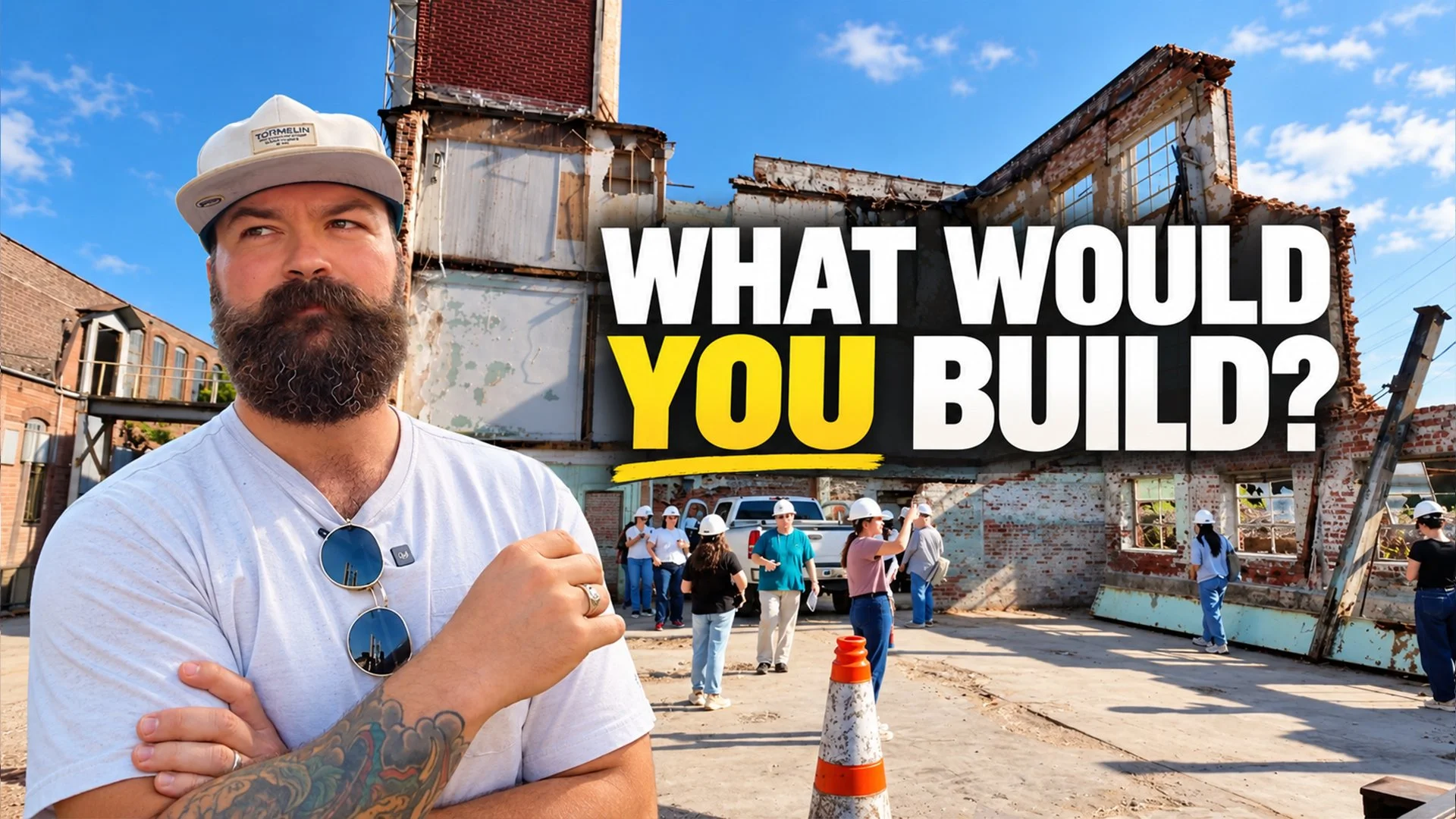
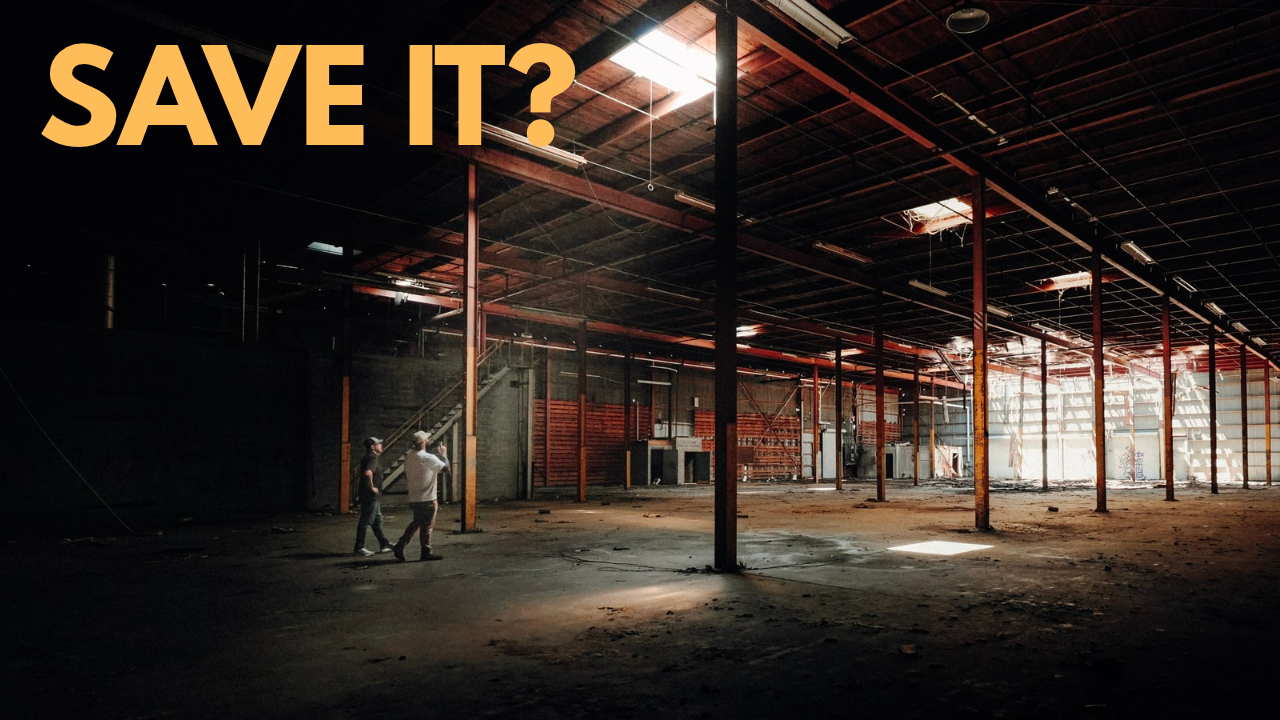
Four years ago we bought Peerless Mill in Chattanooga: 32 acres, 29 buildings and about 1.5 million square feet. The plan was always to keep every piece of it. In this video I'm walking Building 21 because I'm selling it. Building 21 is 43,000 square feet on about two and a half acres, and the price is $500,000. It's going out of the Peerless Mill partnership and into a new one with Dave and the Greenleaf team, and I'm a partner in both. That puts me on both sides of the deal, so I have to believe the price is right twice, once as the seller and once as the buyer. Here's how we're looking at the deal:
Paying for the dirt and getting the building for free
A new roof at about $400,000, which costs almost as much as the property
About $3,000 an acre per month for the industrial outdoor storage laydown yard, plus around $2 a foot net on the building
Roughly $160,000 a year in NOI, which at an 8 cap is about a $2 million value on a $1.5 million basis
Going to market well below market rents so lease-up goes faster and we're not carrying the debt for long
Why we're bringing in a strategic partner on a project that would take over $100 million to finish
Key Takeaways
Building 21 is being sold for $500,000 from the existing Peerless Mill partnership into a new partnership with Dave Codre and the Greenleaf team. Tyler remains involved in both partnerships. The sale is intended to help recapitalize Peerless Mill, pay down debt, and fund future development.
The deal is primarily about the land. The property includes about 43,000 square feet and 2.5 acres. The partners see the land as valuable for industrial outdoor storage, with the building effectively included at no additional cost.
The renovation carries significant cost and scope risks. The roof is estimated at about $400,000, with additional electrical work needed. Tyler is comparing three roofing bids against the same scope and including contingencies in the budget.
The leasing plan prioritizes flexibility and quick occupancy. The rectangular building could suit one tenant or be divided among multiple tenants, using the existing columns to guide the layout. The team wants to minimize shared areas because they add operational complexity.
The financial plan targets competitive rents and roughly $160,000 in annual NOI. The discussion cites about $2 per square foot net for the building and roughly $7,500 per month for the laydown yard. Tenants would take responsibility for expenses such as utilities and landscaping.
The next development phase is expected to start by the end of 2026 or early 2027. The nearly completed self-storage space is awaiting EPB’s transformer installation so it can be fully powered and receive its certificate of occupancy.

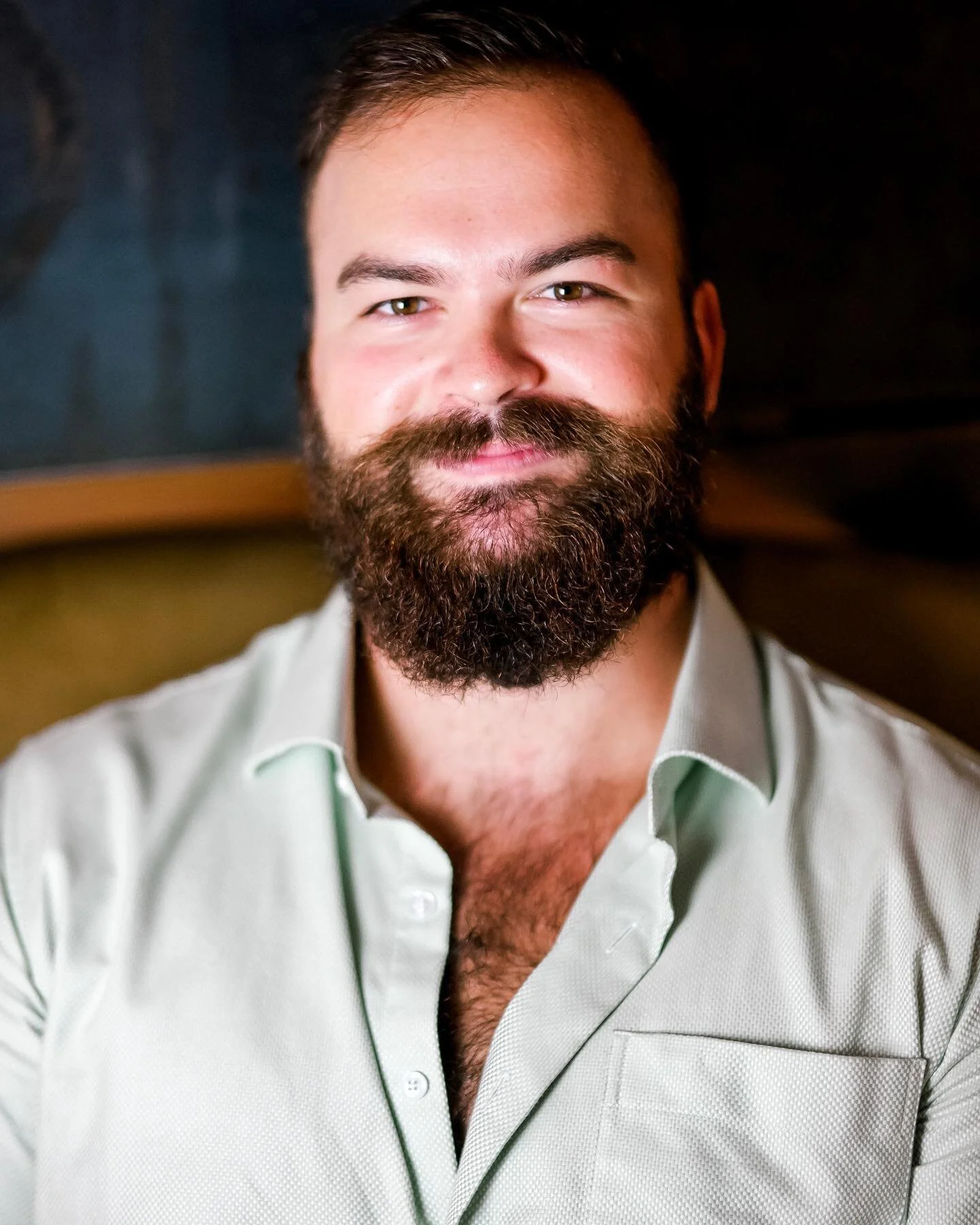
About Your Host:
Tyler Cauble, Founder & President of The Cauble Group, is a commercial real estate broker and investor based in East Nashville. He’s the best selling author of Open for Business: The Insider’s Guide to Leasing Commercial Real Estate and has focused his career on serving commercial real estate investors.
Tyler Cauble
Four years ago, we bought Peerless Mill, which is a 32-acre site, 29 buildings, about a million and a half square feet, and the plan was always to keep it, every part of it. But today, we're driving down to Chattanooga because I'm looking at selling one of the buildings. But it's definitely not without work. You know, we're missing the deck here-it's been falling in for a couple years now. We've tried to stop it as much as we can. Every dollar that we would put into keeping this roof from destabilizing more is $1 that we can't put into a space that we could actually go ahead and get leased out. So here's what's actually happening because all of the details matter. I own Peerless Mill with a couple of partners. We're selling Building 21 out of that partnership and into a new partnership with Dave Codre and the Greenleaf team, and I'm a partner in that one too. So I'm on both sides of this deal, which means that I have to believe that the purchase price is the right number twice, right? Once is the guy selling it, and then once again, it's the guy buying it. And here's why I do: it's 43,000 square feet, about two and a half acres of land, which we will be using as a laydown yard for industrial outdoor storage for $500,000. And I don't think that we're paying for the building at all. We're really looking at it as if we're paying for the dirt, and the building comes for free. So Dave and I are walking it today to figure out if I'm right about that, and if I'm right about selling it. My plan had always been to keep as much of the property as possible, not sell anything, so that we can really see the vision through of what we're trying to see here, and this is a great step in that direction. Even though I'm technically selling it into another partnership, I'm still involved in it, but it allows us to go and recapitalize a piece of the project. It allows Peerless Mill to pay down a little bit of its debt and get some cash on hand so that we can start reinvesting into the next phase. So I have mixed feelings about it. I'm excited about it. I think that it's definitely the right move to make. I hope that 10 years from now, when the rest of the mill is up and running and where we want it to be, that I'm not going to look back and say, "Man, I wish we hadn't done that. But it's a great way to produce some really good income today, and to really start funding the next phase. So why bring Dave in at all? But you guys have seen me go through and raise capital for these buildings, do the renovations myself, and we're more than capable of doing that. But when you can strategically set up partnerships, especially on a project that is of this scale, because here's the thing: we could go and raise $100 million tomorrow. We would have to in order to do everything that we need to do on the site, but one, I don't have the capability to raise $100 million myself. The largest raise that I've ever done is closer to about eight and a half million. And even if we're taking this on a face-by-face project, at some point I'm going to tap out my investors. We're just not going to have enough capital in our stable to be able to pull that off, and so bringing in strategic partners that one have another investor base, two have a team to help actually go through the renovations and handle the management side of things. Since we have a management company together, makes it substantially easier on me, so that I can continue to focus on other aspects of the property instead of continually getting bogged down, building by building. You get this outsized return compared to the amount of work and effort that you have to put into a project, and everybody wins because of that. So to me, it's it's a no-brainer. All right, dude. How are you? This thing's awesome, Nick. Right. Yeah. This is Dave. How's
Speaker 1
it going, everyone?
Tyler Cauble
You guys have seen him before, and this is also his badass van that we're going to be live streaming out of here in a minute because he's got Starlink in it.
Speaker 1
Works great. Works everywhere.
Tyler Cauble
Works pretty well. So we'll take you guys on a tour of Building 21 today. Tell you what we're working on here, and even though it's. Doesn't look like a whole lot just yet. It looks like something. There's a lot of potential here. That's what matters when it comes to real estate. Bugs are just going to be part of what's going on out here, I guess. God, these mosquitoes are the size of birds. Man, I'm gonna get eaten up today. Did you bring any bug spray? I do have bug spray. Of course you do in a camper like this. Dude, the mosquitoes are nuts. You're the man. Let's go. Look at this guy always coming prepared. Love the smell of DEET in the morning. You can tell that the property's a little overgrown, and it's tough to maintain when you have assets like this because we were just here mowing not too long ago, and this lot, once it is fully redone, fully stabilized, it's going to be beautiful. I mean, imagine a brand new fence. All of this, you know, land is cleared, graded. We've got this beautiful creek right here that, unfortunately, right now is overgrown with kudzu. And the goal is to make this the front of the property again. Since Building 21 faces Westlake and has its own entrance over there. It makes it very easy for us to kind of parcel this off and separate it from the rest of the project that we're doing here, without causing a whole lot of interference, right? That's what we're most worried about. Is when you're planning a project at the scale of Peerless Mill, you want to make sure everything is cohesive, that it all flows properly, that everything works the way that it should, and this one's kind of off on its own.
Speaker 1
We back into the numbers of these deals with how they work, and we really target like how efficiently can we do the project, and what's the what's the lowest rent we can charge to still have a successful deal. And in this situation, if we're charging four and a half dollars a square foot in rent, it covers what we're trying to do here and provides over a 10% return. So that's kind of like where we say, "Hey, what's the what's the bare minimum we have to do on revenue creation to make it work?
Tyler Cauble
Yeah, right. I mean, we're we're going to be going to market at at least less than a half, if not a third, of what market rates are in this area for comparable product. Which some investors may say, "Well, aren't you leaving a little bit of meat on the bone by doing that? And to me, I'm like, "Well, if we're getting it for 11 bucks a foot, we're investing you know 20 bucks a foot into it. Our basis is basically 30 dollars a foot. We don't have to rent it out for market rates, which means that we can be more competitive, and our lease up will go a lot faster. Which means we're not having to carry that debt service. Yeah. So, Dave, when you're when you're walking into a building like this, like from y'all's perspective, because we've been working on this for four years now, but when you walk in, what are y'all looking at to determine this is structurally sound. This is a building that's worth investing in. Here's what we can do with it. With you know how the columns are spaced out and everything. Like, what do y'all look for?
Speaker 1
I mean, we want to be able to get to a yes with a tenant as quickly as possible. Have as many options as possible where we can have someone come in and say yes, I can use this space, so look at this layout. Ceilings are high enough to do pretty much anything you'd want to do. The flooring can hold anything you'd want to put in here, really, from a small business.
Tyler Cauble
It just damp concrete floor too.
Speaker 1
In the layout, it's like okay, you see poles and kind of stuff all over the place, but we could divide these spaces up, put up even small barriers to give people like how much space would you like to use here? We can give you that space that you need. So, really has a lot of ways that we can say yes to leasing the space because again we talked about that stuff before. Like we can make the greatest space in the world, but if we can't lease it, it's useless. Yeah. So we've got to be able to get to a point that a business can come in and use this space as easy as possible.
Tyler Cauble
So what do you think? Do you think this will be a single tenant? Do you think this will be multiple tenants? If it was multiple tenants, like how are you? How would you demise those?
Speaker 1
It all comes down to timing. You know, it's it's 43,000 square feet, so we we could find a single tenant that's going to use all 43,000 square feet and use the two and a half acres, or tenant comes in and they say, hey, I want 5,000 square feet. We're like, perfect. We can do 5,000 square feet. You can have room to expand if you want it, but it enables us to get that first yes. Have a tenant come in, use some of the space. It's a rectangle, so rectangles are the easiest to divide up. If it's a square, if you think about a square trying to carve out a spot of that, it's very hard. But a rectangle is much easier to put in one wall or one chain links dividing fence if it's just storage to be able to make little spots that everyone can use.
Tyler Cauble
Yeah, and these columns make it super easy to visualize what you can do too because they're 20 to 25 feet and they're basically all in squares, and so you can kind of say, okay, well that's 400 to 500 square feet. Right there, how many squares? Just how many do what? You
Speaker 1
can take them here, here, there, but any wall we do is the only option in my head is you're going from pillar to pillar. You can't put a wall in between that. You have to use the natural layout of what's here to say, look, you can take this space, you can take this one, and the next one going down.
Tyler Cauble
So we've got 123, roll-up doors outside. We've got four loading docks here. We've got another actual outdoor loading dock right there. Do you see that being common area for these tenants? Do you see that being, hey, whoever just happens to take this half of the building and that side of the building, they get access to those. What do you think? Yeah, it's
Speaker 1
it's it's probably going to be whoever takes that space would have more access to either more or less doors.
Tyler Cauble
Yeah.
Speaker 1
Just because that'll be common space, is that's something you got to maintain. It's something you got to work around. It's something you got to then handle. Like, hey, now you have two people that are basically roommates, and they got to share that space. So, common space always makes operating real estate harder. So the more we can eliminate common area space.
Tyler Cauble
Yeah, so if you sign the lease earlier and sooner, you get to dictate all of that. So you get to pick who your neighbor is going to be if you have one, or you just take the whole thing. Take the whole thing. So we're paying $500,000 for this building, and the new roof is another $400,000. So before we've done anything else, before siding, before power, before we touch an acre of the laydown yard, the roof alone costs almost as much as the entire property did.
Speaker 1
Looking at the roof, right? If we budget roughly right now for about 20% of the decking that has to be replaced, if that turns out to be 25% well, that's just not like a 5% increase in cost. That's a 25% increase over the original perform on what that budget is, so we got to make sure that our numbers going into it add a little bit of buffer for all the space of things that could happen. Roofing is a big one. The other one that happens is electrical. So as we're walking through that site, you know, a tenant that comes in, do they want, you know, an electrical outlet every three feet, every six feet? Do they want to drop down on the poles? You know, did they want them chest high on the wall or down on the ground? We got to make sure if we go in and the more that we build out, then it could lead to an issue where tenant wants something different. So we try and go and get in the basic electrical package, knowing that any tenant that's going to come in, we got we got to be able to offer that to them and say, hey, we can put outlets on these on every pole, if you want to, on there we can put them up high, we can put them on the walls, but make sure we have that in the plan.
Tyler Cauble
Here's what rent ends up looking like if that's the case. Yeah.
Speaker 1
Yeah. So right now we're going in with the basic package of we got to put the main electrical service in, and then we have to be able to run service along all the walls, knowing we're going to add conduits to it. Maybe we have to add different circuits for each one of those as well. We have to be prepared for what that cost is going to be. Typically, we're going to try and cover that in our TI package with tenants. All that stuff that can be, you know, negotiated on the lease side. But the biggest thing going in is really the roof.
Tyler Cauble
It's a lot easier to basically just get it turnkey and say, "Yeah, here you go. Do you want it or not? Sign the
Speaker 1
lease. Yeah, tenants really aren't interested in your real estate vision. They're more like, hey, if you've got a space that's good and usable, and we can go right now and do it, great. They've got a business to run. It's great that you have a fantastic story and some great pictures and stuff. But they want to see something they can do right now.
Tyler Cauble
So when we're when we get this leased out, we're talking about roughly $3,000 an acre for the way down yard, right? So let's call that 7500 a month, give or take, right? So that's 90,000 a year, and then what are we thinking for this building? Around $2 a foot net.
Speaker 1
That gets yeah, and that gets us to our 10% overall turn on it. Yeah, yeah. So
Tyler Cauble
we're at about 160,000 a year NOI, right? So I mean, if if we're just running basic math at 160,000 a year NOI, let's just say it's only an eight cap. It's a $2 million building. We're in it for one and a half. We've got $500,000 of equity built in day one. And that
Speaker 1
lease is really it's going to be a net lease.
Tyler Cauble
Yeah.
Speaker 1
So the 10 occupying the space, like they're going to move in and they're going to take over the responsibility for landscaping and utilities. You know, they're going to take over the the full response of that lease. That's why the lease rate is pretty low, then because of that. But also, it's going to be a fairly cheap building to operate.
Tyler Cauble
I mean, the nice thing is, it's a pretty straightforward deal. Like you said, it's a box, very easy to just figure this out. It just needs a new roof, new scan, and it's off to the races. In terms of marketing, how are we finding these tenants?
Speaker 1
You know, we've always had good relationship with leasing brokers. You know, it's you kind of think like sometimes you're like, oh, what are we gonna do here? Like their their full time job is out talking to tenants, helping helping people relocate, helping people find space that they need.
Tyler Cauble
So the self-storage units are practically done. Everything has been built out. Most of the lights have been run. All of the units are put in. The HVAC trunks are in, as you can see right there. We're just waiting for EPB, which is the local power board, to drop the power into the units so that we can get everything fully powered, and then we're finally ready to go. We'll be able to get our certificate of occupancy. So one thing I'm checking on today is to see where we stand on the power, which you can probably hear. That big old thing right there, and that thing. We've got the services in, and now it's just a matter of actually getting the transformer dropped outside so that we have the power that we need to get the rest of the lights turned on. Because this is only half of the space. That is unfortunately the only thing that we're actually able to power at the moment. Now we're outside the building. You can see this area down over here, where the electricians have been running the new lines. They've been setting a pad for the transformer. We actually had a pad there originally for the transformer, and that wasn't acceptable for the local power board, so we had to completely redo everything, and that should be done. The workers told me here in the next week or so. All right, let's go home. So, did I get it right? The lot on its own is worth more than the new partnership is paying for all of
Speaker 2
it,
Tyler Cauble
and the building would cost $4 million just to put it back up and get it back into the condition that we're going to be bringing it back in. And the storage building I just finished opens up next month. You know that's the part that I keep coming back to. Every piece that we finish pays for the next one. I still don't necessarily love selling a piece of this place, but I think that that's how the rest of this gets built. You know, I think the risk is still real out there, right? As with every real estate project you ever do, and Dave brought it up while we were there. It's you know, hey, are we confident in the scope of work that we're going to have to do with regard to the roof? Are we confident in the scope of work that we're going to have to do with regards to bringing electrical to the building and redoing all of that and getting it prepped for a tenant? And I think that all of that matters, you know, and and of course we're doing everything that we can as real estate investors to mitigate that risk and make sure that we're having all of the sidewalks with our vendors, going through the process with them, going line by line through the scope of work that not one roofing contractor but three roofing contractors have given us so that we understand what the true scope of work is. What everybody's bidding off of is the same scope of work, so that we can try and make sure that we're not going to have these budget overruns because it happens all the time. You know, we've been very fortunate in most of our deals to come at or maybe just above budget. Very rare to ever come in below budget, and that's what that contingency is for-that you build into the budget as well, right? That's that's there to help with any of those cost overruns as they pop up. So the construction is supposed to start by the end of this year or early 2027. So I'll bring you guys back for a tour as we're undergoing that aspect of it, so that we can see what we're actually uncovering before you guys get to see the finished product. All right, I just got home. You guys mind if I share something with you real quick? Come here. Come here. This is Millie. She was abandoned at the mill when she was a puppy, and she'd been living on site for about a month. When we finally caught her, she was living underneath the deck where the self-storage unit is now. And compared to what she was, she is fat and very, very happy. All right, y'all have a good night.
AI is changing how commercial real estate investors find, analyze, and manage deals, but which tools are actually worth using?
In this video, I break down how AI is being used in real estate today, from market research and underwriting to marketing, leasing, and property management. I'll walk through the tools available, where they work best, and where they fall short.
I'll also show you how I'm using AI in my own real estate business, with real examples from my day-to-day workflow, and share a few practical ways you can start using it on your next deal.