
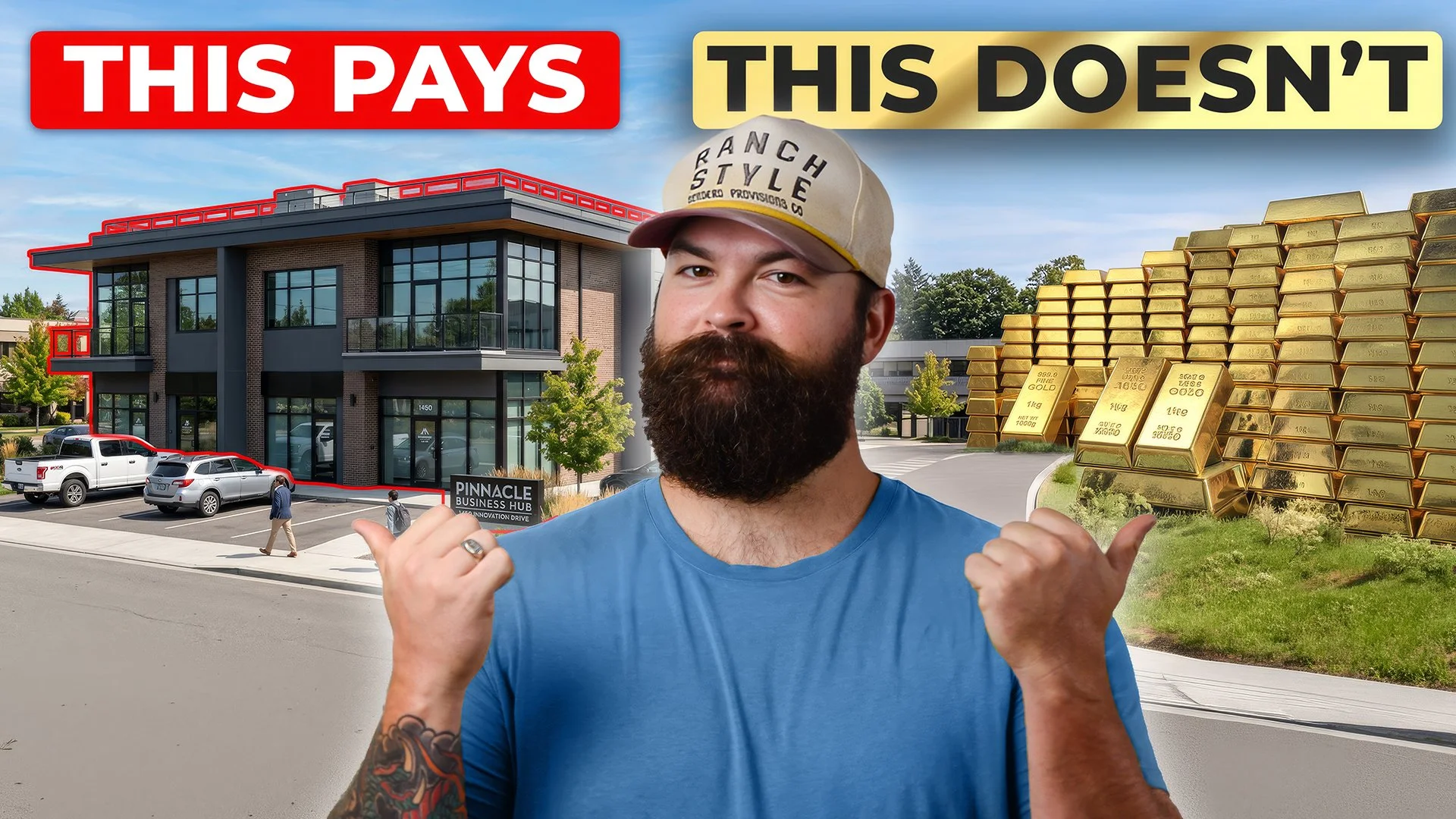
Gold Doesn't Pay You. This Does.
Gold doesn't pay you. It doesn't give you tax benefits. And you have zero control over whether it goes up or down.
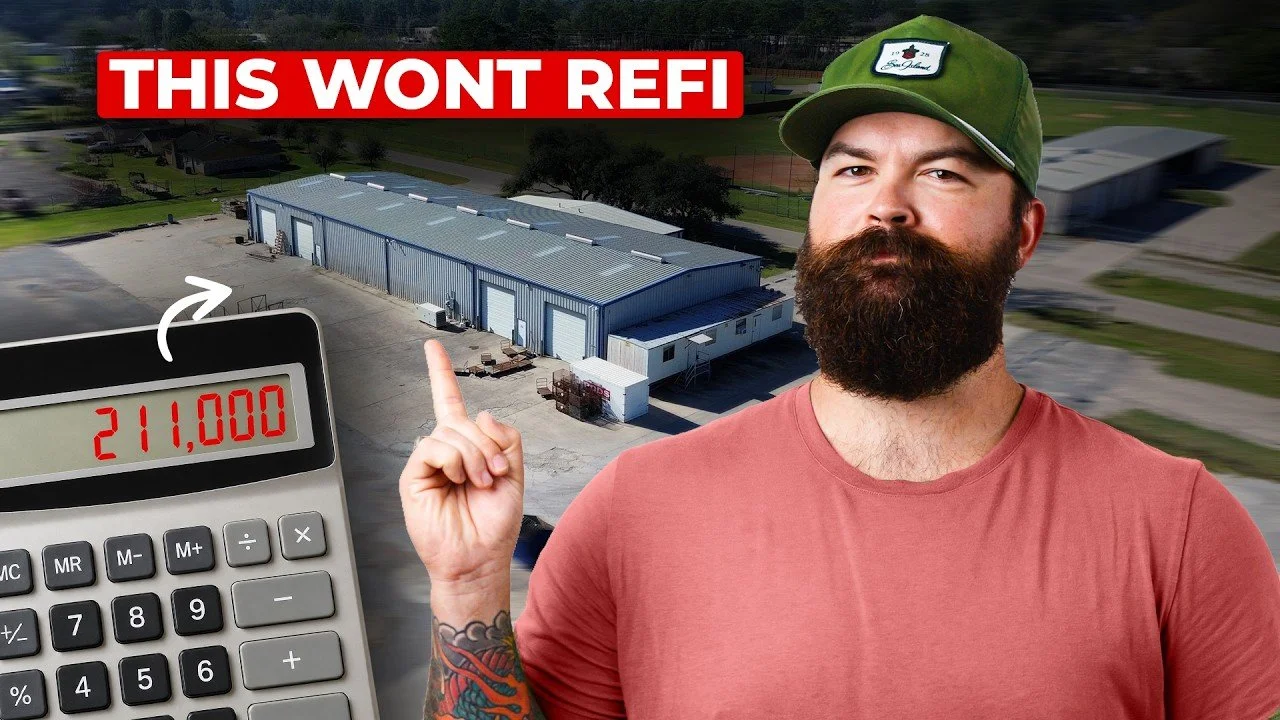
In this video, I'm breaking down why commercial real estate is a better hard asset than gold — and I'm using a real deal from one of my Mastermind members to prove it. Matt Barbaccia joined the CRE Accelerator feeling underqualified, then 45 days later closed a 70% vacant flex warehouse with zero dollars out of pocket and no debt payments for the first two years.
Here's what we cover:
→ Why gold just sits there while CRE pays you every month
→ Matt's exact deal structure (and how he pulled it off with $0 down)
→ Forced appreciation vs. hoping the price goes up → Cost segregation — how I wrote off $120K in year one on a $480K building
→ The real return comparison (and what the headline numbers leave out)
→ Every common "but gold is easier" objection, knocked down one by one
Get commercial real estate coaching, courses, and community to jumpstart your investment journey over at CRE Central: www.crecentral.com
Key Takeaways:
Gold vs CRE: Gold is a good store of value but doesn’t pay income, has no tax benefits, and you can’t control its performance. Commercial real estate (CRE) does all three.
Matt’s example: He bought a 70% vacant flex warehouse with 100% private financing, no payments for 2 years, and now collects rent while leasing up the rest, directly increasing both income and property value.
Why CRE beats gold (per Tyler):
Monthly cash flow
Leverage where the property’s income pays the debt
Tax benefits (depreciation, cost segregation, 1031 exchanges)
Forced appreciation via leases, renovations, and operations
Returns: Tyler targets ~18–22% annualized cash-on-cash on his deals, arguing that once you factor in taxes and leverage, CRE outperforms gold despite gold’s attractive long-term charts.
Objections addressed: CRE can be passive (triple-net leases), accessible with creative financing, and is less risky than it looks because you can underwrite and stress-test deals in advance.
Core message: Holding some gold is fine, but if you’re choosing where to grow wealth, Tyler argues commercial real estate “wins every time” and invites people into his accelerator mastermind.

About Your Host:
Tyler Cauble, Founder & President of The Cauble Group, is a commercial real estate broker and investor based in East Nashville. He’s the best selling author of Open for Business: The Insider’s Guide to Leasing Commercial Real Estate and has focused his career on serving commercial real estate investors.
Episode Transcript:
Tyler Cauble 0:00
Here's something, nobody telling you to buy gold wants you to know gold doesn't pay you, it doesn't generate income, it doesn't give you any tax benefits, and you have zero control over whether it goes up or down. Now I'm not saying gold is worthless, obviously, that would be ridiculous, but I am saying there's a better hard asset, and I'm going to prove it.
Tyler Cauble 0:27
Look I get it. When markets get squirrely, people run to hard assets, and gold has skyrocketed in value. It makes sense. It's a non governmental backed store of value. There's a limited supply of it. Gold's not being printed. When stocks don't perform, gold tends to do better. The Case for gold is very real, but I do think that there's a significantly better option. And one of my mastermind members proved it, 45 days after he joined, Matt joined the CRA accelerator mastermind and told me that he felt under qualified for Commercial Real Estate Investments. He'd been sitting on the sidelines doing residential real estate, and in that same window, gold was doing its thing, going up. He could have just bought gold, and felt like he made a smart move, but instead, he went looking for a deal. He found a flex warehouse on crexie, 70% vacant. Most investors scrolled right past it, including people who had been in commercial real estate for years. But Matt paused on it because he learned to read the story behind that vacancy. This wasn't a building with a structural problem. It wasn't in a bad market. It was a retiring business owner who just wanted out the vacancy was a motivation problem, not a real estate problem. Now here's where the gold comparison really starts to matter. If Matt had taken that same money and bought gold, he'd be in the same position as every other gold buyer, waiting, hoping the price goes up, no control, no income, no ability to remotely change the outcome. Instead, Matt picked up the phone and started working on this deal, and because that building was 70% vacant, no conventional bank was likely to touch it, which actually worked in Matt's favor, because it meant the seller's only real buyer was someone who was willing to get creative. Matt went out and raised 100% private financing for this deal, $0 out of his own pocket. Try buying gold that way, and he negotiated zero payments for the first two years, meaning the deal didn't need to cash flow immediately just to stay alive day one. Matt owns a cash flowing commercial property. His existing tenants are paying rent every month. In fact, last week, he just signed another lease, and with no debt payments coming due for two years, that income is pure runway to lease up the vacant space. He didn't have to wait for anything. The asset is already working, paying him every single month, and now he's in control of the outcome, in a way you simply cannot be with gold. As he leases up those vacant units, his income goes up. And when the income goes up on a commercial property, the value goes up because commercial real estate is valued on the income, not the comps. Sign one more lease, and the building is worth more than it was yesterday, just because you've executed a piece of paper, signed them all, and he could double or triple the value of that property compared to what he bought it for gold. Can't do any of that gold just sits there while you wait for someone else to decide that it's worth more. Matt closed that deal in 45 days. Set the record, actually, for the fastest first deal ever closed by a member in the accelerator mastermind felt under qualified 45 days earlier. That's what happens when you stop buying hope and start buying real estate investments. So let's break down exactly why commercial real estate beats gold. Because Matt's story isn't an accident. There are structural reasons that this is true every single time. The fundamental problem with gold is that once you buy it, it just sits there. You don't get anything out of it until you actually go to market and sell it. That's it. That's the whole business model. Buy it, wait, hope and sell commercial real estate is also a hard asset like gold, it's going to hold and grow its value as the dollar inflates, but it is a whole lot more on top of that, it pays you cash flow on a monthly basis. Your property is generating income every single month while you own it. You also get leverage. We can use debt to buy commercial real estate, and the property throws off the cash to cover that debt. You're not coming out of pocket. The asset is actually paying for itself. Now, could you use debt to buy gold? Sure, but you're buying an asset with leverage that doesn't have any income to cover that debt, which means you still have to pay for it. You can also 1031, exchange, whenever you're ready to grow into something bigger, you can sell that property, not pay capital gains tax. Almost straight into the next deal. You can't do that with gold. I mean, sure you could sell it and buy a like asset, but that's not real estate. And then there's forced appreciation, and this is really the big one. With gold, you buy it and hope that it goes up. That's literally all that you can do. But with commercial real estate, you can force the value up, sign a lease, renovate the building, improve your operations. The property is now worth more because of what you did. You're not waiting around
Tyler Cauble 5:27
for the market to decide the value of your property. You can actually influence that by increasing the net operating income yourself. And then there's the tax side, which is where commercial real estate really starts to separate itself from every other investment class, let alone gold, because gold gives you nothing here. This is hard to quantify for every person, because everyone's tax situation is different. But let me give you an example. We use something called a cost segregation study. So a firm comes in, they do an analysis on the property, and they figure out which components have a shorter useful life, like your HVAC unit, your fixtures, your parking lot. So instead of writing those off over 39 years in a straight line depreciation, as is typical for a commercial asset, you're actually writing them off on a five or seven year basis, a lot shorter, right? Because obviously an HVAC unit's not going to last 39 years, so you're pulling a huge chunk of that depreciation forward into the early years. Now, when I bought my office building, we paid around $480,000 we were able to depreciate $120,000 in year one. The entire value, basically of our down payment written off on our taxes just for having bought the property. Gold doesn't do any of that. You buy it, you hold it, you pay full taxes when you sell. That's the deal. Now, I know what you're looking at, commercial real estate has averaged around 8% over the last 20 years. Gold has averaged more than that. So why the hell would you choose commercial real estate if that's the case? Because that 8% doesn't tell the whole story. That number is just an average across every type of commercial real estate, including triple net leases that make 5% cash on cash, but they're basically bonds. They're safe, stable, lower return in the deals that I do, we won't do anything unless we're compounding 20% annualized cash on cash return. We average around 18 to 22% on every single one of our deals. And here's the thing, that nobody factors in those returns. Don't account for the tax benefits, they don't account for depreciation, they don't account for the leverage that you can use, and they don't account for the fact that you're paying full taxes on gold gains when you sell while we're deferring depreciating and 1030 wanting our way to generational wealth. On the commercial side, gold's returns look good on paper. I know that they do. They seem sexy, but the full picture is a totally different story. Now I know what some of you are thinking, because I hear the same objections every single time I talk about this, so let's knock them down. Tyler gold is passive. I just buy it, I put it in the safe, or I leave it at the bank, and I don't have to do anything. Okay? If that's the case, why don't you go buy a triple net lease, Starbucks, Chick fil A, whatever, and not do anything for 10 to 15 years. The tenant will handle everything. You collect checks that's passive. You still get cash flow, you still get depreciation, and you still get appreciation. On top of all of that, passive is not exclusive to gold. Tyler, I don't have enough money to get started in commercial real estate, okay? Well, Matt had $0 in this deal, right? He had money, but he didn't have to come out of pocket for any of it. Zero. But let's talk about the different levels. If you've got 10 to $20,000 use it as reserves while you pursue creative financing structures, just like what Matt did. You don't always need a bank. Now, if you've got 50, maybe $75,000 that's enough to be a meaningful equity partner in a deal. Go after smaller properties with seller financing or private money, or bring a couple of partners together. And if you've got six figures or more, conventional deals, start to open up. Commercial lenders typically want 25 to 30% down on their payment. So a $500,000 property, which is pretty much the same price that I bought my first commercial property for 575 grand, you will need to be in that for 125 to $150,000 that's it. That property throws off cash flow from day one with gold at any of those levels, you put that money in and you wait, you have no control. Well, commercial real estate sounds risky and very complicated. Now, look, I'll be honest, there is certainly a learning curve. I'm not going to pretend that there's not, but complexity is not the same as risk gold feels simple because you don't have to understand anything. You just buy it and hope, we like to say hope is not an investment strategy at all. Right? With commercial real estate, you can underwrite the deal
Tyler Cauble 9:52
before you buy it. You can stress test the numbers. You can calculate exactly what rent you need to make in order for this deal to work. Work and what you should pay for it. You're not guessing. You're doing math. That's not more risky than gold. That's less risky because you know what you're getting into before you're in it, especially if you do all of the market research and you understand what is going on in that world, and I don't understand it yet as a solvable problem. You're watching this video, that's step number one. We have 700 more videos on this channel for you to dive into and learn everything that you possibly can before you do your first deal. Now I'm not telling you to never own gold, a well diversified portfolio. Having some gold makes sense, but if you're sitting on capital and you're trying to decide between the two, if you're trying to protect your wealth, to grow it and actually build something. Commercial Real Estate wins every single time. It's not even close. Gold is a bet on fear. Commercial real estate is a bet on yourself. Matt made that bet 45 days after telling me he felt under qualified. I don't think he's ever going back. Now, if you're thinking cool, I'd love to do what Matt did, but I still don't know where to start, you're in the right place. That's exactly why I built the accelerator mastermind. It's the step by step system that I wish I'd had when I was first getting started, and it's already helped mastermind members, just like you, close their first commercial deal way faster than they thought possible and start building a portfolio. That link is in the description below. Check it out. I am the one that takes every single call. So if you book a call with me, you will be talking to me. If you're not ready for that, that's fine. We've got tons of videos here. Check out this video next you.
Transcribed by https://otter.ai