
Everybody thinks Buc-ee’s is a gas station. It’s not. Gas is around 60% of the revenue and they make almost nothing on it, single-digit margins, sometimes pennies a gallon. The actual business is a 75,000-square-foot retail machine sitting on 30-plus acres of interstate frontage that they own outright, and it costs about $50 million to build. That’s more than most hotels.
I buy and develop commercial real estate for a living, so I have walked a lot of big properties. I still drove out to one of these to see it in person (footage is in the video, and it does not do the scale justice). Standing under the fuel canopy, you can’t see the end of it. The parking lot moves like an airport. And every pump, every parking space, every square foot inside is doing one specific job.
Buc-ee’s is one of the smartest land banking operations in America, a land company with a beaver mascot. Today I will walk you through how the money actually flows, and then hand you the one move from their playbook that a normal investor like you and me can copy without ever pouring a foundation.
In This Article
Buc-ee’s Isn’t a Gas Station, It’s a Real Estate Company
The Store Is Where the Money Actually Prints
The Real Wealth Is the Dirt Underneath
The Anchor Flywheel: How Traffic Creates Land Value
The Land Banking Play You Can Actually Copy
Buc-ee’s, By the Numbers
$50M
To build a single location
74,000 sq ft
Average store, 20x a normal C-store
30+ acres
Interstate frontage, owned outright
Buc-ee’s Isn’t a Gas Station, It’s a Real Estate Company
Start with the scale. The average convenience store in America is about 3,500 square feet. A Buc-ee’s averages 74,000. That is 20 times bigger. The one in Luling, Texas is 75,593 square feet, the largest convenience store on the planet. A normal gas station has 8 to 16 pumps. A Buc-ee’s has 120, parking for 650 cars, and more than 200 employees per store. There are 56 of them across 13 states, with eight more under way right now.
Now the part everybody gets backwards. Gas is reportedly around 60% of the revenue, but fuel margins in this business are brutal, low single digits, and Buc-ee’s prices its gas cheap on purpose. Pull up any Buc-ee’s exit on Gas Buddy and they are usually the cheapest sign on the interstate. Why would you deliberately make less money on the majority of your revenue?
Because the pumps aren’t the business. The pumps are the marketing budget. That giant sign with cheap gas pulls tens of thousands of people a day off the interstate. A normal gas station needs gas profit to survive. Buc-ee’s needs gas traffic. Every one of those 120 pumps is a turnstile. Once you’re out of the car stretching your legs, the kids need the bathroom, and now you’re in the store.
The Store Is Where the Money Actually Prints
Walk inside and it clicks. There is a wall of jerky longer than most gas stations. A guy behind the counter calling out fresh brisket like he is working a trading floor. An entire aisle of Beaver Nuggets. A merch section selling anything and everything with a beaver on it. And once you see it, you can’t unsee it: almost every high-margin item has that logo on it.
That’s the whole trick. Almost everything they want you to buy is private label, the nuggets, the jerky, the brisket, the merch. When you make the product and you retail the product, you capture both margins. Analysts estimate Buc-ee’s runs around 40% gross margins inside the store against an industry average of 31% to 37%. One store’s inside sales alone have been reported north of $30 million a year.
Then there are the famous bathrooms, spotless every time. That is a moat, not a courtesy. Families literally plan their road trips around clean restrooms. They will drive past four competitors to get to one. Buc-ee’s won “cleanest restrooms in America” and turned it into a billboard campaign.
And the part I love as a business owner: none of that works with a revolving door of minimum-wage staff, so Buc-ee’s puts its pay on the billboards. General managers reportedly make $150,000 to $225,000 a year. Car wash managers make $125,000. That’s not charity. Clean bathrooms and full shelves require people who stay and who care about where they work.
The Real Wealth Is the Dirt Underneath
Everything I just described, the cheap gas, the brisket, the bathrooms, is the operating business. The real wealth is the play underneath it. Buc-ee’s buys its own land. They don’t lease. It is reportedly 25 to 40 acres per site, somewhere between $6.1 and $11.5 million a parcel, always at an interstate interchange, and always in the path of growth. And they refuse to franchise. Ever.
Think about what that means. McDonald’s franchised and became a real estate company with a burger business bolted on. Buc-ee’s kept all of it: the land, the building, the operating margin, even the brand. If you have seen my breakdown of why McDonald’s owns its real estate and Starbucks doesn’t, this is the same machine, just held in one set of hands instead of split with franchisees.
That is why I keep calling it a land company. The store is a very profitable excuse to own a huge, appreciating piece of dirt at the best corner on the highway. So how does that dirt actually go up in value?
The Anchor Flywheel: How Traffic Creates Land Value
The framework worth stealing is the one I call the anchor flywheel, and it runs in four steps.
Step one: buy cheap rural land at an interchange. Dirt nobody is fighting you over yet.
Step two: build an anchor that generates its own traffic. Buc-ee’s doesn’t wait for a good location. The store is the location. Tens of thousands of visitors a day, manufactured out of thin air.
Step three: let that traffic reprice every parcel around you. The area builds itself around the anchor. In Texas alone, Buc-ee’s locations have generated an estimated $641 million in economic impact. One site in Missouri opened up nearly 1,000 acres along I-44 for development. Buc-ee’s doesn’t find good corners. It makes good corners.
Step four: monetize the corners you created. For proof they know exactly what they are doing, Buc-ee’s leases out the excess land on its own sites. There is a listing on Crexi right now for Buc-ee’s excess land in Royse City, Texas. They create the value, then rent it back out.
That is the entire land banking engine in one loop: cheap dirt, self-made traffic, repricing, and a second income stream off the land you already own.
What Traffic Does to Land
$1M → $2.5M
Per acre on Dickerson Pike in ~4 years
$641M
Buc-ee’s economic impact in Texas
~$100K
Per acre, per year, on shadow-anchor ground leases
The Land Banking Play You Can Actually Copy
I doubt anybody reading this is about to build a $50 million travel center, and you don’t have to. The trade is this. Buc-ee’s announces locations 18 to 24 months before they open, because that is how long these things take to build. That’s a public, printed countdown. And the land around that interchange reprices while the store is still dirt.
This is already a real market. There are listings advertising land as “Buc-ee’s shadow anchored,” 40 acres in Madisonville, 46 acres across the road from a development in Ennis, parcels going for a reported $100,000 an acre per year on ground leases. It’s happening again right now in Mansfield, Ohio: Buc-ee’s coming in 2027 with 37 acres at the I-71 interchange, a 110-acre annexation around it, and $15 million of new roads and infrastructure. That’s the flywheel starting up in public, on the record, two years before the first Beaver Nugget gets sold.
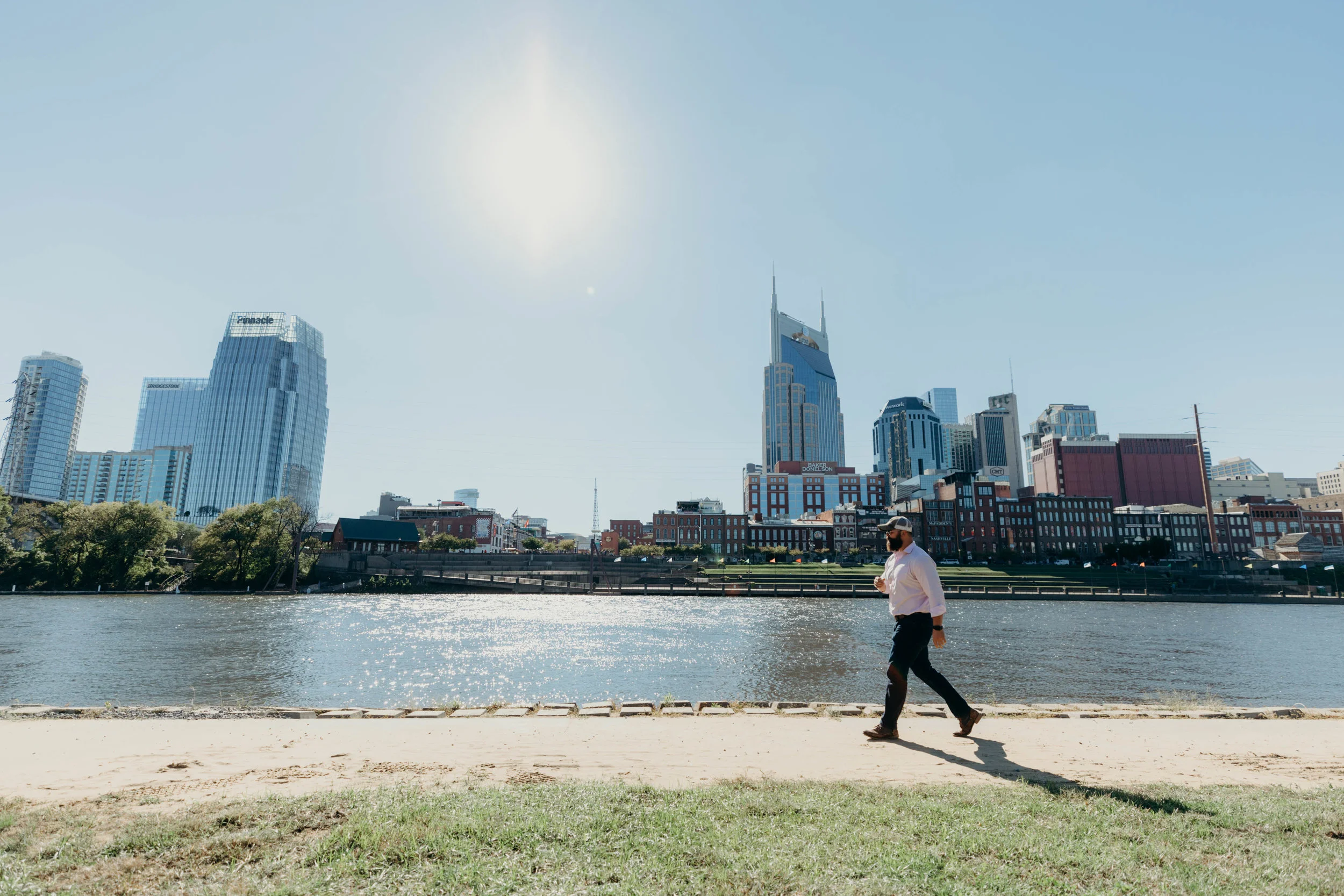
I have watched this exact thing play out in my own backyard. Back in 2019 I was telling every developer in Nashville to buy land on Dickerson Pike, right outside my window, when it was around a million dollars an acre. Then Oracle’s campus got announced, then the new Titans stadium got announced, and inside four years that same dirt was trading at $2.25 to $2.5 million an acre. Same flywheel, no beaver required. (And for the record, those developers should have listened to me.)
You don’t need a beaver, but you do need to run the numbers before you buy a speculative parcel. To pressure-test a land banking play, plug it into my commercial real estate deal analyzer and see what the carry actually costs you while you wait on the bulldozers.
Don’t Underwrite the Building, Underwrite the Traffic
Write this one down, because it is the principle under everything above. Don’t underwrite the building. Underwrite the traffic generator. In plain English, before you buy anything, ask what brings the people, because the people are what bring the value.
That holds for a parcel next to a Buc-ee’s. It holds for a shop next to a new stadium. It honestly holds for the house you live in. It is also the exact question I start with on every deal I look at, and it is the first thing I would teach you about commercial real estate investing: the property is downstream of the demand. Get the demand right and the rest tends to follow. For the mechanics of putting real numbers to that, I break down how to analyze a commercial real estate deal in full.
The Catch: It’s Still a Bet
If this sounds too easy, you’re right. There’s always a catch. Not every town wants one of these. Palmer Lake, Colorado has been fighting a proposed Buc-ee’s for over a year, and the planning commission flat out said it doesn’t fit their master plan. Announcements can die. Infrastructure costs can land on the wrong people. If you buy dirt next to an announcement, you carry that risk until the bulldozers actually show up. Land banking doesn’t always go the way you want it to.
One last detail tells you everything about this company. Buc-ee’s bans semi-trucks, the single biggest traffic source on the interstate, turned away on purpose. Why? Because truckers change the parking math and the experience for the family in the minivan, and the family in the minivan is the customer. Most investors never apply that kind of discipline. Know exactly who your customer is, build only for them, and turn away revenue that does not fit.
Key Takeaways
The gas is the marketing budget, not the business. Cheap fuel pulls tens of thousands of people a day off the interstate. The 40%-margin store and the land are where the money is.
Buc-ee’s owns its dirt and never franchises. They keep the land, the building, the margin, and the brand. That’s a land company wearing a convenience-store costume.
Traffic reprices the land around it. A self-made anchor turns cheap rural corners into the most valuable dirt on the highway, and Buc-ee’s even leases the excess back out.
The copyable move is the 18-to-24-month window. When an anchor is announced, the surrounding land reprices while the store is still under construction. That is your window to land bank.
Underwrite the traffic generator, not the building. Ask what brings the people before you buy anything. The demand comes first, and the property value follows it.
It’s still a bet, so keep the discipline. Announcements fall through and towns push back. Know your customer, know your carry cost, and say no to deals that don’t fit.
This article is adapted from a conversation on the Tyler Cauble YouTube channel. Watch the full breakdown of the Buc-ee’s real estate playbook for the footage and the full numbers.
Want me walking you through your actual deals?
Get my step-by-step investment blueprint, the underwriting software, and personalized feedback on every deal inside the CRE Accelerator.
Learn About the CRE Accelerator