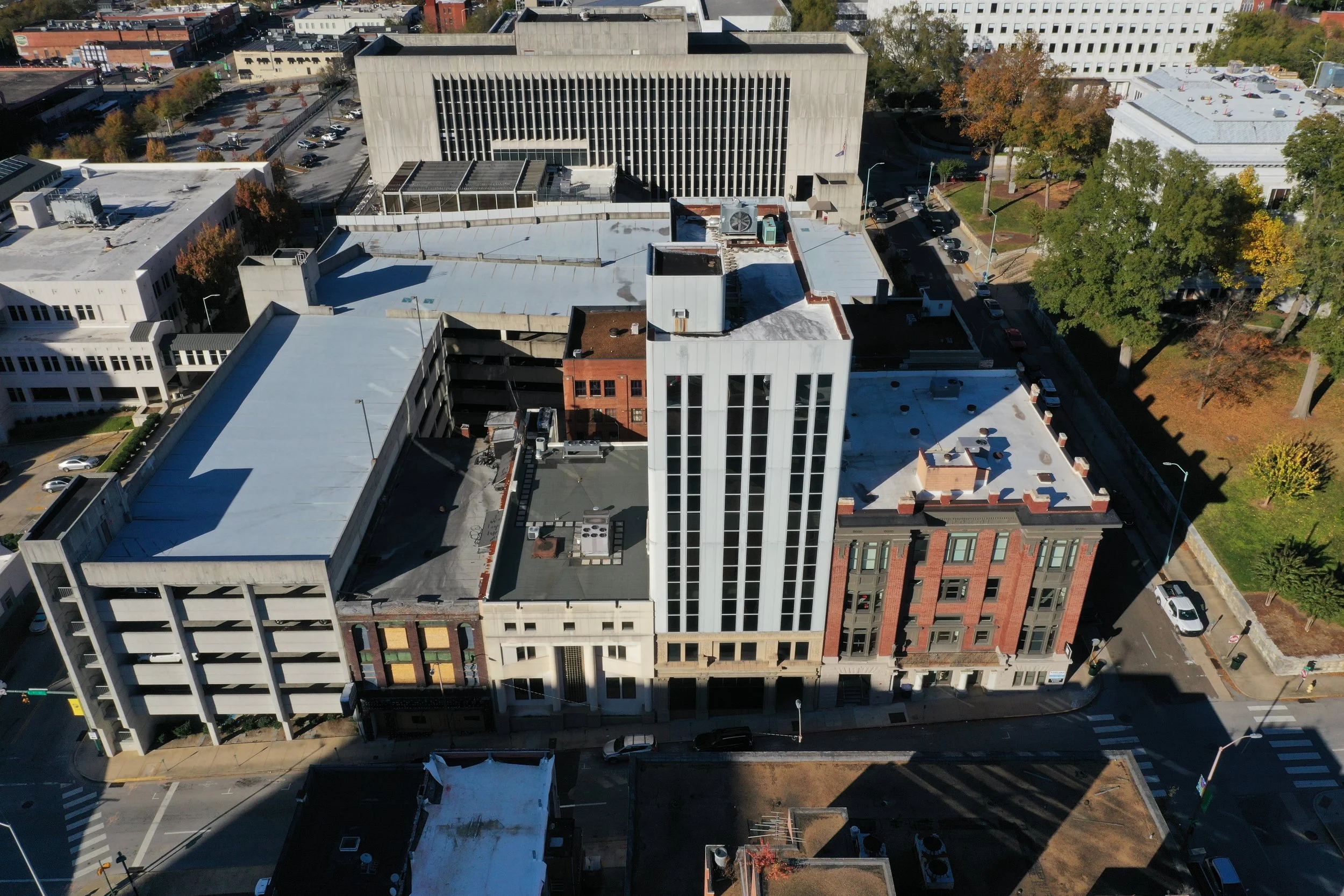

Sale leaseback transactions have emerged as a strategic tool for companies seeking to optimize their capital structure while retaining operational flexibility.

Blog
Connecting People & Places in
Commercial Real Estate
Single-family rentals will never replace your W-2 income. And honestly, the same goes for commercial real estate. But probably not for the reason you're thinking.
I get this question more than almost any other from people looking to get started, residential or commercial: how fast can I replace my W-2? And today I'm going to make the argument for why you shouldn't be trying to replace it at all, at least not yet. I call it the W-2 paradox, and once you see it, you can't unsee it.
Here's the thing. When you're building a real estate portfolio, your W-2 is one of the most valuable tools you have. Every dollar your portfolio earns is a dollar you can reinvest into buying more real estate. The second you quit and start living off your rental income, that engine stalls. So let's talk about why keeping your job is the smartest move you can make on your path to commercial real estate investing, and what to do instead.
In This Article
The Real Math
$600K
In missed compounding over 5 years if you quit and live off cash flow
33 to 1
Residential homes it took to rival a single commercial property
2-5 hrs
A week to manage 4M+ SF of commercial space
Here's what most people are doing when they get into real estate. You save from your W-2. Your salary funds every down payment. Then your W-2 helps you qualify with the bank. Then you stack cash flow until you can walk away. Save, qualify, stack, repeat. It's a circular plan, and it works.
Here's the problem, though. The plan only works while you have the W-2. The moment you quit, the entire system breaks. You become completely reliant on the cash flow from your assets, which banks view as risky, and you lose the very thing that was funding your growth.
Most investors don't see this until they're on the other side of it. They think quitting the W-2 is when they finally get to focus on real estate full time. It's actually the opposite. The day you quit, your investing usually stalls out. There are three walls that close in behind you, and you need to understand all three before you hand in your notice.
When your W-2 disappears, so do the banks. Lenders underwrite you first, then the asset. They look at your credit, your cash, your experience, your debt-to-income, and your global cash flow. And your global cash flow includes your W-2 income. If you're making $120,000, $150,000, whatever it is, the second you stop, that global cash flow drops off a cliff.
A steady paycheck beats every other form of income on a lending application. It's the strongest qualifier there is. The "real estate investor" is actually one of the hardest borrower profiles in all of lending, because even if you're diversified across an office building, a strip center, and an industrial building in three parts of town, 100% of your income still comes from real estate. If the market hiccups, the bank sees serious risk.
I lived this. When I started my business back in 2018, I couldn't qualify for anything. It took me two years before a bank would approve me to buy a house, even though I was making substantially more than when I worked for someone else. Banks see self-employment as riskier than a W-2, which is wild when you think about it. You could lose a W-2 job tomorrow, but they still treat it as more stable. Don't ask me why. This is exactly why getting your financing lined up early matters so much when you're figuring out how to buy your first commercial property.
This is the wall I'd argue matters most. You can find your way around the lending wall with private money or seller financing. But the compounding wall is far more damaging to your future.
The money you spend to live is money that's no longer compounding. For every dollar you spend today, that's a dollar you could have invested and doubled in five years. That's the standard we hold ourselves to: if we're not doubling our money every five years, I'm not doing the project.
So run the math. If you quit and your living expenses are $5,000 a month, that's $60,000 a year, or $120,000 over five years that you no longer have to invest. Multiply that over time and you're talking about roughly $300,000 spent over five years that turns into $600,000 in missed capital growth. That cash flow used to fund your next acquisition. Now it's going toward groceries.
Here's the part that stings: your portfolio freezes the minute you quit. Whatever you own the day you walk away is basically the portfolio you're stuck with. Sure, over 20 or 30 years you can grow an asset, sell it, and 1031 exchange into something bigger. But now you're waiting on one asset to grow instead of adding a new property every couple of years and doing the 1031 exchange.
Here's the one nobody warns you about: passive income is the most active job you'll ever have, if you build it wrong. Every door is a relationship. You still have tenants, leases, renewals, and repairs, and every property needs a system.
This is where the numbers turn against you in residential. Thirty doors means 30 furnaces, 30 roofs, 30 lease renewals, and 30 residential tenants. It's miserable. And I'm not guessing. Every single person I've ever talked to who got to 50, 100, 150-plus residential units is miserable. They're not making what they thought, they're drowning in issues, and they're either managing it all themselves or paying a fortune to someone else. It becomes a full-time job.
Now compare that to commercial. I own about $75 million worth of real estate and we manage over four million square feet of commercial space across the Southeast. That takes me maybe two to five hours a week. Across that whole portfolio I have about 100 tenants, and they're all businesses. We hardly hear from most of them, and the ones we do hear from, I actually enjoy talking to, because they're entrepreneurs like me calling about expanding their parking lot or adding on to their building. That's the beauty of it. If you want to understand the deeper differences here, I broke it all down in commercial real estate vs residential.
I know some of you are miserable at your job and the whole point was to quit. I get it. I've been there. But here's the reframe: once you have enough passive cash flow coming in, that gives you leverage. That gives you flexibility.
You don't have to grind 40 hours a week at a job you hate. Go part time. Work as a consultant. Change careers entirely. Do something different. That's the actual point of passive income. It's not to retire and pick up gardening, you'll get tired of that fast. It's to give you the freedom to do whatever you want with your life while your portfolio keeps compounding in the background.
Think about how powerful this is. If you net $120,000 from your W-2 and $120,000 from your real estate, and you live off $60,000 to $80,000, you get to invest the difference every single year. That's when things really start to snowball. The best investors I know are all still working, by the way. I've got a buddy here in Nashville with well over a billion dollars in real estate who still negotiates leases every single day. He doesn't have to. He chooses to, because he enjoys it.
"Your salary is the engine of your real estate investing machine. The W-2 is the engine. Stop trying to kill it. Use it."
- Tyler Cauble
So here's what I actually want you to do with all of this.
Keep the W-2. That's your leverage. Don't burn it down. Reframe it as a tool for buying more real estate, not a cage keeping you from investing full time.
Sell the single-family, 1031 into commercial. If you own single-family rentals, chances are your return on equity is low today. You've probably built up some equity but you're barely cash flowing. Sell it, 1031 exchange into a commercial building, and make far more. We did a video comparing one commercial property to 33 residential homes. It took 33 houses to rival a single commercial deal that only cost about a million to a million and a half.
Build equity through forced appreciation. This is the thing you simply can't do in single-family. One of our members, Chad, added $700,000 in value the moment he signed a lease on a property he already owned. Show me another investment where you can sign one piece of paper and create $700,000 in value. Another member, Bob, found a commercial deal on Facebook Marketplace, bought it for around $200,000, and will have added about $350,000 in equity by the time he's done. That's the power of value-add.
Quit on a capital event, not a whim. The time to leave your W-2 is when you have a capital event large enough to set aside one to three years of living expenses while your cash flow comfortably surpasses your salary. Until then, keep the engine running. When you do finally step back, you'll be able to do it like a true passive real estate investor instead of trading one job for a harder one.
Don't rush to replace your W-2. Your salary funds down payments and qualifies you for loans. It's the engine of the whole machine.
Three walls close in when you quit too soon. The lending wall, the compounding wall, and the operational wall all work against you.
Commercial beats residential on effort. Thirty residential doors is a full-time headache. Millions of SF of commercial can take a handful of hours a week.
Passive income buys flexibility, not just retirement. Use the cash flow to choose your work, go part time, or switch careers.
Quit on a capital event. Leave the W-2 only when your cash flow comfortably surpasses your salary and you've banked one to three years of expenses.
This article is adapted from an Office Hours episode on the Tyler Cauble YouTube channel, where I go live every Tuesday to answer your questions about commercial real estate investing.
Ready to build real passive income the right way?
Get my step-by-step investment blueprint, a community of active investors, and personalized coaching inside the CRE Accelerator.
Learn About the CRE AcceleratorEvery time I sign a new commercial real estate loan, I run through the same mental checklist of everything that's actually negotiable in these contracts. And it's a lot more than most people think. When you've never closed a commercial real estate loan before, you probably assume the interest rate is the whole game. Get the rate down, win the deal. Right?
Not even close.
There are four levers I look at on every single loan, and most of them protect you or save you more money than the interest rate ever will. On a $1 to $5 million loan, negotiating these points can save you tens of thousands, sometimes hundreds of thousands of dollars over the life of the deal. So let's break down how to negotiate a commercial real estate loan, what's actually on the table, and how to have these conversations with your lender so you don't leave money sitting there.
In This Article
First, You Need Leverage (Or None of This Matters)
Lever 1: The Personal Guarantee
Lever 3: Rate and Origination Fees
A $2.5M Loan, By the Numbers
$50K-$100K
Left on the table by most first-time borrowers
$24,000
Saved by negotiating 25 basis points off the rate
$80,000
Difference between a bank's first offer and a smart counter
Here's what's actually at stake. Take a $2.5 million loan, which honestly isn't a big loan in commercial real estate. Most of you getting started will land somewhere in the $1 to $2.5 million range depending on the size of property you're chasing. The gap between the bank's first offer and what's actually achievable can be $50,000 to $100,000, sometimes more.
And most first-time borrowers leave every dollar of it on the table. It's kind of like that apartment lease you signed back in college. You look at the paperwork and think, "Well, this is just it. I have to sign it." That's not the truth. Banks will tell you their terms are fixed, that these are laser docs they don't change. Yes and no. There are things they won't move on, like the insurance they require on the property. If I were the lender, I'd want my borrower carrying the right coverage too, because if something happens to that building, I need my loan repaid. But interest rates, personal guarantees, origination fees, amortization, burnoffs? All of that is fair game. Just because it looks official doesn't mean it's set in stone.
One more thing before we get into the levers. Do yourself a favor and get a great commercial real estate attorney in your corner for this. I still have my attorneys negotiate loans on my behalf, because they do this for a living and it's easier to have a professional handling the paperwork while I'm having the relationship conversations with my lender.
Before I give you a single lever, understand this: you can't negotiate any of them without leverage. None of it matters if you don't have options.
So what gives you leverage? Multiple opportunities. If you're backed into a wall, you have to refinance in the next 60 days, and you've only got one lender willing to work with you, you've already lost. Sure, you can push for better terms. But the second they say, "Actually, we don't want to do this deal anymore," you're out of luck.
The more options you have, the more runway you have, the better the deal you can negotiate. Go find two, three, four, even five lenders who'll give you a term sheet. Once you've got competing offers in hand, you can start negotiating with all of them against each other. That is leverage. Keep that in the back of your mind through every one of these levers, because it's the foundation everything else sits on. This is also why how to buy your first commercial property comes down to preparation long before you ever sit across the table from a banker.
The personal guarantee is the single biggest lever on the page. I know what you're thinking: what about the amortization or the interest rate? No. The personal guarantee is number one, because it decides whether you're personally on the hook for this debt for the entire life of the loan.
This is 100% negotiable. It depends on your track record, your experience, and the strength of the deal. Now, most banks won't voluntarily let you off the hook. But if you're coming in with 50% down and Starbucks is corporately guaranteeing the lease, the bank looks at it and goes, "Our risk is low, maybe we don't need a personal guarantee." For the rest of us, and that includes me, I'm still signing personal guarantees on almost every commercial real estate loan I do. Here's how I negotiate them down.
Burnoff provisions. This is the big one. A burnoff means that as you stabilize the deal and hit certain metrics, the guarantee goes away. For example, once the property hits a 1.3 debt service coverage ratio and holds it for 12 consecutive months, the personal guarantee burns off. If you want to understand exactly how lenders calculate that ratio, it's worth getting comfortable with commercial underwriting before you ever sit down at the table.
Step-down releases. You can also have the guarantee burn off over time: 100% year one, 50% year two, 25% year three, gone after that. Sometimes a lender will only do a partial release and it stays at 25% after year three. Almost every piece of this is negotiable. It comes down to how creative you and the lender are willing to get.
Bad boy carveouts. Make sure you've got carveouts in there too. We call these "bad boy" clauses, and they limit your personal liability to things like fraud and gross negligence. Banks want the ability to call the note if you've got real character problems, and I get that. If I commit fraud or file personal bankruptcy, sure, foreclose. But you don't want a divorce accelerating your loan. That should have nothing to do with the property, so you carve it out.
Lever number two is the prepayment penalty, and there's a big spread between a step-down and yield maintenance. You want to understand what penalties you have and how to negotiate them, because this can cost you a fortune if you ignore it.
Go for a step-down, every time. A step-down is the best structure for the borrower. You see aggressive ones on SBA loans, like a 5-4-3-2-1: 5% penalty in year one, 4% in year two, all the way down to 1% in year five. When you get into community and regional banks, they'll often start lower and sooner, maybe 2% in year one and 1% in year two, and then you're free to refinance.
Avoid yield maintenance if you can. The alternative is yield maintenance, which basically guarantees the bank a certain return. If you want to refinance early, you have to pay them enough to hit that number, and it can be a ton of money. I hardly ever see it in the world I play in, but you want to know it when you see it. There's also defeasance, where you replace the debt with bonds. It gets complex and it's common on CMBS notes, but most of you won't touch it.
It doesn't have to be a 5-4-3-2-1. Ideally it's a 3-2-1. On my heavy value-add projects, the first three years is usually all I'll agree to anyway, because it takes me 18 to 24 months to finish the work and another 12 to stabilize before I'd sell. By then my step-down has burned off. And if a buyer shows up inside that window, I just bake the prepayment penalty into their purchase price. You pay it if you want it now, otherwise we wait.
Notice this is lever number three, not number one. The rate matters, but it's the thing everybody fixates on while ignoring the levers that actually protect them. Let me put it in perspective: we're seeing members close as many deals today as they were two years ago, when rates were a full point lower. If 50 to 100 basis points breaks your deal, it probably wasn't a deal in the first place.
That said, there's money here. In most markets you can negotiate the rate by roughly 12 to 25 basis points. A basis point is 0.01%, so 25 bips takes you from 7% to 6.75%. Banks price differently, some off the 10-year Treasury plus a spread, some off prime plus 250. Understand their base, then negotiate from there. Ask for prime plus 125 instead of prime plus 150. But don't walk in at 6.25% and ask for 5%. They'll laugh you out the door.
Origination fees. Most lenders charge about 1%, essentially paying themselves for putting the loan together, like a broker earning a fee for bringing a tenant. I see 1% about 99 times out of 100, sometimes pushing 1.5% if there's a mortgage broker sourcing it. It never hurts to ask them to bring it down to 0.5% or 0.75%.
Use your deposits as leverage. Here's what banks really care about: deposits. Every dollar sitting in their bank is another few dollars they can lend out. So tell them, "If I move my accounts over here, how much can we renegotiate this?" That's real leverage, especially when the relationship is the point. All a lender cares about long-term is the relationship. I've got one right now where I can text him a deal, have my CPA send the financials, and get it approved, no dog and pony show required. That kind of relationship is worth more than a few basis points.
"Negotiating 25 basis points off a $2.5 million note is about $24,000 over a five-year term. It's not game-changing. But I'd rather have it in my pocket than the bank's. Wouldn't you?"
- Tyler Cauble
One more play here: the rate lock. If you think rates are more likely to rise than fall before you close in 30 or 60 days, ask if the lender will lock today's rate. Most won't lock until the week of closing, but some will do it early. It never hurts to ask.
Reserves. Reserves aren't typical on the commercial side, but they're everywhere in multifamily. Depending on how a bank feels about your deal, they might ask you to bring six months of reserves and park it in an account. That's a lot of cash sitting idle. In a rough market, borrowers are grateful their lender forced them to do it, because it carried them through. In a hot market, it's dead money earning no return, so you want to negotiate it down or out.
For ongoing replacement and capex reserves, you'll usually see 2% to 4% of net operating income set aside annually. Honestly, that's something you should be doing anyway. A lot of what a lender requires isn't there to make your life harder, it's there to make the deal secure. They look at more deals than you do, so when they ask for a 2% capex reserve, you'd better have a good reason not to.
Amortization. This one gets interesting. If you're chasing cash flow, you want the longest amortization you can get, 25 years, sometimes 30 with a private lender. I've even heard of 40. But here's the trade: a longer amortization means lower payments and almost nothing going toward principal. If you don't care about cash flow, a 20-year amortization pays the principal down faster, so in a three-to-five-year hold you'll have more equity waiting for you when you sell. More money at the exit, less cash flow along the way. Know which one your deal needs. This is exactly the kind of thing you should be modeling out when you analyze commercial real estate deals before you ever sign.
Be careful here, because pushing on the wrong things makes you look green. You want to know where the floor is without trying to renegotiate it.
Loan-to-value and DSCR. In today's market, LTV is going to cap around 75% on most assets. You can absolutely ask a bank where their LTVs and debt service coverage minimums are today, that's smart. But if they say their max is 75% and you keep pushing for 80%, you'll get laughed out of the room. The one exception: if their stated DSCR minimum is 1.2 but your term sheet shows 1.25, you might squeeze that down a little depending on the asset and your global cash flow.
Appraisal and environmental. These are third-party items the bank has to order. You'll often hire the environmental team, and the bank orders the appraisal, usually a blind, arms-length appraisal so there's no bias. That's why they won't accept an appraisal you already paid for. These fees are non-negotiable, and asking for a reduction just makes you look inexperienced. This is all part of proper due diligence, so budget for it up front.
Here's how to actually run the conversation.
Get two to three term sheets first. Maybe five. The more you have, the easier everything else becomes, because you've got leverage and you're not backed into a corner with one savior.
Lead with what you want. I send my lenders the terms I'd like to see, the amortization, the personal guarantee structure, sometimes I don't even bother negotiating the rate because I know it's tied to prime or the Treasury plus a spread. They know what the market is. Tell them where you want to land.
Trade items. Move your deposits over for a lower rate. Put more equity in to burn off the personal guarantee. A bank might say, "At 75/25 it's too risky for a non-recourse loan, but bring it to 65/35 and we'll drop the guarantee." For a lot of investors that's 100% worth it: your cash-on-cash return dips, but the deal is far more stable and you're no longer personally on the hook. That same trade-off logic is why so many investors get creative on the capital stack, which is the whole idea behind buying commercial real estate with no money down.
Use silence. Say what you want and then stop talking. That's sales 101. If you're across the table and you say, "I want a 25-year amortization with no personal guarantee," then sit there and let them think. Grab your water, take a sip, whatever you need to do to keep quiet. Most people get nervous and fill the void by talking themselves out of what they just asked for. Don't. Let them answer.
Know when to walk away. This is the whole point of having multiple term sheets. This past weekend I had 65 people in Nashville for a three-day workshop, and on Sunday my CFO and I reviewed the three loans we seriously considered for the Salt Ranch Hotel. One of them was so insane we threw it straight out. But at least we had it, because more often than not lenders just won't budge. The leverage to walk is what gets you the right deal.
Here's the whole thing in one example. A bank offers you a 7% rate, 1.5% origination, full recourse on the personal guarantee, yield maintenance on the prepay, and a 20-year amortization. Your counter: 6.75% rate, 0.75% origination, a personal guarantee that burns off once you hit a 1.3 DSCR, a 3-2-1 step-down prepay, and a 25-year amortization so the deal cash flows. Same deal, same building. There's about $80,000 of difference on the table, and you're barely moving the needle on any single point.
Leverage comes first. Get two to five competing term sheets before you negotiate anything. Without options, you can't move a single term.
The personal guarantee is the biggest lever. Negotiate burnoffs, step-down releases, and bad boy carveouts so you're not on the hook for the life of the loan.
Always go for a step-down prepayment penalty. A 3-2-1 beats yield maintenance for the borrower nearly every time.
The rate is lever three, not lever one. Negotiate 12 to 25 basis points and your origination fee, and use your deposits as leverage.
Treat the term sheet as a conversation. Lead with what you want, trade items, use silence, and be willing to walk away.
This article is adapted from an Office Hours episode on the Tyler Cauble YouTube channel, where I go live every Tuesday to answer your questions about commercial real estate investing.
Want to negotiate your next deal like a pro?
Get my step-by-step investment blueprint, a supportive community of investors, and personalized coaching inside the CRE Accelerator.
Learn About the CRE AcceleratorSingle-family rentals will never replace your W-2. And honestly? Commercial real estate won't either, at least not the way most people think it will.
Bold statement, I know. But stick with me here, because this is one of the most common questions I get from people trying to break into real estate, whether it's residential or commercial: how fast can I quit my job? Today I'm going to make the opposite argument. I'm going to show you why chasing passive income real estate to replace your paycheck is the wrong goal, and why your W-2 might be the single most valuable tool you have as an investor.
I've been in commercial real estate since 2013 and investing for myself since 2018, right here in Nashville. And I've watched this one mistake stall out more portfolios than just about anything else. So let's dig into what I call the W-2 paradox.
In This Article
Why Your W-2 Is the Engine Behind Passive Income Real Estate
The Three Walls That Close In When You Quit
Passive Income Real Estate Is the Most Active Job You'll Have
My Portfolio, By the Numbers
$75M
Real estate owned
4M+ SF
Managed across the Southeast
~100
Commercial tenants
~2 hrs
My weekly management time
Here's the thing. When you're getting into real estate, your W-2 is one of the most valuable assets you have. I know everybody gets into this game to replace that paycheck with passive income and walk away. But I want you to flip how you think about it.
Because every dollar your portfolio makes is a dollar you can reinvest into buying more real estate. The second you get rid of your W-2, you're now living off of all that rental income. And the day you start spending your cash flow instead of compounding it, you stop being able to grow your portfolio at the same pace. The whole machine slows down.
Walk through how this actually works. Your salary funds every single down payment. You set aside a little each month, you get a bonus, you have a good year in sales, and that's the money you use to buy your next deal. Your W-2 also helps you qualify with the bank. Now, commercial is very different from residential when it comes to financing. You're not completely dependent on your personal situation, because the property and its income factor in too. But without W-2 income, it's a lot harder for a bank to approve you for an investment loan. They see you as riskier, because if a tenant moves out, your cash flow is gone and so is your ability to make the payment.
So the typical plan looks like this: save from your W-2, use the W-2 to qualify for the loan, stack the cash flow, then repeat and keep stacking assets. It's a good strategy. It works. The problem is that it only works while you have the W-2.
"Your salary is the engine of your real estate investing machine. Stop trying to kill it. Use it."
- Tyler Cauble
The day you quit your W-2, three walls close in behind you. Most investors don't see them until they're already on the other side.
Wall #1: The lending wall. When your W-2 disappears, so do the banks. Lenders underwrite you first, then the asset. They look at your credit, your cash, your experience, your debt-to-income, and your global cash flow. And here's the kicker: your global cash flow includes your W-2. So if you're making $120,000, $150,000, $200,000 a year and you walk away from it, that global cash flow drops off a cliff. A steady paycheck beats every other form of income on a lending application. When I first started my business back in 2018, I couldn't qualify for anything. It took me two years before a bank would approve me for a house, even though I was making more than I ever did working for someone else. Banks just see self-employment as risky, which is wild when you think about it, since you can lose a W-2 job tomorrow.
Wall #2: The compounding wall. This one is the most damaging, and it's the one nobody talks about. The money you're now living on is money that's no longer compounding. For every dollar you spend today, that's a dollar you could have invested and doubled in five years. On our deals, if we're not doubling our money every five years, I'm not doing the project. So say your living expenses are $5,000 a month. That's $60,000 a year, $300,000 over five years, and roughly $600,000 in missed growth. The cash flow that was supposed to fund your next acquisition is now going toward groceries. Your portfolio freezes at whatever size it was the day you quit.
Wall #3: The operational wall. Passive income is the most active job you'll ever have, especially in residential. Thirty doors means 30 furnaces, 30 roofs, 30 lease renewals, and 30 tenants calling you. I've interviewed members of my mastermind who got to 75, 100, even 450 residential units, and almost every single one of them was miserable. They weren't making what they thought, and they were either drowning in property management or paying through the nose for someone else to do it. That's a big part of why I love commercial so much more. I own $75 million in real estate with around 100 tenants, and they're all businesses. We hardly hear from most of them, and the conversations we do have are fun ones, about expanding a parking lot or adding on to a building.
Here's what I want you to understand about passive income real estate: it's only passive if the systems are built right. Every door is a relationship. You still have tenants, leases, renewals, and repairs. The reason I can manage over 4 million square feet across the Southeast in about two hours a week is that the processes are dialed in, and commercial tenants simply require less hand-holding than residential ones.
And this is the real point of building passive income in the first place. It isn't to retire and pick up gardening, trust me, you'll get bored of the hobbies fast. It's to give you flexibility. Once you have enough cash flow coming in, you get leverage over your own time. Hate working 40 hours a week but like the work? Go part-time. Move into consulting. Switch careers entirely. The passive income lets you do whatever the hell you want with your life, and that's worth far more than simply quitting.
The best investors I know are all still working. I've got a buddy here in Nashville who owns well over a billion dollars in real estate, and he still negotiates leases every single day. He doesn't have to. He just enjoys it. So if one of the most successful investors I know chooses to keep working, why would you quit at $10,000 a month?
So here's the playbook I'd run if I were you.
Keep the W-2. It's your leverage. Don't burn it down. Reframe it as the tool that buys you more real estate. You don't have to grind 50 hours a week, but keep it until your portfolio actually replaces the income you'll be satisfied with for the rest of your life.
If you own single-family rentals, sell and trade up. You've probably built equity but you're earning a weak return on it. Sell, run a 1031 exchange, and move that equity into commercial. We did a video comparing one commercial property to 33 residential homes, and it took 33 houses to rival a single commercial building that cost maybe a million bucks. That's the difference. And if you're still deciding where to start, my full guide on how to buy your first commercial property walks through the mechanics.
Build equity through forced appreciation. This is something you simply can't do in single-family. With value-add commercial real estate, you can sign one piece of paper, a lease, and instantly add hundreds of thousands of dollars in value to a property you already own. One of my mastermind members added around $350,000 in equity to a building he found on Facebook Marketplace and bought for about $200,000. That's cheaper than a lot of houses people are chasing right now.
Let me give you a real example. Back in 2021, I went under contract on a small retail building for $435,000. The owner was leaving, so I negotiated the right to market the space and sign a tenant before we closed, contingent on closing. We signed that lease, took it to the bank for the appraisal, and it came back at $650,000. That's over $200,000 in equity created the day we closed, and it didn't cost me a dollar. That's the power of understanding commercial real estate cap rates: better, more stable tenants compress the cap rate and drive the value up.
Quit on a capital event, not a feeling. The right time to leave isn't when you hit some arbitrary monthly number. It's when you have a capital event large enough to set aside one to three years of living expenses while your cash flow keeps rolling in and comfortably surpasses your old salary. That's the moment you've actually earned your freedom. If you want to go deeper on the long game, here's how I think about being a passive real estate investor and where I'd start with commercial real estate investing overall.
Your W-2 is an asset, not an obstacle. It funds your down payments and qualifies you for loans through your global cash flow. Treat it as the engine of your investing machine.
Quitting too early triggers three walls. The lending wall, the compounding wall, and the operational wall all close in the day you walk away from steady income.
Passive income buys flexibility, not just retirement. Use it to go part-time, consult, or change careers. The goal is control over your time, not an early exit.
Commercial beats residential on every axis. Fewer tenants, less management, and forced appreciation you can't replicate with single-family homes.
Quit on a capital event. Walk away when you can bank one to three years of expenses and your cash flow clears your old salary, not before.
This article is adapted from a conversation on the Tyler Cauble YouTube channel.
Ready to build real passive income the right way?
The CRE Accelerator is my step-by-step program for building a commercial real estate portfolio while keeping your W-2 working for you.
Learn About the CRE AcceleratorWe bought a 105-unit self-storage facility in Madison, just outside Nashville, about a year and a half ago. It came with permanently built units, some truck parking, and a vacant lot on the side. The existing units? Maxed out. Full occupancy. And we've got customers lined up waiting for space. So the question became: how do we add more units without spending a fortune on new construction? The answer is shipping container storage.
I sat down with my business partner Jacob from Sixth Man Movers and Jamie from Storage Designer to walk through exactly how we're planning to add 46 shipping container storage units to our site, and the numbers are wild. We're looking at roughly $150,000 in total capital to create close to $800,000 in additional property value. That's a 5x return. And the beauty of it is you can do it in phases, a few containers at a time, so you never create excess vacancy.
If you're thinking about getting into commercial real estate investing through self storage investing (or you already own a facility and want to juice your returns), this is the playbook.
In This Article
Why Adding Units Beats Raising Rents Every Time
The Madison Property: What We're Working With
Designing the Layout: Three Options for Lot 1
New vs. Used Containers: Why Brand New Wins
Running the Numbers: How $150K Becomes $800K
Self storage is one of the hottest asset classes in commercial real estate investing right now, and it has been for years. If you're looking at buying self-storage facilities, sure, you can raise rents and operate better to increase your net operating income. That's the standard playbook. But the real money? It comes from adding units to the site.
Think about it this way: even if you raise rents by 20% across the board at a stabilized facility, you're still not going to get anywhere close to a 5x return on your investment. But by spending the capital to add 40 or 50 modular units, you're creating 40% more income-producing square footage at a fraction of what it would cost to build from scratch. Your land basis drops, your NOI per unit goes up, and the property becomes substantially more valuable.
That's the value-add real estate investing strategy that gets me excited about self storage. And the best part? When you're buying, you want to look for sites that have additional land, maybe some industrial outdoor storage, maybe some truck parking, where you can eventually drop more units. The cost-to-revenue ratio is wildly outsized.
Our facility sits on just under two acres in Madison, which is an up-and-coming area right outside Nashville. We've got about 105 permanently built self-storage units that are already there, some truck parking, and a vacant lot on the side that we've already graded and gotten ready for shipping container storage units to be dropped in.
We also have a second lot inside the gate that's currently being used for RV and boat parking, maybe a dozen spots. It brings in decent money for not much effort, but we think we can do a lot better with it.
The approach here is modular. Instead of building an entire permanent structure (which would be expensive, slow, and require extensive permitting), we're bringing in shipping containers and prefabricated self-storage units and just dropping them in place. They're semi-permanent, they can be deployed in phases, and you're not committing all your capital at once.
"Don't build everything all at once. Add units as you need them. Especially with a modular approach like this, it's not really any more cost effective to do 100 units as it is five. Make sure you don't create too much vacancy."
- Tyler Cauble
And here's a self-storage hack that most people don't think about: partner with a moving company. My partner Jacob owns Sixth Man Movers, a moving company here in Nashville that's growing rapidly. His clients need storage constantly. So we've essentially maxed out our occupancy with our existing units, and Jacob already has customers lined up waiting for the new ones. That built-in demand is a game changer because you can let the demand dictate the supply instead of guessing.
We brought in Jamie from Storage Designer to help us plan the layout. One of the biggest mistakes self-storage investors make is just dropping containers on a lot without any thought. You've got to think about access for moving trucks, turning radius, customer experience, fire code turnarounds, and how the site will look from the street.
Our lot is long and relatively thin, which created some design constraints. Jamie put together three options for us:
Option 1: The Simple Row. Twenty-four 20-foot containers all in a single row with a 25-foot access way. Very straightforward, great visibility across the entire site, and comfortable for multiple vehicles to pass each other and pull up to units with drive-up access. From a safety standpoint, I liked this one best because you can see everything going on. No nooks, no hiding spots. In a spot like Madison, that matters.
Option 2: The Maximized Layout. Twenty-eight 20-foot containers plus four smaller 10-foot units, configured in multiple rows. This gets us more units but reduces the access way to about 16 feet and creates 15-foot interior lanes. Still accessible for pickups and SUVs, but tighter for larger moving trucks. The smaller 10-foot units add variety in self storage unit sizes, which is nice for customers who just need a small space.
Option 3: The Hybrid Mix. This variation swapped some 20-footers for 40-foot containers targeted at commercial tenants. The 40-footers are hugely popular with small businesses and trades who need more space but aren't ready for a full warehouse lease. By pushing the 40-footers to the front of the lot (closest to the drive) and the smaller units toward the back, we get an efficient layout where moving trucks don't have to pull in too far.
One thing we discussed but decided against (at least for now) was tearing down an old switchboard building on the property. It's a windowless brick building that used to be a telephone switching station. Only three customers use it right now. Demolishing it could give us six or seven more container spots, but with about $20,000 in demo costs plus regrading, it becomes a numbers game. We'll revisit that decision later.
This was a big conversation. Shipping containers come in several categories: brand new (purpose-built for storage), one-trip (shipped once from the Far East and then sold), and used (could be 10+ years old, sold with a watertight and windtight guarantee). The price difference is real, but so is the risk.
Jamie's recommendation, and I agree with it completely, is to go brand new. Here's why:
Longevity. You're getting 15+ years of use out of a new container, and with proper maintenance (especially on the roofs in high-rainfall areas), even longer. Used containers are a gamble. You don't really know what you're getting until it shows up.
Appearance matters. Your customers are trusting you with their belongings. Walking into a site with a bunch of rusted, beat-up containers versus a site with clean, branded, color-matched units is a completely different experience. And that experience directly affects what you can charge.
Branding flexibility. New containers come in almost any color now. You can match them to your brand, add vinyl stickers, number the units, include instructional graphics for how to open and lock them. It all adds up to a more professional operation that commands higher rents.
The cost difference? A new 20-foot container runs about $2,500 to $3,500 delivered. Used might save you a few hundred bucks per unit, but the risk of getting something that looks terrible (or worse, leaks) is just not worth it. Think long term.
This is where it gets fun. Let's break down the math on both lots.
Lot 1: The Side Lot
~11,000 SF graded · 20 containers · 20-foot units
$25K
Site Work
$50K
20 Units @ $2,500
$75K
Total Cost
$200/mo
Rent Per Unit
$31K/yr
Added NOI
$416K
Value Created @ 7.5% Cap
The site work cost us $25,000 for grading and gravel, which comes out to about $2.27 per square foot. Pretty inexpensive. New 20-foot containers at $2,500 each times 20 units is $50,000. So our all-in cost is roughly $75,000, or about $3,750 per unit.
At $200 a month per unit with about 35% operating expenses, that's $1,560 per unit per year in NOI. Multiply that by 20 and you get $31,200 in annual NOI. At a 7.5% cap rate, that's $416,000 in additional equity created. On a $75,000 investment. That's a 5.5x return.
Lot 2: The Parking Area
Currently boat/RV parking · 26 units · Mix of 40-foot and 20-foot
$25K
Site Work
$45.5K
26 Mixed Units
$70.5K
Total Cost
$140/mo
Rent Per Unit
$28.4K/yr
Added NOI
$378K
Value Created @ 7.5% Cap
The second lot is smaller and triangular, currently pulling in rent from about a dozen parking spots. We're planning a mix of five 40-foot containers (about $7,000 each with multi-door configurations) and some 20-foot units with divided roller shutter doors. The 40-footers with four separate doors let us rent out smaller individual sections, which is great for customers who just need a 10-foot space.
At $140 a month per unit (priced lower than the indoor units to stay competitive), we're looking at another $28,392 in annual NOI. At a 7.5% cap rate, that's $378,000 in value. On about $70,500 in cost. Another 5x return.
Combined Value Created
~$800K
46 units added · ~$145K total investment · Property purchased for $1.7M
Combined, we're adding roughly 46 units for about $145,000 in capital, and creating nearly $800,000 in additional property value. Keep in mind, we bought this property for $1.7 million. By spending another $145,000 (less than 10% of the purchase price), we're adding almost 50% more value to the property. That's how you analyze commercial real estate deals and find the upside that most people miss.
When you're thinking about who's going to rent these units, you've got two categories of customers. First, your typical residential mover who needs storage between apartments or just inherited mom and dad's stuff. They're fine, but they churn. Three to six months and they're gone.
Then you've got what Jamie calls "tradies" (much cooler word than "contractors," by the way). These are your HVAC companies, caterers, home stagers, small builders. They don't need a full warehouse, but they need somewhere to store their equipment and parts. And they are incredibly sticky tenants. They start with one container, then they need two, then three. It becomes a business expense. They're not leaving.
A lot of the sticky customers we acquired when we took over the property were exactly these types of businesses. There's an HVAC company, a caterer that stores event equipment, and several small contractors. They're willing to pay a premium for dedicated access, and their expectations are easier to manage because they're professionals.
Here's the gap in the market that we didn't fully appreciate until we got into this: as Nashville grows and property taxes keep climbing, small businesses are finding it harder to afford leasable space. They can't keep everything at their house (there are rules against that in most neighborhoods). So a shipping container storage unit at $200 a month becomes the perfect middle ground. It's cheaper than a warehouse, more accessible than indoor climate-controlled storage, and they can drive right up to it.
If you can fill your units with these commercial tenants instead of residential movers, your occupancy becomes far more stable and your churn rate drops significantly. That predictability is worth a lot when you're trying to grow your self storage investing portfolio.
"If you want a really great self-storage hack, go partner with a moving company. They have clients that need storage constantly. Let the demand dictate the supply."
- Tyler Cauble
Adding units beats raising rents. Even a 20% rent increase won't give you a 5x return. Adding shipping container storage units to vacant land can.
Buy facilities with extra land. When you're looking to buy your first commercial property in self storage, look for sites with truck parking, vacant lots, or underutilized space where you can drop containers later.
Go new on containers, not used. A new 20-foot container runs $2,500 to $3,500 delivered, gives you 15+ years of life, and looks professional. Used containers are a gamble on quality and appearance.
Phase your deployment. Add five containers at a time, lease up to 70-80% occupancy, then add more. Don't create excess vacancy by building everything at once.
Chase sticky tenants. Small businesses, HVAC companies, home stagers, and caterers are far stickier than residential movers. They expand over time and rarely leave.
Work with a designer before dropping containers. Layout, access, turning radius, fire code, and customer experience all matter. Don't just start placing containers without a plan.
This article is adapted from a conversation on the Tyler Cauble YouTube channel with Jacob from Sixth Man Movers and Jamie from Storage Designer.
Want Help Analyzing Your Next Self Storage Deal?
Join the CRE Accelerator Mastermind for step-by-step coaching on finding, underwriting, and adding value to commercial real estate investments.
Learn More at CRECentral.comAbout Tyler Cauble
Tyler Cauble is a commercial real estate broker, investor, and developer based in Nashville, Tennessee. As the founder of The Cauble Group, he has acquired over 2 million square feet of industrial, retail, and office properties. Tyler is the author of Open for Business: The Insider's Guide to Leasing Commercial Real Estate and the host of the Commercial Real Estate Investor podcast. Through his CRE Accelerator mastermind at CRECentral.com, he coaches investors at every stage of their commercial real estate journey.
Ninety days ago, my partner Jacob and I took the keys to a self storage facility in Madison, Tennessee that had been neglected for years. The previous owner was completely absent. The property management software was from another era. Tenants were paying with paper checks, the rent roll was a mess, and people in the neighborhood literally warned each other not to rent there. So what does it actually look like to turn around a failing self storage facility in 90 days? That's what we're about to get into.
If you missed the first episode in this series, I'd recommend reading how to buy a storage facility where I walk through the entire acquisition process. Today's update covers everything that's happened since we closed: the operational chaos, the wins, the surprises, and exactly where the numbers stand after three months of hands-on property management.
In This Article
What Day One Actually Looked Like
Operations: The Non-Sexy Stuff Nobody Talks About
The Moving Company Marketing Hack
Let me paint you a picture. The first week Jacob was on-site after we closed, people were literally running up to his car saying "help us, help us, are you the new guy?" That tells you everything you need to know about how neglected this property was. The previous owner had checked out completely, and the tenants could feel it.
The place was a time capsule. There was a U-Haul poster from the '90s still hanging up. Everything was pen and paper. The management software existed, but it was outdated and the previous owner hadn't even communicated to the software company that the property was being sold. So when we tried to take over the system, we couldn't, because nobody on the other end knew we were the new owners. That's kind of a problem when your entire rent roll lives in that software.
Here's the thing about buying a self storage facility that nobody tells you: the first 60 to 90 days are pure chaos. There's an onboarding process for every single vendor, every utility account, every software platform. And most of these companies move at their own pace. You show up for a meeting thinking you're going to get things set up, and you learn that the meeting was actually just to schedule another meeting to start the onboarding process. It's all the non-sexy stuff, and it takes way longer than you'd expect.
"Operations is not sexy. Everybody thinks you buy a self storage facility, get into the property management system, and everybody's just paying rent. That's really not the case."
- Tyler Cauble
When we bought the property, we were told occupancy was around 82%. The reality? It was closer to 60%. As I mentioned in my last post about buying a storage facility, that 30% discrepancy was a tough pill to swallow. But here's the nuance that I want you to understand if you're looking at self storage investing: a lot of those "occupied" units had tenants who hadn't paid in months, or tenants who were essentially using the facility as a dumping ground. On paper they were occupied. In reality, they were generating zero revenue.
The good news is that the tenants who were actually paying and using their units? They've been incredibly sticky. Some of these people have been there for four to five years. We've got a catering company operating out of one of the units and an electrical company that uses another as their base of operations. These aren't people storing a few boxes. This storage is utilitarian to their businesses, and they're not going anywhere.
The biggest fear existing tenants had was that new ownership would come in and either kick them out or triple their rent overnight. Jacob spent the first 90 days personally connecting with every tenant, assuring them that we're here to improve the facility, not to gouge anyone. That personal touch has made all the difference. We haven't lost a single paying tenant since we took over.
90-Day Snapshot
105
Current Units
130-140
Target Unit Count
$0
Marketing Spend
0
Paying Tenants Lost
There's a big misconception in commercial real estate investing that self storage is "passive income." I get a little skeptical every time I hear that phrase. Is it simpler than managing an apartment building or a hotel? Absolutely. But passive? Not when you're turning around a failing facility.
Here's what the first 90 days of operations actually involved. First, we had to get the previous owner's management software company to recognize us as the new owners. That required what amounted to a power of attorney from the seller's broker because the seller himself was so uninvolved that he couldn't even facilitate the handoff. Then there was the insurance transition, utility transfers, setting up new payment processing, getting a gate code system working, and about a dozen other administrative tasks that all had dependencies on each other. This has to be set up before that can be set up, and it just takes time.
A lot of this can't be delegated, either. Jacob and I both have administrative teams for our respective businesses, but the vendor onboarding process specifically requires the owner to be involved. So for the first quarter, a significant chunk of our time went to just getting the infrastructure in place. Not the glamorous stuff you see on YouTube, but absolutely essential.
The timing actually worked in our favor, though. January and February in Tennessee are terrible weather months, so there wasn't much we could do on the physical improvement side anyway. By the time spring hit and we were ready to tackle curb appeal (new signage, dumpsters full of junk removal, general cleanup), we had all the backend systems running smoothly.
I touched on this in the first post, but it's worth going deeper because the numbers are genuinely remarkable. When we were evaluating management companies for this facility, the proposals all included $8,000 to $10,000 per year in marketing spend. That's standard for the industry. You need Google ads, you need a website, you need to be listed on storage aggregator sites, all of that.
We spend zero. Not a dollar. Because Jacob's moving company, 6th Man Movers, is our marketing engine. Every customer who books a move with Jacob's team gets asked a simple question: "Do you need storage?" And a good percentage of them do. It's the most natural referral pipeline imaginable.
Let's talk about what that actually means for the property's value. If you don't have to spend $10,000 a year on marketing, and you're running at a 7.5% cap rate, that's $133,000 in property value created just by eliminating a line item. That's not hypothetical. That's real equity that shows up when you refinance or sell. Think about that: $133,000 in value from a business relationship, not a capital expenditure.
And the customers coming through the moving company pipeline tend to be stickier than average. These aren't people who Googled "cheap storage near me" and are shopping on price alone. They're people in the middle of a life transition (moving houses, downsizing, building a new home) who need storage as part of a larger service package. That relationship starts before they ever see the storage facility.
Now that we've got the operational foundation in place, the next 90 days are all about growth. Our focus is on everything inside the fence line: maximizing our footprint by adding shipping container storage units to the existing lot.
We're looking at adding enough containers to bring our total unit count from 105 up to 130 or 140. Each container costs between $4,000 and $8,000 depending on the type and configuration, and each one can hold two to four individual storage units inside. The containers are mobile, which is actually a strategic advantage. If we ever decide to redevelop this site or reconfigure the layout, we can pick them up and move them. That flexibility is worth a lot.
The math on adding units is where this deal gets really fun. We're already cash flow positive at the current unit count. Every container we add is nearly pure profit because the infrastructure is already there: we don't need additional power, water, or management systems. A 30 to 40% increase in our unit base translates directly to a 30 to 40% increase in NOI, and at the cap rates self storage properties trade at, that's a massive jump in property value.
Beyond the containers, we're also focused on leasing our flex space buildings and continuing to drive occupancy through Jacob's moving company pipeline. Our goal is to get the facility stabilized at 90% or above, which based on our current lease-up pace of three to five units per month, should be achievable within the next couple of quarters.
"We sold our investors on a five-year timeline. If we add the container units and get to stabilized occupancy, we might be done in two. That's what gets everybody excited."
- Tyler Cauble
If I could give one piece of advice to anyone about to buy their first self storage facility, it would be this: don't underestimate the information gathering. During due diligence, walk every unit, verify every tenant, and don't take the seller at their word. We took them at their word, and their word wasn't great.
Also, budget for 60 to 90 days of pure onboarding before you can really start operating at full speed. There's a chicken-and-egg problem with vendor setup where everything has dependencies, and it all takes longer than you think. Plan for that instead of being surprised by it.
The first 90 days are about infrastructure, not income. Expect to spend your first quarter getting systems, vendors, and operations in place. The revenue growth comes after the foundation is solid.
Tenant retention beats tenant acquisition. We haven't lost a single paying tenant by investing in personal relationships and basic customer service. In self storage, keeping existing tenants is far cheaper than finding new ones.
Vertical integration is a superpower. Pairing a moving company with self storage eliminates marketing costs entirely and creates a natural customer pipeline. That alone is worth $133,000 in property value at a 7.5% cap rate.
Self storage is not truly passive. Especially in the turnaround phase. Budget your time accordingly, and expect to be personally involved in vendor onboarding and tenant relations for the first few months.
Adding units to an existing facility is the highest-ROI play in self storage. Shipping containers at $4,000 to $8,000 each can add $41,000+ per year in revenue, creating hundreds of thousands in property value with minimal capital invested.
Watch the full episode on YouTube: 90 Days After Buying an Abandoned Self Storage Facility
Ready to Find Your Own Self Storage Deal?
Join the CRE Accelerator Mastermind for deal analysis tools, underwriting templates, and hands-on coaching from active investors.
Join the CRE AcceleratorAbout the Author
Tyler Cauble is a commercial real estate broker, investor, and developer based in Nashville, Tennessee. He is the founder of The Cauble Group, the author of Open for Business: The Insider's Guide to Leasing Commercial Real Estate and the host of the Commercial Real Estate Investor podcast. Through his CRE Accelerator mastermind at CRECentral.com, he coaches investors at every stage of their commercial real estate journey.
Self storage is one of the hottest asset classes in commercial real estate right now, and I finally got my hands on my first facility. But here's the thing: the deal almost didn't happen. The seller wouldn't negotiate, the financials were misrepresented, and the property had a reputation so bad that tenants were literally running up to my car on day one saying "help us." So why did I still buy it? Because I knew how to look past the mess and see the opportunity underneath.
Today, I'm going to walk you through exactly how to buy a self storage facility, step by step, using the real deal my partner Jacob and I closed on in Madison, Tennessee. Whether you're looking at your first commercial real estate investing opportunity or you've been in the game for years and want to diversify, this guide covers everything from finding the deal to closing it and planning your value-add strategy.
In This Article
Why Self Storage Is Worth Your Attention
Underwriting a Self Storage Facility
Due Diligence Lessons (What We'd Do Differently)
I've been in commercial real estate since 2013, but I only really started investing in 2019 after founding my own brokerage. Since then, I've developed townhomes, acquired office and retail space, and even converted a 1950s motel into a boutique hotel. But self storage? That's the one asset class I'd been circling for years.
The reason is simple: self storage investing gives you all the upside of commercial real estate with lower operational complexity than most other asset classes. There's no kitchen to maintain, no HVAC complaints at 2 AM, and your tenants are storing boxes, not living in your building. When you layer in a value-add strategy, the math gets really compelling.
For my partner Jacob, who runs a moving company called 6th Man Movers out of Memphis, the play was even more obvious. When you own a moving company and a storage facility, that's vertical integration. You're moving people's stuff and then storing it all under one roof. No marketing budget needed because every single customer who books a move becomes a potential storage tenant.
The Deal at a Glance
$1.7M
Purchase Price
105
Storage Units
~60%
Occupancy at Purchase
95%
Occupancy Target
This one came through Crexi, which is one of the major platforms for finding commercial real estate deals. The listing went live around June, and Jacob and I jumped on it pretty quickly. But even though we moved fast, it still took us until September to actually go under contract. That's just the reality of buying commercial property: these deals take time.
The facility is located in Madison, about 12 minutes north of downtown Nashville. It's actually just two blocks from my office buildings on Madison Station Boulevard, which was a big plus. I already knew the area, I knew the demographics, and I could keep an eye on the property without going out of my way.
Here's what the property included: 105 self storage units (95 of which are climate controlled), a flex building around 2,400 square feet, and a large gravel lot that was being used for vehicle parking. The storage building itself has an interesting L-shaped layout with a dog leg, and the whole thing sits on a decent-sized parcel with room to expand.
When you're learning how to buy a storage facility, underwriting is where you either make or break the deal. And I'll be honest: this one was tricky. We started doing our underwriting and had a hard time justifying the $1.7 million price tag based on what the owner was showing us. My numbers came closer to $1.5 million, give or take.
But here's the thing: even at $1.7 million, the deal still worked because of the value-add potential. When you're buying a stabilized asset, you need the numbers to pencil at the purchase price. When you're buying a distressed or mismanaged property, you're underwriting to what the property could be, not what it currently is. That's the fundamental difference between buying for cash flow and buying for value-add.
The seller listed it at what they said was a 7% cap rate. After we got into the numbers, it probably wasn't. But here's what we saw: occupancy was sitting around 60%, rents were below market, and the owner wasn't answering the phone. Those three things alone told us there was massive upside. If we could just do the basics, like answer calls, clean up the property, and raise rents to market, the deal would more than pencil.
"If we're renting up three to five units a month, we'll be stabilized by the end of the year. Self storage isn't rocket science. Answer the phone, keep the property clean, and price your units at market."
- Tyler Cauble
If I could go back and do one thing differently with this deal, it would be during due diligence. The occupancy that was represented to us during the sale was significantly higher than what we actually inherited. We were told the property was around 82% occupied. The reality? Closer to 60%. That's a 30% discrepancy, which is pretty significant.
The lesson here is simple: walk the property and open every single unit. During due diligence, you're entitled to do that. It's your money on the line. We took the seller at their word, and their word wasn't great. Some of the units that showed as "occupied" on the rent roll had tenants who hadn't paid in months or had essentially abandoned their stuff. That's a very different picture than what we were sold.
Now, to be fair, sometimes you don't have a seller who's willing to give you that level of access. This one wasn't exactly cooperative. But looking back, if we had pushed harder on that point, we would have been able to negotiate a lower price or at least structure the deal with more protections in place.
The good news? Even with the lower-than-expected occupancy, the deal still works because the value-add runway is even longer than we originally thought. A 60% occupied facility with below-market rents in a strong Nashville submarket is basically a layup if you're willing to put in the work.
If you're wondering how to buy a storage facility from a financing perspective, there are a few routes you can take. For this deal, we raised capital from investors and structured it as a syndication with a five-year timeline. The pitch was straightforward: we're buying a mismanaged property in a great location, stabilizing it through basic operational improvements, and either refinancing or selling once we've hit our target NOI.
We closed on December 31st. Literally New Year's Eve. I usually take 30 days off from December 15th to January 15th, so closing a deal right in the middle of that wasn't ideal. But sometimes when you find a good deal, you make it happen. And there was actually a silver lining: closing on December 31st meant we could run a cost segregation study and accelerate our depreciation for that entire tax year. That's a meaningful benefit when you're talking about a $1.7 million asset.
If you're buying your first self storage facility and don't have investors lined up, you can also look at SBA loans, conventional commercial loans, or even seller financing. The key is having a solid business plan that shows the lender (or your investors) exactly how you're going to increase the property's income and value. If you're brand new to this, check out my guide on how to buy your first commercial property for a deeper dive into financing options.
This is where things get really exciting. When you buy a failing self storage facility, the upside comes from operational improvements and physical additions. Here's exactly what we're doing:
Step 1: Fix the basics. The previous owner wasn't answering phones, wasn't marketing the property, and wasn't maintaining it. So step one is literally just showing up, answering the phone, and being a good operator. You'd be amazed how much occupancy you can recover just by being present and responsive.
Step 2: Raise rents to market. Our units are significantly underpriced compared to the competition. There are self storage facilities half a mile in either direction charging more than we are. Bringing rents up to market is an immediate NOI boost with zero capital expenditure required.
Step 3: Clean up the property and the reputation. Jacob has been on-site dealing with this firsthand. People in the neighborhood knew this facility as the place to avoid. We're flipping that narrative through curb appeal improvements, better signage, and genuine customer service. Jacob's approach has been to personally connect with every existing tenant, and it's working. People are sticking around because they finally feel like someone cares.
Step 4: Add more units. This is the big play. We have enough room on the property to add 30 to 40 additional shipping container storage units. The math on this is incredible. Each container costs around $4,000 to $8,000 and generates roughly $100 per month in rent. At 85% occupancy, 40 additional units add about $41,000 per year to our bottom line. At a 7.5% cap rate, that's over $500,000 in added value for a $30,000 investment. I will spend that money all day long.
The Container Unit Math
$4-8K
Cost Per Container
$41K/yr
Added Annual Income
$510K+
Value Created
Step 5: Lease the flex building. We also have a 2,400 square foot flex space on the property that's currently underutilized. Getting that leased at market rate adds another significant chunk of NOI. Between that and the container units, we're looking at potentially increasing our net operating income by 30 to 40%.
The combination of all these improvements is what could turn our original five-year investment timeline into a two to three year play. That's where everybody gets excited: the investors make their returns faster, we get to roll into the next project sooner, and the property becomes a genuinely well-run facility that serves the community.
I want to highlight something that makes this particular deal structure unique. Jacob's moving company, 6th Man Movers, essentially eliminates our marketing budget. We got proposals from management companies that wanted $8,000 to $10,000 per year just for marketing. When you capitalize that at a 7.5% cap rate, that's $133,000 in value we're creating just by not having to spend on marketing. Every move Jacob's team does is a potential storage customer, and that pipeline never dries up.
You don't necessarily need a moving company to make self storage work, but if you can find a way to create a built-in referral pipeline, whether that's through partnerships, a real estate brokerage, or another complementary business, you'll have a massive competitive advantage.
Don't wait for the "perfect" deal. Our facility had misrepresented occupancy, a terrible reputation, and a seller who wouldn't negotiate. We bought it anyway because the fundamentals (location, building quality, market demand) were all there.
Walk every unit during due diligence. Open every door, verify every lease, and don't take the seller's word for occupancy numbers. A 30% discrepancy between represented and actual occupancy is a lesson I won't forget.
Value-add in self storage is simpler than you think. Answer the phone. Raise rents to market. Clean up the property. These three things alone can dramatically increase your NOI without spending much capital.
Adding units is the ultimate value play. Shipping containers at $4,000 to $8,000 each can generate over $500,000 in property value. That kind of return on invested capital is hard to find anywhere else in real estate.
Find your competitive moat. For us, it's the moving company. For you, it might be something else entirely. But having a built-in customer pipeline changes the economics of self storage completely.
Watch the full episode on YouTube: I Bought a FAILING Self Storage Facility
Want Help With Your First (or Next) CRE Deal?
Join the CRE Accelerator Mastermind for step-by-step investing guidance, deal analysis tools, and a community of active investors.
Learn More at CRECentral.comAbout the Author
Tyler Cauble is a commercial real estate broker, investor, and developer based in Nashville, Tennessee. He is the founder of The Cauble Group, the author of Open for Business: The Insider's Guide to Leasing Commercial Real Estate and the host of the Commercial Real Estate Investor podcast. Through his CRE Accelerator mastermind at CRECentral.com, he coaches investors at every stage of their commercial real estate journey.
I've been in commercial real estate since 2013, and self storage is the asset class I kept coming back to. Year after year, I watched investors build serious wealth with storage facilities while I was focused on office buildings and retail centers. So in late 2024, I finally pulled the trigger: my partner Jacob and I bought a failing 105-unit self storage facility in Madison, Tennessee, and I'm documenting every step of the turnaround.
This page is your complete guide to self storage investing. Whether you're wondering if the self storage business is right for you, trying to figure out how to buy your first facility, or looking for strategies to maximize the value of an existing property, everything I've learned (the wins and the mistakes) is right here. I'll keep updating this page as our project progresses and as I publish new content on the topic.

Madison Self Storage: our 105-unit facility in Madison, Tennessee.
In This Guide
Is Self Storage a Good Investment?
How the Self Storage Business Works
How to Buy a Self Storage Facility
Value-Add Strategies That Actually Work
Short answer: yes. But let me give you the longer version, because the "why" matters more than the "yes."
Self storage has a few characteristics that set it apart from other commercial real estate investing asset classes. First, the demand is remarkably recession-resistant. People need storage when the economy is booming (they're buying more stuff, upgrading homes, expanding businesses) and when it's struggling (they're downsizing, moving in with family, consolidating). Life transitions drive storage demand, and life transitions happen regardless of interest rates or GDP growth.
Second, the operating costs are low compared to almost any other property type. There are no kitchens, no elevators, no lobbies to staff. Climate-controlled facilities have HVAC costs, but non-climate-controlled units are essentially metal boxes that cost almost nothing to maintain. That means a larger percentage of your rental income drops straight to the bottom line.
Third, and this is the one that really gets me excited, self storage has some of the best value-add potential in all of commercial real estate. You can physically add more units to a property, raise rents incrementally, improve technology and automation, and expand into ancillary revenue streams like truck rentals and moving supplies. Every dollar of NOI increase gets multiplied by the cap rate into property value. The math compounds in your favor in a way that's hard to replicate with other property types.
Why Self Storage Stands Out
Recession Resistant
Demand in all economic cycles
Low OpEx
Minimal maintenance costs
Expandable
Add units to increase NOI
At its core, the self storage business model is straightforward: you own a building (or a collection of units) and rent individual spaces to tenants on a month-to-month basis. There's no long-term lease negotiation, no tenant improvement allowances, and no build-out periods. A tenant signs up, gets a code, and starts storing their stuff.
The revenue drivers are simple: number of units, occupancy rate, and average rental rate per unit. Your goal as an owner is to maximize all three. A 100-unit facility at 90% occupancy charging $100 per unit per month generates $108,000 in gross annual revenue. Bump that to 140 units at the same occupancy and rate, and you're at $151,200. Raise the average rate to $120, and you're at $181,440. Every lever you pull compounds.
There are a few different types of self storage facilities worth understanding. Climate-controlled facilities are fully enclosed buildings with temperature and humidity regulation. They command premium rents and attract tenants storing furniture, electronics, documents, and other sensitive items. Drive-up facilities are the traditional outdoor units you see along highways. They're cheaper to build and maintain but also command lower rents. And then there are hybrid facilities like ours in Madison, which have a climate-controlled building plus room for outdoor units like shipping container storage.
The three metrics I pay closest attention to are: average unit cost (what each unit rents for), occupancy rate (what percentage of your units are leased and paying), and customer retention (how long tenants stick around). That last one matters more than most people realize. A tenant who stays for three years is worth far more than one who stays for three months, because every turnover means a period of vacancy and a new tenant acquisition cost.
I wrote a detailed breakdown of this based on my own experience, which you can read in my post on how to buy a storage facility. But here's the high-level overview of what the process looks like.
Finding deals. Self storage properties show up on platforms like Crexi, LoopNet, and local broker listings. Many of the best deals, though, come through off-market channels: driving neighborhoods, reaching out to owners of older or visibly neglected facilities, and building relationships with brokers who specialize in self storage.
Evaluating the deal. The two most important numbers are NOI (net operating income) and cap rate. You'll want to understand the current financials, but more importantly, you need to project what the property could produce with better management. That's your underwriting, and it's the skill that separates successful investors from everyone else. Don't just accept the seller's numbers at face value. We learned that lesson the hard way.
Due diligence. This is where you verify everything. And I mean everything. Walk every unit. Verify every tenant on the rent roll. Check the condition of the HVAC systems, the roof, the gates, the security cameras. Look at the competition within a three-mile radius. Understand the local zoning so you know whether you can expand. I go deeper on this in my commercial real estate due diligence guide.
Closing. Self storage transactions typically close in 60 to 90 days, though complicated deals can take longer. Make sure your financing is lined up, your insurance is quoted, and your management plan is ready to execute on day one. If you're new to buying commercial property, my guide on how to buy your first commercial property covers the entire closing process in detail.
This is where self storage investing really shines. There are more levers to pull for value creation than in almost any other asset class. Here are the ones I've either implemented or am actively working on:
Raising rents to market. If you buy a mismanaged facility (and many of the best deals are mismanaged), the rents are almost always below market. Research what competitors within a three-mile radius are charging, then bring your rents in line. This is the single easiest way to increase NOI because it costs you nothing.
Adding physical units. If you have unused land or parking areas on the property, you can add units. Shipping containers are the most cost-effective option: we're adding them at our facility for $4,000 to $8,000 each. I wrote a complete breakdown of this strategy in my post on shipping container storage. At a 7.5% cap rate, every $100/month unit you add at 85% occupancy creates roughly $13,600 in property value. That's the kind of return on invested capital that's almost impossible to find elsewhere.
Improving operations and technology. Upgrading to modern management software, installing smart locks and keypad entry, adding security cameras, and building a basic website can all drive occupancy. Tenants increasingly expect to be able to rent a unit online, set up autopay, and manage their account from their phone. If your facility still runs on paper ledgers (like ours did), modernizing the tech stack will attract a higher-quality tenant base.
Vertical integration. This is a more advanced strategy, but it's what we're doing with Jacob's moving company. If you own or partner with a complementary business (moving company, real estate brokerage, estate sale company, contractor), you can create a captive customer pipeline that eliminates marketing costs entirely. The savings flow straight to your NOI, which means they get capitalized into property value.
Ancillary revenue. Truck rentals, moving supplies (boxes, tape, bubble wrap), tenant insurance, and even vending machines are all common add-on revenue streams for self storage. None of them are game-changers individually, but together they can add 5 to 10% to your top line with minimal effort.
The biggest misconception about self storage is that it's passive income. I get a little twitchy when I hear that. Is it simpler to manage than an apartment complex or a retail center? Absolutely. But there's still work involved, especially in the first year of ownership.
At a minimum, you need to handle: rent collection and delinquency management, unit turnovers and lock-cuts for abandoned units, basic property maintenance (lighting, landscaping, pest control, snow removal), tenant inquiries and move-in/move-out coordination, and marketing and lead follow-up. You can either do this yourself, hire a site manager, or contract with a third-party management company. Management companies typically charge 6 to 10% of gross revenue, and many also tack on marketing fees. For our facility, we self-manage through Jacob because the moving company partnership makes that the clear best option.
One thing I learned the hard way: budget 60 to 90 days for the operational transition after you close. Vendor onboarding, utility transfers, software migrations, and insurance setup all have dependencies on each other, and everything takes longer than you'd expect. I go into more detail on this in my post on our 90-day self storage turnaround.
There are several paths to financing a self storage acquisition, and the right one depends on your experience level, the deal size, and the property's current performance.
SBA loans are great for first-time buyers purchasing smaller facilities. The SBA 7(a) program can go up to $5 million, and the 504 program works for owner-occupied situations. Down payments are typically 10 to 20%, and terms can extend to 25 years.
Conventional commercial loans from banks or credit unions are the standard path for stabilized facilities. Expect 20 to 30% down, 5 to 10 year terms with 20 to 25 year amortization, and interest rates that vary with the market. The key here is that lenders underwrite to current NOI, so if you're buying a distressed property, you may need to bring more equity or structure the deal creatively.
Seller financing can be a powerful tool, especially when the seller is motivated and the property doesn't qualify for traditional lending. I've written more about creative financing approaches in my post on buying commercial real estate with no money down.
Investor capital and syndications are what we used for our Madison facility. We raised equity from investors, structured it as a syndication with a defined hold period, and retained operational control. This works well for larger deals or value-add plays where you need more capital than a single investor can provide.
Whichever route you take, run a cost segregation study as soon as you close. Self storage facilities have a lot of depreciable components (metal buildings, HVAC systems, paving, fencing, security equipment) that can be accelerated under bonus depreciation. The tax benefits from cost segregation can meaningfully improve your year-one cash-on-cash return.

Drive-up storage units at the facility, the type of units that make self storage so cost-effective to operate.
I'm documenting our entire self storage journey in a series of posts. Here's where you can follow along:
How to Buy a Self Storage Facility - The full acquisition story: finding the deal, underwriting, due diligence mistakes, financing, and our value-add game plan.
90 Days After Buying an Abandoned Self Storage Facility - What the first 90 days actually looked like: operational chaos, tenant retention strategies, and the moving company marketing hack.
Shipping Container Storage: Adding 46 Units for $150K - How we're using modified shipping containers to add 46 storage units to the facility, the math behind the investment, and what it means for property value.
Madison Self Storage: The Numbers
$1.7M
Purchase Price
105 â 140+
Unit Expansion
60% â 95%
Occupancy Target
2-3 Yrs
Projected Hold Period
Self storage is one of the most accessible CRE asset classes. Lower operating costs, simpler tenant relationships, and strong recession resistance make it an ideal entry point for new commercial real estate investors.
The real money is in value-add. Buying stabilized facilities at market price works, but the outsized returns come from fixing mismanaged properties through operational improvements and physical expansion.
Due diligence is non-negotiable. Walk every unit, verify every tenant, and never take the seller's word for occupancy or revenue numbers. The 20% of time you spend on diligence saves you from 80% of potential mistakes.
Think about your competitive moat. Whether it's a moving company partnership, a prime location, superior technology, or a local brand, having something that your competitors can't easily replicate is what turns a good investment into a great one.
It's not passive, but it's simpler than most CRE. Especially after the first 90 days of setup and onboarding, self storage operations can be streamlined to a manageable time commitment. But don't go in expecting mailbox money from day one.
Want to Invest in Self Storage (or Any CRE Asset Class)?
The CRE Accelerator Mastermind gives you the blueprint, tools, and coaching to find, analyze, and close your next deal. Join a community of active investors doing exactly what you're reading about.
Join the CRE AcceleratorAbout the Author
Tyler Cauble is a commercial real estate broker, investor, and developer based in Nashville, Tennessee. He is the founder of The Cauble Group, the author of Open for Business: The Insider's Guide to Leasing Commercial Real Estate and the host of the Commercial Real Estate Investor podcast. Through his CRE Accelerator mastermind at CRECentral.com, he coaches investors at every stage of their commercial real estate journey.
As the deals get larger, the stakes get higher. I work directly with investors and developers through commercial real estate consulting, from underwriting to closing.
I’m going to show you how to get started in commercial real estate investing with 5 steps to buying your first property. In fact, it’s the same strategy that I used in 2019 to acquire 4 office buildings here in Nashville.
So, if you’re interested in commercial real estate investing, you’re going to love this step-by-step guide.
If you've ever found the perfect commercial real estate investing opportunity but couldn't pull the trigger because your current property hasn't sold yet, you're going to want to hear this. There's a strategy that most investors don't even know exists, one that lets you lock up your replacement property before you close on your sale. It's called a reverse 1031 exchange, and it completely changes the game.
I've been in commercial real estate since 2013, and I can tell you that timing is one of the biggest killers of good deals. You find a property you love, the numbers work, but you haven't sold your existing asset yet. In a traditional 1031 exchange, you sell first and then have 45 days to identify and 180 days to close on your replacement property. But what happens when you find the perfect deal before you've sold? That's where the reverse 1031 exchange comes in. Let's break it down.
In This Article
What Is a Reverse 1031 Exchange?
How the Reverse 1031 Exchange Works Step by Step
The 1031 Exchange Timeline You Need to Know
When Should You Use a Reverse 1031 Exchange?
A reverse 1031 exchange is exactly what it sounds like: the traditional 1031 exchange, but flipped. Instead of selling your property first and then buying the replacement, you acquire the replacement property first and then sell your existing property afterward. You still get all the same tax deferral benefits, you just do it in the opposite order.
The IRS established the rules for this under Revenue Procedure 2000-37, which introduced what's known as a "parking arrangement." Here's the key concept: since you can't hold title to both the old property (the "relinquished property") and the new property (the "replacement property") at the same time during an exchange, a third party called an Exchange Accommodation Titleholder (EAT) temporarily "parks" the new property until you're ready to complete the exchange.
Think of it this way. You find a property you want to buy. The EAT acquires it and holds it on your behalf while you go sell your current property. Once the sale closes, the exchange is completed and the replacement property transfers to you. The IRS is happy because at no point did you personally own both properties simultaneously.
Reverse 1031 Exchange: By the Numbers
180
Days to Complete Exchange
45
Day Identification Period
100%
Tax Deferral (if done right)
$5K-$10K+
Typical Additional Cost
The reverse 1031 exchange involves more moving pieces than a standard exchange, but once you understand the structure, it's not as complicated as it sounds. Here's how it plays out in the real world.
Step 1: You find the replacement property. You locate a property you want to acquire, but you haven't sold your current investment yet. Maybe the deal is too good to pass up, or maybe the market timing just isn't lining up. Either way, you need to move now.
Step 2: You engage a 1031 exchange qualified intermediary and an EAT. Before anything happens, you need two key players in place. The 1031 exchange qualified intermediary handles the exchange documentation and ensures IRS compliance. The Exchange Accommodation Titleholder (EAT) is the entity that will actually take title to the replacement property and hold it for you.
Step 3: The EAT acquires the replacement property. Using funds you provide (or that you've arranged financing for), the EAT purchases the replacement property and "parks" it. The EAT holds legal title, but you typically manage the property day-to-day. You can even lease it out during this parking period.
Step 4: You sell your relinquished property. Now you go sell your current property. The sale proceeds go through the qualified intermediary, just like a traditional exchange. You have up to 180 days from the date the EAT acquired the replacement property to get this done.
Step 5: The exchange is completed. Once your sale closes, the qualified intermediary uses the proceeds to "purchase" the replacement property from the EAT, and title transfers to you. The exchange is complete, and your capital gains taxes are deferred.
"The reverse 1031 exchange lets you stop losing deals because of timing. You don't have to watch the perfect property slip away while you wait for your current one to sell."
- Tyler Cauble
Whether you're doing a forward or reverse 1031 exchange, the 1031 exchange timeline is critical. Miss a deadline and the entire exchange fails, meaning you're on the hook for capital gains taxes. Here are the key dates you cannot afford to miss.
The 45-day identification period. In a reverse exchange, this clock starts the day the EAT acquires the replacement property. Within those 45 days, you must formally identify the relinquished property (the one you're going to sell). In most cases, you already know which property you're selling, so this part is usually straightforward. The 1031 exchange identification period rules still apply: you can identify up to three properties under the Three-Property Rule, or any number of properties as long as their combined value doesn't exceed 200% of the replacement property's value.
The 180-day exchange period. From the day the EAT acquires the replacement property, you have exactly 180 calendar days to complete the entire exchange. That means selling your relinquished property and closing the exchange within that window. No extensions, no exceptions. This is why you want to have your relinquished property market-ready before you even start the process.
Here's a pro tip that I tell every investor I work with: start marketing your relinquished property before or at the same time the EAT acquires the replacement. You don't want to burn 60 days getting your property ready to list when you only have 180 days total. If you're looking at how to analyze commercial real estate deals in the context of an exchange, always factor in a realistic timeline for the sale of your existing asset.
Not every exchange needs to be a reverse exchange. In fact, the traditional forward exchange is simpler, cheaper, and should be your default whenever the timing works out. But there are specific situations where the reverse exchange is the right move.
You find a deal you can't pass up. This is the most common scenario. The commercial real estate market doesn't wait for you. If you find a property that checks every box, maybe it's a value-add real estate investing opportunity with below-market rents and upside potential, you don't want to lose it because you haven't sold your current asset yet.
Your relinquished property needs more time to sell. Maybe you own a specialized property, something like a single-tenant industrial building or a niche retail space, that's going to take longer to find the right buyer. A reverse exchange gives you the flexibility to secure your replacement property now and take the time you need (up to 180 days) to sell.
Market conditions favor buying now. If you're seeing interest rates drop, cap rates compress, or inventory tighten in the market where you want to buy, it might make sense to lock in the acquisition and worry about selling later. The cost of the reverse exchange structure could be far less than the price increase you'd face by waiting.
You want negotiating leverage. When you're not under the gun to buy within a 45-day identification window, you negotiate differently. With a reverse exchange, you've already secured the replacement property. You can negotiate the sale of your relinquished property from a position of strength rather than desperation. If you're new to this world and wondering how to buy your first commercial property, understanding these strategies puts you way ahead of the curve.
I'll be upfront with you: a reverse 1031 exchange costs more than a traditional exchange. You're paying for additional legal work, the EAT's services, and potentially the carrying costs of the replacement property while it's being parked. Typical additional costs range from $5,000 to $10,000 or more, depending on the complexity of the deal and the value of the properties involved.
But here's how I think about it. If you're deferring $100,000, $200,000, or more in capital gains taxes, spending an extra $5K-$10K on the exchange structure is a no-brainer. That's a fraction of a percent of the tax savings. The math isn't even close. Understanding your commercial real estate tax benefits is essential here, because the deferral is almost always worth the added cost.
That said, there are real risks to be aware of.
The 180-day deadline is non-negotiable. If you can't sell your relinquished property within 180 days, the exchange fails. You'll end up owning two properties and paying capital gains taxes on the sale whenever it does happen. Before you start a reverse exchange, be realistic about how quickly your property will sell.
Financing can be tricky. Not all lenders are familiar with reverse exchanges, and the EAT ownership structure can complicate mortgage applications. You may need to provide additional documentation or work with a lender who has experience with these transactions. Some investors use bridge loans or cash to acquire the replacement property and then refinance after the exchange is complete.
You need the right team. A reverse 1031 exchange is not a DIY project. You need an experienced 1031 exchange qualified intermediary, a tax advisor who understands the nuances, and potentially a real estate attorney. I'd also recommend running the numbers through a deal analyzer, you can check out our commercial calculators to get started. The upfront investment in professional guidance will save you from costly mistakes.
And don't forget about cost segregation once you acquire your replacement property. Pairing a 1031 exchange with a cost segregation study on the new asset is one of the most powerful tax strategies in commercial real estate. You're deferring the gains from the sale and accelerating accumulated depreciation on the new property at the same time.
"The investors who build real wealth aren't the ones who avoid complexity. They're the ones who learn the strategies that most people skip over because they seem too complicated. A reverse 1031 exchange is one of those strategies."
- Tyler Cauble
A reverse 1031 exchange lets you buy first and sell second. Instead of scrambling to find a replacement property after your sale, you lock up the deal you want and then sell your existing asset.
An Exchange Accommodation Titleholder (EAT) parks the property for you. The EAT holds title to the replacement property while you sell your relinquished property, keeping the exchange IRS-compliant.
You still have the same 45-day and 180-day deadlines. The 1031 exchange timeline doesn't change just because you're doing it in reverse. Plan your sale timeline before you start.
It costs more, but the tax savings almost always outweigh the cost. Expect $5K-$10K+ in additional fees for the EAT and added legal complexity, a fraction of the capital gains you'll defer.
Stack it with cost segregation for maximum tax benefit. Pairing a 1031 exchange with a cost seg study on the replacement property is one of the most powerful wealth-building moves in commercial real estate.
Watch the full breakdown in my video above where I walk through the reverse 1031 exchange strategy in detail, including real-world scenarios where this approach makes the most sense for commercial real estate investors.
Ready to Start Building Your Portfolio?
Join the CRE Accelerator and get the guidance, tools, and community you need to close your next deal with confidence.
Join the CRE AcceleratorA 1031 has a lot of moving parts and a tight clock. If you want help getting it right, I offer commercial real estate consulting for investors and family offices.
You've been looking at commercial real estate for a year, maybe longer, running numbers and watching videos, waiting to feel ready. And nothing's happening. I did that, too, for 18 months. Then, in February of 2019, I wired $575,000 to a title company and closed on my first commercial property, a former community bank in a Nashville suburb that two different buyers had already walked away from.
For the next year, I questioned whether I had just made the biggest mistake of my life.
Today, I'm going to show you exactly how that deal worked. The real numbers, the two-offer negotiation that got me $175,000 off the list price, the $20,000 mistake that hit me two months after closing, and the one thing that actually separates people who buy their first commercial property from people who just keep looking at them. It's not capital. It's not market knowledge. It's not even finding the right deal. It's something else entirely.
In This Article
Who I Am and Why This Story Matters
How I Actually Found the Building
The Two-Offer Negotiation That Saved Me $175,000
The Real Numbers and How I Structured the Capital Stack
The Three Mistakes That Almost Broke Me
The Part Nobody Tells You About Your First Deal
The Exit: $575,000 In, $740,000 Out
I'm Tyler Cauble. I've been in commercial real estate investing since 2013, but I didn't actually start investing until 2019, after founding my own commercial brokerage here in Nashville. Since then, I've acquired over 2 million square feet of industrial, retail, and office properties, developed a 42-unit townhome community, and built a boutique hotel called Salt Ranch.
But in 2019? I was a 25-year-old broker. There's a reason they call them brokers, because they're broke. I had commission checks, not a cash pile. And the story I'm about to tell you is the deal that changed everything for me. Not because it was perfect, but because it was real, messy, stressful, and ultimately the best financial decision I've ever made.
If you're a beginner looking at how to buy commercial real estate, this is the unfiltered version. No hypothetical spreadsheets. Just the actual deal.
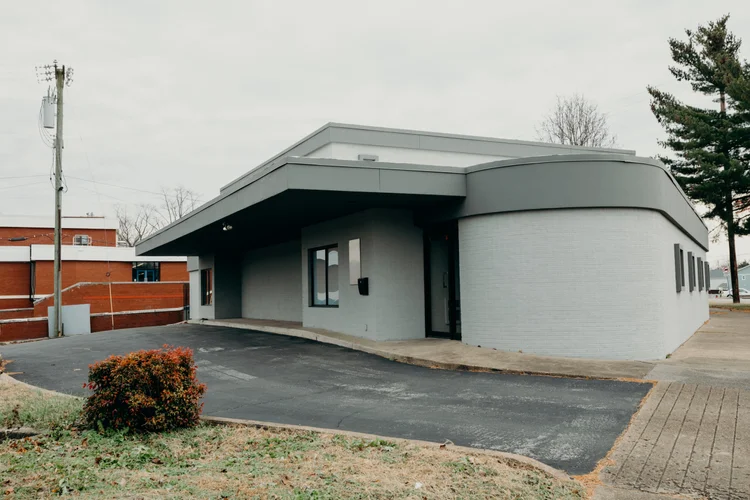
1100 Old Hickory Blvd, Old Hickory, Tennessee. The former bank building I purchased for $575,000.
Here's the part that still makes me smile. I didn't find this deal on LoopNet. I didn't cold call the owner. I didn't drive a farm area for six months until I got lucky. I actually had the building on my own listing board.
Remember those two buyers who walked away? They were my buyers. I was the broker who brought them to this building. Both of them went under contract, and both of those deals fell apart in due diligence. The first client walked because they couldn't get their funding together. The second walked for the same reason.
And each time the deal fell through, the seller got a little more nervous. The property sat for a little longer. The list price of $750,000 started to feel a little less defensible. By the time the second contract died, I'd been staring at this building for half a year. I knew the building. I knew the market. I knew the seller's situation. And most importantly, I knew the deal was there if someone could actually close it.
This is how a lot of first-time buyers find deals, by the way. They don't stumble onto some off-market unicorn. They stay close to the market, pay attention to what's sitting, and recognize when a motivated seller is running out of patience. If you're actively looking for deals, I wrote a whole guide on how to find commercial real estate deals that breaks down exactly where to look.
I didn't just submit an offer. I submitted two. Same buyer, same property, two options for the seller to pick from.
Option One: $650,000. Standard contract, financing contingency, inspection contingency, 30-day due diligence period. On paper, the bigger number.
Option Two: $575,000. No contingencies. No financing out. No inspection out. Close in 60 days. Clean as a whistle.
Think about what that does to a seller who has already watched two deals blow up in due diligence. On paper, $650,000 is the bigger number. But a seller who's seen two contracts die isn't necessarily seeing the bigger number anymore. They're seeing another buyer who might walk away in three weeks. They're seeing uncertainty.
The $575,000 offer? Uncertainty goes to zero. Money is money. Time is time. And a closed deal in 60 days beats a maybe deal in 90.
"When you're buying with enough information, the no-contingency offer is one of the most powerful tools in commercial real estate."
- Tyler Cauble
The seller took Option Two. I saved $175,000 off the list price because I understood the seller's pain better than anyone else in the market. That's what commercial real estate underwriting is really about: not just running numbers on a spreadsheet, but understanding the human being on the other side of the transaction.
The Deal by the Numbers
$750K
List Price
$575K
Closing Price
$97/SF
Price Per Foot
$740K
Exit Value
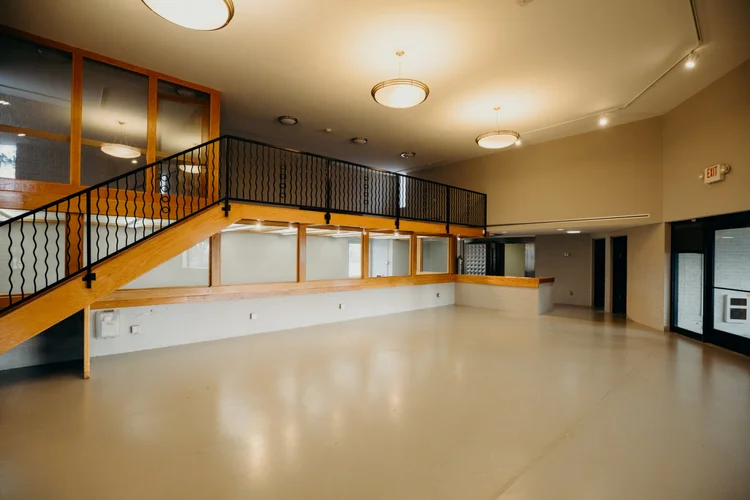
The renovated interior of 1100 Old Hickory. This was a former bank that needed creative build-out to attract tenants.
Here's how I actually paid for a $575,000 building at 25 years old with commission checks and not much else.
I financed it conventionally at about 80% loan-to-value. The bank gave me $460,000 and I needed to bring roughly $115,000 in down payment plus closing costs. The only problem: I didn't have anywhere near $115,000 in my bank account.
So here's how I closed it:
$460,000: conventional bank loan at 80% LTV. Standard commercial mortgage.
$100,000: investor equity from two investors at $50,000 each. One was a friend, one was a client I'd been working with and building trust over a couple of years. Both wrote me checks because I had already shown them I knew this specific building, this specific market, and this specific deal inside and out. I wasn't pitching a business plan. I was pitching a building they could drive to and touch.
$125,000: line of credit. This is the piece most people don't talk about. I had a line of credit that I could draw on for the remaining gap plus working capital. The LOC is the secret weapon of early commercial investors. It covers the gaps that your proforma didn't plan for, and trust me, there will be gaps.
~$18,000: my own money. That was the check I wrote at the closing table, and at 25 it was the biggest check I'd ever written by a factor of probably four. Between the investors and my $18K, we had the down payment covered.
If you're wondering how to structure something like this, I break it all down in my post on how to buy your first commercial property. And if capital is your biggest hurdle, take a look at buying commercial real estate with no money down for creative financing strategies.
This is where the story gets honest. I made three mistakes on this deal, and every single one of them cost me real money.
Mistake #1: I didn't scope the HVAC. Two months after closing, one of the HVAC units died. That was a $20,000 replacement I hadn't budgeted for. If I had scoped the mechanicals properly before closing, I could have either negotiated a credit from the seller or adjusted the purchase price. Instead, it came straight out of my pocket. Lesson: always, always get a full mechanical inspection, even if you're waiving your inspection contingency. Know what you're buying.
Mistake #2: I underestimated vacancy carry. Both suites were vacant at close. I'd built my proforma assuming I'd have a tenant signed within about 180 days and paying rent that year. In reality, it took us nearly a full year to get those suites leased. Market rent was there. Demand was there. But the space was a former bank, it was kind of wonky, it needed some buildout, and good tenants take their time. Every extra month of vacancy is debt service, utilities, and insurance coming straight out of your pocket. Lesson: double your vacancy assumptions. If you think it'll take 3 months to lease up, model 6. If your deal still works with 6 months of vacancy on every empty suite, you've got a real deal.
Mistake #3: My proforma was too optimistic. This is the big one. I assumed best-case rents, best-case lease-up timing, and best-case expenses. Every number in my model was the good scenario. And when reality hit, every single line item was a little worse than projected, and those little misses compound fast. Lesson: stress test everything. Run worst-case scenarios on your deal analysis. If your deal only works in the best case, it's not a deal, it's a gamble.
I'm not being dramatic here. In the first six months after I closed, and definitely the night before, I did not sleep well. I'd wake up at 2 a.m. thinking about the roof. Thinking about the HVAC unit I just had to replace and hoping it wouldn't go out again. Thinking about whether I overpaid. Thinking about the $100,000 I owed to investors I'd never taken on capital from before.
That feeling doesn't go away just because you read another book or listen to another podcast.
It goes away because you see the building deposit the rent check month after month. You see the vacant suite lease up. You see the line of credit balance starting to come down. You see the appraisal come in substantially higher than what you paid. And then you sit there after about 12 months and realize: oh, this kind of actually works. I like it.
And then you want to go do it again. In fact, that year I bought three more buildings just because I bought that one.
"Your first deal doesn't have to make you rich. It doesn't have to get you a 30% IRR. It has to prove to you and your own brain that you can own commercial real estate and not have everything blow up."
- Tyler Cauble
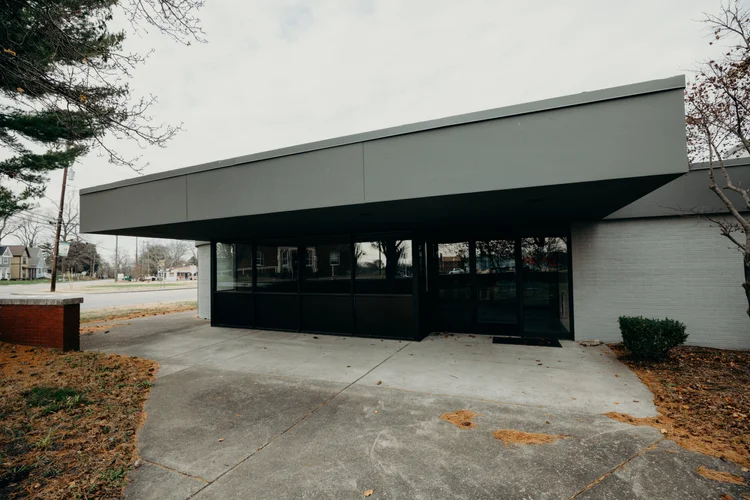
The building that turned $575,000 into $740,000 in about two years.
A couple years in, one of my partners committed a massive amount of fraud. I didn't want the asset locked up in an FBI investigation for years. So I went to my largest tenant and told them they should buy the building and owner occupy it. They could get an SBA loan at a rate I couldn't touch, and they were willing to pay me real money for the space they'd been renting. In fact, their mortgage was almost equivalent to the rent they were paying me.
So we sold the building to the tenant for roughly $740,000. Do the math: $575,000 all in, $740,000 out, plus two years of operating income. The investors got their 8% return paid out over a two-month disbursement window. Everyone got what they were promised, and I walked away with enough capital and enough confidence to go buy the next one.
But the real return wasn't financial. It was the three buildings I bought that same year just because I had the confidence from closing on that first one. That's the moment. That's the only thing your first deal actually has to do for you. It doesn't have to make you rich. It has to prove to you and your own brain that you can own commercial real estate and not have everything blow up.
Here's what I know after doing this for years now. The one thing that separates people who actually buy their first commercial property investment from people who spend years just looking at them is not capital, not market knowledge, and not finding the perfect deal.
It's the willingness to act before you feel ready.
I wasn't ready when I wired that $575,000. I was terrified. I'd never owned a commercial building. I'd never raised investor capital. I'd never managed a property that big. But I had done enough homework on that specific deal that I could make a decision, even if it scared me.
Your first deal doesn't have to be perfect. It doesn't have to be the deal of the century. It has to be the deal that gets you off the sidelines.
If you've been watching videos and running numbers for months (or years) and you still feel like you're not ready, I get it. That's exactly where I was. But "ready" doesn't come from more analysis. It comes from doing the thing. And the sooner you do the thing, the sooner you realize that the fear was always bigger than the reality.
If you want a roadmap, start with my guide on how to buy your first commercial property. It walks through the full process step by step, including the parts I had to learn the hard way.
The two-offer strategy is powerful. Giving a motivated seller a clean, no-contingency option alongside a higher-priced contingent offer lets them choose certainty. I saved $175,000 this way.
Creative capital stacks make deals possible. Bank loan, investor equity, a line of credit, and personal capital. You don't need $575,000 in your bank account to buy a $575,000 building.
Always scope the mechanicals. A $20,000 HVAC surprise two months after closing is money you'll never get back. Inspect everything, even if you're waiving contingencies.
Double your vacancy assumptions. If you think it'll take 3 months to lease, model 6. If your deal still works, it's a real deal.
Stress test your proforma. Best-case numbers are fantasies. Run worst-case scenarios and make sure you can survive them.
Your first deal just has to prove it works. $575,000 in, $740,000 out, three more buildings that same year. The confidence is the real return.
Watch the full video above where I walk through every detail of this deal, including the sleepless nights, the actual closing documents mindset, and the exact moment I knew commercial real estate was going to change my life.
Ready to Buy Your First Commercial Property?
The CRE Accelerator is the step-by-step system I wish I'd had at 25. Build your buy box, structure your capital stack, and walk through live deals with me so you don't make the same mistakes I did.
Book a Call with TylerI'm building 43,350 square feet of flex space for about $2 million. The going rate to build that from the ground up? Somewhere between $6 and $8 million. And I didn't have to buy a single acre of land to do it.
The structure that makes this possible is called a master lease, and it's one of the most underutilized strategies in commercial real estate investing. A master lease in commercial real estate lets you control a property without owning it. You sign a long-term lease with the building owner, renovate the space, and sublease it to tenants at market rates. You keep the spread between what you pay and what you collect.
I'm going to walk you through exactly how I'm using this strategy on my Peerless Mill Warespace deal, why the numbers work so well, and what risks you need to watch out for before you try this yourself.
In This Article
Why Ground-Up Construction Doesn't Work for Most Investors
What Is a Master Lease in Commercial Real Estate
The Peerless Mill Deal: 43,350 SF of Flex Space
The Tax Advantage Most Investors Don't Know About
The Peerless Mill Warespace Deal at a Glance
43,350 SF
Flex Space
$2M
Total Cost
$637K
Year 1 Tax Savings
20 yrs
Hold Period
Let's start with what most people think they need to do when they want to build flex or industrial space: buy land, hire an architect, get permits, pour a foundation, and build from scratch. That process costs somewhere between $6 and $8 million for the kind of square footage I'm building. And that's if everything goes right.
Here's the thing. Ground-up construction forces you to absorb every possible risk up front. You're buying the land before you have a single tenant. You're spending 18 to 30 months in construction before a dollar of revenue comes in. You're dealing with cost overruns, supply chain delays, permitting headaches, and the constant possibility that the market shifts before you deliver the finished product.
GROUND-UP BUILD VS. MASTER LEASE
| Ground-Up | Master Lease | |
|---|---|---|
| Total Cost | $6–8M | $2–2.5M |
| Land Purchase | Required | None |
| Time to Revenue | 18–30 months | 3–6 months |
| Construction Risk | Full exposure | Interior only |
| Upfront Risk | All capital at risk | Buildout capital only |
For most investors, especially those just learning how to get into commercial real estate investing, that risk profile is a dealbreaker. You need deep pockets, a tolerance for construction chaos, and enough runway to survive almost two years without cash flow. That's a tough ask even for experienced operators.
So I asked myself a simple question: what if I could skip the land purchase entirely and go straight to the buildout?
A master lease in commercial real estate is a structure where you sign a long-term lease with a property owner, giving you operational control over the building. You're not buying the property. You're leasing it. But you have the right to renovate, improve, and sublease the space to your own tenants.
Think of it this way: the owner keeps the title. You keep the cash flow. You're essentially running the building as if you own it, but without the purchase price, the mortgage, or the down payment that comes with a traditional acquisition.
"Think of a master lease like renting an entire restaurant space, remodeling the kitchen, hiring the staff, and running the business. The landlord owns the building. You own the operation and the revenue it produces."
Now, this isn't the same as a regular commercial lease. With a standard lease, you occupy the space for your own business. With a master lease, you're stepping into the role of operator. You're the one finding tenants, managing the space, handling the buildout. The property owner becomes more like a silent partner who collects a percentage of what you bring in.
The beauty of this structure is capital efficiency. Instead of spending $2 million on a down payment for a purchase and then another $2 million on construction, all of your capital goes directly into operations and improvements. Every dollar you spend is building the revenue-generating asset.
"A master lease lets you control a commercial property without buying it. Your capital goes to improvements and operations, not to the seller. That's what makes the math work on deals that would otherwise be impossible."
- Tyler Cauble
If you want to understand the fundamentals of evaluating deals like this, check out my guide on how to underwrite commercial real estate. The principles are the same whether you're buying or master leasing. You still need to know your numbers.
Let me get specific about the deal I'm working on right now. Peerless Mill is an existing building that has space the owner isn't fully utilizing. I signed a master lease on 43,350 square feet, and I'm converting it into flex industrial space under the Warespace brand.
Deal Structure at a Glance
RENT TO OWNER
10% of Revenue
FIXED MONTHLY RENT
$0 Until Leased
BUILDOUT COST
$2 – $2.5M
HOLD PERIOD
20 Years
That means from day one, the landlord gets paid when I get paid. There are no fixed monthly rent payments hanging over my head before I've leased a single unit. The rent structure is entirely revenue-based, which means I have zero obligation until money is actually coming in the door.
Compare the $2 to $2.5 million buildout to the $6 to $8 million it would cost to build the same amount of flex space from scratch. I'm saving millions because the shell of the building already exists. I don't need to buy land, pour foundations, or erect walls. I'm doing interior buildout: demising walls, roll-up doors, electrical, HVAC, and the finishes that make the space leasable.
"Because my basis in the deal is so much lower than a ground-up build, my return on invested capital is dramatically higher. Every dollar goes into improvements that generate revenue, not into land that just sits there during construction."
- Tyler Cauble
This is a value-add strategy at its core. I'm taking underutilized space, investing in targeted improvements, and repositioning it at market rents. But the master lease structure means I'm doing it with a fraction of the capital that a traditional purchase or development would require.
This is where things get really interesting. When you do a master lease and invest in leasehold improvements, you can take advantage of something called the ML Operator tax election. And on this deal, it generates $637,000 in Year 1 tax savings.
How the Tax Savings Break Down
STANDARD DEPRECIATION
39 years
Slow tax recovery
ML OPERATOR ELECTION
Year 1
Accelerated depreciation
TAX SAVINGS
$637K
~1/3 of buildout cost
Here's how it works. The money I spend on building out the space, the demising walls, the HVAC systems, the electrical, all of those leasehold improvements can be depreciated aggressively. We're not talking about the standard 39-year depreciation schedule that commercial buildings usually fall under. Through bonus depreciation and the ML Operator election, I can accelerate the depreciation of those improvements and create a massive tax shield in the first year of operations.
That $637K in tax savings is real money that stays in the deal. It offsets income, reduces my effective cost basis, and improves every return metric on the project. For investors in high tax brackets, this is the kind of benefit that can make or break a deal's attractiveness.
You need a CPA who understands commercial real estate to structure this properly. The tax code around leasehold improvements and accelerated depreciation has specific requirements. But when it's done right, on a deal like this, roughly a third of your total buildout cost comes back through tax benefits.
Where Master Leases Work Best
Flex / Industrial Space. Owners with large buildings that are partially vacant or underutilized. Convert unused square footage into leasable flex units with roll-up doors and individual suites — the fastest-growing niche in industrial real estate right now.
Strip Retail Centers. Aging retail properties where the owner doesn't want to invest in repositioning. You take over operations, renovate, and bring in new tenants.
Warehouse Space. Single-owner warehouses that are sitting empty or partially leased. Subdivide and lease to small businesses, e-commerce operators, and contractors.
Mixed-Use Buildings. Properties with a combination of office, retail, or industrial space where the owner wants hands-off income without selling.
Any Underperforming Asset. If an owner has a building they're not using to its full potential and they're open to a creative deal, a master lease is on the table.
For a deeper look at leasing strategies and how to structure tenant relationships, take a look at my guide on how to lease commercial space.
I'm not going to pretend this is a risk-free strategy. There are real downsides to a master lease, and you need to go in with your eyes open.
You don't own the asset. At the end of your 20-year lease, you walk away. You've built cash flow, you've taken tax benefits, but you don't have a building to sell. That's a fundamentally different wealth-building equation than buying a property and holding it for appreciation. If long-term asset ownership is your primary goal, a master lease won't get you there.
You can't do a 1031 exchange. Because you don't own real property, you can't defer capital gains through a 1031 exchange when the lease ends. The IRS treats a leasehold interest differently than fee simple ownership. So the exit strategy looks different than a traditional purchase and sale.
You're dependent on the landlord. Your entire operation sits on top of someone else's property. If the landlord runs into financial trouble, gets foreclosed on, or decides to be difficult about lease terms, you have exposure. You need a bulletproof lease agreement reviewed by an attorney who specializes in commercial real estate. Your lease is your entire protection.
This is not a beginner deal. A master lease with a $2 million buildout is not your first deal. You need to understand construction management, tenant relations, underwriting, and lease negotiations before you take on something like this. If you're still learning the basics of commercial real estate, start with our walkthrough on how to buy your first commercial property and build your way up. Master leases are a tool for sophisticated operators, not first deals.
But here's the flip side. If you're an experienced operator who knows how to manage construction and lease space, a master lease eliminates the single biggest barrier to entry: the purchase price. You can control a large asset, generate serious cash flow, and take significant tax benefits without writing a check for millions of dollars to a seller.
A master lease in commercial real estate lets you control and operate a property without purchasing it. Your capital goes to improvements and operations, not to a down payment.
Ground-up construction for 43,000+ SF costs $6-8 million with 18-30 months before revenue. A master lease cuts the cost to $2-2.5 million and eliminates the land purchase entirely.
Revenue-based rent (10% of revenue to the property owner) means you have no fixed payments until tenants are generating income. The risk is aligned with performance.
The ML Operator tax election can generate massive Year 1 tax savings by accelerating depreciation on leasehold improvements. On this deal, that's $637K back in tax benefits.
The trade-offs are real: no ownership at the end, no 1031 exchange, and dependency on the landlord. This strategy is for sophisticated operators, not first-time investors.
Best use cases include flex/industrial space, strip retail, warehouses, and any building where an owner has underutilized square footage and is open to creative deal structures.
I'm documenting the entire Peerless Mill Warespace buildout as it happens, from lease negotiations to construction to first tenants. If you want to follow along and see how this deal plays out in real time, subscribe to the Tyler Cauble YouTube channel where I'm breaking down every step of the process.
Ready to Structure Your Own Deals?
Learn deal structuring, underwriting, and advanced strategies like master leases inside the CRE Accelerator.
Join the CRE AcceleratorGraham Stephan just announced he's selling all of his rental properties in Los Angeles. Every single one. And honestly? I don't blame him. But here's what kills me. Graham is one of the smartest real estate creators on the internet, and he's about to walk away from the entire asset class because of problems that only exist in residential real estate. Every complaint he made in that video — the garbage returns, the constant headaches, the regulatory nightmare, all of it — disappears when you step into commercial real estate. He essentially made the perfect case for commercial real estate vs residential, and he doesn't even realize it.
I watched that video and took notes, because almost every single frustration Graham described is something I solved years ago by switching to commercial. So let's break this down piece by piece.
In This Article
Why Graham Stephan Is Selling Everything
The Real Problem With Residential Real Estate
How NNN Leases Eliminate the Background Noise
Why California's Regulatory Nightmare Doesn't Apply to Commercial
Commercial vs Residential: By the Numbers
4-5%
Graham's Returns
$0
Maintenance Under NNN
3 yrs
LA Eviction Moratorium
8-12%+
Commercial Returns
If you haven't seen the video, here's the short version. Graham has been a residential real estate investor in Los Angeles for years. He built a portfolio of rental properties, documented the whole journey on YouTube, and became one of the biggest personal finance creators on the platform. Now he's liquidating all of it.
His reasons? The returns are terrible. He's pulling 4-5% on his equity, which barely keeps pace with a Treasury bond. He told a story about needing a $400 permit just to replace a $500 fence. And then there's the constant "background noise," his words, not mine. The texts from tenants, the maintenance calls, the city inspectors showing up over nonsense. He's fed up. And California's regulatory environment has been the cherry on top. Eviction moratoriums that let tenants stay for three years without paying. Hostile permitting processes. The whole system working against landlords.
So Graham's plan is to sell everything and park the money in Treasury bonds and index funds. Safe, passive, done. And look, I get it. If residential real estate in LA is the only version of real estate you've ever known, walking away makes total sense. But that's not the only version.
Here's what I need everyone to understand. Graham didn't discover a problem with real estate. He discovered a problem with residential real estate. There's a massive difference, and the commercial real estate vs residential debate is one I've been having for my entire career.
Residential real estate, especially in high-cost markets like LA, has been broken for a long time. The numbers don't work. When you're buying properties at a 3-4 cap rate and your financing costs are in the same range, you're basically working for free. You're betting entirely on appreciation, and you're absorbing all the risk and headaches in the meantime. That's not investing. That's speculation with a side of property management.
The 4-5% return on equity that Graham described isn't a ceiling for real estate. It's a diagnostic. It tells you that the residential asset class, in that market, at those prices, is fundamentally broken as an income investment. I've been saying this for years. If you want to learn how to actually analyze whether a deal makes money, check out my guide on how to underwrite commercial real estate. The math is completely different.
And that $400 permit for a $500 fence? That story perfectly captures the absurdity of being a small residential landlord. You're dealing with city bureaucracy, inspectors, permits, all for a fence. I've dealt with building inspectors and city processes myself, so I know how frustrating it can be. But in commercial, particularly with NNN leases, that's not your problem anymore. Your tenant handles it. All of it.
Graham used the phrase "background noise" to describe what it's like being a residential landlord. The constant drip of texts, calls, and small emergencies that never fully stop. It's not catastrophic. It's just always there, eating away at your time and your sanity. I think every residential landlord on the planet felt that one in their bones.
But here's the thing. That background noise is not an inherent feature of real estate. It's an inherent feature of residential real estate. In commercial, we have a lease structure called Triple Net, or NNN, that permanently eliminates this problem.
Under a NNN lease, the tenant is responsible for property taxes, insurance, and all maintenance. The roof leaks? Tenant's problem. The parking lot needs resurfacing? Tenant's problem. The HVAC goes out on a Saturday night? You guessed it. You, as the landlord, collect rent. Period. That's it. No texts at midnight about a broken toilet. No $400 permits for a $500 fence. No background noise whatsoever.
"The difference between residential and commercial real estate isn't just the returns. It's the entire operating model. With a NNN lease, you're not a landlord managing a property. You're an investor collecting a check. That's the version of real estate Graham never got to experience."
- Tyler Cauble
Now compare that to what Graham was doing. He was managing residential tenants, fielding every maintenance request personally, dealing with city permitting for minor repairs, and earning 4-5% for the privilege. That's not passive income. That's a part-time job with terrible pay. Commercial real estate with NNN leases is what passive income was supposed to look like all along.
What the NNN Tenant Covers
Property Taxes. Passed through to the tenant, adjusted annually.
Building Insurance. Tenant carries the policy and pays the premiums.
All Maintenance and Repairs. Roof, HVAC, plumbing, parking lot, everything.
Capital Expenditures. Major repairs and replacements are tenant responsibility.
Permitting and Compliance. No more $400 permits for a $500 fence.
Common Area Maintenance. Landscaping, snow removal, exterior upkeep.
One of Graham's biggest frustrations is California's regulatory environment, and he's 100% right to be frustrated. The eviction moratoriums during COVID allowed residential tenants to stop paying rent for nearly three years with zero consequences. Three years. Imagine owning a property, paying the mortgage, paying the taxes, paying the insurance, and your tenant just doesn't pay. For three years. And the government says you can't do anything about it.
That's insane. And it's also almost entirely a residential problem.
Commercial tenants are businesses. They have reputations to protect, contracts to honor, and credit on the line. They don't get the same protections that residential tenants get under these moratoriums. If a commercial tenant stops paying rent, you have legal remedies that actually work. You can enforce your lease. The playing field is fundamentally different because commercial lease law treats both parties as sophisticated business entities, not as a landlord-versus-vulnerable-tenant dynamic.
And the permitting headaches? In commercial, especially with NNN leases, the tenant is typically the one pulling permits for their own buildout and improvements. You're not the one standing at the city counter arguing about a fence. Your tenant's contractor is. It's a completely different experience. If you want to understand how to get started with this kind of investing, I put together a full walkthrough on how to get into commercial real estate investing.
So when Graham says California has made it impossible to be a landlord, what he really means is California has made it impossible to be a residential landlord. And yeah, he's right about that. But commercial is a different world with different rules, different tenants, and different outcomes.
Graham framed his decision as binary. Either keep struggling with residential rentals that earn 4-5% and drive you crazy, or sell everything and buy Treasury bonds. And in that framing, selling makes sense. But there's a third option he never mentioned, and it's the one I've built my entire career around.
Commercial real estate.
Instead of dumping millions into Treasury bonds at 4-5%, Graham could 1031 exchange those properties into commercial assets. No capital gains tax on the swap. And suddenly, instead of earning the same 4-5% with zero growth potential and zero tax benefits, he's looking at 8-12%+ cash-on-cash returns with built-in rent escalations, depreciation benefits, and actual equity upside.
Think about what that looks like in practice. A well-located commercial property with a strong NNN tenant generates steady, predictable income. No maintenance calls. No permit headaches. No tenant drama. Rent bumps built into the lease so your income grows every year. And if you buy right, you're also building equity as the property appreciates and your loan pays down.
That's the version of real estate that actually delivers what everyone thinks real estate is supposed to deliver. Passive income, wealth building, and freedom. Not the residential grind that burned Graham out. If this sounds like what you've been looking for, I'd encourage you to check out the concept of value-add investing over chasing pure cashflow. It's how I think about every deal. And if you've never owned a commercial asset, my step-by-step walkthrough on how to buy your first commercial property covers everything from finding the deal to closing day.
Now, I'm not saying commercial real estate is risk-free. Nothing is. You still need to underwrite deals properly, understand your market, and structure your leases correctly. But the fundamental problems that made Graham quit, the lousy returns, the constant headaches, the hostile regulations, those problems don't exist in commercial the way they do in residential. It's not even close.
Graham's 4-5% returns are a residential problem, not a real estate problem. Commercial properties routinely deliver 8-12%+ cash-on-cash returns with significantly less hassle. The yield ceiling he hit doesn't exist in commercial.
NNN leases eliminate the "background noise" entirely. When your tenant pays property taxes, insurance, and all maintenance, you're not a landlord anymore. You're an investor. No midnight texts. No $400 permits.
California's regulatory nightmare is primarily a residential issue. Commercial tenants are businesses. They don't benefit from eviction moratoriums, and commercial lease law treats both parties as sophisticated entities.
There's a third option beyond "keep struggling" or "sell everything." A 1031 exchange into commercial real estate preserves your capital, eliminates your headaches, and dramatically improves your returns.
Don't let one bad asset class turn you off to all of real estate. Graham's frustrations are valid, but they're specific to residential. Commercial real estate is a completely different game with different rules, different tenants, and much better outcomes.
I break down deals, lease structures, and real-world investing strategies every week on my YouTube channel. If you're someone who's been thinking about real estate but got scared off by residential horror stories like Graham's, come see what commercial looks like. It's a different world.
Ready to Make the Switch to Commercial?
Learn how to find, analyze, and close commercial real estate deals with the CRE Accelerator.
Join the CRE AcceleratorMost investors think the only way to grow is to buy more properties. More deals, more down payments, more risk. But what if the biggest opportunity you're missing is sitting right next to the property you already own?
That's exactly what happened to Chris Thorndike, one of our CRE Accelerator members based in Gainesville, Florida. Chris doubled his cash flow without buying a single new property. No new bank relationship. No new construction risk. And the whole thing started with a value add real estate play that most people would have completely overlooked.
Let me break down how he did it. And whether you've already got a building or you're still working through how to buy your first commercial property, this is the kind of value-add thinking that separates the people who build real wealth from the ones who just collect rent checks.
In This Article
From Abandoned Car Wash to Value Add Real Estate Goldmine
The Value Add Real Estate Move Hiding in Plain Sight
How He's Financing the Conversion With an LOI-Backed Line of Credit
Why Small Bay Warehouse and Micro Suites Are the Future
If you've ever wondered whether value add real estate investing is really worth the effort, this story should put that question to rest.
Chris Thorndike: By the Numbers
2x
Cash Flow Increase
$400K
Original Purchase
0
New Properties Bought
2.5 yrs
Zero Vacancy
Chris originally picked up a rundown $400,000 warehouse building in Gainesville that came with an old, abandoned car wash sitting right next to it. Most people looked at that car wash and saw a liability: a dilapidated structure that needed to be demolished or left to rot. Chris looked at it and saw potential.
After buying the warehouse, Chris converted it into small bay units and leased it up to local businesses. The property has had zero vacancy in two and a half years. That alone is a great deal. But Chris didn't stop there.
He looked at the abandoned car wash right next door, a building he already owned, and realized he could convert it into micro suite office space. Same lot, same ownership, zero acquisition cost for the additional building. That's the kind of commercial real estate investing move that separates the people who build real wealth from the people who just collect rent checks.
Here's what makes this deal so brilliant. Chris isn't going out and sourcing a new property. He isn't competing with other buyers, negotiating with sellers, or taking on the risk of a new market. He's taking an underutilized asset he already owns and turning it into a cash flow machine.
The conversion plan is to build out the old car wash into multiple micro suites, small office spaces between 150 and 300 square feet. These units are perfect for solo practitioners, consultants, small agencies, and anyone who needs a professional workspace but doesn't need (or want to pay for) a full-size office.
"The best deal in commercial real estate is often the one you've already done. Chris didn't need to find a new building. He just needed to look at what was sitting right next to his existing investment and ask, 'What else can I do with this?'"
- Tyler Cauble
The demand for this type of space is massive right now, especially in mid-size markets like Gainesville. Small businesses and independent professionals want flexible, affordable office space without the overhead of a traditional lease. Chris is solving a real problem in his market, and he's doing it with a building that was literally sitting there doing nothing.
So how do you fund a conversion project when you don't want to tie up a bunch of cash? Chris is using a strategy that's incredibly smart for value add real estate investors: he got LOIs (letters of intent) from prospective tenants before going to the bank.
When you walk into a lender with signed LOIs showing that tenants are ready to move in as soon as the buildout is complete, it completely changes the conversation. The bank sees pre-leased demand, not speculative construction. That allowed Chris to secure a line of credit specifically for the conversion, funded by the demonstrated demand for the space.
This is a pattern I see over and over with successful commercial real estate investors. They don't just have a good idea; they validate the demand first, then use that validation to unlock financing. If you want to understand how to underwrite a deal like this, the LOI strategy is something you should absolutely have in your toolkit.
Chris's deal highlights one of the biggest trends I'm seeing in industrial real estate right now: the explosion in demand for small, flexible spaces. Small bay warehouses, flex industrial, and micro office suites are quietly outperforming bigger, sexier asset classes.
Higher rent per square foot. Small tenants pay a premium for flexibility. You're getting more revenue from every square foot than you would with one large tenant.
Diversified risk. With 6 or 10 tenants instead of 1, losing a single tenant barely dents your income. Chris has had zero vacancy in 2.5 years, but even if he lost one tenant, he'd still be at 90%+ occupancy.
Lower barrier to entry. You don't need a $2 million building to make this work. Chris started with a $400K warehouse conversion.
Sticky tenants. Small business owners who find a great, affordable space tend to stay. They build out their suite, establish their customer base, and they don't want to move.
The institutional investors aren't chasing these deals because they're too small. That's your advantage. While everyone else is fighting over Class A office buildings and big-box retail, you can quietly build a portfolio of high-cash-flow micro suite properties that nobody else is paying attention to.
Before you go chase the next shiny deal, look at what you already own.
Chris could have spent months searching for a new property. He could have tied up capital in another down payment. He could have taken on all the risk that comes with buying something you've never managed before.
Instead, he looked at the building sitting 20 feet from his most successful investment and asked one question: can I do the same thing here?
The answer was yes. And it's going to double his cash flow.
"You're not just buying properties. You're creating value in properties. And sometimes the biggest opportunity isn't out there somewhere. It's right in front of you."
That's the power of thinking like a value add investor. You're not just buying properties. You're creating value in properties. And sometimes the biggest opportunity isn't out there somewhere. It's right in front of you.
Value add real estate investing doesn't always mean buying a new property. Chris doubled his cash flow by converting an abandoned car wash he already owned into micro suite office space.
Small bay warehouse and micro suites are in high demand. Small tenants pay premium rents, diversify your risk, and tend to stay long-term.
Use LOIs to unlock financing. Getting letters of intent from prospective tenants before approaching your lender turns a speculative project into a pre-leased deal.
Look at what you already own. The best deal might be the underutilized asset sitting right next to your existing investment.
Institutional investors ignore small deals. That's your competitive advantage in micro suite and small bay warehouse investing.
This article is adapted from a conversation on the Tyler Cauble YouTube channel. If you want to hear Chris's full story, including the details of his financing strategy, the buildout plan, and how he's positioning the micro suites for maximum cash flow, watch the full episode above.
Ready to Find Your Own Value Add Real Estate Deal?
Learn the strategies that CRE Accelerator members like Chris use to find, analyze, and execute value add deals.
Learn About the CRE Accelerator