
Watch Me Underwrite a Real Industrial Deal in 30 Minutes
Before most investors ever make an offer, they convince themselves there are no deals left.
The market is too competitive.
Prices are too high.
Everything worth buying is already gone.
So in this Office Hours session, I decided to test that theory.
I pulled up a random city, found an industrial property live, and underwrote the entire deal from scratch in about 30 minutes. No preparation. No cherry-picked example. Just the exact process I use to evaluate whether a deal deserves a second look.
Along the way, I break down how I identify the best locations for flex space, what numbers matter most during underwriting, how I stress test a deal before making an offer, and why most investors eliminate opportunities long before they ever run the math.
What You'll Learn:
How to identify the best areas of any city for flex and industrial investments
Why many investors look in the wrong locations and overpay for deals
A step-by-step walkthrough of how I quickly evaluate industrial opportunities
The simple underwriting framework I use to determine whether a deal is worth pursuing
How to stress test rents, renovation costs, and exit assumptions before making an offer
Common mistakes investors make when analyzing small industrial and flex properties
What separates a deal worth chasing from one you should walk away from
How I found, analyzed, and validated a potential industrial deal in real time
And most importantly, you'll see that finding and underwriting commercial deals doesn't have to be complicated when you have the right process.
Get commercial real estate coaching, courses, and community to jumpstart your investment journey over at CRE Central: www.crecentral.com
Key Takeaways:
Location for Flex/Industrial
Don’t go “main & main” in the city core (too expensive, competing with retail/office).
Target major highways/arterials just outside town, where you can serve multiple submarkets at lower land/building cost.
Pricing & Strategy
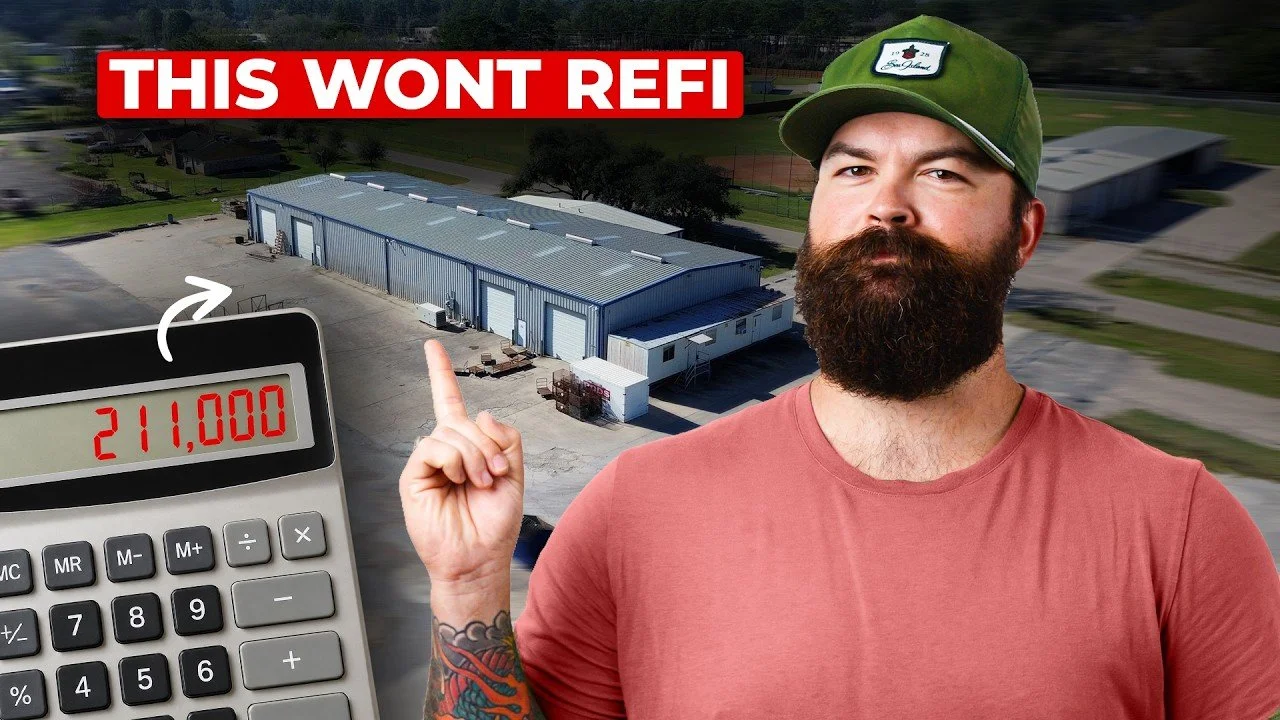
Your all‑in cost/sf (purchase + rehab) must be well below new construction cost (~$120–$150/sf) or the deal won’t compete.
Quick screen: if all‑in ≈ $100/sf and you can get ~$12/sf NNN, that’s about a 12% yield on cost → worth deeper underwriting.
Kansas City Example Deal
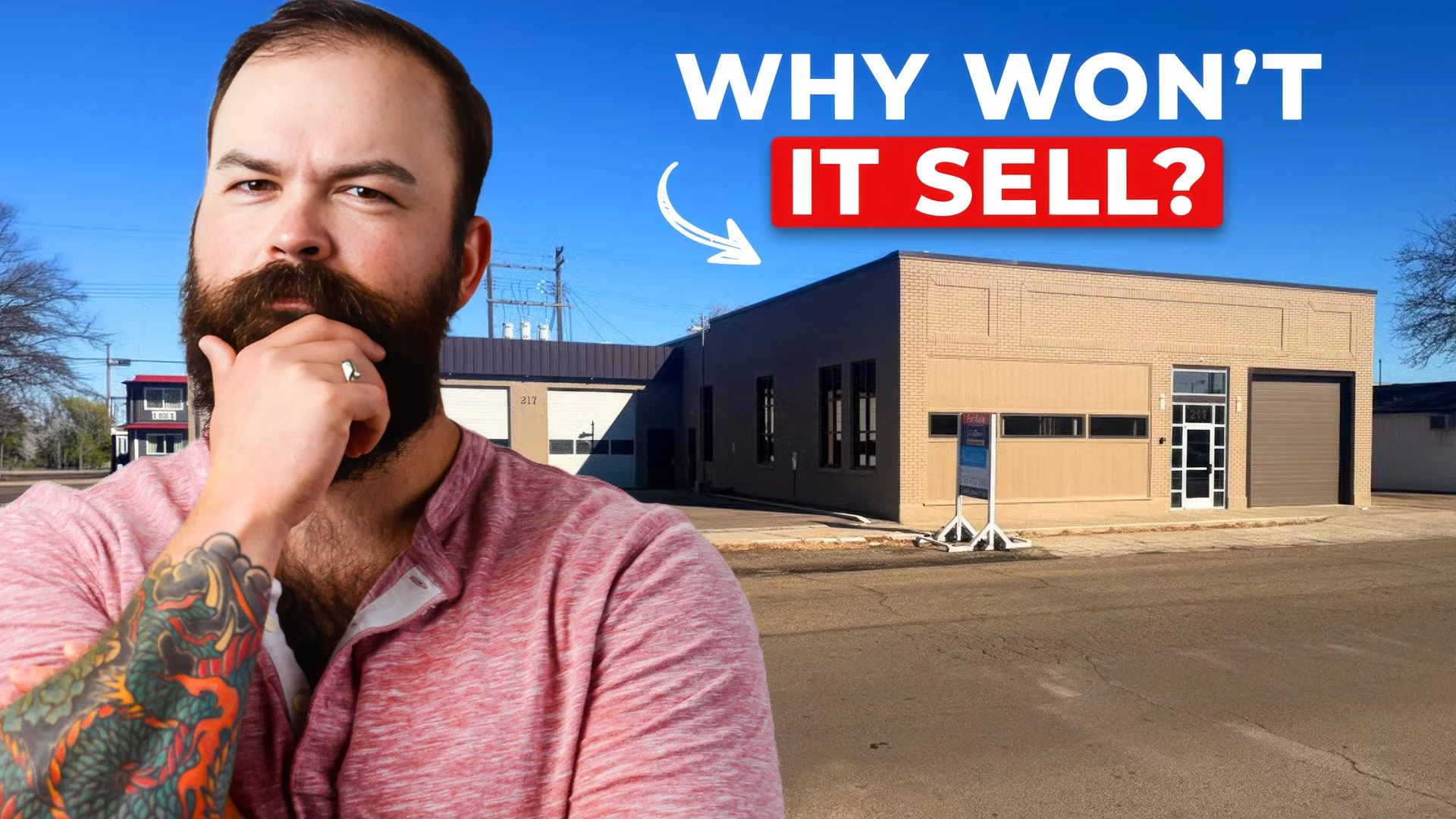
4,260 sf building at $315K (~$74/sf) in Raytown; concept: split into two bays, add another roll‑up door, light rehab.
Verified via Google Street View that there’s no real loading dock despite the listing.
Underwriting Outputs (base case)
Assumptions: 25% down, 7% interest, 20‑yr am, 2 tenants at $12/sf NNN, 3% bumps.
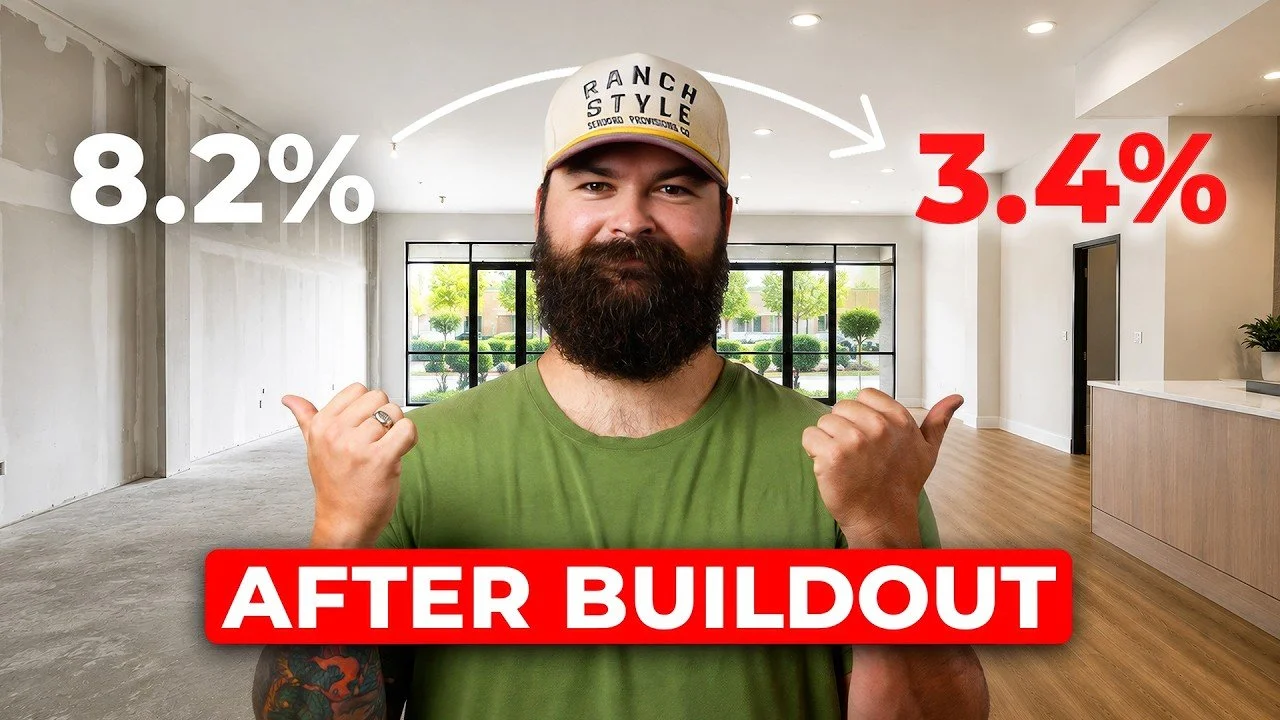
Results: ~16–17% IRR, ~19–20% annualized cash‑on‑cash, ~2.0x equity multiple over 5 years, DSCR ~1.7x.
Risk & Stress Test
Even with rents at $10/sf and rehab at $100K, deal still modeled at mid‑teens IRR and solid cash‑on‑cash.
But in a bear scenario (lower rents, higher vacancy, worse exit cap), you can lose money → need margin.
Capital Raising
Raising capital starts with your existing network:
Call people, explain your deal type and target returns, and ask if they’d want to see one.
Build a list of soft commitments before you have a live deal.


About Your Host:
Tyler Cauble, Founder & President of The Cauble Group, is a commercial real estate broker and investor based in East Nashville. He’s the best selling author of Open for Business: The Insider’s Guide to Leasing Commercial Real Estate and has focused his career on serving commercial real estate investors.
Episode Transcript:
Tyler Cauble 0:00
Uh, last night in our CRA accelerator mastermind call, we had a pretty great discussion around where do you actually go and look to put a flex building if you are interested in buying an existing industrial facility and converting it into smaller flex suites, or if you're looking at building flex, where should you go? So, today on this episode of Office Hours, I figured we would dive into where would you look within any sort of city. I'm going to show you guys exactly how I would go about finding a location to put a deal like this, and then we're gonna hop on Crexi and pick a random city in the US and go run the numbers on it, so you guys can kind of see my process of how I go through it. If you are interested in my underwriting a deal in your city, drop it in the comments. I don't really care where it is, we'll go figure it out from there. Welcome to the Commercial Real Estate Investor Podcast. All that and more on today's episode. This episode of the Commercial Real Estate Investor Podcast is brought to you by my CRE Accelerator Mastermind, where you'll get access to my step-by-step investment blueprint, essentially a library of resources on how to invest in commercial real estate. You'll get connected to a supportive community of other commercial real estate investors that are doing projects just like you. You'll get personalized coaching and feedback from me every step of the way. Go to www.crecentral.com to learn more. Welcome back to the Commercial Real Estate Investor Podcast. I am Tyler Cobble, your host here in the Nashville location for the Cobble Group Studios, and I say that as if we have other locations. It's just in Nashville, that's the only place we ever really want to be today. We're diving into underwriting industrial deals, flex distribution - doesn't really matter to me. But first, what I want to show you. We are going to go onto Google, so I'm sorry if you are listening on the podcast, but I will try to do my best to thoroughly, audibly explain exactly how we are going about this process, so that you can follow along. All right, let's go to Google. I mean, let's pick a random city. Let's just say, like Boulder, Colorado. I don't know what made me think of that, but I'm gonna pull this map up. What a lot of people, what I have seen, a lot of investors are tempted to place or search for flex inside some of the more popular areas. Right, you don't really want to treat flex like retail, obviously. If you're doing retail, you want to be right in the middle of, I mean, it depends on exactly how the city's laid out, but probably closer to the center of town, right. Here's the thing, though, with flex, you don't want to be right in the middle of everything, because you're going to be paying the same price that you would be for retail. You're going to be paying the same price that you would for office. It's very expensive, it's cost prohibitive, and so for those tenants, it just may not make any sense. So, what you want to do is find the major thoroughfares in and out of town. All right, so it looks like here in Boulder we've got Highway Seven, we've got, okay, if it'll stop pulling businesses up, we've got Highway 119 looks like down over here Highway 36 So right off the bat, I mean, I probably wouldn't go up Boulder Canyon Drive. It looks like it's probably not going to be a very, you know, I don't know, safe place to maybe build flex, considering it goes up a mountain, but let's look here, headed southeast out of Boulder on 36 Look at this, I mean, we're talking maybe 20 minutes outside of town, you're halfway between Boulder and what is that Broomfield? That's like a great spot to put flex, because they can very easily service Boulder. They can very easily service Broomfield. I almost said Bloomfield, Broomfield, and they've got pretty easy access with this major thoroughfare in and out of both areas, so you know, if I was in Boulder, like this to me, like the Paragon Estates area, kind of right outside of what is that called Superior, that all seems like a pretty interesting area, right? If we come up here, we head east, look at that, it looks like there's some more major development over here towards Lafayette again, I would probably go on Highway Seven, you know, near one of these junctions, right? See, how this major thoroughfare, north and south, is right here. This, to me, this intersection would probably be a pretty great space to go look for flex, so that would be a good spot for you to go and either see what's for sale over there, or start sending letters, do whatever you need to do. All right, so that's how I think about that. Like, if you're looking at doing some sort of flex space, don't try and do it in the middle of town, because you're going to be paying 202 5300, plus per square foot, you're going to be competing with retail, it just doesn't. And honestly, owner occupiers like you, as an investor, you'll never be able to compete with a business that actually wants to pay to have their space somewhere. All right, so those are my thoughts right there on how we would go about actually locating a space like this. Elvis Blueprint is saying, what's up? What's up, Elvis? Thanks for joining us. Hunter, what's going on, dude. Good to have you here. So, there we have it. For how to find and locate where you should actually be looking for flex. Let's see here. I'm just going to go on Crexy. We're going to find a random deal, and we're going to make this happen. Let's see, we're going to go to industrial. I'm going to get rid of refrigerated and cold storage. I just don't think it makes any sense. Probably get rid of manufacturing and research and development. I just want to look at flex warehouse and distribution. The reason I'm keeping warehouse and distribution, we could always cut those spaces up into something smaller. Let's see what we have in here. Unidia, Georgia. Never heard of that. Let's do Kansas City. Why not? I haven't done anything in Kansas City in a long, long time. See what's going on in this market now. The first thing I'm going to do is remove this boundary. I know Kansas City goes across two states. I don't particularly care about any of that. Now, here, here's the thing. If we are looking at for sale properties, right, let's assume that you don't necessarily want to build flex from the ground up. Let's say you want to take something and you want to convert it into flex. If we are doing that, then we are going to have to find something that is at such a good price per square foot that it doesn't begin to compete with the replacement cost, right? The replacement cost of, of just building new construction, to be honest with you, because look, you're not going to be able to compete with new construction if you're renovating something, so you don't want to be anywhere close to those prices. Maybe it's 10% below that market, maybe it's 20% below that market. It's going to depend on exactly where you are, but it's something to keep in mind. So, when we look at, let's go to our filters over here, let's see, active on market, I want to go price per square foot a max of $100 a square foot, because I know that if I'm going to go out and build ground up brand new flex space, it's going to cost me somewhere between 120 and $150 a foot, so if I find something at 100 bucks a foot that I just have to throw some walls up in that's probably not going to work, because I'm going to be pushing that $120 a foot all in pricing, and at that point I'm not going to be as competitive as a new construction building, but maybe there's no new construction going on in Kansas City, we'll find out, I don't know what's going on in that market, and then also it may be relatively move and ready, sometimes you'll look at these, these, you know, older spaces, and you can just kind of see, like, okay, we could very easily just take that and put multiple tenants in it, maybe we'll have to fix up a couple of walls, interesting, so we've got $3.3 million for 77,605 square feet. That's a pretty big facility. Looks like that would be a doozy to underwrite, man. Stuff is cheap in Kansas City. $2.8 million for 80,000 feet. West Bottoms redevelopment opportunity, that's a pretty good, that's a really cool building, man. You know, one thing that Nashville is missing is just these older cool historic brick buildings. Oh, look at that, $315,000 for 40 260 square feet. I mean, that's a super approachable deal. Maybe we do that. Let's, let's check this one out. Ted is saying, "Good morning. Good morning, Ted. Glad to have you here, my friend. Elvis is saying, "Did you fund your first deal? If not, how did you find investors? I did not. I didn't have the money, man. I was 25 Technically, it was my second deal, but was my first syndication where I actually had to go out and raise capital for it. The first one, I just had a partner and they funded everything. Yeah, I just went out, called a couple of people that I had known, got $50,000 each from them. I'd been in the business, though, for like five or six years at that point. Okay, let's see here, 9118 east 72nd terrace, Raytown, Missouri. I don't know exactly where that is. Okay, but right off the bat, I mean, again, we're at 4260 square feet. It's saying they've got a loading dock. I don't believe that to be true, based on the photo that we're seeing right here. We 100% have a row up to. Four, so I wonder if we might be able to look at this on Google Street View. It's one of the first things that I always do. I always pull up Google Street View. I want to see exactly what's going on in the area, like to walk around the building and see what's actually happening over here. Okay, I don't see a loading dock. Do y'all nope. That's why you always want to keep your searches on Crexy a little broader. Get a lot of brokers that really don't know what they're talking about, or they mislabel things, and I mean it's very easy. Maybe they do know what they're talking about, and they just, you know, had an assistant selected roll up door, or a loading dock instead of a roll up door. It's a huge difference, by the way. I know it seems small, but the tenant that needs a loading dock is they'll pass on this 100% because they don't have this, doesn't have a loading dock. Okay, looks like parking is pretty decent. We've got, you know, some parking around back, around the side. Looks like you've got some alley access over here. Looks like some decent windows, not a super tall building. I think that's probably one of the worst things that we have going for us, right? I mean, if we look at this, I'd assume that this garage door is probably eight feet, give or take, which means we might be nine or 10 feet tall after you think about, you know, dropping in a ceiling and having light fixtures and all that kind of stuff in there. Let's see if they have anything on the interior, because there is, there are no other photos here. Okay, apparently the computer doesn't know my password for Craxi. Always find it very interesting when brokers put up a single photo, like, of course, it's been on the market for 243 days, and you're priced at only what it didn't say, what the price per square foot is. We're talking about $315,000 for 4260 feet. It's only $74 a foot. It's been on the market for that long. I mean, just to, like, just so y'all know, for a deal like this, 7374 bucks a foot, the way that I run my quick back of napkin math, I would take that plus whatever dollar amount of improvements that I would have to put into it, so let's say in this case it's 25 bucks, 26 let's just make it an easy $100 per square foot, if I could rent this out for $12 a square foot, triple net, right, which is a 12% cap rate on my total all-in costs. Then it's a, then it's a good deal, like, then it's worth underwriting. And so then I would come back over here to our property searches, we'll go back to four lease, we'll go look at just industrial, although you could probably get a different type of tenant in here as well, just depending, and I actually need to see what part of town this is. It I have no clue where it is. All right, we are just southeast of downtown, so I'm going to come in here. We're just going to look at rental rates in this area. Go to Insights. Correction makes it super easy. Ah, I forgot I'm not signed down. Well, that's too bad. Let's just look at cops. 12 bucks a foot. This looks like, I don't know, better condition. Definitely not brand new. $11 a foot for this pos bad thing that a school. What's going on here? 950 for office single tenant looks pretty decent. I like that. I mean, it's older for sure. $2,700 per acre per year is just under, okay? So, I mean, you got a couple of cops, really. I mean, 61,000 feet is not going to be a cop. We've got a couple that are closer to the size that we're looking at. 6000 feet for 950 it's in an older kind of rundown park. It looks like, so I mean, look, 10 to 12 bucks a foot is probably reasonable. Six bucks a foot for 41,000 feet, $24 $4 a foot for 7500 square foot of warehouse plus outdoor storage, so that one's substantially higher, just because they're baking in the outdoor storage into that fee, 675 1380 Okay, so I mean, I feel pretty good about our 10 to 12 bucks to fly just looking at the cops over here. Okay, now here's the problem, and you guys are going to encounter this all the time when you're going out and you're underwriting deals like this. We don't have any clue what the interior of this building looks like, because these brokers decided not to put any information about this deal out here, so we're going to have to make some assumptions. All right, I'm going to assume the interior condition is as good as the exterior. Now that's not saying that it's great, but it is, you know, I mean, it's gonna need a little bit of work. It's, you know, there's no landscaping here. I think a little bit of landscaping will go a super long way just to making it look better. Allied instruments. I wonder if we can maybe click on this and get some okay power specialties, inc. Let's see if they have any photos of the actual interior. No, just looks like product photos. That's a little hack, by the way. Sometimes you can click on the, the Google My Business, whatever business is actually in there at the time, and you can sometimes see interior pictures, right? That way you don't have to walk, so I mean, you know, look with flex, you don't really have to spend a whole lot of money to make it make sense. I mean, I think you know, look, if we had 20 bucks a foot, that gives us, you know, roughly $80,000 to do some work to this space. I think you add in a second row up door, because this should be divided in two spaces, 2000 square feet each. I think you could very easily add it, or maybe you can actually even add a dock here. You can't add it to the back side, so maybe we add another little driveway right here, and we add in a row up door there, that's not going to cost too much. I mean, we typically budget like 10 bucks a foot to do something like that. Let's just say that that's 20 grand, right, to put in a little driveway, build a little, you know, overhead door there, a little roll up door, demise the space. I mean, 80 grand will go a long way on a building like this. Upgrade the landscaping. You don't need to do anything with the parking lot, it's pretty nice as is. I mean, it's not not luxury by any means, but it's pretty great for what it is, and now we've got a little two tenant building. Okay, so let's, let's go run this through our deal analysis machine. You guys have been following me for a bit. If you are religious about tuning into the office hours episodes, you know that we recently released a full suite of software to our mastermind members for analyzing and underwriting these deals. You have to be a member in order to get access to the software at this time. However, if you go to Tyler cobble.com/analyzer you can get a version of the calculator that we are going to be using today. It is not a spreadsheet, it is an actual piece of software, and instead of just giving you outputs, like a spreadsheet does, like you have to understand how to use spreadsheets in order to underwrite with a spreadsheet. Sorry, kind of is what it has. Instead of having to fully understand that side of things, you literally just go through this, you put the numbers in, you click calculate, it just, it doesn't just give you outputs, it actually explains to you what's going on? So you really learn how to do these types of deals, all right. So we're just going to go with a commercial property type. I'm going to expand these inputs to make it easier. All right, purchase price: 315,000 I'm going to assume that we're just going to give them their asking for now. It's 4260 square feet. Oh, I have it in quick mode. We don't need quick mode. I want to go full mode. All right, we're just going to call this test deal KC. Let's give her the date. We'll say that we'll acquire it. I don't know. Let's just say 60 days from now, so august 1, $315,000 capitalized rehab. We said 20 bucks a foot. Let's go with $80,000 Not going to do any non-cap rehab. That's more common in multifamily, although you can, depending on how you decide to structure a deal, maybe bring non-capitalized rehab instead. Closing costs, I'm going to go with one and a half percent, pretty market standard. Sometimes we'll underwrite 2% if we're doing a full syndication. Just depends on how we're going about doing it. Now, there's a lot of errors that I see people make when they are going through the purchase and costs and the financing and. Unless you have loan terms from an actual bank, I typically don't recommend anything less than a 20 or 25% down payment. I typically don't recommend anything less than like 7% interest today, anything more than a 20 year amortization, right? If you get a 25 or 30 year, it's certainly possible. Illegit, it's possible to get a 25 or 30 year amortization. It's possible to put 10% down. It's possible to get a 6% interest rate. Don't underwrite to that unless you know for sure that those are going to be the terms that you will get. All right, you don't know, it's not market standard. So, 25% which means that we're putting 75% debt on it. I'm going to say 7% interest, 20 year amortization loan term. Just go with 10 years, although it's more likely going to be five. I just don't want to mess with that in this calculator right now, because when we go to sell, depending on how you decide to actually time this, if you say, oh, our loan term is five years, what we're selling in year five, it may not exactly line up properly. Just want to be careful with that. One origination fee, 1% lender is going to charge you for doing the loan. Minimum debt service coverage ratio is going to be a 1.25 Can you get away with the 1.2 Maybe, but again, that's one of those numbers that, like, if you have it in writing from a bank, that they will hold you to a 1.2 Great, I always underwrite to a 1.25 Let's see, I'm actually going to do a fixed amount on our operating capital reserve. I think that 25,000 I'm just pulling a number out, right. 25,000 sounds pretty good to just have extra cash on hand for whatever's going to come up. Okay, we will do window funded soft costs, so that's where the window will actually give you some of the soft costs in the loan, so that you don't necessarily have to pay for, like, you know, interest or whatever as you're going through it, interest only period, we are going to do that. I'm going to say 1.5 years, so 18 months of interest only. Let's see, number of tenants, we have two tenants, and we're just going to split this right down the middle. All right, suite A, we said it was what, 4260 square feet, so that's 2130 per bay. Let's say that we get our $12 a square foot triple net. Let's say that it takes me 90 days from closing, so that's august 1 closing, right? So 123, so it'll be October 1. Let's go with november 1 before we actually get a tenant in there, okay? We go with a 60 month lease term, annual bump, 3% bumps every year, no tenant improvement allowance, because I'm gonna go ahead and spend that money up front. All right, it's gonna be nice. These types of tenants I get asked all the time, like, hey, should we go ahead and build the space out for the tenants, or should we just wait until a tenant comes along and then build it out for them. Neither way is necessarily right, more right or wrong than the other. But when you're looking at suites that are 2100 square feet, these are smaller. These tenants typically want to just sign a lease and move in next week or next month. They don't want to sit there and wait for you to go through doing all of the rehab, all the renovations, whatever, and then you know hope that something happens, all right? So it's something you want to keep in mind for sure. Okay. All right. TI allowance again, zero leasing commissions. We pay 6% I always pay my brokers. Keep that in mind. If you ever bring me a deal, and you can represent me as the buyer's broker, you get to keep 100% of the commissions. Or, if you ever bring me a buyer for one of my deals, I don't charge free rent. No market rent doesn't matter. All right, sweet B. This one is also 2130 square feet. We'll also be getting 12 bucks a foot. I don't like to stack my leases up the same. Let's say that we just get this one actually a little bit faster. We sign this one on october 1, right? So that's 30 days in advance of the other one. Sometimes you'll see investors go through and they'll, they'll underwrite where all of the leases start on the same day, and I mean, look, if you have a crazy leasing program and you guys are really doing this ahead of time, maybe you can make that happen. I don't think that you want to, though, because in 235, years, all of those leases will come due at the same time, something to keep in mind, because that would be hell to have to deal with, so you like to stagger it, right? It's okay to do a 24 month, a 36 month, a 60 month, a 63 month lease, just so that you don't have all of these vacancies coming up all at once. All right, again, we pay 6% leasing commissions on that, no free rent base. Line vacancy rate. I always include this in here. Okay, I'm going to say 7% The reason that we include a baseline vacancy rate is because the bank is going to hit you with vacancy anyway. All right, even if you are 100% occupied, even if you're buying a Starbucks triple net 15 year deal, which some of you will say, "Whoa, well, you never see a Starbucks triple net deal. Okay, double net. I have seen Starbucks triple net deal sell, but if you go out there and you have a 100% occupied property by a corporate credit tenant for 15 years, the bank is still going to hit you with a 5% vacancy rate, so you always want to underwrite that as well. Okay, second generation assumptions. I'm going to do so we can click this and go detailed per tenant. In this case, it doesn't matter because we're putting two of basically identical spaces in here. I'm going to say we have three months of vacancy, we sign new 60 month lease terms a 5% increase over the prior period, and then continual 3% bumps thereafter. We're only going to pay 4% commissions on the renewals, because chances are good I might just get one for free, since a tenant will renew and won't have to worry about that operating expenses. We're going to structure this as a triple net lease, and we're gonna make sure, since these are both brand new leases, 100% of our operating expenses are reimbursed by the tenants. I'm just gonna go with a percent of EGI and say that 35% is what our operating expenses are gonna be. We don't know, right? I don't have an offering memorandum to go off of. You guys can tell, like I'm making a bunch of assumptions right now, like our first underwriting pass doesn't have to be perfect, it's not going to be perfect, because we don't have all the information right, so like if I go through my process, I put numbers in there that I feel comfortable with, and then it looks like it could work, that's what I'm calling the brokers, I'm having the conversation of what can you send me, I am interested in this deal. All right, 3% annual operating expense increases. I also see a lot of people forget to increase your annual operating expenses, and that to me should increase at the same rate that your rents increase. If you're increasing your rents at 3% your operating expenses should go up at least 3% That will go up, even if it's 100% of the tenant. It's something that you need to consider will increase, right? Because at the end of the day, your tenants have a x amount of buying power, right? And if your operating expenses become disproportionately large on a property, your tenants can still only pay x amount of buying power, right? So, if your base rent plus your operating expenses starts to exceed that, they're going to have to leave. If you can keep your operating expenses low, right, to the point where it still makes sense, you can raise your base rent higher. You can actually make more money if you do it this way. So, keep that in mind. Non-operating expenses, I'm not going to say that we're syndicating this deal. It's $300,000 right? I mean, we're bringing, like, I think 120 something 1000 to closing. Okay, so maybe it's you and a partner, you know, one money person, but we're not going to syndicate it for capital reserves. I'm going to do 25 cents a foot. We are going to do a cost segregation study on this. I'm just going to do industrial and warehouse, this will fill in the estimates there. This does not replace by any means an actual cost seg study. It just helps you make the assumptions for underwriting. I'm going to say that we'll exit this at an 8% cap rate. I mean, it's, it's a tertiary. I mean, I guess Kansas City is kind of a secondary market. I feel like some people would argue, it's more of a tertiary market. I don't think that we're going to be able to push a 7% cap rate on a two tenant localized credit deal. I think 8% is good, makes sense to me. All right, 6% commission primary exit year. Let's want to exit in year five. Oh, prepayment penalty, I can put my target IRRs and my cash on cash. It doesn't really matter to me right now. Okay, that's it. Let's calculate returns. All right, looks like a initial blush. Pretty decent deal. Our average debt service coverage ratio ends up being 1.73 It's really good. Our projected IRR is 16.7% annualized cash on cash at 19 and a half percent, and an equity multiple of nearly two times. That's pretty exciting to see, especially for just having clicked the calculate button. Right, sometimes you go through it and you're like, oh man, this is just not going to work at all. It is having us bring some interest carry reserve of $2,430 so we will have a cash flow shortfall at some point in the first year. Total down payment, $107,286 with a 75% LTV. Year five, I know. Gets up to 51,007 74 with a cash flow of 21,008 30, pretty great five year snapshot. I mean, pretty strong yield on cost is up to 12% pretty tough to beat. Let's look at the cash flow, all right. So, average occupancy comes out to 93% Gross potential rent, I'm just going to look at year five. Gross potential rent, 57,001 87 We take out a little over 4000 for vacancy, for our 7% vacancy loss. It gives us a net rental of 53,001 84 We're getting 18,007 28 of triple net operating expense reimbursements, brings our total income to 71,009 12. We have operating expenses of 20,001 38 which gives us an NOI of 51,007 74 We have mortgage interest payments of 20,008 62 principal reduction of 9083 gives us a total debt service of 29,944 and a debt service coverage ratio of 1.73 times. Property cash flows in year 520 $1,830 are cumulative cash flow. This is how much cash flow we have been able to pull out of it over that five year period. By year five is $76,000 which is a 70% cash on cash return. Tough to beat. And our loan balance by year five is only 288 939 Here's what's cool, though. I mean, this is not a super crazy deal, but with that, I mean, we're able to save about $15,000 on our tax taxes in year one, thanks to the type of building that we're doing, thanks to the cost seg study. If I look at our returns, it's telling me that our year three exit is actually our best exit, so if we can get in there, fix it up, sign these leases, and then immediately sell, we're actually going to get a higher equity multiple than we would. So, why is it saying that? I would imagine this has something to do with the timing of the leases rolling over, because obviously year three, no matter what, should not have a better equity multiple than year five. Typically, what you'll see is it'll have a much higher IRR, right, because it's so much faster. But I would imagine it's just the timing of the leases turning over. We have three months of vacancy, then we have income coming back in. The calculator is going to base the actual valuation of the property based on the income that's bringing in that year, so it can, it can mess with that a little bit. If I wanted to fix that, I'll show you guys exactly how I do it. This isn't obviously as realistic, but I come in here and I go to the rent roll and I say we're going to do 120 month leases, right? That's basically saying that we're signing 10 year leases with these groups, 12 bucks a foot, starting off 3% annual bumps. Right now, obviously not super realistic, but it's going to keep it so that we don't have any breaks in our rent to where in this calculator, obviously not in real life, but in the calculator, that's where you would really, you know, you'd have to take into account the vacancy stuff like that, and it's, and it's basing the net operating income for year five off of the fact that we have three months of vacancy on two suites, so see that fixes it, your five exit is now a 3.18 times equity multiple with a 29% IRR. I mean, that's insane, 29% IRR. So, if you're able to go out and do this deal, you put $80,000 into it, you're able to get 12 bucks a foot. Makes a lot of sense. Let's say, because again, I don't know this market super well, so I'd have to go out there, and I would have to find cops. But let's say we can only get 10 bucks a foot. Call my buddy Logan Freeman, see what his thoughts are. There's the king of Kansas City. If you ever want to do real estate in Kansas City, you call Logan Freeman. Even at 10 bucks a foot, we still have a 17.9% projected IRR, a 22.4% annualized cash on cash. I mean, it's tough to beat, tough to beat. Let's say, and this is how I typically come in here and stress test my deals, by the way. Let's say our capitalized rehab ends up surprising us, and now it's $100,000 instead of $80,000 We're still looking at a 14.7% IRR, 17.6% annualized cash on cash return. We're still nearly doubling our money over five years. I could come over here to the sensitivity table that we have in this calculator, and again, if you want to use a version of this software, you can get it completely free. It's Tyler cobble.com Slash analyzer, that link is also in the show notes. All right, so you're welcome to go and check this out. Let's see, you know, we've got a base case, a bull case, and a bear case, right? I like to look at these deals and assume, like, okay, well, if everything goes wrong, what are we looking at, even in a bear case, yeah. I mean, in a bear case, you're actually losing $57,000 All right, so we're getting aggressive, assuming a softer market with lower rents, higher vacancy, and an expanding cap rate. There's not a lot of margin on the deal if we're at 10 bucks a foot. If our capitalized rehab ends up coming in at $100,000 All right, so just something to keep in mind. You always want to make sure, like, you've got some flexibility, you've got some room in that deal. So, all in all, I mean, this is a deal that I would be calling these brokers about, and saying, 'Hey, give me more information, I want to get inside and tour. I need to dial in my construction numbers. There's just a random deal that we went and found in Kansas City. All right, so I don't ever want to hear Tyler. I can't find any deals. There's no deals out there. They're everywhere. I literally just found one. It's 9:06am We started this podcast at 8:30am We found one in 10 minutes. Fully underwrote it. Looks like it's probably a deal. I would call the brokers, see if I can get that down to 250 for the building, get an even better deal, depends on, you know, the condition of it, but that's that's how I would go about doing it. All right, let's get into y'all's questions real quick. If y'all have anything else, Gomez is saying, how do you raise capital for beginners? Well, the best thing to do is to go out, you, you started raising capital years ago, right? Go out and, you know, go through your phone. I guarantee you, you have 100 people in your phone that could invest five or $10,000 or more, should, right? And then start calling them and asking them, hey, if I'm gonna.. here's the types of deals that I'm gonna do, here's what I'm, here's how we're going to go about finding it and doing it. If I find this type of deal that gives this kind of return, would you be interested in investing? Start writing every single name down, that's the best way to do it. Dragon Breath is saying, "Good morning, industrial analysis specialist, who I'm sure is sitting here like, "Man, I could have underwritten that a lot better if he's the specialist. Also saying, "Good morning, good to see you guys. Thank you all for jumping again, guys. Appreciate you for joining me. Hopefully, that this - hopefully this was helpful, going through this process, seeing what it's like underwriting just a random industrial deal. You know, we did this whole thing back in the fall called 30 deals in 30 days. You can go to my YouTube channel, you can find that under the playlists. It is literally 30 days in a row of me underwriting random deals that some of which y'all sent in, and that's actually using spreadsheets, so not this software. You can also get that spreadsheet for free. It's, you know, my deal analysis toolkit. That link is also in the description. But go check out the software. It's been a complete game changer for me, kind of wild. I mean, you guys saw how quickly we just ran through that. It has capabilities that we've never been able to achieve inside a spreadsheet, because I'm not a spreadsheet wizard, all right? You know, I.. I'm not a math whiz, I'm not a spreadsheet guy. I just, you know, look, the most method I like to do is 6% of a number, that way I can calculate what my commissions are going to be. Right, I'm a broker, so it's been a lot of fun, and it's cool. I mean, you know, look, we've got 173 members of the mastermind now. We have people that have been underwriting deals for years, like we have one individual who is, he basically leads a group of limited partners that professionally invest in syndicates, and he's using the tool like crazy. The guy's been underwriting deals for years. Meanwhile, we've got, you know, I've got some guys that joined us almost right out of college, never underwritten a deal before. They're already presenting deals and going through the underwriting and understanding how it works after one or two deals going through, because you guys just saw how super, super simple it is. Atlanta, John Doyle is saying, could we send you a deal to underwrite? You could, I would charge you for it, though. My time is very expensive, to be fair. Like, guys, you can go on my website, you can do one-on-one consulting with me. I charge $1,000 an hour. It's not cheap, it's because my time is super expensive. Leonardo is saying, could you take a look in Tampa, for to understand where you would target the highway system in the area? Is interesting to say the least. Leonardo, I would be happy to do that another time. We are well over time today, but if you jump in office hours, you know, early next time, 8:30am Central Standard Time, maybe next Tuesday, and you drop that in. Be happy to take a look at Tampa. Tell you my thoughts. Let's see, Coil Array is saying very helpful. Interesting watching how investors walk through deals. Can you provide a link to the spreadsheets available? Yes, those are also in the show notes. It's just my deal analysis toolkit, so you can get those spreads. Sheets for free, Hunter's saying the software looks great. Turned out really well. I'm really, really excited, actually, with how it came out. Took a lot of work. So, anyways, appreciate you guys. That was office hours, right? If this is your first time tuning in, come here every Tuesday, 8:30am Central Standard Time. I'm going live, and either teaching you guys some sort of concept around commercial real estate investing, or we're walking through deals, we're doing all sorts of fun stuff, so that you guys better understand how to actually go out there, find deals, analyze them, get them closed, and start building your commercial real estate portfolios. Appreciate you guys. We'll see y'all in the next
Speaker 1 40:42
one, you
Tyler Cauble 40:44
This episode of the Commercial Real Esther Podcast is brought to you by my CRE Accelerator Mastermind, where you'll get access to my step-by-step investment blueprint, essentially a library of resources on how to invest in commercial real estate. You'll get connected to a supportive community of other commercial real estate investors that are doing projects just like you, you'll get personalized coaching and feedback from me every step of the way. Go to www dot cre central.com to learn more,
Unknown Speaker 41:10
you.