
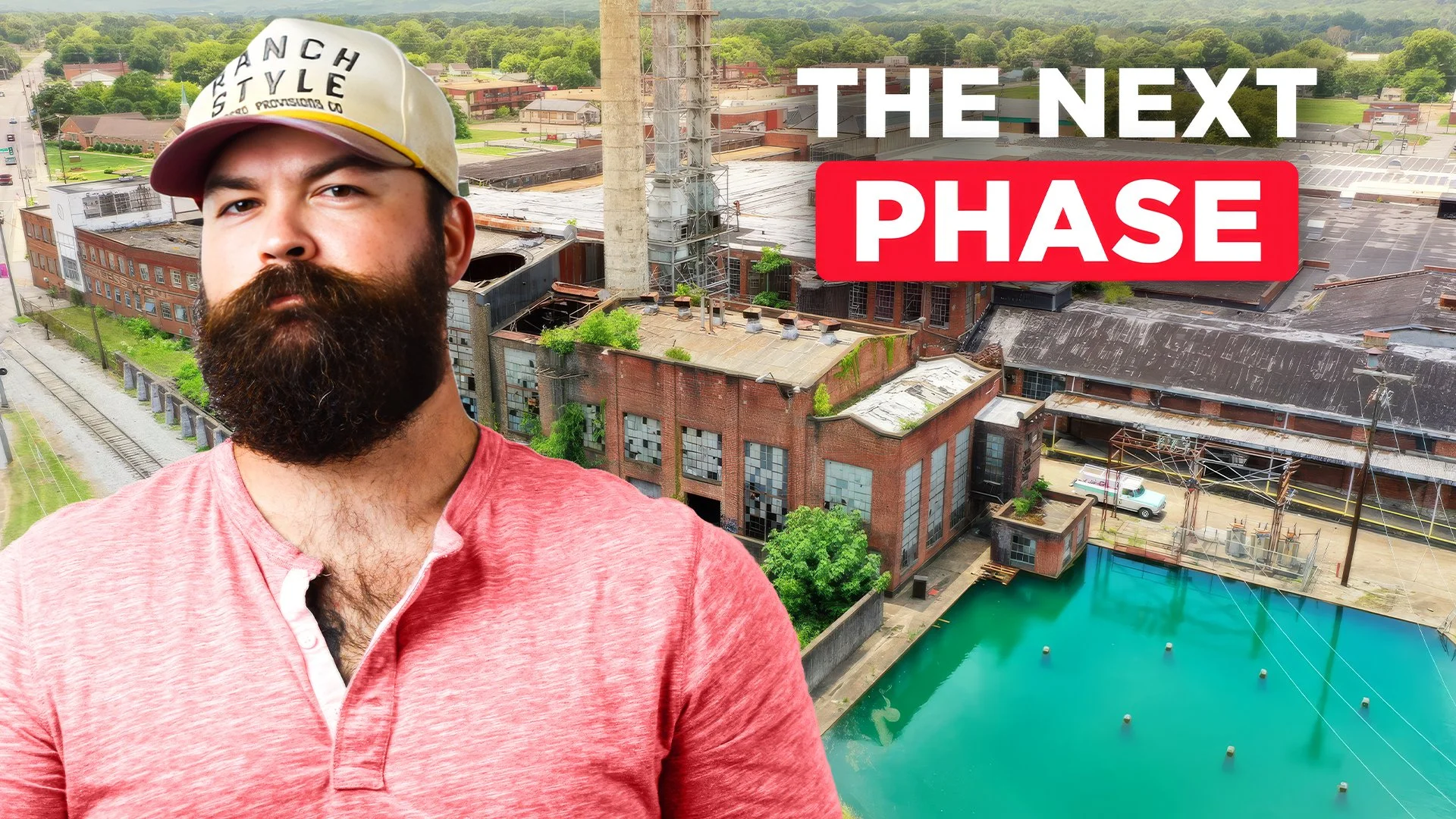
I Bought an Abandoned Mill Outside Chattanooga (Peerless Mill Update)
Four years ago, I took on one of the biggest projects of my career: a 1.5 million-square-foot abandoned textile mill just outside Chattanooga.
At the time, a lot of people thought it was too risky. Environmental concerns, vacant buildings, financing challenges—you name it. But I saw the opportunity to create something that could transform an entire community.
In this week's episode, I'm giving you a behind-the-scenes update on where the project stands today. I walk through what's been completed, why we chose to build self-storage before tackling restaurants and retail, how we're thinking about cash flow versus long-term vision, and what comes next as we continue redeveloping the 29-building campus one phase at a time.
If you've ever wondered how large-scale commercial real estate projects actually come together—or what it really takes to execute a value-add deal over several years—I think you'll enjoy this one.
Listen to the episode below, and if you're ready to start building your own commercial real estate portfolio, I'd love to help. Join the CRE Accelerator and get access to the same frameworks, coaching, and community we use to analyze deals, structure financing, and confidently take on projects of your own.
Get commercial real estate coaching, courses, and community to jumpstart your investment journey over at CRE Central: www.crecentral.com
Key Takeaways:
Think long term. Large redevelopment projects aren't completed overnight. Success comes from executing one phase at a time while staying focused on the bigger vision.
Cash flow comes first. Tyler explains why the first major investment was a self-storage facility—creating predictable income to fund future improvements across the property.
Buy with a margin of safety. Acquiring the property at a low basis created room to absorb unexpected challenges while still making the investment work.
Infrastructure creates value. Upgrading utilities, parking, sprinklers, and other behind-the-scenes improvements lays the foundation for attracting higher-quality tenants in future phases.
Redevelopment is about solving problems. From environmental due diligence to financing and tenant strategy, every obstacle is an opportunity to create value that others overlooked.
Creative financing provides flexibility. Structuring the deal with a small group of partners instead of institutional investors allowed the project to grow at the right pace without pressure to sell quickly.

About Your Host:
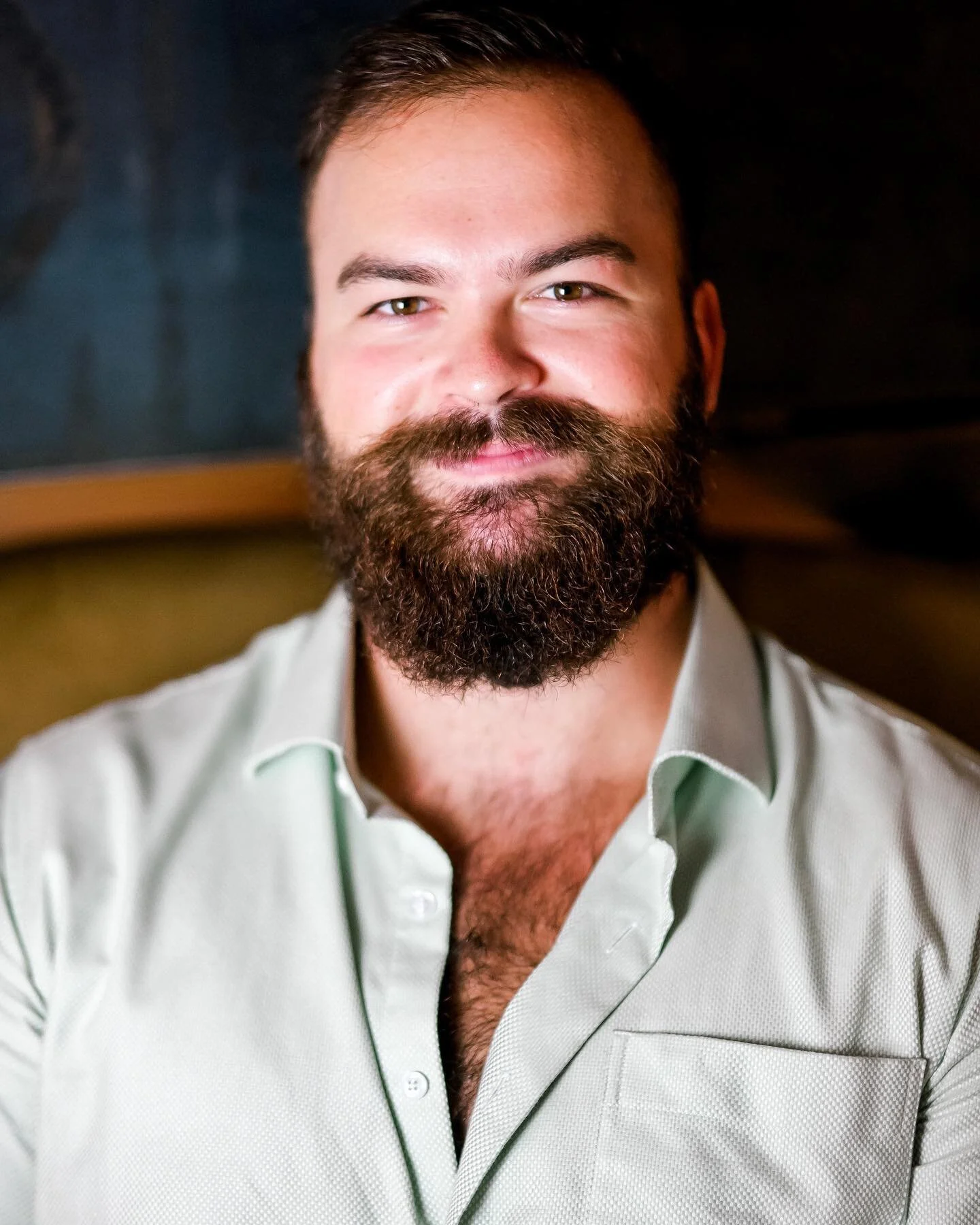
Tyler Cauble, Founder & President of The Cauble Group, is a commercial real estate broker and investor based in East Nashville. He’s the best selling author of Open for Business: The Insider’s Guide to Leasing Commercial Real Estate and has focused his career on serving commercial real estate investors.
Episode Transcript:
Four years ago I bought a 29 building campus down in Rossville, Georgia, right outside of Chattanooga, probably 10 minutes south of downtown, and I was really good about updating you guys for the first couple of years, and then time slipped away from me, and I realized I haven't really done an in-depth update on Peerless Mill, and so that's what we're going to be diving into today. It's 29 buildings, 32 acres, 1.5 million square feet, and I'm going to walk you guys through what we're working on, all that more on today's episode of Office Hours. This episode of the Commercial Real Estate Investor Podcast is brought to you by my CRE Accelerator Mastermind, where you'll get access to my step-by-step investment blueprint, essentially a library of resources on how to invest in commercial real estate. You'll get connected to a supportive community of other commercial real estate investors that are doing projects just like you. You'll get personalized coaching and feedback from me every step of the way. Go to www.crecentral.com to learn more. Welcome back to the Commercial Real Estate Investor Podcast. We are live from the Cobble Group Studios here in Nashville, Tennessee, coming at you with an update on the Peerless Mill in Rossville, Georgia. If you are not familiar with this property, we'll be diving into the listing page for it today, going through some of the marketing, telling you guys what we've got going on. So this is a property that I bought back in 2022 almost four years ago to the day. We're probably, I don't know, 30 to 60 days out from that. I think I closed around August or September on this property, and we were under contract on it for gosh, I don't know, eight or nine months. It took a while, because you can imagine with a former wool mill there were some environmental concerns. Fortunately for us, and unfortunately, probably for the community, there were, I mean, again, fortunately for us, there were like hardly any environmental concerns that we were able to find now that doesn't mean that we have 100% scoped everything out, but in terms of, you know, asbestos and lead paint, we kind of know where everything is. We found a 10 foot by 10 foot area of arsenic in the soil that we will have to remediate, but outside of that, it's not a Superfund site, which, if you're not familiar with what a Superfund site is. It's basically an environmental disaster declared site, and you get all sorts of government incentives for cleaning that up, and it can be incredibly expensive. For example, here in Nashville, the facility that's down by the Titan Stadium is probably going to be a Superfund site that is fund with a D, not fun, as in this is really entertaining and a lot of fun. So you know, we are in the Georgia Brownfield program. We're going to be doing that on a building, like phase by phase basis, remediating everything that we need to, and that is what had scared a lot of people away from this property to begin with, it's, you know, definitely not easy to be going down and taking down a project like this. We had to do, like, a phase one, a phase two, then we had to do a second phase two, basically a much more intense phase two. I like to call it a phase two and a half, which doesn't technically exist, but that's where we were, and so that's why it took us eight or nine months to finally get this deal closed. Also, we had to get creative with it. Surprise, surprise. Not a lot of banks like looking at a mostly abandoned factory. Now, fortunately, we do have tenants on site. We've got, and I'm going to run through some of them here in a minute, that you know we're that are paying us right. So, we were able to finance it based on that, so I just brought in a couple of buddies. We didn't raise, like, private equity. I didn't syndicate this deal. It was just me and a couple of friends, because we wanted to make sure that we weren't beholden to a specific timeline. Like, once you start bringing on professional investors, or even semi-professional, right, they're limited partners. They're used to just co-investing in deals like this.
Speaker 1 4:03
They want you to get their money back in five years. And we knew with one and a half million square feet, which to put it in perspective, I want to say it's like 30 or 40 football fields of space that we have to fill. It's a lot. It'll take you three to four hours to walk through this place. We wanted to make sure that we just took our time and did it right instead of having to get in there do a bunch of things really quickly just to flip it and make a profit right and so because of that we're able to be very intentional about what we're doing so the pitch that we made to the city to the community was always going to be a long term project this is going to take us some time, because first we've got to wrap our arms around what the hell is going on with this property. Then we've got to do phase one, which is really what are the cheapest types of uses to put into the mill that will start helping. Us cash flow the most right, because then we'll have the cash to be able to reinvest into the property without having to continually raise capital, because here's the thing, I could drop $100 million in this tomorrow easily, very, very easily, I mean, and you probably wouldn't even notice a lot of it, which is pretty crazy. So here are some of the spaces that we're working on actually. Before we do that, let me kind of catch you up on what we've done. So, we've signed a couple of leases, and I'll go back to the top here in a minute, but we've also got a self storage facility that we have built out on the site. It is 350 units, climate controlled. It's right here, and it looks like our so copper storage is who's managing it for us, so this is the building here, looks like they've already got the page up, which is excellent for the marketing on this, so we are utilizing the 350 self storage units here to help fund everything, I mean this should cash flow somewhere between 15 and $30,000 a month, once it is fully occupied, which is enough money for me to start reinvesting into cleaning everything up and building out spaces for new businesses, and all of that kind of stuff. Really, really excited for this. We just did a video on Peerless Mill this past week on Instagram and TikTok, talking about what we're working on, and I showed everybody the self storage facility, got a lot of negative comments about, oh great, you know, self storage, and I get it, I mean, self storage isn't the sexiest use possible, but here's the thing, it only cost us $1.6 million to build that out, compared to if I, this is 50,000 square feet, if I built out retail at 50,000 square feet, it probably would have been 1015, $20 million so it would have been substantially more expensive. And this allows us to invest only 1.6 which is still a lot of money, by the way, out of my own pocket and my partner's pockets, and then start cash flowing it, so that we can start reinvesting into the next phases, so we're pretty excited for what we're going to have here with the self storage facility. When I developed it, we did leave another 25 or 30,000 square feet on the floor plate for expansion, so when we did a survey with a local storage company to see what the, like, a market survey to see how many units the market could sustain, and they determined we could do about 600 units here before we would start really hitting a wall. We only did 350 so we could always expand and add more self storage units later if that's something that we choose to do, but really this is going to help us just start to activate the site and bring some cash coming in. Since we bought the mill, Cesario's pizza has opened up out front, and Flipside Burger Bar is about to open up here pretty soon as well. These really excited for these restaurant concepts, Cesarios is absolutely crushing it. Their pizza is phenomenal. They're like $21 personal pizzas, you know. It's, it's not a, you know, it's not another fast food restaurant like this.
Speaker 1 8:10
It's a high end pizzeria, and it is worth every dollar. The pizzas are amazing, which is really cool to see. Of course, we've got Prater's Flooring there, they're occupying a couple 100,000 square feet. Amigos at Peerless Mill. This is one of, I think, six restaurants that they have. Last time I spoke with them, it was the number one restaurant in their chain, which is pretty cool. So, we've got some activity on site. I mean, things are happening, and so, like I said, I just haven't really been good about updating guys as to what's going on. Now, here's the thing, of course, if you go to Google right now, and you type in Peerless Mill, I'm going to show you guys what comes up. The first thing is probably going to be okay. Well, first thing is me, which is nice. The second thing is historic Peerless Woolen Mill demolition in Rossville, not the greatest thing in the world, but we had a building that was unfortunately damaged by a storm a couple of weeks ago. We've had some crazy storms in the Rossville and Chattanooga area here recently. The storm came through. We had already had a damaged roof, and we knew it. Like this building, if you want to get really into the lore of Peerless Mill, two owners ago, the owner was a little crazy. He was at odds with the city. He poured concrete down the city sewer drains, caused a lot of problems. Anyway, he dragged a couple of the HVAC units off the roof and threw them off the roof. Well, he completely gashed the roof, and so by the time I bought it, the roof was already gone. It had completely collapsed in, and there was just nothing that we could really do, unfortunately. So we were kind of holding out, hoping that the building would just stay, and until we could get to it, because it just wasn't worth like shoring the building up when we knew it needed so much work, it was going to be a late phase in the. Project, anyway. Well, unfortunately, a couple weeks ago, a storm hit it, and we ended up having to hire a demolition company to come in and just tear the whole thing down. So, fortunately, it is only a portion of one building of the 29 buildings that are there. So, I want to be clear on that, because I've had people reaching out saying, "I can't believe you're demoing the whole mill, I, you know, I would love to see it before you tear the thing down. I'm like, no, it's literally one portion of one building. So, if you look at this map here, I'll see if I can.. I can't really zoom in too much. Anyway, it's like this section right here, that's it, like we're still keeping this portion of the building, so it's, it's really not, not a problem, but it actually works out well, because if you look at what we are planning for the building immediately next to it, it's a brewery and a tap room, and so we're going, this is like what we are working on now, what we are working on next is a brewery in a tap room in the old boiler room, which is really cool, 38 to 51 foot ceilings. It's right next to the pond. Well, now that has a parking lot immediately adjacent to it. So, and here's, here's, and I've just done these renderings with ChatGPT, by the way. If you guys are trying to, you know, help people visualize anything, go use Chat GPT. It's pretty incredible with what it can do. I guess you guys can't really see, because my video is taking up too much of the space here. But anyway, these are some renderings that I've come up with for what the brewery could be. We are going to white box it for the brewery or distillery, whoever comes in, and then we were offering a tenant improvement package. So, if you guys know a cool brewery, cool distillery, somebody that's looking in the Rossville, Chattanooga area, let us know. This is, this is going to be like the anchor gem of the site, just below the smokestacks, you can see them there.
Speaker 1 12:01
It is like the most prominent building that you see when you're driving through Rossville, and we really want to find something cool for this, especially considering, you know, the outdoor beer garden. I mean, you just look at that, like you could see so much potential with that site. So we're working on that one now, and then the next two buildings that we have available. These are also renderings that we have put together. We've got about a 13 150 square foot standalone building, brand new roof. Again, we are willing to spend some money, fix this up. I think it's perfect for a coffee shop or a little. And then we also have 7400 square feet that's immediately adjacent to that, that it, that could also be built out for, you know, bar, restaurant, retail, it could be temporary art studios, for now, you know, so many different uses that we could be working on there, and then, of course, we got a couple of industrial just warehouse spaces that are available, and so you know that's including this three and a half acre lay down yard, so that's a big part of what we're working through right now, is like, how are we balancing, you know, all of the cool stuff that we want to do, that's going to cost a ton of money with what do we, what can we do today to just bring some revenue in to start paying for all of that, and so I think sometimes you know that's what's hard to convey to the community, to the public, because projects of this scale, they're not easy to do. I mean, this is one of those things that, like, you know, you wake up in the middle of the night thinking about, because there's just so much to be done, and you know, we're just taking it one building at a time, right? So, it's, you know, we worked on building 24 right here, the self storage facility. You know, now we're working on, you know, 27 There's there's a brand new roof on this building, and we've got almost 20,000 square feet of warehouse space available for somebody. We're working on the brewery, so that's 70 650 square feet, by the way, from the demolition of that building, like we were just unable to salvage it. You guys saw that picture, we are saving all the brick, so I'm pretty excited about that. I mean, it's like 100 year old brick, you cannot remake this stuff, super cool. And we are going to be bringing that back and utilizing it throughout the site in different areas, so you know, right now it's really one of those things where we're just trying to show the community what we're doing and start recruiting the cool businesses that are going to help us get this going, and again, you know, working through the visualizations on our end and the marketing to really convey the story of what's going to be here, because I get it, like when you come down here and you look at some of the, we've got some existing photos here, like it can be intimidating for businesses to look at this and think, like, okay, well, what could we do there? I mean, there, you know, there's a tree growing out of the side of the building, well, we clean that up, right? I mean, look, if. Know, for the brewery, if Sweetwater comes along, I'll put a million dollars into that building tomorrow, but it doesn't make sense for me to spend a million dollars today, and then wait and go find that tenant, because we don't want that much capital just sitting there costing us. So, there's a lot of opportunity that we could really take advantage of on the space, but yeah, I mean, that's that's pretty much where we are. We're going through some refinancing. There are some really great incentives that we're working on, of course. You know, you can see here all the tenant incentives for the businesses that are on site, tons of incentives for the businesses. There's a lot of incentives for us too.
Speaker 1 15:39
And so, as the property owners were working on that to see what we can do, you know, there's some community improvement tax credits that we can get, that where we can get some like really, really interesting loan terms that don't cost us a whole lot of money, so big updates there at the mill, lots of things going on, it is like I said, it's 29 buildings, 32 acres. We've got the self storage facility opening up here at the end of the summer, is what I'm aiming for. It has been really, really tough to get that going. Unfortunately, the Chattanooga Area Power Company is just not easy to work with, but to be fair, I don't know which power boards are easy to work with. It's, it's taken us almost 12 months to get power to the self storage facility. It's like a relatively simple and straightforward deal, right? But the nice thing is, you know, you think about how much infrastructure we put into the space, like we had to do. You know, I spent $500,000 on sprinklers just for the self storage facility, which is like a third of the cost, which is crazy. But now we have sprinkler infrastructure to multiple buildings, so it's very easy for us to just start running the lines off of that. We've got power going to the building now. Well, it's very easy for us to run power to surrounding buildings off of that EPB is now familiar with the property, so it should be very easy for them to drop a transformer moving forward. So, there's a lot of behind the scenes work that we've been doing that you don't necessarily get to see, because there's nothing pretty happening yet. But my hope is, you know, now that I mean, again, unfortunately, we have to demo that building down there in the process of doing that now, but my hope is, you know, that is going to really reignite a lot of interest in the property, because we're going to have a parking facility inside the mill, right next to the brewery or tap room that we are planning there, and we'll start working on that, and getting a lot of momentum going from there. Let's see what you guys are saying in the comments. Ted is saying, Good morning, Tyler. Good morning, Ted. Thanks for dropping in, Jason. Good morning, greetings from Venice. Jason, what's going on, dude? Good to see you, man. Adriana, let's go from Dominican Republic, learning about commercial real estate in the states. Thanks for being here, guys. If y'all have any questions on the mill, feel free to drop those in the comments. Happy to share with you guys. Luke, good morning from Minnesota. Luke, what's going on, man? Glad to have you here, buddy. Happy Tuesday from Connecticut. From Jason C SMG, good morning from New York, man. We got guys are from all over the place. I'm loving this. Jason is saying, "Can you put a link to the marketing material in the chat? You can go to Peerless mill.com and that will, that will take you to all the marketing materials. He's asking, "What was the purchase price of the total mill project? Great question. $5.6 million which, if you run the math on that, it's like $4 a square foot is what we bought it for, so you know when people ask me, like, how did you know it was a good deal if it was so vacant, and this and that, and the other. Well, one, the current tenants were covering the debt service, so like it was break even when we bought it. Two, we bought it for $4 a square foot, like I knew even if we had to deal with a bunch of environmental issues, even if we had to lose a couple of buildings because they just weren't salvageable, even if we only accomplished 20% of our overall plans, the project would be successful. So, yeah, maybe 5.6 hell of a deal. Nick is saying, when raising for deals, do you ever just offer an interest rate paid back upon refinancing or sale, instead of a GPLB split. We have value add that will exit in 18 to 24 months. And thinking of offering that, yeah, Nick, we've got like Matt Barbaccia, if you want to go watch his interview on the channel.
Speaker 1 19:32
He did a 100% finance deal up in Rochester, New York. Absolute badass, love Matt. He went in and negotiated with private investors to structure it as debt, and they were fine with it. He gave them an interest rate that they wanted, he gave them payback terms that they were fine with. So, yeah, absolutely. If your investors are good with that, do it. Let's see, Darlene is saying, "Thank you for. Update, even wondering, exciting. Absolutely, Darlene. Yeah, feel free to spread the word. Here's the thing about these small towns, like, you know, I, and I actually ended up having to leave the Rossville Facebook page because it is - it's so miserable. And this isn't just a Rossville thing, like East Nashville Facebook is also just completely miserable to be a part of, but people like to spread crazy rumors, and then they like to just talk negatively about everything, and so it was actually kind of nice with the video taking off this past week, like it did on TikTok and Instagram, because I got a lot of the positive feedback too. Sometimes you just think, like, man, does the whole community just hate the fact that this deal is happening at all, and then you know something like that goes viral, and it's like, man, everybody's just so excited for anything happening, you know, which is, which is really cool. I really love that Jason is saying, can you partner with the brewery for equity, offer a lower rent rate, as your contribution is that common in commercial real estate? Yeah, I mean, Jason, you could certainly do things like that. I'm not interested in being a partner in any businesses. There's just little to no upside for me in that, and there's a massive amount of upside in commercial real estate, because I can control it. I have done that in the past, and I ended up getting bought out of all of the businesses that I invested in. Fortunately, I did fine on them, but they were - they're just miserable, because then you're involved in a business and somebody has to report to you, and I just - I don't like being a part of it. But yeah, I mean, if you enjoy that, you are - you're absolutely able to negotiate for equity in breweries or in tenants that you're working with. Rich is saying, what made you decide to start with self storage over other opportunities? By far the cheapest thing that I could build that I could 100% control. So, like, the nice thing about doing the self storage is that when we spent $1.6 million on the build out, we were already there, and so, like, we're about to open the doors, right? If I spent 1.6 million building out flex space there, I then have to go through the leasing process, find tenants, pay brokers, all of that kind of stuff. And so there's nothing that I could really do where we could get 50,000 square feet occupied ahead of time and just have the certainty of it being done at this, at this price, I mean, if you run the math, we spent 1.6 million, give or take, on roughly 50,000 square feet, that's only $32 a foot, so like all in on that self storage facility, we're roughly 36 bucks a foot, like the numbers are going to work really, really well, and so that's why we did it. We'll have very easy cash flow coming in from day one, and then we can move on to leasing to tenants next. So that's that's why we decided to do that. Rich Jules is saying, "Hey, Tower, does the Siri Accelerator Mastermind take on clients from Ontario, Canada, looking to pivot into value add strategies, or is the curriculum strictly tailored to US markets? Appreciate the question, Jules. One, we have, I think, we have two members currently that are in Canada. I have one in Japan, and I have one in Israel. So, if you are looking at investing in America, in the Americas, it's applicable. 80 90% of what we teach is also applicable to Europe and beyond. I don't really know about the Asia markets, don't know a whole lot about, you know, Africa or the Middle East, you know, like Dubai and stuff like that.
Speaker 1 23:35
But, like, if you're interested in investing in the US and Canada, like, I mean, especially in Canada, 90 95% of what we talk about is applicable. It's basically like the 1031 exchange that is not going to be so. Yeah, absolutely. We've got, we've got a couple of members in the Canadian Great White North, so we'd love to take you on if you're interested in that. Jason is saying, How do you pay the holding cost to what is profitable? So we had tenants already in place that we're covering our debt service, everything else was cash out of pocket, and so I mean, you want to be very careful with that, right? I mean, we brought enough cash down to make sure that, like, we weren't having to carry anything, because I knew going into it, like, we've got a lot of, like, the space is in surprisingly good condition, considering what it is, but we're gonna have to spend a lot of money to get it prepped for tenants to come in, and so, again, like, you know, going back to what Rich was asking, like, how did you decide on self storage? Like, I just knew if we spent the money, I could open the doors and start getting money coming into the door. Next, we're gonna start doing flex space, so, for example, we've got a 43,000 square foot building that we were working on next, where I'm working on my financing right now. We're going to fully build it out and put like eight to 12 flex tenants in there, so that'll be a pretty great thing. But you know, again, it's all a balance of like what's the cheapest for the most money that we could make, right? And self storage was by far the. Cheapest that we could build with the highest return overall. Luke is saying completely shameless plug here, but if you're watching this and want to take the next step in the CRE game, you have to get in on the CRA accelerator with Tyler. Guys on point, Luke, I appreciate that, man. Luke is a member of the Mastermind, he's been in it for a few months now, and, and he's absolutely crushing it. So, I appreciate you guys jumping in and plugging the Mastermind. It's a lot of fun. I do enjoy the Mastermind. I don't plug it, you know, too often as we're talking on the show, because I don't want this to just be a complete advertisement for the Mastermind. But, you know, look, if you, if you want all the free education, we've got the podcast, we've got the YouTube channel, Instagram, TikTok, the blog, everything is there. Like, go and enjoy that. But you know, there's nothing special that I have on the education side. You guys are getting it all here, right, on the YouTube. But if you actually want to work with me, like, if you want to get my feedback on your deals, you want me to be looking at deals with you, you want me to be going through your underwriting, making sure that you understand things, and that you're not missing what you don't know you're missing. That's what the mastermind is for. You just get to work with me. That's the only difference. So, yeah, guys, appreciate you jumping in for an update this week on Peerless Mill. Excited for what's to come next. I'll be down there on Sunday, working on a couple of things. Maybe we'll get another TikTok or Reel out, so if you're not following me on Instagram, definitely go do that, and we'll keep, we'll keep you guys posted. But yeah, let me know what questions you have on these projects in the comment section. We'll take it from there. Cheers, you guys. See you next Tuesday. This episode of the Commercial Real Esther Podcast is brought to you by my CRE Accelerator Mastermind, where you'll get access to my step-by-step investment blueprint, essentially a library of resources on how to invest in commercial real estate. You'll get connected to a supportive community of other commercial real estate investors that are doing projects just like you. You'll get personalized coaching and feedback from me every step of the way. Go to www dot cre central.com to learn more,