
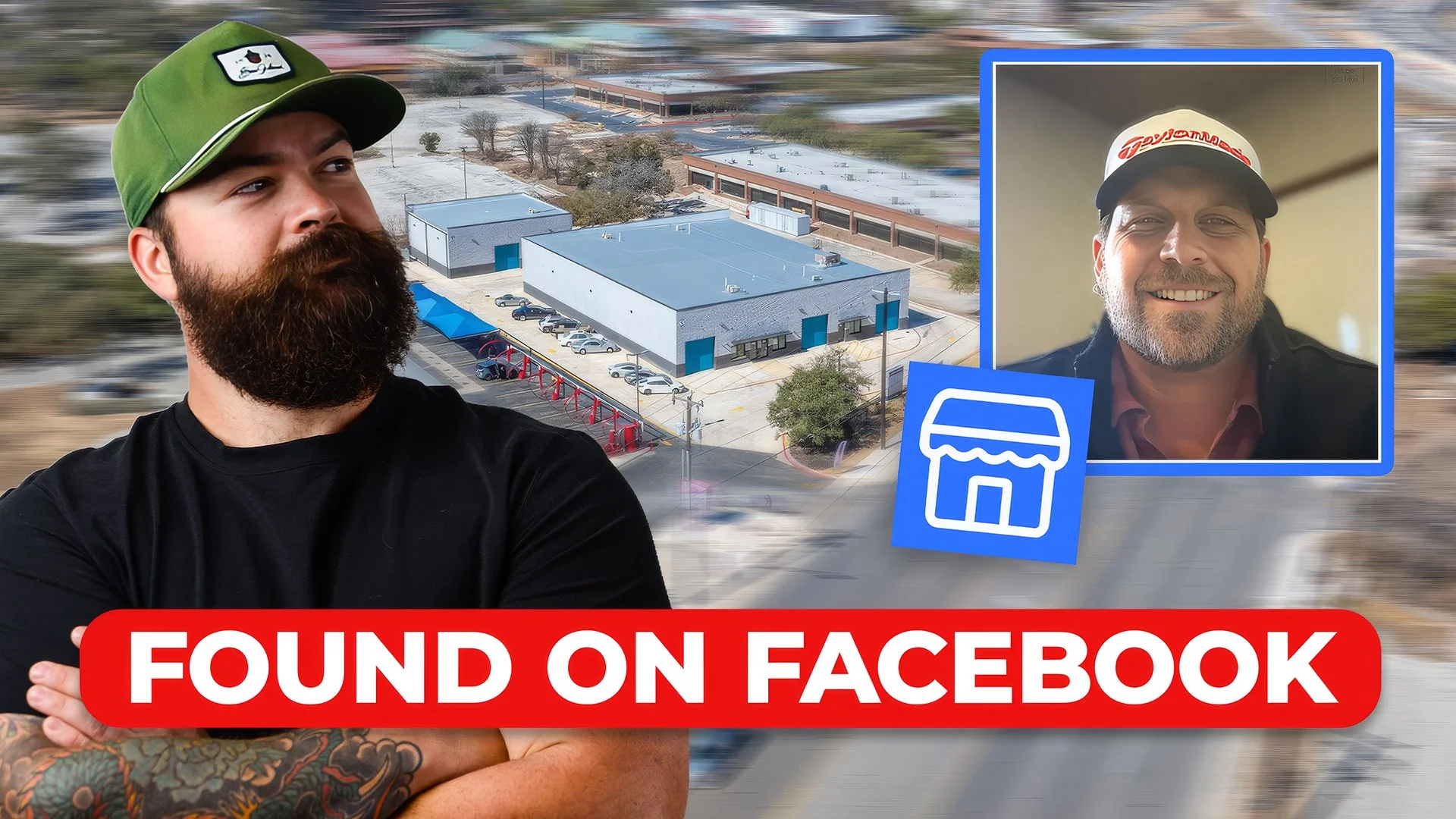
He Found a Commercial Building on Facebook Marketplace (Yes, Really)
Most investors think the path into commercial real estate starts with brokers, listings, and years of networking.
Bob's first commercial deal came from Facebook Marketplace.
After spending 13 years as an electrician while building a 75-door residential portfolio on the side, Bob reached a breaking point. Late-night tenant calls, constant maintenance issues, and the reality of managing dozens of units while raising a young family pushed him to look for something more scalable.
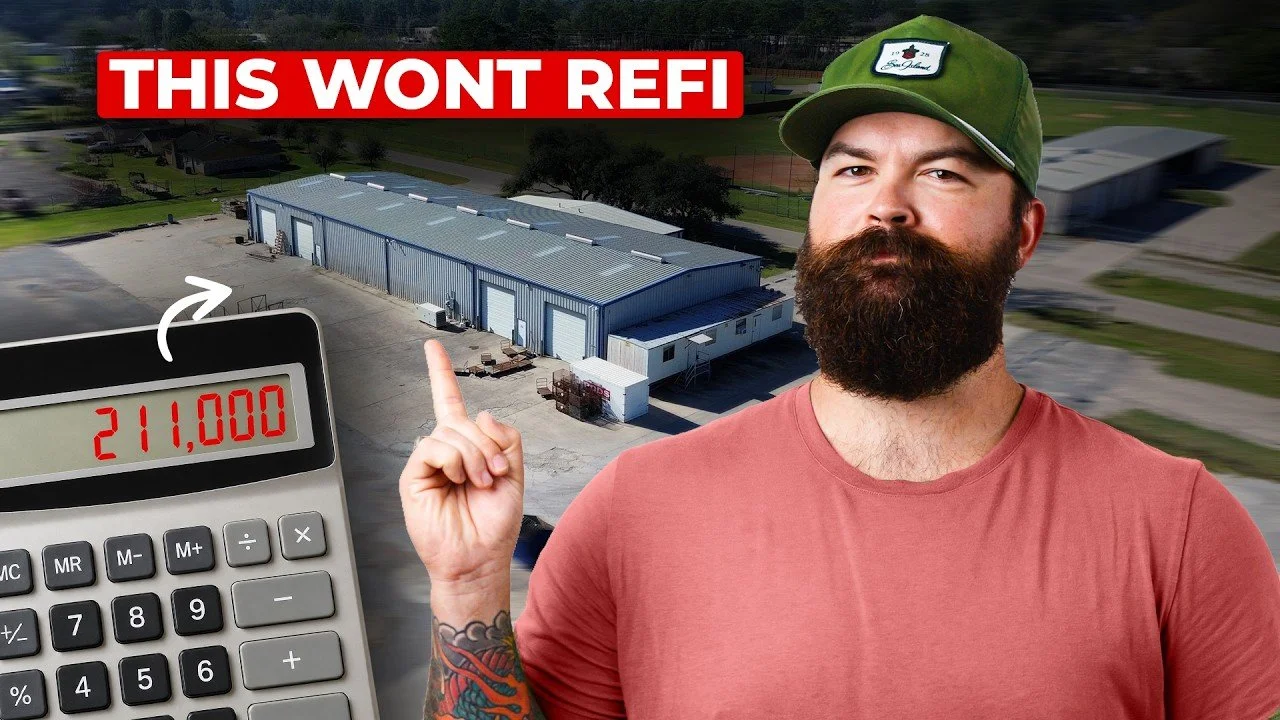
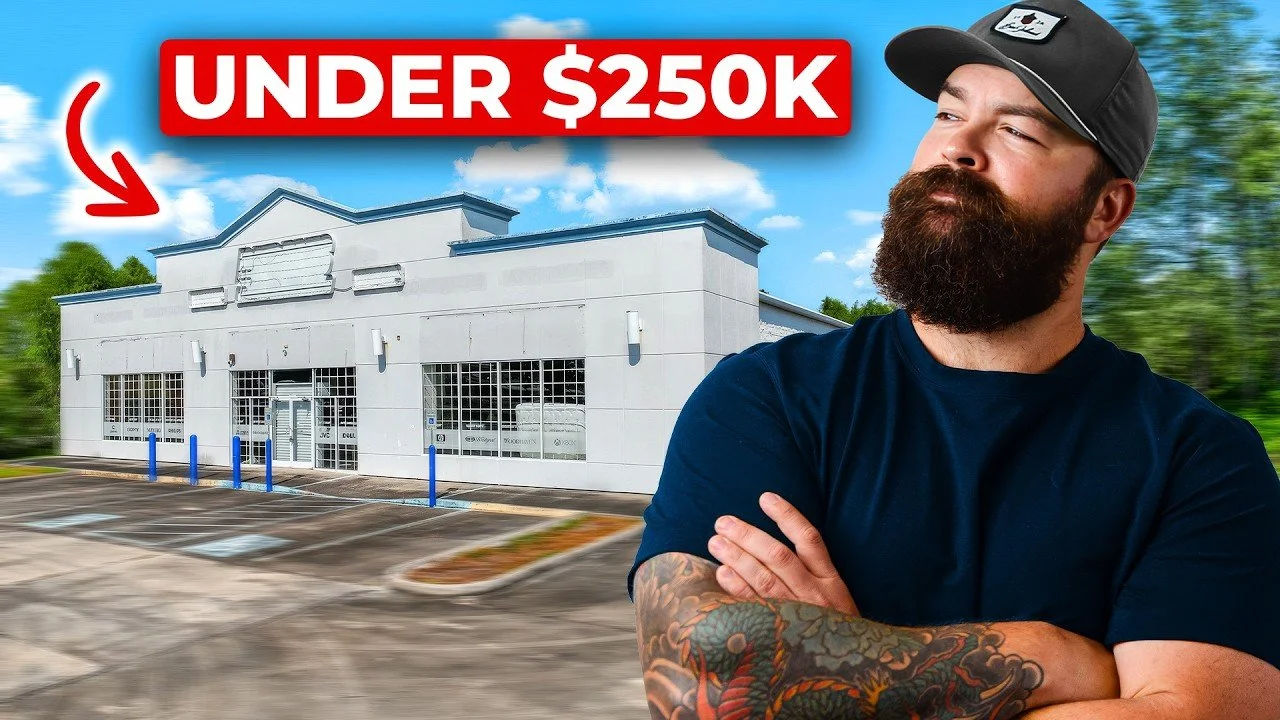
Just over a year after joining the CRE Accelerator, he closed on an 8,000-square-foot flex industrial building in Lansing, Michigan for $200,000.
In this conversation, Bob shares exactly how he made the transition from residential to commercial, why he became convinced flex industrial was one of the best opportunities in his market, and how he found a deal that larger investors overlooked.
What You'll Learn
Why Bob decided to move from 75 residential units into commercial real estate
The hidden cost of scaling a residential portfolio
How the birth of his daughter changed his investing goals
Why Michigan's commercial market created a major opportunity in flex industrial
How marijuana operators buying industrial buildings created a shortage of space for local businesses
The surprising way he sourced his first commercial deal on Facebook Marketplace
How he analyzed the opportunity and gained confidence in the numbers
The renovation plan to transform a former print shop into modern flex space
Why other investors passed on the property while Bob moved forward
The direct-to-owner marketing strategy that generated a call five years after he left a business card
How he thinks about finding off-market opportunities today
The lessons he learned making the jump from residential to commercial investing
If you're a residential investor looking for your next step, or you're tired of dealing with tenants and toilets, this episode offers a practical roadmap for making the transition into commercial real estate.
Get commercial real estate coaching, courses, and community to jumpstart your investment journey over at CRE Central: www.crecentral.com
Key Takeaways:
Commercial real estate can be a natural next step for residential investors. Bob went from managing 75 residential units to buying his first commercial property after realizing scale wasn't creating the lifestyle he wanted.
Market shifts create opportunity. In Lansing, marijuana operators acquired much of the available industrial inventory, leaving local businesses struggling to find space and creating strong demand for flex industrial properties.
The best deals often aren't on traditional listing platforms. Bob found his 8,000-square-foot building on Facebook Marketplace, proving that investors should look beyond LoopNet and Crexi.
See the building, not the clutter. While other investors were scared off by a vacant print shop full of old equipment, Bob focused on the fundamentals: good bones, functional layout, utility infrastructure, and strong tenant demand.
Value is created through repositioning. By purchasing the property for $200,000 and investing roughly $135,000 in renovations, Bob expects to create a property worth $700,000+ once stabilized.
Talk to the market before you buy. Conversations with brokers, business owners, tenants, and lenders helped validate demand and gave Bob confidence in the opportunity.
Direct-to-owner outreach compounds over time. One business card Bob left on a property generated a seller call five years later. Consistent outreach creates opportunities long after the initial contact.
Execution matters more than perfect analysis. Bigger investors looked at the same property and passed. Bob took action when the numbers made sense and trusted his ability to solve problems along the way.
Relationships accelerate results. Just over a year after deciding to pursue commercial real estate, Bob closed his first deal by surrounding himself with investors already operating in the space.
The transition from residential to commercial is often less about knowledge and more about confidence. Many of the skills Bob developed renovating and managing residential properties transferred directly into commercial investing.

About Your Host:
Tyler Cauble, Founder & President of The Cauble Group, is a commercial real estate broker and investor based in East Nashville. He’s the best selling author of Open for Business: The Insider’s Guide to Leasing Commercial Real Estate and has focused his career on serving commercial real estate investors.
Episode Transcript:
Tyler Cauble 0:00
Uh, Bob and I met at the Midwestern Real Estate Investors Conference a little over a year ago, where he grabbed me after I walked off stage and said, 'I want to start buying commercial real estate. And here we are, a little over a year later. He's already closed on an 8000 square foot flex industrial building up in Lansing, Michigan, and he and his partners are currently looking for their next opportunity, all that and more on today's episode of the Commercial Real Estate Investor Podcast. This episode of The Commercial Real Estate Investor Podcast is brought to you by my CRE Accelerator Mastermind, where you'll get access to my step-by-step investment blueprint, essentially a library of resources on how to invest in commercial real estate. You'll get connected to a supportive community of other commercial real estate investors that are doing projects just like you. You'll get personalized coaching and feedback from me every step of the way. Go to www.crecentral.com to learn more. Bob, what's going on, man? Excited to be sitting down with you today, and diving into this. I can't believe it was just over a year ago that we were having a conversation in the lobby of that conference, talking about getting you into commercial real estate and out of residential. And here you are, man, you closed an 8000 square foot building. I mean, we'll get to that here in a minute, obviously. But, man, tell us a little bit about yourself. Like, what's your story? How'd you get started in real estate?
Unknown Speaker 1:24
Well, when I graduated high school, I had a buddy's dad was starting an electrical company, and I didn't know what to do, so I started picking his mind a little bit, and he's like, 'You should just come on board with me and started doing some electrical work, and I'm like, okay, so I started doing that, and in the meantime he owned a few rental properties that he ended up selling to get his business started, so it perked my interest a lot, kind of hearing his background and what he built, and then being able to sell that portfolio and start, you know, a commercial electrical company, so I worked with him for about 13 years, and in the meantime, doing that after work, I was working many, many hours on flips and rentals, and trying to build my portfolio and build that dream that I always seen out there, so it took 13 years, and I finally decided that, you know, I was going to cut the leash and try to figure out everything on my own. Met up with a few guys that had an apartment building that I was trying to buy. They, they said, "You know what, we'll bring in, you show us that you know what you're doing, and we'll start buying real estate with you. So, at that time, I think I had five rental properties. I was doing everything at that time, I was doing, you know, all the rehab, marketing, everything. Got burnt a few times with tenants, and it was hard at the beginning, but started learning the ropes, and last year we were up to 75 doors throughout, like a 30 mile, 40 mile radius, where I live, and I was just burning at both ends, you know, you get tenant calls at night, and you got to run when water leaks, you got to go, you can't wait. And it started burning me out three years ago. I had my first kid, my first daughter, and it kind of changed my perspective on life and what I wanted to do and where I wanted to be in the future. I wanted to be involved in her life, and so I took a little bit of time off right when she was born, and that's when me and you met up at that conference in Grand Rapids. And after just looking around the real estate world, I was kind of like, you know, it looks like commercial is really the spot that I would like to be, that I could grow, but also still be involved in it, and do all the stuff I love. I really like transforming buildings. I've most houses I buy, cities and townships and jurisdictions are like, these need to be bulldozed, and I end up turning around in their beautiful houses and go on the tax roll, you know, but in that time, you know, you're always fighting with neighbors and jurisdictions and all this, and I didn't feel the real appreciation really there. So it kind of made me start thinking, what else is there? What else is there? My business partners owned a commercial building that they rent out to a national company and I've been involved a little bit here and there and seeing what it entails for that kind of business compared to my rental properties, it was, it was a no brainer for me and. Just didn't know how to step into it until I met you, and it kind of opened the door to there is a way in, but not a lot of people talk commercial, and when you start talking commercial, it's a whole different conversation, you know, and I've really enjoyed it. I'm from Lansing, Michigan, so a very, very small capital city. Actually, I think about 10 years ago, 15 years ago, was the most deprived capital city in the nation, and there's been some investors that have really stepped up and turned it, and I've been watching it happen, and I'm like, man, that would be cool to be a part of something like that, you know.
Unknown Speaker 5:39
So it helped me make my dream a little bigger, seeing all these commercial buildings around town that are vacant, dilapidated, and a lot of times they, they aren't really that bad, they're just outdated, you know, and these tenants that want to come in, they just want to come into a beautiful modern building, you know, and that was the same thing with residential, so I started seeing like there are some things that kind of tie together, and this might not be as hard for me to make that step as I originally thought, and, and without your program, really, I mean, it's it's opened my eyes to a lot when I first started looking at this, I really wanted to build new, but the more and more I got into it, I realized that our market is really hard to support those higher rental rates, so I started looking around the market, seeing what was out there, and I stumbled on a nice, well, it's going to be a nice building, but when we bought it, it was a print shop, which we know what's going on in that world, you know, a lot of the print companies are closing down and things are changing and people are consolidating, and this guy unfortunately passed away that had this company, and that's why this one closed up, and the wife couldn't keep it going. So we stepped in towards the end of last year, and they wanted this property considered a fire sale. They just needed to move. She owed taxes on it. It was getting more than she could handle. Power was shut off, water's been shut off, all the equipment's in the building. So it was great, because I talked to other investors that have walked through this building, and they said we walked away, we couldn't see what we were going to do with it, and I'm like sitting there going, what do you mean? You can't see what to do with it. It has four walls and a roof, like that's what you need to know. I mean, all the other rooms or whatever you have that just gets removed and you make it back into a warehouse, you know. So, when I seen that and walked through it with my realtor, I said, I'm not letting anybody buy this. There, I don't care what it takes. I'm going to make sure I close on this building, and that's what we ended up doing. We ended up closing on that building, and it's been a, it's been a fun journey, you know. You, you buy a building with print presses that, in my eyes, you know, and the owner's eyes told us at closing that there's no value there, nobody wants those, those are old machines now, but I just had some feeling that, you know, the machinery that was there, there was some value, and with two hard days on the internet, I found somebody out of Ohio that buys these equipment, and they send them across seas to Vietnam and areas like that, where this equipment is still usable, and it, it opened my eyes to, like, there's just so much opportunity, you just have to dig in and go after it, you know. So that was very unique. Everybody I talked to is like, how'd you get rid of that stuff? How'd you find somebody, you know? It's like everything, you know, like this commercial building. Honestly, one, it was after one of our Thursday meetings we had, and talking about looking for property, after I got off the call, I got on Facebook, started going through all the marketplace, and I seen it pop up, and I'm like, you know what, I'm chasing this, and I just went after it, you know, and I think that's the biggest thing on anything we do in life, is you know, put your mind to it and start chasing,
Tyler Cauble 9:39
how cool is that? I mean, Facebook Marketplace, that's that's a spot where you can actually find some hidden deals. A lot of people don't think about that, so yeah, like I mean, man, there's so much that I want to pick apart on that before we dive into the marketplace thing and finding deals, because we could talk forever about about finding opportunities. You had 75 houses, I mean. For 75 unit, 75 units. Sorry, yeah,
Unknown Speaker 10:03
yep. So we had 24 apartment unit, a 24 apartment unit, a 16, and then the rest were single families or duplexes throughout our city, and we sold off two years, was it? No, we sold off last year the 24 of them, so now I only have 55 under management, which you know sounds like a lot, but in the big scheme of things it's not. If you have good tenants, you know, I mean, I mean, but it takes a lot of work, and if I had that many commercial tenants, oh my god, it would be a game changer, you know, and it's it's looking at a big picture and breaking it down into small things, is how I've looked at it, when I tell people 75 doors are like, oh, wow, that's a lot, and yeah, it's a lot, I managed them. I ran everything, so I was, I was getting burnt out from it. A lot of the stuff in our area is older, so you know what that brings. That brings water issues, you know. The one we sold was a three story to 12 unit buildings, one of them had water heaters underneath the countertop. I don't know, that doesn't sound good as soon as I say it. And you get one of those that bust, and it's, it's a lot of work. And I mean, my wife's from Mexico, and we've been on heading out on trips, and I mean, three days before I'm working sun up to sundown, trying to get some of these taken care of, you know, and it was just some of that stuff, just kind of turned me into, you know, I like to deal with somebody that's on a nine to five or sun up to sundown people, you know, and and commercial renters are more business people, and that's who I like to work with, people that have an understanding, and that it's I don't want to have to drop what I'm doing at all times, depending if it's night, weekends, whenever, to keep people happy, you know, and the commercial world, you know, those people aren't going to be there on the weekends, and if they are, they understand that, hey, if a toilet broke, we'll have it fixed on Monday or Tuesday, beginning of the week, you know. So, when they say toilets and tenants, it's a true thing. After you handle it for a number of years, you're like, okay, I'm done with that toilet and tenants deal, you know.
Tyler Cauble 12:39
Yeah, no kidding. I mean, it's a lot of work, especially like you said, once you get up to 75 units and you're self-managing, which is really the best way in residential and multifamily to make money. Otherwise, that's eight to 10% right out the door. What would you say, like, in your experience, because you had a ton of experience doing residential and managing it and dealing with tenants? What would you say were the biggest differences you found when you moved into commercial real estate and started exploring those opportunities.
Unknown Speaker 13:08
Oh man, how to source find deals, I think, is the part I'm still learning, but to be honest with you, I went back to how I did it with the residential stuff, you know, that was back when we had Craigslist, and honestly, I bought numerous properties off of Craigslist, you know, just trying to find those distressed sellers, and that's what I kind of realized after doing your program a little bit, is that you know, I thought I was going to come in and start building new, and the more I looked around, I'm like, man, that's harder, but I want to, I want to break this and get into it right now. So I just went back to how I got into residential, and boots on the ground, I mean, I knock on people's doors, look all over the place to find these deals, and that's kind of where I've started, and I know networking is going to be another huge thing to get my network bigger for people to know that this is what I'm doing now. Once I decided that I was going to go commercial. I had three residential properties fall in my lap, and it was very interesting how they fell in my lap. So I'm still finishing up those, and then, then, then I'm in full bore. But it was interesting. I put a card, a business card, I make up a business card, and on the back I say, interested in buying your property, cash offers. I put it on a house. Five years later, they called me.
Tyler Cauble 14:52
Wow,
Unknown Speaker 14:54
and so that just made me think, you know, I can do the same thing in commercial. Social, you know, people might not be ready to sell today, but making that connection is where it's at. So that's where my mindset is now, and it's been working. It's crazy, a lot of these owners of commercial real estate, and some of these older buildings that need work, are older people, you know, that are getting ready to retire, and I think that's a great market to go after, and so that's what I've been doing here locally, is just talking to distressed building owners, and it's, it's been working out pretty good.
Tyler Cauble 15:34
How cool that you found this on Facebook Marketplace. Walk us through, like what about this property stood out to you, and said, "Hey, maybe that's actually a good deal. Let's dig into this a little bit more. When you saw it,
Unknown Speaker 15:47
well, since I was trying to build new really flex space, talking to people, talking, we have the Lansing Airport, which is an international airport here in Michigan, talking to people there, they're very successful CEOs and stuff, were telling me they have property that they rent out, and they're like, it's full all the time. I go talk to other people that have property that they're renting from people, and they're like, "We're looking for a new space, we don't have any room, and I'm like, "There's there's a trend here that there's not enough, and the reason that was is because the marijuana market took over here in Michigan in about 2020 and come to find out, I started talking to all these building owners, and a lot of these building owners sold to marijuana corporations back in 2020 and I said, Well, who are you renting to before HVAC companies, appliance repair companies, all these smaller businesses, you know, I would say maybe five employees, you know, and I'm thinking, well, you guys just sold everything, so where are these people going? You know, there's no room, so when I went to that building and seen the square footage of it, it has 314 by 14 foot doors, a 16 by 16, and I think a 10 by 12 door. In my eyes, that was just like this is perfect. The doors are already cut out inside. You got four walls. Once you get it cleaned out, you can divide that up however you want, but when you get into dividing it, there's so much more to it, you know. Plumbing, what are you going to do with plumbing? You know, how do you have every tenant have toilets? How do you have every tenant have their own electrical? So that was something that was after we got into it, that that I've been learning, you know, but looking right at that building, honestly, it was the four walls, and being 15 foot tall ceilings on the inside to me, I felt like I could get majority of the people in there. I know if it was 16 foot, that extra foot makes a huge difference, but I just knew with a brick exterior, so it's all cinder block, and then with 15 foot ceilings, I just knew that I could turn that into something that is going to be very rentable for a long time. It also had, which was unique, as three quarters of an acre fenced in yard that's all asphalt, so that helps too with your tenants, so they can secure their equipment, you know, overnight, and, and all that. So those, those couple things really caught my attention. The power to the building also was another one, they had 480 going to the building, so to me being an ex-electrician, I was just like, "Wow, that's another bonus, because now no matter if they're running presses or machinery or whatever, they have that power that they needed for that, so those couple things really was all it was that I needed to see that there was value there, and like I said, in flipping houses, you know, I mean, I would buy hoarder houses, I mean, I bought houses with motorcycles in the living room, that you know, it's so much weight, it's, you know, we've had to re-raise floors and all that kind of stuff, so junk in a property never scares me. I've always had that vision to see through it, and I think that's what's maybe one of my unique qualities that got me this property that didn't scare me away from it. That was like, okay, you see the four walls structurally we're good. Let's go clean this bad boy out and see what we can make of it.
Tyler Cauble 20:03
Yeah, so, so physically the building checks all the boxes, it makes it makes all the sense in the world. How did you get comfortable with the numbers, like under, like, what was your deal analysis? Like, what did that process look like to analyze the price, the price per square foot? How did you find out the rents, or what the market rents could be like, what did all that look like for you?
Unknown Speaker 20:23
So, you know, that's interesting. I'm still learning all that stuff, but from me going into it and trying to figure out how to do a new build really opened my eyes to the value of this building, and they were fire sailing it, it was so cheap in my eyes that, like, the numbers, I mean, work so good, and with the, with what I really liked about it was that in the commercial world you can increase the value of that property, so I knew I was buying it cheap enough, I could get my rent per square foot that I need around eight to $10 a square foot. That's going to raise the value of that building way past what I paid for it. So, just knowing, knowing that part of it to me, I felt very comfortable that in the end, when this was done, I was easily financing, I mean, I already have local banks asking me, 'Hey, when's this going to be done? When can we look at financing this? You know, and every time I'm on the phone with them, they're like, 'Hey, we want the shot, we want the shot, you know. So that made me feel good that I once I got into it, everything I knew was supported by the bankers behind me and the local market, you know, but yeah, it was, it was very interesting to switch your mind so quick, because from residential to commercial it's so different, you know, to get my price per square foot and stuff. I talked to local realtors, and in the time I'm talking to local realtors, I'm asking them, you know, do you think this market is saturated or not? No, you know, 3% vacancy rates, you know, that's very good, and, and asking them, you know. Hey, do you think you know this area town is good? Yes, you know people are looking in that area. People really like that area. So, talking to the realtors helped me make that decision that my price, that I was going to get into it for the purchase price, and what I needed to put into it was way under what this building's going to be valued at, and that's really what I like about rehabs. It was the same thing with houses, you go and you buy a de-stressed house, it's very cheap, you fix it up. I'm OCD, and like to make things very nice, so by the time it was done, I mean, a lot of my houses are on the market just a few days, and they're sold, you know. I'm very attention to detail on everything I do, so I thought bringing that to the commercial world was going to be a good thing for me, you know. And the tenants out there looking for properties, you know, a lot of the stuff around this town, I mean, is is old and outdated, and these people moving in don't have the money to fix it, so if I can come in on the front end and fix everything up and update it and bring it to a modern, more modern style that appeals to these people, it's been a no-brainer. Everybody I've talked to is like you're right on, I mean, that's kind of the problem with people that are running commercial spaces, is they don't want to put a ton of money into it, and some of them can't even visualize it, and that's another thing, you know, so yeah, it's been, it's been, it's been an interesting ride, but every day learning something new on it and making connections and just asking questions all the time, you know. What do you think about this? What do you think about that? Getting other people's input, because I am new in this sector of it. I mean, you say commercial and apartments are commercial, and I've been doing that for a while, but this is, we're going to be renting to business owners instead of residential people, so
Tyler Cauble 24:28
that's right. Yeah, so, so it sounds to me like y'all probably paid cash for the building. Are you planning on doing like a true burr strategy, where you're going in, you're fixing the property up, you're putting tenants in there, and then you're going to refinance it, and maybe hold for a little bit, or you guys thinking you're going to flip
Unknown Speaker 24:46
it right now. We're going to hold it, but you know, you never know until you get into a property, right? Or you never know, you might get an offer that is just, hey, we might as well let it go and put it into the. Next deal, and keep rolling, you know, but right now we want to hold on to it and run it out for the meantime, and also the reason we want to do that too is it also gives you credibility that you can talk about, you know, hey, we have this 8000 square foot building right now that we're running, we did this to it, you can kind of show it off, kind of gives you a little more credibility, so that's kind of our thought right off the bat, but like I said, I mean things could change very quick, you could get somebody in there that wants to do some crazy land contract that's just like a no brainer for you, so yeah, but right off the hip, yes, it's gonna be a hold,
Tyler Cauble 25:42
that's great, man. I'd love to dive into the numbers, if you're comfortable sharing that. I mean, what did.. what did y'all pay for it, and what are y'all expecting to put into it, in terms of the renovations?
Unknown Speaker 25:52
Yes, so we bought it for 200,000 but right before closing, I told my buddy, hey, we need to write some of this content off in here, so if you go online, it looks like we bought it for 150 but you know, with all the machinery, there are a couple vehicles left there, we felt like, you know, we could write a little bit of that off and help us on our tax on purpose, so on the tax record it shows that we bought it for 150 we bought it for 200 We're looking to put it's going to be 100 to 150 I think we're going to be around 135 ish into it, so we'll be 330 to 350 into it, really by the time it's all said and done, and that belt that you know probably be six $700,000 so those numbers, I mean, I don't even got to put them on a spreadsheet, and it works.
Tyler Cauble 26:52
Yeah, I mean, you're like under $50 a foot, right? If you bought it for 200 you put 150 into, or at 350,000 right there. I mean, phenomenal, right? You've got to go through and rent it out. What do you guys, what are you thinking you'll get for in rent?
Unknown Speaker 27:09
It's kind of all we're.. it's going to be somewhere around $8 a square foot to $10 a square foot. It's funny because, like, I talked to people, and it's like, how can we pin this down exactly? And I keep telling them, like, hey, there's nothing in the market like this out there right now, can't we push our price? So that's where I'm trying to get them more towards the $10 they're saying 850-ish I think we can get a little bit more, and then a triple net, you know, you got a couple dollars on that.
Tyler Cauble 27:49
Yeah, so that's that's killer. I mean, just running the back of napkin math, like you're all in around, let's say, 350 to 400 if we're gonna give ourselves some buffer room, right? Exactly, so if you're getting even just eight bucks a foot on 8000 square feet, that's $64,000 a year on a triple net basis, right? And, of course, you know somebody listening will be like, well, you got to take into account vacancy and all that kind of stuff, we're not going to do that right now, right? We'll give you a wage, so that's $64,000 a year on your NOI, once you guys are stabilized. I mean, even if it's only valued at an 8% cap rate, that's $800,000
Unknown Speaker 28:24
Yeah, I mean, so
Tyler Cauble 28:25
let's just say, hey, seven to $800,000 right? Somewhere in that range, you guys will not only be able to get your money back, you'll be able to pull cash out, and this property will still cash flow.
Unknown Speaker 28:37
Yeah, exactly. And that's our, that's our game plan, is to pull a little bit extra out when we get done with it to keep moving and doing things, but yeah, when I seen the building, and after going through your program, it was like, man, these numbers are like great, you know, and that's why, you know, I was telling you I wasn't going to let the deal go, some of the people that were looking were some of the bigger investors in town, and I really don't understand why they didn't pull the trigger like we did. They offered $50,000 less than we did, and my whole thing was like, I just want the property, I want this opportunity to be able to step into the commercial world and start building my legacy,
Tyler Cauble 29:28
man. What an incredible, incredible first deal. I'm happy for, yeah, that's that's really exciting, man.
Unknown Speaker 29:34
You know, and really, it wouldn't.. I, I, I look at this all the time and go, man, if I wasn't on that call that day, where we were talking about finding deals and getting off and just saying, hey, I need to see what's out there, and it popping up, somebody else would have had it, you know, so being in the right place at the right time and always thinking about what what. You're doing, you know, and trying to surround yourself with like-minded people, because you never know when a deal like this can come up. And a secret that I've always had, looking at real estate, I'm always in the hunt right at the end of the year. I bought some of my best deals at the end of the year, people are trying to get them off the books. Here in Michigan, you got winners coming, you get frozen pipes, utility bills, heating, all that stuff starts adding up. So these people, if they've already been through one winter of it being vacant, they already know what entails, they don't want to do it again, so I've seen I bought a handful of deals, you know, anywhere from Thanksgiving to the end of the year that have just been killer deals, because these people didn't want to hold on to them, and they wanted to get them off the books, and I kind of feel like that's what this one was, they wanted to close it before the end of the year, but because it was kind of considered an estate deal, there was a lot of paperwork and stuff that had to come through, you know, and and the seller was a little slow getting all this stuff around because it was her husband that that passed away, so you know that's that's a lot going on,
Tyler Cauble 31:19
yeah, so
Unknown Speaker 31:20
we closed it was middle of January,
Tyler Cauble 31:25
man. What a way to kick off 2026 Bob, if anybody listening wants to follow what you're doing, maybe they've got deals for you to look at up in Michigan, or maybe they're wanting to invest in the Michigan area. How do they find you?
Unknown Speaker 31:40
Yeah, you can email me at Revital Bob at Revitalize commercial.com That's going to be the best way to get a hold of me right now. I'm not.. I'm like the young old guy. I really don't have much social media or anything like that. You can find me on Facebook, but I mean, I really don't post much on that. Everybody says I need to start picking that up, but yeah, reaching out through email is probably going to be the best to get a hold of me.
Tyler Cauble 32:10
There we go. So, Bob at Revitalize commercial.com Bob, thanks for coming on, man. Thanks for doing this. Thank you for walking us through it.
Unknown Speaker 32:18
Yeah, it's been great. Love, loving every second of it.
Tyler Cauble 32:22
Awesome, man. Well, appreciate you guys for tuning in and listening to Bob's story. Hopefully, you guys will maybe hop on Facebook Marketplace and go see what deals are available in your area. Appreciate you guys for joining us. We'll see you in the next one. This episode of the Commercial Real Estate Investor Podcast is brought to you by my CRE Accelerator Mastermind, where you'll get access to my step-by-step investment blueprint, essentially a library of resources on how to invest in commercial real estate. You'll get connected to a supportive community of other commercial real estate investors that are doing projects just like you. You'll get personalized coaching and feedback from me every step of the way. Go to www.crecentral.com to learn more.