
An 8% Cap Rate Doesn't Mean You Earn 8%
One of the most common misconceptions in commercial real estate investing is that an 8% cap rate automatically translates into an 8% return. It doesn’t.
An 8% cap rate is simply a snapshot of a property’s income relative to its purchase price. Your actual return can look dramatically different once you factor in financing, closing costs, capital expenditures, reserves, and the accuracy of the property’s reported NOI.
In this edition, we’ll break down why cap rate alone isn’t enough to evaluate a deal—and the key number you should look at to understand whether your financing structure will actually produce cash flow.
Key Takeaways:
An 8% cap rate does not equal an 8% return. Cap rate is a property-level metric based on NOI and purchase price—not your actual cash-on-cash return.
Financing can dramatically change your returns. Interest rate, amortization, leverage, and loan structure can cause cash-on-cash returns to vary significantly—even on the exact same property.
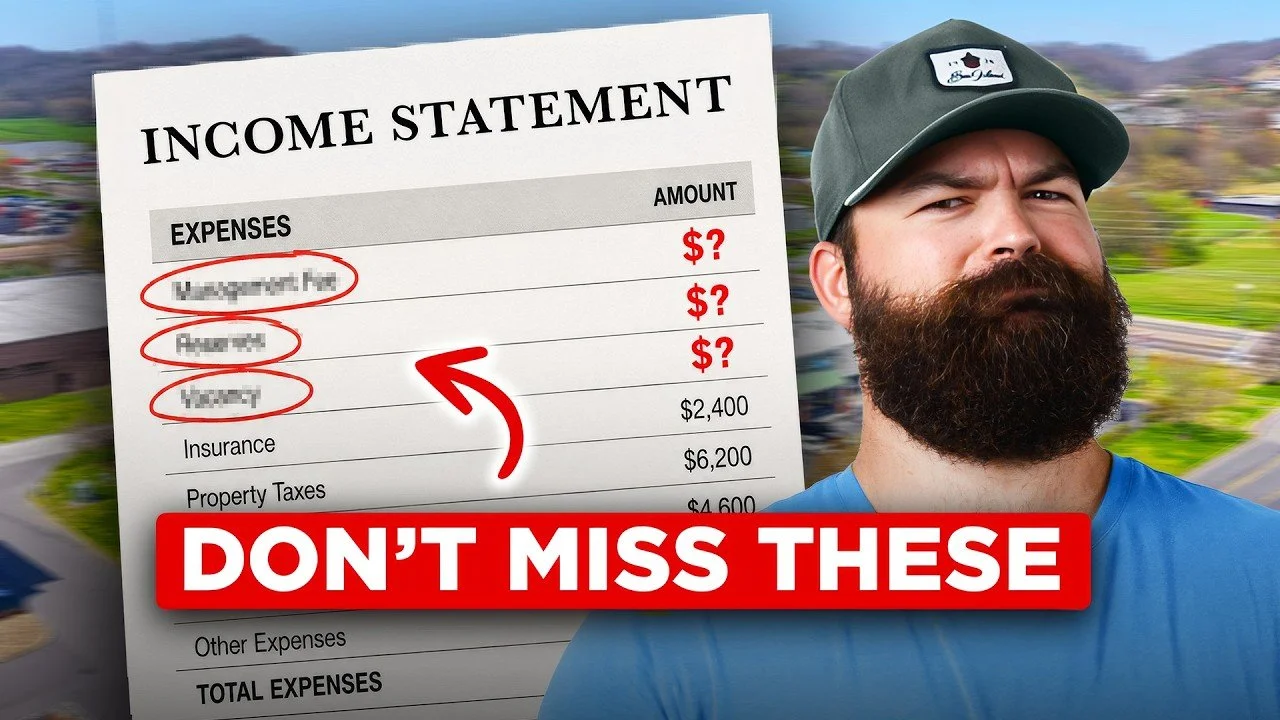
Don’t take the reported NOI at face value. Management fees, reserves, vacancy, credit loss, and other expenses may not be reflected in the seller’s numbers.
Your true cash invested matters. Closing costs, capital expenditures, reserves, and other upfront costs can materially reduce your actual returns.
Look beyond the interest rate—understand the loan constant. The loan constant captures both interest and principal repayment and can reveal whether the debt is helping or hurting your cash flow.
Underwrite the entire deal, not just the cap rate. A strong investment decision comes down to the property’s true NOI, financing structure, and potential to increase NOI through value-add strategies.



About Your Host:
Tyler Cauble, Founder & President of The Cauble Group, is a commercial real estate broker and investor based in East Nashville. He’s the best selling author of Open for Business: The Insider’s Guide to Leasing Commercial Real Estate and has focused his career on serving commercial real estate investors.
Unknown Speaker 0:00
We're gonna be going through one building at a million dollars. All right, it's got $80,000 of NOI. Right, so that is an eight cap, and that will not change for the entire time that we are going through this presentation. Depending on how you finance it and how honest the sellers' numbers are, your cash on cash on that exact same deal can be anywhere from 3% to 12 and a half percent. Same building, same price, same eight cap. There's one number that decides which of those you get, and it's what I like to use as a cheat code anytime that I am looking at these deals. I will tell you guys that at the end, so that you're able to quickly look at these
Unknown Speaker 0:41
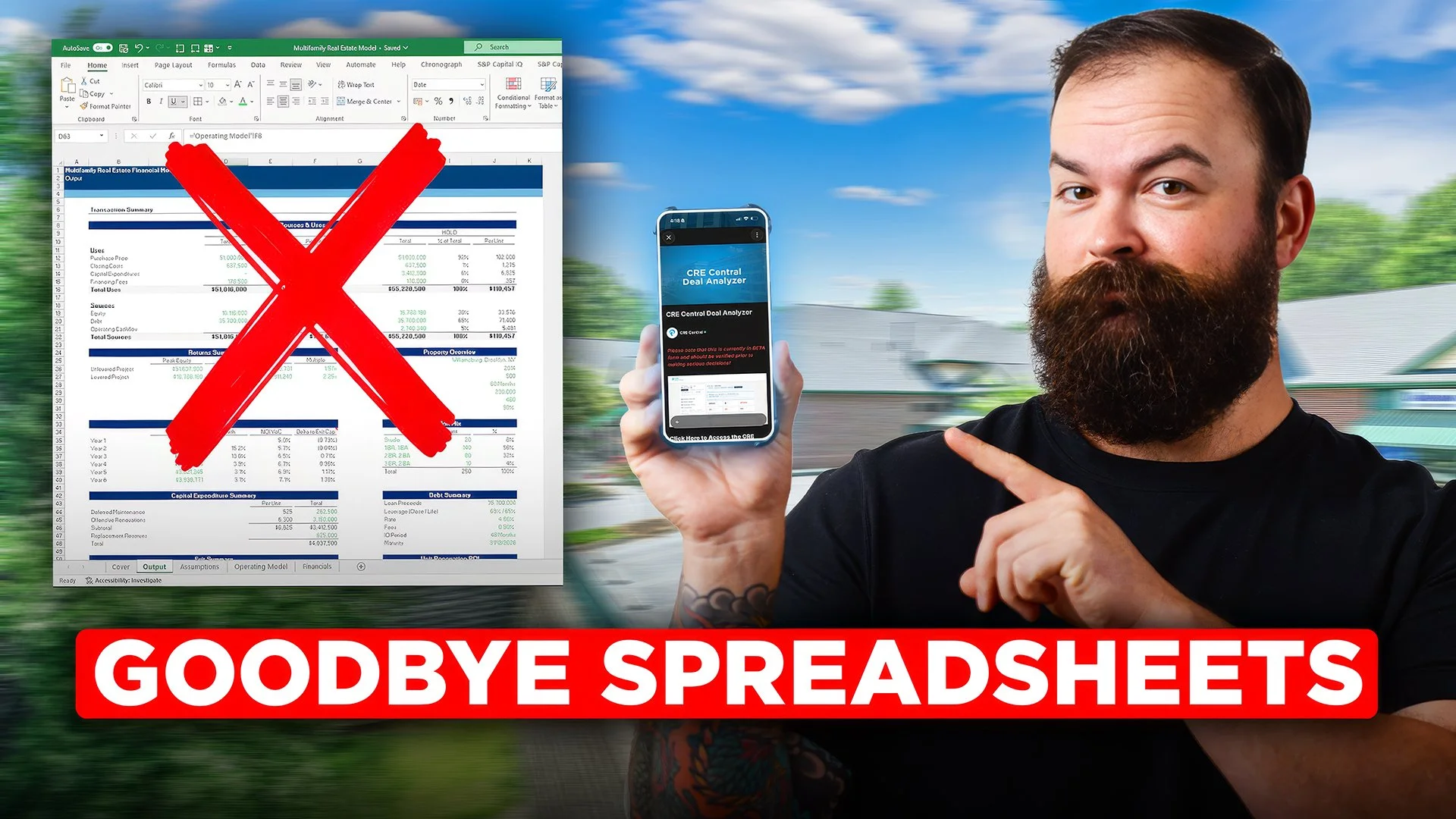
and determine which deals are worth your looking at. Today, we're going to be running all of these through the Deal Analyzer. If you want to check that out, that is our piece of software that we recently released that helps us run the numbers and completely analyze all of these deals. Go to
Unknown Speaker 0:58
TylerCabble.com/Analyzer. You can check it out for free. You don't even have to pay for it. You don't have to use a credit card. You can just go check it out there.
Unknown Speaker 1:07
All right, so let's get into this. An 8% cap rate is not an 8% return. That is a big misconception that I typically see when it comes to investing in commercial real estate. So this is going to be one building that we underwrite kind of in seven different ways, and I'll walk you through each of them. That cap rate is never going to move off of 8% and again, our cash on cash is going to swing anywhere from 3% to 12 and a half percent. One number will explain every single version, and again, I'm going to share that with you at the end of this, so here's what a cap rate actually is. All right, it is the net operating income divided by the purchase price. That is the whole formula. Super super easy. The net operating income divided by the purchase price. It is
Unknown Speaker 1:57
unlevered. All right, so it is calculated before any debt exists, no loan, no payment, no lender. It is also year one only, right? So a cap rate is really just a snapshot in time. It's kind of like your cash on cash when you're buying it. It is just a snapshot at that day and time if you're collecting that much in rent and you're paying that much in expenses. All right, it says nothing about what's going to happen next year or four or five years down the road,
Unknown Speaker 2:25
and of course it is property level. All right, this is not necessarily yours. It describes the building, not your position in the building. It's really a property metric, and there's many reasons as to why the industry uses it. It is a conversion rate. All right.
Unknown Speaker 2:41
Cap rates turn income into value and back again.
Unknown Speaker 2:45
Every investor that is going to be looking at a deal will be utilizing a different debt structure. They'll be utilizing a different approach, a different payment. The cap rate allows investors to look at these deals at a snapshot in time to see as it sits and exists today, what does it look like? All right, and just for some round numbers, every dollar of net operating income is about 12 and a half dollars of value at an 8% cap rate. So you can see very quickly why commercial real estate can be so powerful when you are, you know, increasing your net operating income, and then able to use a cap rate to revalue the property instead of you know adding a third bedroom, and that third bedroom is worth 20 or $30,000 based on all the comps. Every dollar that we add to the net operating income adds $12.50 in value on the exit. At a seven cap, that same dollar is worth about $14.29, and at a nine cap, it's worth about $11.11. That is what the cap rate is for: just pricing the income and comparing different buildings. So it's really just a pricing tool. It's not really a metric of returns, at least not in the equivalent way that everybody thinks about it. So here's four things that a cap rate cannot see: your debt. It has no idea what kind of debt you're bringing, what rate, the amortization, whether or not it's interest only, how much of that leverage you have. Are you bringing in 50% debt? Are you bringing in 100% debt? Totally different numbers. All right. It has no idea how much cash you're bringing in whether that's your closing costs, your capital expenditures, your reserves, your origination fees. You got to pay the lenders for for the for the right to use their money in the deal. All right, it doesn't tell you whether the net operating income is real either. Right, that's always a big one that we have to dive into whenever we're analyzing these commercial real estate deals. Is the net operating income an actual real number, right? Typically, it's not because sometimes even if the seller is honest, they're probably not including a management fee because maybe they're managing it themselves. Maybe they're not including reserves. They're you know not counting in vacancy because they just happen to get it fully leased up. But historically, that.
Unknown Speaker 5:00
Properties run at 12% vacancy, and of course, not credit loss. They're not going to tell you about that. And then for the timing, when does that income start, and what rolls in year one? It might be an eight cap today,
Unknown Speaker 5:15
technically on paper, but if the tenant doesn't start paying rent for six months because they have a rent abatement, it's not actually an eight cap when you buy it. Okay, so there's four different variables that a cap rate cannot see. So the property that we are about to break, and we will be underwriting this entirely in the Series Central Deal Analyzer.
Unknown Speaker 5:34
Every number,
Unknown Speaker 5:36
it's a 10,000 square foot single tenant building. I made this very easy for us. So as we're going through the process, all right, it's a million dollars to $100 per square foot. The
Unknown Speaker 5:47
rent will be $10 per square foot, so flat rent, 10-year term, no bumps. We're just going to keep this very simple, and our operating expenses are $2 a square foot. So that gives us a net operating income of $80,000 a year. That's an 8% going in cap rate. So hold that number.
Unknown Speaker 6:05
All right. Now let's pull up the deal analyzer. I'm going to show you guys what this looks like. And actually, real quick before I do that, let me
Unknown Speaker 6:14
fix my camera here so that you guys can see more of this screen.
Unknown Speaker 6:19
One Second,
Unknown Speaker 6:22
okay, there we go.
Unknown Speaker 6:25
So when I go to expand my inputs, I'm going to run you guys through this real quick. You can see here, of course, 10,000 square feet, million dollars purchase price. I don't have any capitalized rehab. I don't have any closing costs. We've got a 35% down payment, six and a half percent interest rate, 20-year amortization, no loan origination fee, no capital reserves. Let's see, a single tenant, $10 a foot, no bumps.
Unknown Speaker 6:49
Let's see,
Unknown Speaker 6:51
pretty simple and straightforward 10-year lease, so that again we don't have to worry about this too much. Our $2 a square foot in operating expenses does not increase at all. It stays flat. Again, that's not a realistic scenario by any means, but it will work for today's demonstration purposes. Okay, so looking at our deal overview right here, we've got a great debt service coverage ratio, 1.38 times, with an okay IRR, 10.4% Now again, if you're buying a deal
Unknown Speaker 7:19
35% down and you don't have anything else. I mean, a 10.4% with a tenant that has a 10 year lease, 8% cap rate, probably not a bad deal. You're getting an 11.4% annualized cash on cash, that is different from a snapshot cash on cash. Annualized cash on cash is the cash on cash return over the entirety of the deal divided by the number of years. All right, in a 1.57 times equity multiple over the hold period, not that great. We typically like to double our money, but let's come down here to the cash flow section, and I'm going to show you this right here. So cash on cash return right here, year one. You're seeing that's at about 6.2% Okay, and it doubles the next year. It goes up to about 12 and a half percent, and then goes up to about 18.7% All right, so just looking at year one, it is about a 6.7%
Unknown Speaker 8:15
Sorry, 6.2, 6.24.
Unknown Speaker 8:18
So if we take that same loan, and we convert it to interest only. So let me come back up here into my inputs.
Unknown Speaker 8:28
Let's go down to the loan,
Unknown Speaker 8:32
and let's select interest only period. We're going to do one year.
Unknown Speaker 8:39
Come back up here and rerun the calculator.
Unknown Speaker 8:42
Now look at this. My cash on cash return jumps to over 10% Nothing else changed. We just modified the debt a little bit. Okay. Now if we go to the next slide, and we start looking at past two, and we're counting every dollar that you will actually spend on a deal, so if it's the price only 6.24% cash on cash, but if we have $420,000 in equity in the deal, we've got a 2% closing cost, which is pretty standard. You'll see anywhere from one and a half to 2% closing costs on your deals, and then about $50,000 of capex. So we'll come in here. Let's modify this a little bit
Unknown Speaker 9:22
because you're probably going to have some capital expenditures when you buy a building, even if it's in perfect shape. You're probably still going to want to update the landscaping. You're probably still going to want to repaint something, or maybe the tenant moves out and you need some extra cash on hand.
Unknown Speaker 9:35
All right, and then we're going to come down here to
Unknown Speaker 9:38
the closing costs. Switch that to 2%
Unknown Speaker 9:42
Now, if I turn my interest only period off,
Unknown Speaker 9:47
come back up here and run these numbers.
Unknown Speaker 9:50
Look at that. Now our cash on cash return is even lower. It's closer to what is that 4% I'm having a hard time seeing it up here.
Unknown Speaker 10:00
5.2% if I still have an interest only period on that first year. So let me go ahead and show you guys what that interest only period looks like if we add it back in.
Unknown Speaker 10:13
And there we have it. That jumps up even more.
Unknown Speaker 10:17
We're sitting at 9.2%
Unknown Speaker 10:19
with that interest only period. So that's pretty nice to see. All right, coming back in here, past three, we're going to scrub the net operating income because not every owner is going to give you the full picture. So what we're going to do now is we're going to add a 5% property management fee and 40 cents per square foot of reserves. All right, that's not a lot. It's you know you're gonna want to bring some reserves to the table,
Unknown Speaker 10:44
no matter what you've got going on, because you never know where things are gonna go. So I'm gonna come down here
Unknown Speaker 10:51
to my operating expenses, and I'm going to show some detailed line items. I'm actually going to add a 5% property management fee,
Unknown Speaker 11:01
and then in my capital reserves right here, I'm going to add 40 cents a square foot per year.
Unknown Speaker 11:10
Now, Vogue, those returns right there.
Unknown Speaker 11:13
We've dropped even. Let's see.
Unknown Speaker 11:17
Now we're at 12%
Unknown Speaker 11:19
Let me come back here and drop out my interest-only period.
Unknown Speaker 11:25
You can see how much these numbers are just swinging around everywhere.
Unknown Speaker 11:30
All right, so now we're at 7.7% dropping out the interest-only period.
Unknown Speaker 11:36
It can wildly vary depending on
Unknown Speaker 11:40
many, many, many different factors. This is the same deal, same net operating income. We haven't even touched the net operating income yet. I mean, I guess technically we have. We haven't changed really anything else other than adding a management fee in, which will affect your net operating income.
Unknown Speaker 11:56
So all of those different ways, we have wildly different cash on cash returns for the same deal.
Unknown Speaker 12:04
That's what's crazy about how cap rates can work. Yes, they're a great snapshot as to how the deal exists and how it is performing today, but it is not a good metric as to whether a deal is actually going to cash flow or not. What is a good metric of that is how you like to structure your deals? Now, if you paid all cash for a deal, and you had no closing costs, you had no expenses whatsoever to get into the deal, you paid all cash for it. It was an 8% cap rate. You will get very, very, very close to an 8% cash on cash return. Again, with your closing costs, and you know you're you're not going to have a winter origination fee, but if you're going to have any reserve stuff like that, it's going to drain that a little bit. But you're going to be very close to it. If you start adding on debt, vary varying levels of debt, it will wildly change what your actual returns will look like.
Unknown Speaker 12:54
So, here's the number that I teased at the beginning that I want to run you guys through, and it's the loan constant. All right, this is your annual debt service divided by the loan amount. So just because you have a six and a half percent interest rate,
Unknown Speaker 13:12
does not mean that you are only paying six and a half percent per year, because that's just the interest. Remember, you have to pay back the principal balance of the note as well. What you actually pay on this same loan, six and a half percent interest with a 20-year amortization, is 8.95% for that note. Which means if you have, which is obviously above an 8% cap rate, so you have negative leverage at this point. That deal is going to lose money. You have to bring your debt down to a point to where, like, you've got to bring more down, more cash down, in order to start to decrease,
Unknown Speaker 13:54
or really just increase your spread, right? Between the actual loan constant. So here's the rule of thumb that I like to use,
Unknown Speaker 14:02
one and a half percent above your interest rate gets you to a debt service coverage ratio of around 1.25. All right, give or take. Again, this is a rule of thumb. It's not going to be perfect in every situation, but one and a half percent above the interest rate will get you close. This is again on a 20-year amortization. Will get you close to a 1.25 times debt service coverage ratio. So that means that the deal will be financeable. Okay, you will be able to get a loan for it. That doesn't necessarily mean that you're going to be actually making any money. You really need three points above your interest rate in order to really start cash flowing enough for the deal to make sense. So that means if you have a six and a half percent interest rate, you need to at least get an 8% cap rate to be able to fund the deal.
Unknown Speaker 14:54
You need at least a nine and a half percent cap rate for this to really work.
Unknown Speaker 15:00
And you're probably thinking, well, how often do I see a nine and a half percent cap rate deal out there that actually makes any sense? And it's that's probably pretty rare, right?
Unknown Speaker 15:09
Most nine and a half percent cap rate deals are deals that you want to pass on. They're not necessarily deals that you're going to find the most attractive. There's a reason that they are at a nine and a half percent. However, what that does mean is that if there is some sort of value add component to the deal, maybe I've got a couple of vacant suites that I can lease up. Maybe all my tenants are currently under market rate, but I'm still buying them at an 8% cap rate, and I can push it to an in place nine and a half percent cap rate by adding to the net operating income through either lease ops or operational efficiencies, or you know renegotiating the existing leases, then the deal is really going to work. So that is how I like to look at cap rates. They are, again, a very good snapshot in time, but they are not the best.
Unknown Speaker 16:00
I don't know long-term determinant of whether or not a project is going to work. All right, let's get to all y'all's comments. Luke is saying good morning from Minnesota. Luke, good to see you, man. Thanks for jumping in. Karen is saying, yo, Tyler, are you going to bring back 30 deals in 30 days or something along that line? That's a good question. For those of you all that do not know or maybe weren't here, this was actually close to a year ago, to the month.
Unknown Speaker 16:26
We did a 30 deals in 30 days challenge where I went live, found random deals, underwrote them,
Unknown Speaker 16:32
and so, and it might be Quran. Sorry,
Unknown Speaker 16:36
but I am going to be
Unknown Speaker 16:38
underwriting more frequently in our live streams now, but I don't know if I could do another 30 deals in 30 days. That was a lot to commit to live streaming 30 days in a row.
Unknown Speaker 16:49
Let's see here. Nap Construction is saying good morning from Raleigh, North Carolina. Good morning, Nap. Thanks for joining
Unknown Speaker 16:56
us. Let's see. Luke Sarney. Luke is saying our capital reserves considered an expense that can be written off, or are those funds still considered income and taxable? Great question. So, Luke, I am not a CPA. I don't dress up and play one on TV. It is still taxable income because it is revenue that you are making. You're just setting it aside in case anything comes up. Now, if you have to spend that on, let's say,
Unknown Speaker 17:23
an HVAC replacement. Well, then at that point you will be able to write it off. However, if you go full term on the deal, you never have to spend any of your capital reserves. That's just cash in your pocket. Of course, you will have already paid taxes on it, so you can distribute that back to yourself or your investors or however you decide to handle it. Paul and Harris are saying morning, Tyler just had oral surgery, but I'm still tuning in. Let's go, Harris. Hope you are feeling better.
Unknown Speaker 17:51
I am. I had to go to the dentist, and I got my first cavity, which you know. I mean, you know, that's a big surprise for me! I brushed my teeth religiously. It still had a cavity that I had to get taken care of earlier this year, so that was a lot of fun. So there you go, guys. That is my take on cap rates. An 8% cap rate does not necessarily mean that you are going to earn an 8% cash on cash return. It is a great metric to help you figure out how to initially look at and compare deals side by side, but it's all going to come down to how you are actually funding your deal, what your true structure is, and that is why it is so important for you to go through a full underwriting process on any deal that you are seriously considering,
Unknown Speaker 18:41
guys. Before, let's see. Karan is saying, "Have you done any agricultural underwriting?
Unknown Speaker 18:46
No, I have not.
Unknown Speaker 18:49
I mean, if you're talking about like
Unknown Speaker 18:51
farming,
Unknown Speaker 18:52
you know that that kind of gets into business numbers, and and we don't really underwrite businesses too much.
Unknown Speaker 18:59
But
Unknown Speaker 19:01
you know, if you're if you're buying the land and you have a farm tenant, there would be nothing different from that than you know buying land and having industrial outdoor storage tenants, right? You would still go through the same process of how much rent are they paying? What are your expenses? Here's my costs and and here's my returns. You can kind of, I mean, you can really underwrite anything.
Unknown Speaker 19:21
It's it's really relatively straightforward depending on how you're actually looking at it.
Unknown Speaker 19:27
So guys, the deal analyzer is available. You can go and check it out. Use it for free.
Unknown Speaker 19:33
TylerCabble.com/Analyzer. That link is in the description below. Also, we have an in-person mastermind here in Nashville, october 23 and 24th. That is coming up. It is 2026. I don't know when you guys are watching or listening to this,
Unknown Speaker 19:48
but that is coming up here in about a month and a half. If you would like to attend, I will leave a link in the description below as well, so you can come and hang out with us. And we're going to be diving into real estate systems for success.
Unknown Speaker 20:00
Talking about all of the systems that you need to have in place with regards to running your real estate investments like a true business. All right, even if you've got one property or you've got zero properties, you need to make sure that you are setting up the right foundation so that you can scale this the right way. So I'll be talking about property management. We've got one of our accelerator members talking about construction. We're going to be hearing from an architect on how to work with architects. It's going to be a great conference. So if you guys want to check that out, I'll leave a link in the description below. Appreciate you guys for joining us on this week's office hours. I'll see y'all in the next
Unknown Speaker 20:41
one. This episode of the Commercial Real Estate Investor Podcast is brought to you by my CRE Accelerator Mastermind, where you'll get access to my step-by-step investment blueprint, essentially a library of resources on how to invest in commercial real estate. You'll get connected to a supportive community of other commercial real estate investors that are doing projects just like you. You'll get personalized coaching and feedback from me every step of the way. Go to
Unknown Speaker 21:06
www.crecentral.com to learn more.