
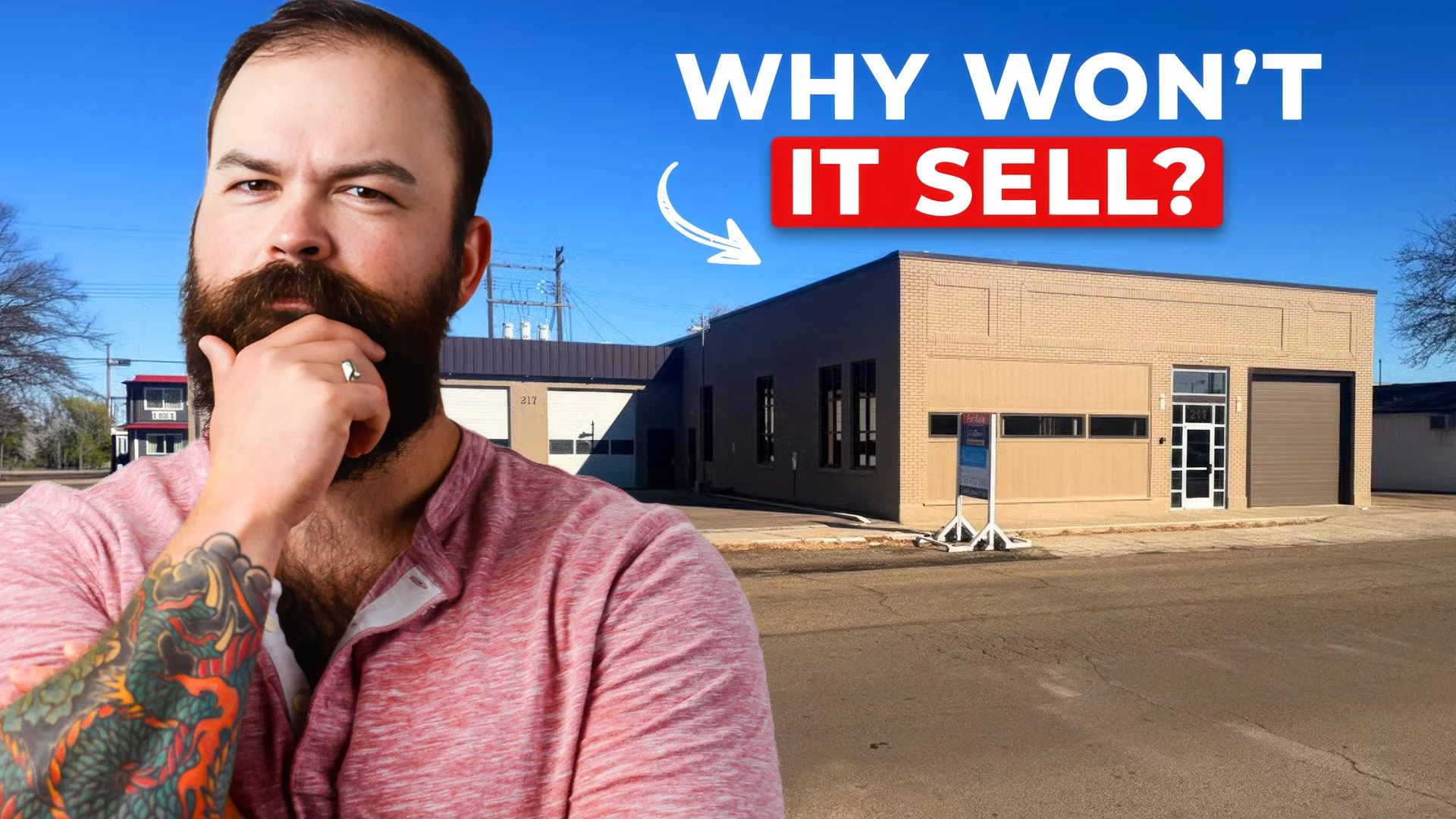
This Building Hasn't Sold in 400 Days. Why?
In this episode, Tyler breaks down why commercial real estate listings that have been sitting on the market for a year or longer can sometimes create overlooked opportunities. Using real listings, he shows how to diagnose why a property isn’t selling, separate fixable problems from true deal killers, and use days on market, seller basis, financing, comps, and carrying costs to strengthen your negotiations.
Key Takeaways:
A stale listing isn’t automatically a bad deal. A property sitting for 400+ days has already received feedback from the market—and that can create negotiating leverage.
There are four common reasons properties sit: incorrect pricing, financing challenges, property-specific problems, or poor marketing.
Know what you can fix. Bad marketing, incorrect asset categories, missing photos, unrealistic pro formas, and certain financing issues may create opportunity; environmental, structural, title/access, zoning, and functional-obsolescence issues can be much harder to overcome.
Investigate the seller’s position. Tax records can reveal what they paid and help you understand their basis, potential debt situation, and how motivated they may actually be.
Calculate the cost of waiting. Taxes, insurance, utilities, upkeep, and debt service can cost an owner thousands each month while a property sits—which can become leverage in your negotiation.
Underwrite stale listings systematically. Tyler looks at days on market and price changes, price per square foot versus comps, required rent, competing supply, listing photos/marketing, and the seller’s basis before deciding whether there’s an opportunity.



About Your Host:
Tyler Cauble, Founder & President of The Cauble Group, is a commercial real estate broker and investor based in East Nashville. He’s the best selling author of Open for Business: The Insider’s Guide to Leasing Commercial Real Estate and has focused his career on serving commercial real estate investors.
Tyler Cauble 0:05
This episode of the Commercial Real Estate Investor Podcast is brought to you by my CRE Accelerator Mastermind, where you'll get access to my step-by-step investment blueprint, essentially a library of resources on how to invest in commercial real estate. You'll get connected to a supportive community of other commercial real estate investors that are doing projects just like you. You'll get personalized coaching and feedback from me every step of the way. Go to www.crecentral.com to learn more. We all want to know how to find better and better deals, and one of those opportunities in commercial real estate is working through listings that have been on the market for a long amount of time, which in some markets, in some property types, that's not uncommon. And last week, on Thursday night, we went live. We were doing a bunch of underwriting of commercial deals, and one of the buildings that popped up was a 7400 square foot flex building in Birmingham that had been sitting on market for close to 500 days, and well, at least it was over 400. And the median in that market was about 209 days. And so it got me thinking: Why don't we do an episode and dive into buildings that are sitting on market for a while, the telltale signs that you can find to discover why they have probably been sitting on the market for a while, and then what you can do about that? Because sometimes that means that you can negotiate a pretty good deal. Sometimes that means that that building is just going to sit there until that owner gets what they want. How do you differentiate between the two? If you are joining us live, welcome to the Commercial Real Estate Investor Podcast. My name is Tyler Cobble. I'm your host here in Nashville, Tennessee, and this is Office Hours. We're going live, teaching you guys every single week more and more about how to get started, how to invest in commercial real estate. If you are interested in joining us in person, October 23rd and 24th, 2026, we will be here in Nashville for an in-person mastermind on systems in commercial real estate. All of this business systems that you need around your investment portfolio to make sure that you can go from one to 10 commercial properties and properly scale that. We're going to be hearing from a lot of guest speakers. It's they're actual workshops. It's not just presentations. So you will be working with about 75 to 100 other people in the room. There is more information on that in the description below. But let's dive on in. Okay, so the deal I was telling you guys about, it was sitting on the market for 499 days, and again, the median in that market was 209 days. So this is sitting on market more than twice the average property, twice as long, all right, and so the gap between that market median, which is 209 in this instance, and how many days this has been sitting, is really where an opportunity can pop up for you to find a pretty interesting investment opportunity, all right. Now, when I typically see people approaching these types of deals, they do one of two things. One, something must be wrong with it. That's that's typically the knee-jerk reaction, right? Obviously, it's been sitting on market for too long. Everybody else has passed, so should I. And we all know the phrase like, "Hey, deals go to LoopNet to die. All right, but sometimes if a deal has been on LoopNet long enough, there it might come back alive. There might be a pretty good opportunity there. And but anyway, people will say something's wrong with it. They skip it. They're eliminating all of those deals from their search, or you can take the approach of they must be desperate, right? Firing a lowball offer. Maybe it's at 60% of the ask. The broker ignores you, never presents it. Now you're just wasting people's time. All right. Not that neither one of those is entirely wrong. They're just not entirely right. They're both guesses as to what's going on. And I want to teach you guys how to actually analyze these deals so that you can diagnose what the issue is and then solve it in a way that works for both you and the seller. Here's why both of these reactions are wrong.
Tyler Cauble 4:05
A stale listing has already been told no by the market. This deal that was sitting on the market at that time for 499 days, they have clearly been told no to this deal. Now they probably know what the problem is. We haven't dived into it, so I can't diagnose it specifically. And we'll get to what all of those reasons could be here in a second. But the market is already giving that seller feedback, right? You get to read that for free. You see, okay, market has already said no to this deal. Number two, a fresh listing has a seller who still believes it doesn't matter how overpriced something is if it's only been on market for a week, that seller probably still believes that their pricing is right, all right. But if it's been on the market for 400 days, they might have a couple of questions in their head about what they're doing with this. And then number three, an offer with no reasoning never gets presented. You know. If you're looking to make lowball offers, or quote unquote lowball, because your offer could actually be the real market value, market rate. We were having this conversation in the mastermind last night on our call for the accelerator, where it's like, hey, how how do you like what is market rate? You technically making an offer on a property that's been sitting vacant just because they're asking it doesn't necessarily mean that that's market rate. You making the offer could also not necessarily be market rate, but it could be. Market rate is kind of this fluid thing that there really is no right or wrong. 17 people will come up with 17 different answers as to what that market rate is, because it's valuable to each of them in a different way. If you have to get a two times equity multiple on your deals, you're going to make a different offer than the owner occupant that is willing to just not have to pay rent to somebody else anymore. They can pay a lot more than you can. All right, but you want to make sure that when you make those offers, you're presenting reasoning. Share with them how you are coming to your conclusion, why you are making the offer that you are making. All right, because that helps the brokers at least tell the seller a story instead of hey, here's another low offer. No, it's so much better for them to be able to go back to the seller and say hey, this investor underwrote it, and in order for them to hit the debt service coverage ratio that they need to from the lender that is working on this project with them, this is the price that they have to come in at. That's a much more compelling story because at least there's something to work on there. All right. So here are the four reasons that a building typically sits on market. Number one, it's priced wrong, obviously. All right. Now, there's many reasons as to why a building could be priced wrong. It could be anchored to what they paid plus what they spent. Sometimes people just overpay, then they fix up way too much on the property or spend too much on it, and then they want to get that back, right? Not necessarily a bad thing for them to want to get their money back, but also probably not very realistic. All right, it could be priced off of pro forma rent that nobody in that submarket is actually achieving. They could be selling you tomorrow's price today. That is what completely irks me every time I get into a deal like this. Like, well, yeah, but once you lease it up, it will be worth this. So that's why I'm going to sell it to you for this. Like, well, no, I still have to buy it, take on the lease up risk. I'm going to have to spend all of the money on commissions and legal fees and all this to get these spaces filled. I'm going to have vacancy in the meantime. I'm not going to pay you a stabilized price for a building that's totally vacant right now. I'm paying you for what it's worth today. A lot of sellers tend to get that wrong.
Tyler Cauble 7:48
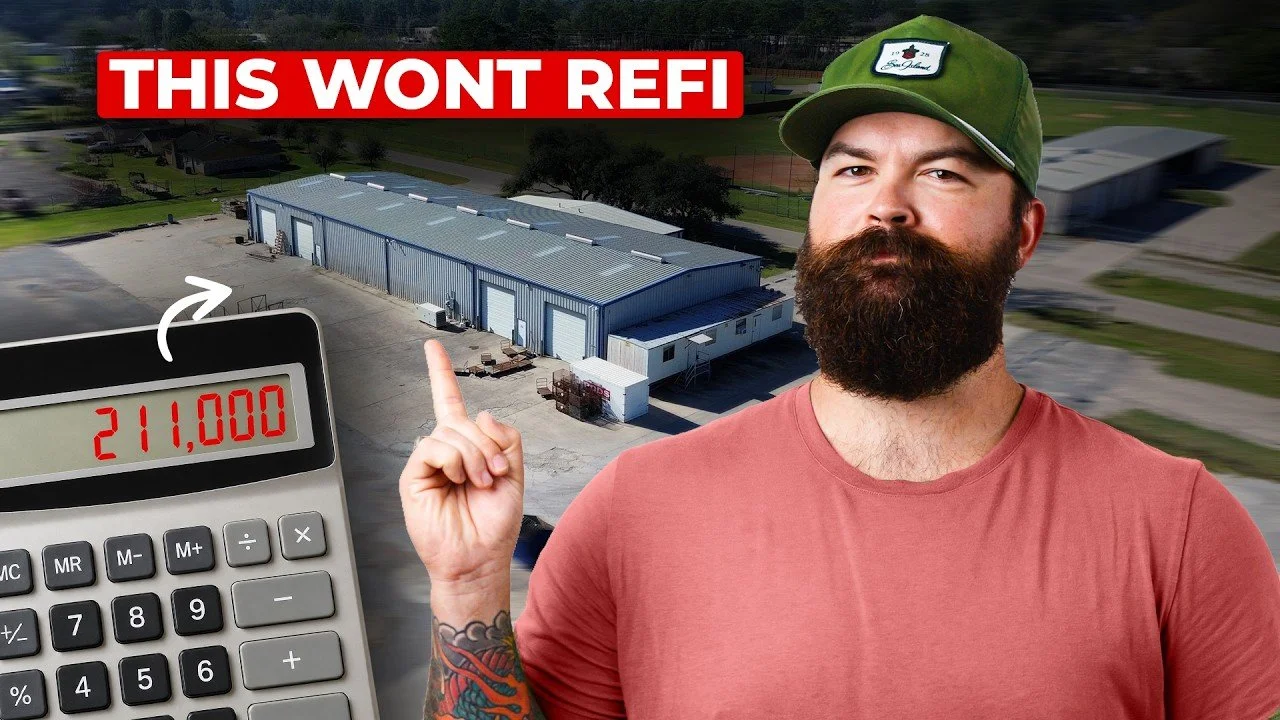
And also, by the way, my my question for them, this is generally what I will say to the broker, is okay. Well, if they want that price and it's so easy to get it leased up, you know, since they're saying I could just very easily get it leased up. Why don't they get it leased up, and then I'll pay that price for it? How about that? Catch them stuttering. All right, number two. The next reason is it will not finance. We mentioned this a bit earlier, but the debt service coverage ratio does not clear at the asking price at today's rate. That is more often than not one of the biggest limitations that we are seeing in today's market. The debt service coverage ratio is what limits you. It doesn't matter if the bank is willing to give you 100% LTV if they have a 1.25 times debt service coverage ratio. The debt service coverage ratio is going to limit it. All right. So typically at that point, either only cash buyers can play, which will cut your buyer pool by like 90% right? We're talking about the the 10% or maybe even sometimes the 10% of the 10% the 1% right? That are actually out there buying cash, and who would want to pay cash for these deals necessarily, right? That's a that's an even rarer find. But it could also just be the that you know now you've got buyers that are having to bring 50% down, or you're going to have to you know do some sort of seller carryback with these deals to make them work. Either way, it starts to get very complicated. A lot of buyers will just walk away and say it's just not worth my time. Number three, the property problem. All right, maybe it's got some environmental issues. Used to have a laundromat in it or a dry cleaners. It'll have deferred capex that exceeds the price. I've actually seen this before, where they were asking. You know, I mean, it was like 150,000 for the building, but it was over $200,000 to do a new roof and to fix some structural issues. Well, yeah, I mean that's pretty daunting for most investors. Could mean money for some, but you have to know what you're doing and dealing with when you get into that. Could just be functionally obsolescent. A lot of these older office buildings-that's what you're seeing today. You can actually get them at pretty good prices, but they're just functionally obsolescent. They they need to be complete. Completely, you know, gutted it and redone. They could have zoning or easements or access issues as well. There's so many different things that could actually cause problems with the property, and a lot of this you won't necessarily discover until you get into your due diligence. You know, I've had that happen before where we got into it, and there was an overlay that we didn't know about that changed the base zoning. So the zoning that I thought that we had on this property that we were under contract on actually took it from 18 units by by right, like fully entitled, down to 12. Well, that completely changed the economics of that deal. All right, that was a property problem. And then number four, and honestly, you probably see this one as much as you see number one with it being priced wrong, number four it's marketed badly. I mean, good gosh, there are some really bad brokers out there. There's some great brokers. Don't get me wrong, but and maybe they're not bad brokers. They're just lazy or they don't know how to market because sales and marketing are two very different things, And and we're going to get on Craxi here in a second. I'm going to show you guys examples of everything that I'm talking about because it really really irks me. But you know, either the price is not disclosed. There's no interior photos. There's one photo of the exterior, or maybe it's just an aerial, right? There's no offering memorandum. They've got it listed in the wrong asset category entirely. I've seen that happen before. We've had issues with LoopNet, where this is why I can't stand that program. Like LoopNet is one of my least favorite things. LoopNet CoStar in commercial real estate.
Tyler Cauble 11:35
I've got a building that I have listed on LoopNet right now that they only they can fix, but my my rep will not make the change. I have a two-story office building. It's 12 160 square feet. It is a single tenant deal. Very obviously a single tenant deal. You cannot demise this in any sort of way that makes any sense without us having to spend a ton of money. Loopnet split it up into two units of 600 square feet each, which doesn't even add up to the 1260. Don't ask me how that works, but that is how it is currently showing. So I'm like, this is why I don't advertise on LoopNet. This doesn't make any sense, and of course we're not getting any leads through LoopNet at all because who the hell wants to lease a 600 square foot upstairs unit where you have to walk through the downstairs. They don't, and also that's not what's available. So sometimes it's the broker's fault. Sometimes it's the listing platform. All right. Now here's what's fixable, and here's what's not. This is what really like this is the condensation. If you're gonna only listen to one thing in this entire episode, listen to this. All right, here's what's fixable by you: bad marketing, wrong asset category, no interior photos, priced off of a pro forma, will not finance conventionally, but will structure in the seller's timeline. Those are all things that you can work with, right? Who cares if there's no interior photos? Obviously, that's a problem. You're going to have to get out there and walk it. Who cares if it has bad marketing? That could just be better news for you because you're the one person that's willing to look into it. Okay, it's priced off a pro forma, so everybody's going to pass because it makes no sense at all on today's price. But you know how to underwrite, so whatever. Now here's what's not fixable. Here's here's where you should generally walk nine times out of 10. That doesn't mean every time, right? There there could be instances where you get a property cheap enough to where it's worth dealing with these problems. But this is typically when I recommend that people walk. Environmental issues. I don't really have an issue with most environmental issues, but a lot of newer investors have never dealt with this stuff before. It can be very daunting and scary, and just there's a lot of unknowns, structural issues. Same exact thing as environmental. It it can be a lot of work. It can be not a lot of work. It just depends on what exactly you're dealing with. Functional obsolescence that you cannot design around. You'll see this with a lot of older office buildings today, where there's just no way that you can actually feasibly make this make sense. Like a lot of people in today's office world, they want a lot of windows. Well, you know, back in the '80s, they had really deep office floor plans where, in the back, was all you know cubicles or whatever, and there's almost no window space at all. Well, you can't just start to demise that into smaller units, because then there's almost no lighting, and it just it becomes a total mess, right? That you'd have to find a completely different way to design around them. Title and access. If they don't have clean title, we're dealing with an issue right now. We're working on listing a property here in East Nashville. The seller passed away, or the owner passed away, and left it to their heirs. Eight people have to sign off to sell this building. That is a title issue. All right. Now, access could be another issue as well. You don't typically see that as commonly in commercial real estate because they're commercial properties, but. Access could be an issue if if there's no in and out, or you've got to drive through, you know, your neighbor's property, and you've got a warehouse, but you actually can't fit an 18 wheeler through there. That's a problem. All right, and then of course a use that the zoning will never allow. If you feel very confident rezoning it, great, go for it. But those are typically like there's too many easy deals out there to do for you to work so hard on some of these other things?
Tyler Cauble 15:25
Okay, so we could go into the county assessor site. I mean, I don't really have enough time today to dive into this, but what I will say is go look up what they paid. That will help you. Like you can go to the county assessor's website and pull all this information. All right, so like in Nashville, I can go to Metro Maps, I could type in the property address, and I could tell you exactly what they paid for it. That will help you understand if they're underwater or not. If they bought it within the past couple of years at $900,000, all right, and now they're asking 850, there's no chance of a seller carryback because they're already losing money on this. Like they're desperate to get out of it. Something's going wrong. But if they bought it 30 years ago for 150, and now they're asking 900, that's a totally different situation. They might not be desperate to get out of it at all because they paid it off a long time ago, and they're willing to just sit there, and their carry costs are not much, right? So there's there's a lot of different investigative approaches that you can take to help you understand what kind of situation might the seller be in right now. That is something that you want to spend some time on. Either talk to the brokers or dive into the county records, see what they paid. Dive into comps, see what's going on. Look at the marketing. Figure out what's going on. See if you can understand what their carry costs and their expenses are, because if they've got, we had a property one time. I actually didn't know this until I closed, but it probably could have helped me on negotiations if I had figured this out. We we bought a property one time where the seller was kind of desperate to close, so they ended up giving us seller financing. It ended up working very well for both parties. We got in there, and the first month we had a $27,000 utility bill. I kid you not, a $27,000 utility bill. And this property was vacant, completely vacant. They had been sitting on it for about a year, so I started running the math. I was like, "Man, they've spent close to $300,000 in utilities on this vacant building. What the hell is going on? There had been a a county data center, not like the data centers you see today. This was like five years ago, before AI was even really a thing. They had a data center that was just running a massive amount of power through it that wasn't even being used anymore, so we're like, "Well, shut it off, turn the utilities off. Who cares? Our utility bill went down to zero the next month. Insane, and that that that waiting can cost them a lot of money. You can see here the examples, you know, between 32,050 $3,000. This was just based on that deal that we looked at in Birmingham taxes, insurance, utilities, upkeep, roughly three to 5% give or take, of the value every single year. Right. So if it's a $775,000 building, that's somewhere between 23 and $39,000. But if we start to add in debt, it depends on how much debt they have. But if you're at $500,000 on a 775 building at 7% that's another $46,000 a year. That means that they could be spending close to $100,000 a year just sitting on this thing, and it's been there for 499 days. All right, so that gives you leverage. Like this little investigation, everything that you need when you are negotiating commercial real estate deals. If you want to get the best deals possible, you need leverage in the negotiation. And knowing that the seller is probably spending five to $7,000 a month letting this property sit there means that you could negotiate a better price and use that as leverage. Cool. Well, they've already spent you know probably $120,000, letting this property just sit here. Do you guys want it to sit here for another year and lose another $120,000, or do you want to negotiate with me and let's just get this done? Boom, there you go. So here's what I run on every stale listing, and you can go to Cruxy, and we'll look at this here in a second.
Tyler Cauble 19:17
I'm going to show you guys this. You can go to Crexie, you can filter by days on market, so you can specifically target deals that have been on market for way too long. I kind of like it because they're probably willing to negotiate or figure something out, right? Again, the person that has just listed a building that is a million dollars overpriced has no reason to negotiate with you because they probably still believe it's worth what they listed it for, whereas somebody who has had a deal sitting on market for over a year might be willing to come back down to reality. Number one, days on market and whether the price has ever moved. Have they had any price decreases, or has it just sat there the entire time? Number two, price per foot of what they're asking. Against what has actually traded in that size band against other comps, all right. If they're asking $150 a foot, but all the comps are at $78 a foot, I want to know why do you think it's worth twice the market rate? All right, you guys know my back of napkin underwriting, the 12% test. You take the price per square foot, you multiply it by 0.12, and that gives you the triple net rent that you need. Right, that could be well above market, and that could probably tell you, well, this is just overpriced. There's no way that this would ever work, and I could lease it up. Number four, competing supply. How many other vacant spaces are in that size range, and how long does it take them to get leased up in that market. If you are buying this building and there's 73 other suites that are within a two mile radius, and they're all sitting on a market for 350 days, well, there's probably not a lot of demand for that type of space. You could have an issue there. The photo audit, right? This is number five. What did they not show you? What did they show you? Typically, they're going to try and show you the best assets. Typically, they're going to try and not show you the worst assets. All right. So just keep that in mind when you're looking at the marketing. You're probably looking at what they are putting as their best foot forward, and they're hiding everything else. And then number six, what's the seller's basis? Go to the tax records, figure out what they paid and when. You can generally get this for free off the assessor record. Sometimes, depending on the county that you're in, you can also find their loan documents to see how much of a loan they actually have on that deal. All right, let's pull up Krexie. Let me shrink myself a little bit here so that I can show you guys a little of what's going on. All right, so before we went live, I just went to Amarillo, Texas. I have no affiliation with this market whatsoever. I came in here to the filters, and I went down to what is it? Listing timeline. I just said you know listed before 930 25. All right, and look at that in Amarillo. There's 183 properties that have been doing that. That's a lot. Now look right off the bat, these guys have been on market for more than 100 and you know for more than a year, and they're unpriced. Not surprising. If you're not going to put a price on your listings. Look at that, 686 days on market, updated 25 days ago, and you're not going to put a price on it, dude. I like I'm not going to sit here and appraise this property for you. I guarantee you that they're wanting way too much for the property, and every time anybody reaches out that is willing to ask for it, it's just it's it's not even worth the time. Let's see this one right here. This one, 769 days on market. Terrible first. I mean, look at how horrible that photo is. What the hell are we even looking at? Which property is it? Is it a bunch of these properties? I have no clue. You can't tell. Okay, that goes a little bit more into detail. Looks like it's multiple tracts. Yeah, multiple tracts of just raw land. Okay, this is one of the exceptions to the rule.
Tyler Cauble 23:15
All right, some people will go in and they will list multiple tracts of land or multiple properties, all under one listing. Well, yeah, obviously it's going to take you some time to absorb and sell all of that land. They could have sold half the land already over the past two years, and you know they're actually moving it fine. But we wouldn't really be able to tell that from a days on market. Okay, look at this one. I mean, what what kind of photo is that? I can't even. It's so dark. I can't even see what's going on. And oh, of course, two photos. None of the interior. I mean, come on. You want two and a half million dollars for an 8000 square foot retail building in Amarillo, and you're not going to to show me the interiors. If I look at the flyer, yeah, they don't even have a regular flyer. They just have a Krexi flyer. So like, there's no, there's just no information on it. You guys see what the competition is out there? Like, if you're a seller, you're trying to sell your property. All you have to do is take good photos and make it very clear what you are trying to sell. Like, look at that. Oh, come on! What is that? Are these iPhone photo? They're iPhone photos or an Android? I don't know. Either one. These are from a phone. Look at how dark you can't even tell what the building is. They're not even the right size photos. They were shot vertically for the most part. Yep, vertical. At least you got some photos of the interiors here, I guess. And again, not to not to you know rip into the these brokers and their marketing, their listings, or whatever. Like obviously, that's not the point of this. I'm just showing you that more often than not, if a deal is not moving, it is not being marketed properly, or it's priced incorrectly. All right, that's just generally what it is. If you have Krexi Pro, you can go over into the Insights tab. You can see like what the median price is and median asking price. So, like if we really wanted to get into this and I wanted to figure out, okay, well, why are these deals sitting on market? I would first of all, I would get rid of just the listings that are within the last, you know, that were over a year old because I'd want to see what's what's newer too, but I'd look at the price per square foot specifically within the comp range of what I'm looking to buy. Like let's say it's 10,000 to 20,000 square feet, and then that'll give me an average price per square foot that these buildings are actually asking and selling for, and then I could say, okay, well everybody's asking 150, and this person's asking 200 bucks a foot. That's probably why it's not moving. Let's call the broker and see why they think the property is worth so much more than what every comp is selling for. And you can also kind of play dumb and let the like tell the broker like, hey, just sell me on this. Look, every comp I'm finding is way way under on a price per square foot basis, here. Do you guys have a hidden military bunker underneath this? Like, why is your property worth so much more than what everybody else is getting in the market? So there you have it. If a deal has been sitting on the market for a long, long time, it could just mean that there's a pretty big opportunity for you to get in there and negotiate a new deal. You just need to know how to properly diagnose those opportunities. All right, let's see. Let's get into the comments here. Bodacious is saying, "Getting my first commercial property. It's in Park City, Utah, this year. I'm 26. Love your videos. Congratulations, Bodacious Lifts. That's exciting, man. 26. That's when I bought my first building. Jason Lombardi. Good morning, sir. Jason, what's going on, dude? Hope everything's well down in Florida. Ted is saying good morning, good morning, good morning. Jason is saying, any more leads? I'm thinking about getting a job in commercial, like an appraiser or an inspector. Do you think this would be a waste of time or not?
Tyler Cauble 26:53
Looking to get more involved than cold calling, Jason. I mean, it's it's tough to say, man. I mean, it just depends. Like, if if that's what you want to be your actual full-time job. I would say go all in and do it. If you're just wanting to get a job in commercial real estate in order to get more leads, I would just say just make more calls. You know, send more letters, go to more networking events, meet more people. My he's saying my local listings are terrible. A lot of undisclosed prices and undisclosed addresses, what's the point of listing? I don't know. I skip over those. I don't even look at them. I mean, like if you're if you're a broker, you're not willing to put a price on your property. Ignored, taken out of my list. I'm not even going to look at the opportunity. He's saying if I see a listed deal, I contact the owner directly to see if they will hold a note or or etc. Is this frowned upon. Realtors lose their shit on me, but they also refuse to pitch my low offer. Jason, I mean, it just depends, right? I mean, if you're a licensed agent and you're going around an agent, like I would say, yeah, that's probably a big deal. If you're just going direct to the owner, I mean, it's it's a gray area. It's probably usually better to just go through the listing agent. That's why they listed it with them. If a realtor, like if a if a if a broker or an agent is not presenting your deal to the owner, they are breaking their fiduciary responsibility as a licensed agent. So if that is actually happening, you can report their license to the state that holds their license. In your case, the state of Florida, and they will investigate them. Like you are not actually allowed to do to do that. You have to. You are obligated to present every single offer that you are given. Now that doesn't mean that the seller is just going to accept your offer because it's a WOBO offer. Again, go into what your reasoning, how you're coming to the conclusion of this pricing, why you think it's worth that, and ask them like, "Am I missing something? If I'm missing something, let's walk through it. Let's figure it out. Dwayne is saying, "Hey, Tyler, just tuned in. From your perspective, what would you consider as a stale listing? Oh, that's a good question, Dwayne. It's a tough one, Dwayne, because like a stale listing and a listing that has been listed for a lot of days are two very different things, in my opinion. You could still have a very up-to-date, active listing that is 400 days old, but you could also have a stale listing that's 30 days old. So, in my opinion, like if you're if you're just looking for deals that have been sitting on market for a while, they're probably more open to negotiating for something. I would say go for 365 days or more. You know, generally in that range, you're gonna like those properties have been sitting a little bit. Stephanie is saying, "I love that you were calling out bad marketing. It helps us noobs learn by highlighting others' mistakes. Absolutely, Stephanie. Yeah, I mean, look-not to talk down on any brokers, but there's a big difference in sales, which a lot of brokers are good at, and marketing, which a lot of brokers are very, very bad at. And so I just-we got to do better. Come on, it's gets if you can't take the photos yourself, hire somebody to do the photos. If you can't design the the flyer in Canva yourself, hire somebody to do you a flyer. It's super super easy. Scott is saying Tyler, thanks for the tips and tricks. Catch you later. Absolutely, Scott. Appreciate you for tuning in, guys. Thanks for joining us. Hopefully that gives you some ideas on what you can get out there and do with regards to these listings that have been sitting on market for a little while. If you want to come hang out in Nashville. Come to our in-person event, october 23 and 24th. The link is in the description below for our in-person mastermind. It's going to be two days of workshops, guest speakers, hanging out with me.
Tyler Cauble 30:33
We'll have plenty of networking opportunities as well. It's going to be a great time. Again, October 23 and 24th here in Nashville. Everybody's staying at Salt Ranch in my hotel, so it can be a lot of fun. Appreciate you guys for tuning in. We'll see you in the next one. This episode of the Commercial Real Estate Investor Podcast is brought to you by my CRE Accelerator Mastermind, where you'll get access to my step-by-step investment blueprint, essentially a library of resources on how to invest in commercial real estate. You'll get connected to a supportive community of other commercial real estate investors that are doing projects just like you. You'll get personalized coaching and feedback from me every step of the way. Go to www.crecentral.com to learn more.