
Chick-Fil-A Already Did Your Real Estate Research
Chick-fil-A spends millions researching a single street corner before they commit analyzing traffic counts, daytime population, growth trajectory, co-tenancy, and then they publish the answer for free.
It's the restaurant. In this Office Hours episode, I break down the Anchor Flywheel: how commitments from Chick-fil-A, In-N-Out, Buc-ee's, and Walmart re-price entire corridors, the 18–24 month public countdown between an anchor's announcement and opening day, and how regular investors buy in the path without building a thing.
Plus this week's news brief: the 10-year Treasury at a 15-month high and what negative leverage means for your next deal, Boulder Group's Q2 net lease report (Chick-fil-A trading at a 4.45% cap while Walgreens sits at 8.10% - same lease, four-point spread), and In-N-Out publishing six new addresses, including one on the corner of a dead mall twenty minutes from my studio.
Get commercial real estate coaching, courses, and community to jumpstart your investment journey over at CRE Central: www.crecentral.com
Key Takeaways:
Big anchors (Chick-fil-A, In-N-Out, Costco, Walmart, Whole Foods, Bass Pro, etc.) spend millions on site selection; small investors can “ride their wave” by buying/ building nearby instead of guessing.
Don’t rely only on listed deals (Krexie, LoopNet), gut feel, or trailing comps; look forward to where development, permits, rooftops, and city plans (like Nashville Next) are headed.
Anchors study traffic counts and speed, AM/PM side of the road, daytime population, growth trajectory, access (right-in/right-out, signals), and co‑tenancy—these same factors should guide your decisions.
Case studies (Dickerson Pike, Rivergate Mall) show how land near future anchors can double in value within a few years once major campuses, stadiums, or redevelopments are announced.
There is typically an 18–24 month opportunity window between anchor announcement and opening where pricing hasn’t fully caught up—ideal time for most investors to buy nearby.
Four main anchor types: QSR scouts, value big box, destination anchors, and redevelopment anchors; all can “make” a corridor and create demand for surrounding strip centers, pads, flex, and services.
Watch for hard signals: actual closings and public incentives (TIFs, grants, PILOTs) that confirm big capital is committed to an area.
Core principle: anchors don’t just find good corners anymore; they create them—your job is to own real estate next door when they do.

About Your Host:
Tyler Cauble, Founder & President of The Cauble Group, is a commercial real estate broker and investor based in East Nashville. He’s the best selling author of Open for Business: The Insider’s Guide to Leasing Commercial Real Estate and has focused his career on serving commercial real estate investors.
Episode Transcript:
Tyler Cauble 0:00
Chick Fil A's already done the research. They're spending millions of dollars that you don't have to. You just get to rely on Chick Fil A. Now, Chick Fil A is not the only one that you could follow. You could follow In and Out. You could follow Trader Joe's. You could follow Walmart. You could follow Bass Pro Shops or Samsung manufacturing plants. It completely depends on the sector of commercial real estate that you are in, what you want to specialize in. If you want to build flex space, and I'm going to get to this here in a little bit too, so I'm getting a bit ahead of myself. But if you want to build flex space and you want to have some sort of market assurance that you're going to be in the right area, go follow the big guys. Go follow somebody that's building a massive distribution facility, somebody that's building a massive manufacturing plant, because you get to ride that wave with them. Here's how most investors pick their markets or pick their deals. Really, they look at whatever is listed. You know, if you're just relying on what's listed on Krexie or LoopNet or is sent to your inbox by a commercial real estate broker, you're probably going to be behind because everybody gets to see those deals. You're competing with literally everybody. If it's on Krexi or LoopNet, everybody else has seen it. Many investors also look close to home, right? What's in my neighborhood? What's what's around here? It's a lot of how I invest, though. What I'm doing is very calculated, both on the front of which I'm talking to you about today, with following where the development is going, but also finding the deals off market. They go with a gut feel in a corner, like it seems busy, but that's not hard data. We like to have the data. Just because something seems busy doesn't mean that it actually is. That's not a true traffic study. You haven't spent any money to see if that's actually going to work. You would be amazed at how detailed these retailers get into every single site location that they choose, it's crazy. It get, I mean, it is unbelievably professional once you get to that level. We're talking like this is this is a relatively simple aspect of it, but Starbucks is very very very picky, and honestly, most QSRs are about which side of the street they want to go on. They want to be on what's called the AM side, the side that you're driving to or on to go to work, because they don't want you to have to cross traffic, turn left to come in and get a coffee, and then turn left going back out of there again to go back to the office, they want you to be able to pull into the right, get your coffee or get your whatever you're getting, and then turn right back onto the road. Makes it very simple. Grocery stores do the same, but in the opposite manner. They actually want to be on the PM side of the road. They want to capture the traffic as people are headed home from the office. Okay, and then the other thing that people look at too is trailing comps, and while utilizing what properties are currently trading at is a very prudent way to comp your real estate, it can also be a trap. Just because something traded for that yesterday doesn't mean that it's not worth 20% more today because of some sort of piece of news or announcement, something that is happening where it could drastically affect the real estate values. And I'll give you an example. So here in East Nashville, we have two major corridors running north and south out of downtown, we have Gallatin and we have Dickerson. All right, Gallatin is where five points is in East Nashville. It's built up. It's closer to the Titans Stadium, and and you have a lot of growth that has already happened over there. Land back in I don't know 2019 2020 was trading for around three to $4 million an acre, very expensive, also very difficult for you to be able to assemble enough land to do anything of scale.
Tyler Cauble 4:11
Whereas on Dickerson Pike, which wasn't nearly as developed or sought after in 2019, 2020, you could get land for a million to 1,000,002 50 an acre, equidistant from downtown. And I knew looking at that corridor that things were going to start to happen. I mean, one you had the entire East Bank, which nothing had happened with. If you look at any other city, Chicago, for example. Now Chicago, comparing Nashville and Chicago, probably pretty tough, but Chicago appreciates their waterfront; they've built all along it. Nashville has neglected its waterfront for a long time, so there hasn't been hardly any development there. And with a growing city like Nashville, at some point, neighborhoods and geographic locations like that have to pop off because they are so close. Everything else, and so I was looking at it, and I just kept telling all these developers, "Hey, start buying on Dickerson because the land is at a discount compared to Gallatin. The residential real estate development is happening on either side of the corridor, all the way north. Residents are moving here, and you can actually get parcels of scale for relatively cheap. And I kept being told, "Oh, it's too early! It's too early! It's too early! Well, the day that Oracle announced that they were buying a and building a campus at the base of Dickerson Pike, you know, we had the Titan Stadium announce their new, you know, multi-billion-dollar redevelopment of the Titan Stadium. Guess what? Land shot up within-I kid you not not even four years. Land went from about 1,000,002 50 an acre to about two to two and a half million dollars an acre. If you had just bought land when it was a million to 1,000,002 50, you could have sat on it for four years, doubled your money, and flipped it. So that's one thing to keep in mind. You don't always necessarily want to price just off of comps, although that helps, and it's really good to argue that when you're trying to buy from somebody. But you can overpay technically today if you have an idea of what's coming down the pike. So here's what these anchors study, and they get really, really into the weeds with this. And a lot of this information you will never need to know. It doesn't actually impact you, but it impacts them and their business pretty substantially, and so it matters to them. They are not going to invest the money, they're not going to invest the time, the energy to go into a location until it checks all of these boxes. So traffic counts, they want to know what the volume, how many cars per day, vehicles per day, are driving by this location? How fast are they driving? That actually matters. If they're driving at 70 miles per hour, that is not nearly as high quality of a car per day as somebody who's driving by at 20-five miles per hour. Because somebody that's driving 25 miles per hour, one they're going to be looking at your site a lot more, but also that tends to be in an area where the intent is to stop and probably spend money, whereas 70 miles an hour somebody's just driving through. All right, and of course, like I mentioned earlier, which side of the road the money is driving on. Then you've got the daytime population, and every city is very weird. I remember when I first started working with bigger brands, probably I don't know 10 or 12 years ago. Nashville was a very odd market for them to wrap their minds around because it is so spread out geographically, and your they'll look at like what's the population within a 135 mile radius? Well, so many people come in from the suburbs in Nashville to work in downtown that the 135 mile radius was actually it wouldn't check any retailer's boxes, but the daytime population with everybody coming in, that's how you know between nine to five restaurants can work because they are trying to see how many people are moving in during the day that will need to eat lunch here. All right. Then there's the growth trajectory. How many permits are being pulled in the area? How many new rooftops are being built?
Tyler Cauble 8:16
Because my restaurant, my business is going to do better if there's more people living here, and if there's a lot of construction activity happening because there's demand, all right. And where is the metro headed next? You can look up in your local municipality, your city, your state, whatever, what their plans are for specific roads, corridors, directions, areas. You know, Nashville has like the Nashville Next Plan, you know, so you can go in and you can see where the city is starting to focus some of its attention, which means they're going to be upgrading roads, they're going to be adding bike lanes, they're going to be updating traffic lights or adding bus routes. All of that leads to better commerce. for all of your tenants. Okay, and then access and co-tenancy. Access is pretty important. How are we getting in and how are we getting out? Like I mentioned earlier with Starbucks, if you can just turn right, you don't have to wait on a light. You don't have to wait on traffic to stop. You're not going to cause a traffic jam. Just turn right into their parking lot, and then when you're leaving, you just turn right again. Now, if I'm having to turn left, there's probably other cars that are stopping behind me. I'm probably holding up a lot of traffic, makes it inconvenient for me, makes it inconvenient for them, causes all sorts of problems. Now, if I'm having to leave and turn left again, and there's no signalized light, I could be sitting there for a while, depending on how much traffic there is. Well, brands don't like that. They don't want you sitting in their parking lot after you've spent their money taking up or spent your money at their store taking up space. They want you in and out. No pun intended. Signalization. Do you? Have traffic lights there, or is it just stop signs, or are there is there nothing? And co tenancy. Who else is committed? This is why when you're driving on the interstate, almost every interstate exit is like identical. You'll see McDonald's, Taco Bell, you know Starbucks, Waffle House, whatever. All of these brands are all clumping together because they say, "Hey, you know, one, somebody already did the research to say that this is probably a very good exit to be on, but two, the higher concentration of all of that retail, the better, because Taco Bell, surprisingly enough, is actually going to benefit from being next to a McDonald's. It makes it more of a destination location, and let's be honest: if you're driving in a car with your entire family, not everybody's probably going to agree that they want McDonald's. Maybe somebody's going to want Taco Bell, right? And so now Taco Bell gets to ride the wave of McDonald's in that sense. But it could also be as big as, you know, a a regional group like Cabela's or Bass Pro Shops. If you sell, you know something that somebody who is going to Bass Pro Shops might want to stop in and see, which is a a regional destination, right? Bass Pro Shops isn't going on every corner. They're picking one spot in a region. People are driving in from all over. You might want to put a restaurant next to that because they might spend some time at Bass Pro, right? Buying guns or boats or ATVs or getting ready for the season, whatever it is, they might want to grab lunch while they're doing it. And so now that restaurant gets to benefit from Bass Pro Shops having driven that customer to that location. The same thing can happen for industrial. It happens for hotels. It happens for office space. You want to see who else is in the area that's drawing people into the area. Because, for example, if you've got a manufacturing facility, you've got fleets of trucks, you've got deliveries, you've got all sorts of you know maintenance crews are going to be working on that facility. They're going to want a location nearby because they're frequently going to that facility, right? So there's four different kinds of anchors. Kind of you know mentioned this a little bit already, but QSR scouts. These are the ones that can go in a little bit earlier.
Tyler Cauble 12:22
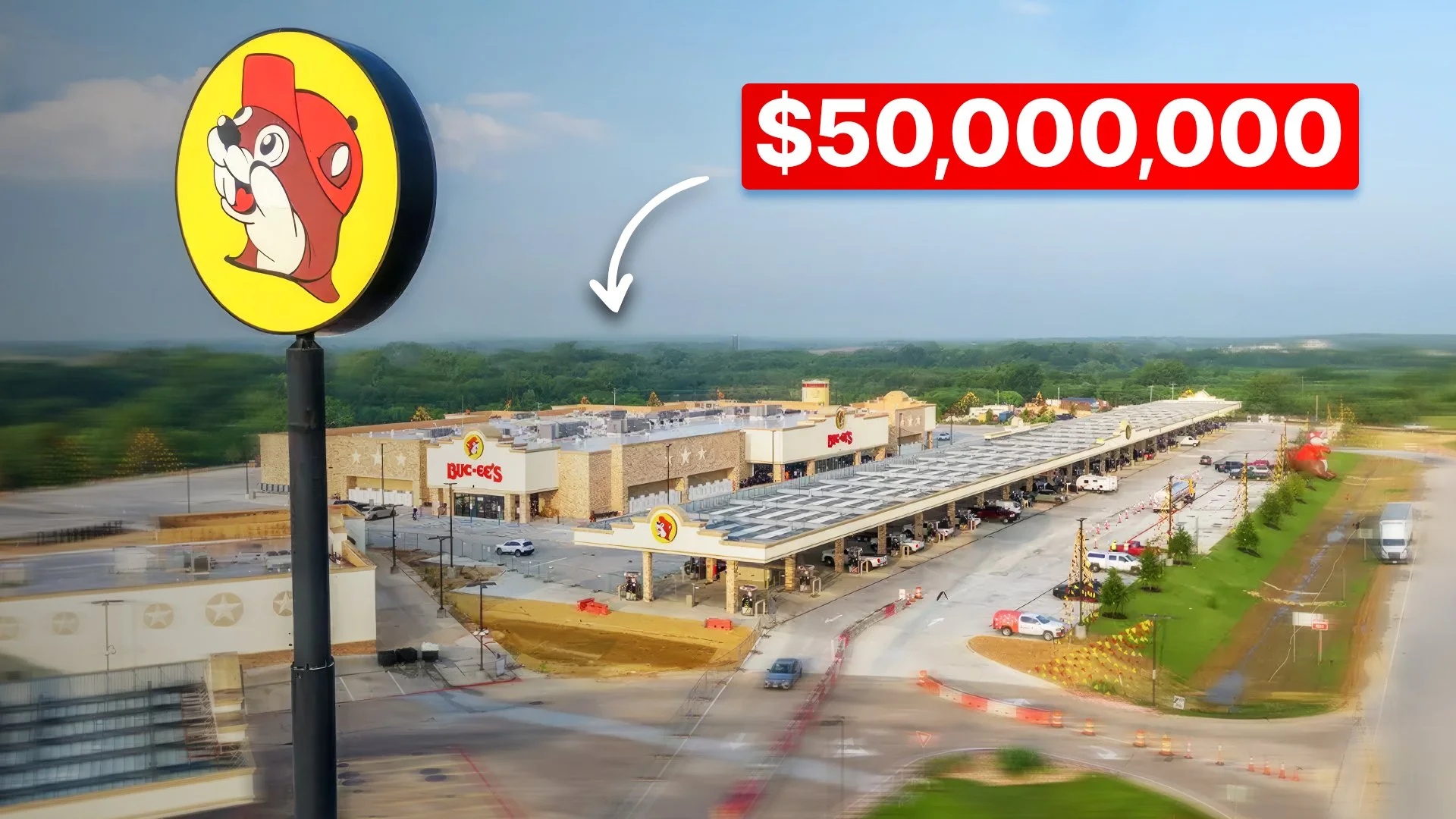
These are typically a smaller bet, which is still you know several million dollars or more, and that's your Chick Fil A's, In-N-Outs, Seven Brew. Those are brands that are expanding like crazy right now. Okay, but it could also be Chipotle. It could also be you know Take Five Oil. There's a bunch of different ones. Okay, those are smaller. Then you've got the value big box. That's your WalMarts, your Dollar Generals. They will confirm that the trade area works. Dollar General is only going to go into an area where they know that their target demographic is going to be able to very easily access them and is going to want to spend money there. Same with Walmart. Now Walmart has a larger regional pool than $1 General does, but it's the same idea. Then you have your true destination anchors. They actually make the corridor. They will go into places that QSR could never go and survive, and that's your Costco's. That's your Bucky's, right? I mean, you look at some of these interstate exchanges that, or interchanges that you know Bucky's has gone off of, and you're like, and there was nothing here before, and now here's a $50 million gas station, but it's because they know Easy in and access. They love the ingress, the egress, the vehicles per day on the interstates. Right? They know that within this region they will be able to pull everybody in. Okay, and then finally you have the redevelopment anchors, and you're seeing a decent amount of this across the United States right now. But these are like your dead malls, right? That are getting bought. They remake the corridor, and like I said, there's one about 20 minutes here. Probably not even actually 20 minutes from from my studio. It's probably 15, and you know we'll we'll be talking about that here in a minute. But a massive amount of capital going into a location like that, you know, they've one done the research. They know that there's going to be demand. Two, just go and ride that wave, baby. Come on, man. I mean, if somebody's going to drop $500 million into a location, you know that being next door to them is not going to be a bad choice. So here's how their flywheel typically works. How these anchors actually go and commit and work through these spaces. So, one they commit right that that means you see an announcement in the newspaper. In and out is coming to Nashville. They close on the site and they actually pull permits. Then the traffic arrives right. The anchor manufactures its own demand. So, like I said last week, In and. Had their grand opening. There were hundreds and hundreds of vehicles there. Then after that, parcels start to reprice because if In-N-Out is bringing in all of these consumers, I want to be next door because you know what? Maybe the line at In-N-Out this literally happened with me and my wife. We went to go see if In-N-Out was you know okay to look at. It was Saturday at 330 I figured you know what? It's a late lunch. We'll be fine. We pull up, and no, the line was so long. And look, I don't have the patience to wait in a line. I just I don't believe in it. We went to the barbecue joint down the street. So that barbecue joint actually benefited from being near the In-N-Out, right? And so when the when the parcels when when that traffic arrives, parcels start to reprice. Now that barbecue joint is valued higher because there's so much traffic. They're going to start to see an increase in spending because there might be other people like me that went to In-N-Out lines too long doesn't work. I'm going to the barbecue joint. All right, and so prices go up, and then followers pile in. There's a pretty fair amount of investors that they are willing to overpay, or just pay then market rates once everything is done for the certainty. So you'll start to see more QSR pads. You'll start to see strip centers. You'll start to see hotels pop up chasing all of this traffic. Now, here's the part that I don't see a lot of investors taking advantage of, except for the incredibly successful, super wealthy investors.
Tyler Cauble 16:34
And you don't have to be able to take advantage of this, or you don't have to be super wealthy to be able to take advantage of this, that's just who I tend to see doing this. But you have 18 to 20-four months between an anchor's announcement and actual opening day. They will be throwing out press releases. They will be going through planning agendas. They will be filing permits. The clock is out there, published for you, so you don't have to have the insider market information that In-N-Out is looking to go into a location. As soon as they announce it, start looking in the area because nothing's really going to reprice at least substantially on an immediate basis, and that's your opportunity to get in, buy something nearby, and then ride the value wave as In-N-Out actually builds up, goes vertical, and starts bringing in a ton of traffic. So here's here's kind of how that is is illustrated. All right, in the different stages, you can have this baseline before, right? So a property is worth X, you know, when before the announcement happens, the announcement happens, and maybe we're looking at X plus 10% All right, these I'm just making up numbers, but maybe properties you know in the immediate vicinity go up 10% after the announcement because people know something's going to happen. Once they actually pull permits and they are going vertical, like the regular person, somebody who's not deeply involved in real estate, can actually see a building going vertical. Then you start to see X plus 20% right? Real estate prices continue to go up, and then once it's open, you're probably looking at maybe X plus 30% right? So there's a pretty decent amount, and again, I'm just making up numbers, but it's making my point that there is a decent amount of value that comes throughout the process, depending on which part of the flywheel you're willing to jump in on. So here's here's an example of one that we're we're seeing here in Nashville, the old Rivergate Mall, finally getting redeveloped, it was bought for 30-$3 million about 50-seven acres. Now, right off the bat, I know if somebody is going to spend 30- million to buy a defunct mall that is definitely not cash-flowing enough to justify 30- million they are going to be investing a ton of capital into that and bringing a lot of activity to the area. So day one, and we actually on you know a handful of properties around this site. We had bought them before the announcement because I already knew something in this area was going to pop off. I mean, you just you you look at it and you had to know. Well, then they announced that they're putting about $450 million into the redevelopment. That's a pretty substantial amount of capital. I mean, you think about the tenants, the the the rooftops that they're going to be bringing in. They're starting off with some apartments. That's all good stuff. And of course, the in and out pad goes out about two and a half acres. And they committed before the demolition even began. Pretty wild. So here's how to take advantage of this at your size, right? Because let's be honest, we don't have the budgets of Chick Fil A. We don't have the budget to just go and buy properties for $33 million that aren't cash flowing. Some of you might, but most investors. Watch for out parcels and pad sites. You know, do the in and out move. Look for small parcels that are out front of these bigger potential redevelopments that can really serve as some new micro anchors. I like to call them. You could buy strip centers in the shadow. You see this very commonly with like a Walmart. All right, so if a Walmart announces, maybe you could buy a one-acre parcel next door and build a little strip center right there. Right, then in that strip center, you can put everything that somebody that's going to Walmart is going to want, or you buy an old one that's down the street and you renovate it. But you could do a laundromat, a neighborhood bar, a nail salon, a game shop-so many different things that you could do.
Tyler Cauble 20:45
Because think about it: if somebody's going to Walmart, maybe they've got a kid with them who's going to want to stop at the game store. All right, you could do small flex nearby, right? Contractors and services also follow rooftops. If I'm an HVAC technician and I can put my flex building, my location-you know-within a one-three-five mile radius of hundreds, if not 1000s, of rooftops, and I'm going to be busy for a long time in that one-three-five-mile radius. I'm not going to have to really go anywhere else. That's very, very, very attractive for me. And so, the two signals that you want to really be paying attention to: real closings, like an actual, not just an announcement. Somebody has actually closed, and money has exchanged hands. And then incentives: is the local government issuing tax increment financing? Are there any grants or other incentives that are going into this? You know, a pilot program, something along those lines that will help really incentivize the development and the growth because that's how you know it's more and more likely to actually happen. So here's the the big takeaway that I want you to have from our conversation today: Anchors don't go out and find good corners. I mean, yes, they do, obviously, but in a market like today, it is very difficult to find a quote-unquote good corner than it was 50 years ago. So they're making them. They are making the good corners, and your job is to just be next door when they do that. All right, let's get to your comments. Let's see what's going on in the comment section. Edwin is saying, "What up, Tyler? Ready to learn? Drop in the comments, guys. What anchors are you following? What do you like to do? I know there's some investors that just absolutely love Trader Joe's. They follow them everywhere. There are like actual quantifiable metrics that you can find as to how much a Trader Joe's bing in your market increases real estate values. Pretty wild. Yeah, let me know what you guys are watching. Costner saying good morning, good morning, Costner. Thanks for being here, Jason. Good morning from Venice. What's up, dude? Luke is saying morning from Minnesota. Scott, good morning, Tyler and everybody else. Great to have you guys here. Jason is saying I'm a student of Tyler. I focus on Florida, from Sarasota and Venice to Tampa, I buy commercial flex parking lots, industrial land of any size. Buy seller finance notes and collector cars. That's pretty badass, Jason. I didn't know you bought collector cars, man. So Jason's a member of the the Siri Accelerator. So Jason, we'll have to talk about that sometime. I love I love nice cars, old cars. I don't care about modern cars today. I actually just sold my 1971 F250 Swiss Aqua, absolutely gorgeous. I loved it. I just got tired of working on it. His buy box is Venice, Sarasota, Englewood, Northport. Yeah, there you go. Drop it in there. If you guys have any deals for Jason, let him know. Brandon is saying Franklin In and Out still has a 20 to 30-five minute drive-through lines at all times of the day, and it opened several months ago. That's crazy. That is absolutely nuts. I mean, think about that. If if you've got a fast food restaurant that has 20-five to 30-five minute lines, maybe you could do a little bit of shopping. You know, the kids could jump out and go to the game shop while while mom is sitting to to go and get food for everybody. So there's there's a lot of potential there, and not to mention the fact that if somebody's captive, they're sitting there for that long. They're going to be looking at your branding. They're going to be you know oh look there's a insulation company. I'm using that because I just actually spray foamed my the spray foamed insulation in my attic this past week. And by the way, guys, if you've never done that, it's it's surprisingly affordable for what it is. And I kid you not, I kid you not, 10 degree difference in my house, insane. But anyway, if you're sitting in line and you see somebody a billboard or signage for an office building of somebody that has you know that's offering insulation services, guess what? Maybe you're just you know what? I'll just call him.
Tyler Cauble 24:56
I'll just call him right now. I've got some time to kill. Brandon's saying I've had a lot. Conversations recently with people who are following Whole Foods, yeah, I love Whole Foods. I mean, think about the target demographic that Whole Foods is going to bring in. That's what I like to do. So I learned this years ago from one of the original guys at Airbnb. He was the first guy that actually had hotel experience that the Airbnb executive team brought him. They he he was from the boutique hotel world. He branded every single one of his hotels after a magazine, and it was really interesting what his reasoning why was. It was because the magazines spent a lot of time nailing their perfect target demographic, so they did a surf hotel in California. I think it was California. Everything was basically modeled after like Surf magazine. So they just they just took the model from that magazine and put it into a boutique hotel, and it was incredibly successful. Do the same thing. Like if you know that your the the type of strip center you want to do is going to be a little higher end or something like that. Go follow Whole Foods because the types of businesses that are going to want to be nearby Whole Foods want to capture the traffic from you know a higher income earning type of demographic that's willing to spend money on organic food or whatever from Whole Foods. All right. So, anyway, there you have it. Hope that was a fun one. Let me let me know what you guys think about following anchors in the comments section. I read every single one. Luke is also saying Costco's are fairly new in Minnesota, and everywhere they go, it goes absolutely bonkers. Absolutely, follow those anchors. Keep in touch with the new development that's going on in your area because people are spending a lot of money on making sure that this is exactly where they should be investing millions and millions of dollars. Let them do the work for you. Cheers, guys. We'll see you in the next one. This episode of the Commercial Real Estate Investor Podcast is brought to you by my CRE Accelerator Mastermind, where you'll get access to my step-by-step investment blueprint, essentially a library of resources on how to invest in commercial real estate. You'll get connected to a supportive community of other commercial real estate investors that are doing projects just like you. You'll get personalized coaching and feedback from me every step of the way. Go to www.crecentral.com to learn more.