
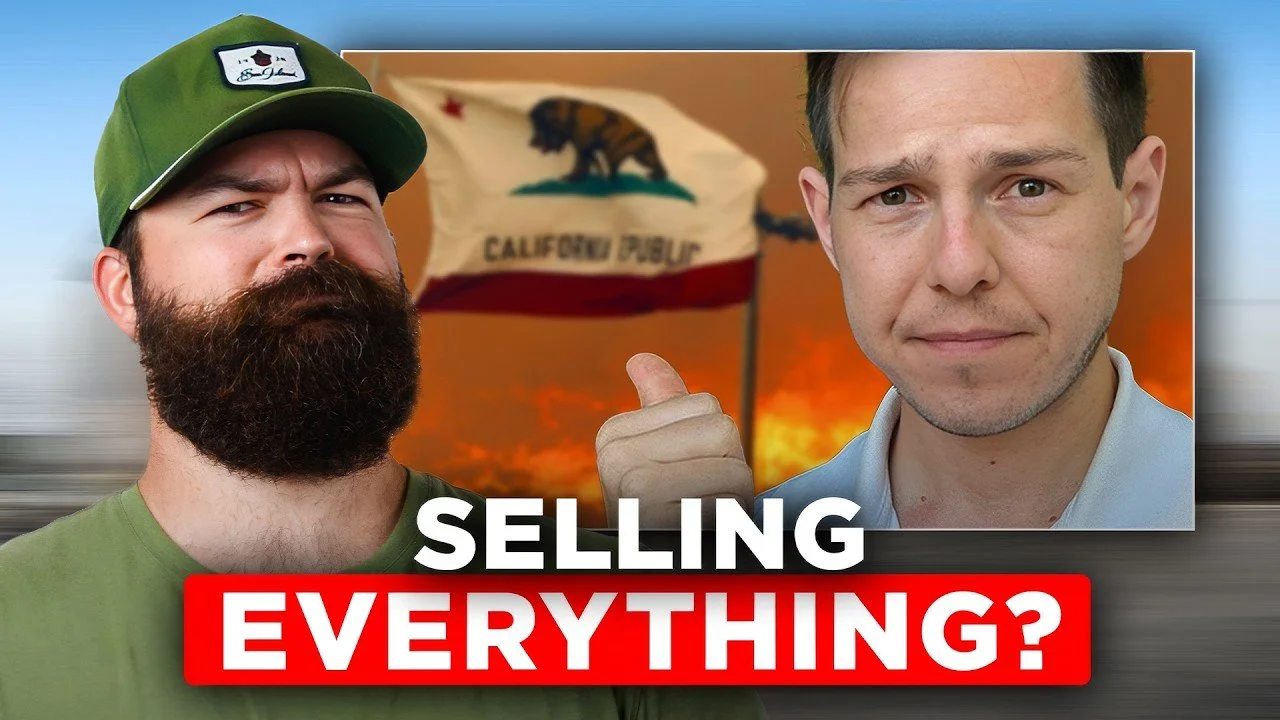
Graham Stephan Just Made the Case for Commercial Real Estate
Graham Stephan just made the case for commercial real estate and I don't think he realized he did it.
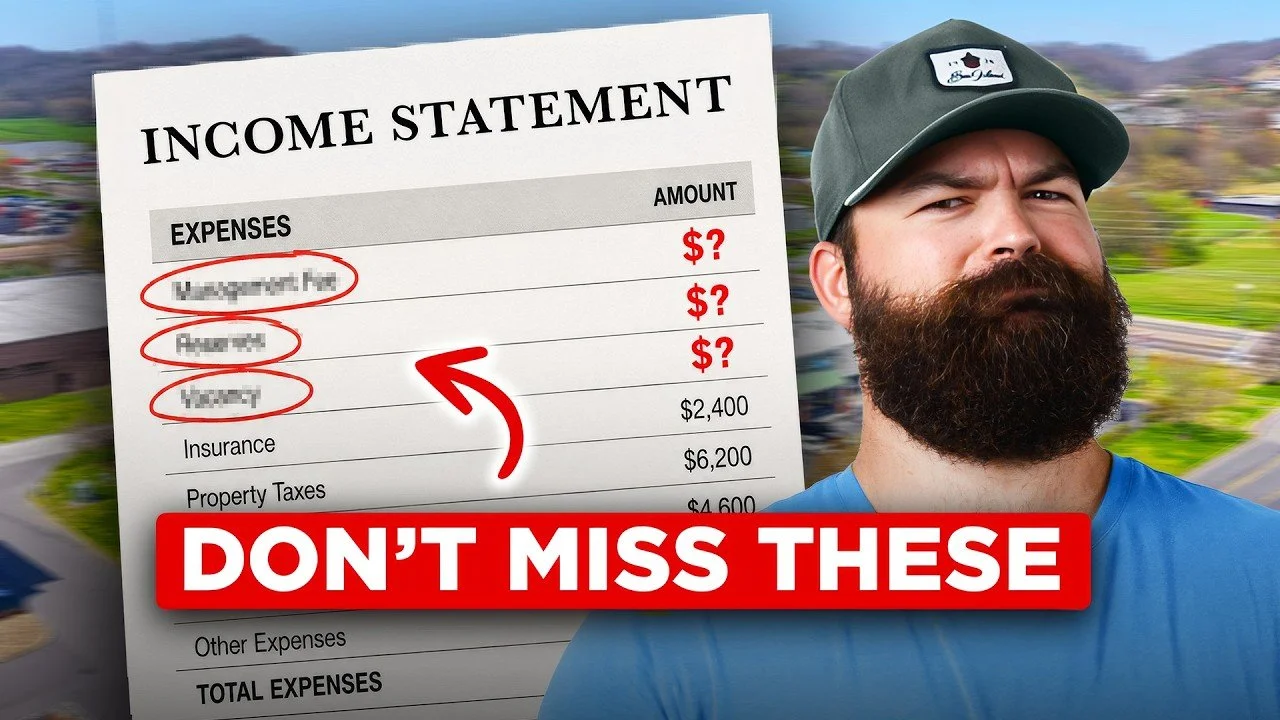
In his recent video "I'm Selling Everything," Graham walked through exactly why he's exiting his entire LA rental portfolio: 4-5% cash flow on equity, the $400 permit fee to replace a $500 fence, the constant "background noise" of being a residential landlord, and a California regulatory environment that's actively pushing capital out of housing.
Here's what nobody on YouTube is saying: every single problem Graham describes is the exact reason commercial real estate exists. The yield problem, the friction problem, the regulatory problem, the "this isn't passive" problem — they're all artifacts of the residential operating model. They're not real estate problems.
In this video, I'm reacting to Graham's reasoning point by point. Where he's right (and he's right about a lot). Where he's missing the picture. And what small landlords stuck in his exact situation should actually consider before they sell everything and dump the proceeds into Treasury bonds.
What we cover:
Why Graham's 4-5% yield-on-equity is a diagnostic of a broken asset class, not the ceiling of real estate
How NNN commercial leases permanently solve the $400-fence problem
The "background noise" trap — and why the right operating model eliminates it
Why Graham's California frustration is a residential issue that disappears in commercial
The third option Graham doesn't mention (and no, it's not Treasury bonds)
Get commercial real estate coaching, courses, and community to jumpstart your investment journey over at CRE Central: www.crecentral.com
Key Takeaways:
Graham’s move: He’s selling all his LA residential rentals because of:
Heavy regulation (3-year eviction moratorium, rent freezes)
Extreme bureaucracy (permits, inspectors, delays)
Weak returns (~4–5% on equity) vs. other investments
ADU “nightmare” example:
Built an ADU and got stuck in:
Multiple failed inspections with shifting requirements
Forced $22k sewer repair, sidewalk and tree-root work
60–75+ day delays for permits and tenant notices
Result: months of delay, extra cost, lost tenant, high stress.
Tyler’s core thesis:
This story doesn’t kill real estate; it kills small residential in high-reg markets.
It actually makes the case for commercial real estate:
Fewer tenant-protection politics
More contract-driven, business tenants
Better return vs. headache trade-off, especially in middle-market CRE deals.


About Your Host:
Tyler Cauble, Founder & President of The Cauble Group, is a commercial real estate broker and investor based in East Nashville. He’s the best selling author of Open for Business: The Insider’s Guide to Leasing Commercial Real Estate and has focused his career on serving commercial real estate investors.
Episode Transcript:
Speaker 1 0:00
This
Tyler Cauble 0:05
episode of the commercial real estate investor podcast is brought to you by my cre accelerator mastermind, where you'll get access to my step by step investment blueprint, essentially a library of resources on how to invest in commercial real estate. You'll get connected to a supportive community of other commercial real estate investors that are doing projects just like you. You'll get personalized coaching and feedback from me every step of the way. Go to www.crecentral.com to learn more. Graham Stephan is selling everything. One of the biggest real estate youtubers on the planet, this past month, announced that he's listing every single one of his Los Angeles rental properties for sale, walking away from the asset class that he has built his entire career on. And here's the wild part, he's right to do it. He's right about the four to 5% returns. He's right about the $400 permit that he talks about to replace a $500 fence. He's right about the constant background noise of being a residential landlord, every single word that he says. What he got wrong, though, is the conclusion, and that's what we're going to be diving into and talking about today. We're going to watch his video, and I'm going to give you guys my commentary and my thoughts on it. Graham looked at his situation and decided that real estate doesn't work anymore. Doesn't work anymore, and that's fundamentally not true. Every single problem that he describes in that video has a solution that he never talks about, that he never mentions once, and it's not treasury bonds, it's not the s, p5 100, it's commercial real estate, and specifically the kind of middle market deals that I do every single day here in Nashville, and that my members in the series, accelerator mastermind are doing all over the country. It's cool. We look at hundreds of these deals a year. So in this video, we're going to watch Graham's video together. I'm going to pause throughout. I'll show you exactly where he is right, where he's nailing it. I'll show you exactly where commercial real estate actually solves the problems that he's talking about that he's about that he's running away from. And by the end, if you have rentals like Graham did, you'll have a much clearer picture of whether you should sell, whether you should hold. And the third option that most of his audience may not even know exists. So I'm Tyler Cobble. I'm a commercial real estate investor, broker, developer based in Nashville, Tennessee, and let's get to watching a little bit of Graham Stephan.
Speaker 2 2:33
What's up, guys? It's Graham here. So I really didn't want to make this video. In fact, I've been putting it off for months because I don't like airing out my grievances to millions of people, but I have just had enough. I am tired of dealing with failed California policies, red tape restrictions and endless bureaucracy to the point where I'm going to start selling off everything that I own there. Honestly, the situation there has just gotten so bad that I can't justify investing any more money into a city that's obviously headed down the wrong direction. So, yeah, I'm going to talk very openly about what's been going on these last few months, with the hope that sharing my story could help a few people avoid the same mistakes as I've made, or better.
Tyler Cauble 3:13
I think the funny thing is, you know, when these investors get in here and they start talking about, you know, California and Los Angeles and not wanting to invest there, and how big of a problem it really is, and all this sort of stuff. You know, I I hesitate to judge that one. Obviously, I don't live in California, and I don't invest in California, but some of the wealthiest and most successful real estate investors in the world have properties there. There's a reason that the cap rates are so low. It's because there's so much demand from institutional style investors. So when he says that, you know, this is a California problem, I'm going to go ahead and caveat this that, yes, maybe it's a California thing. And some of the stuff that he's going to go into are specifically California problems. But overall, this is actually a residential real estate market problem. The fundamentals of residential real estate aren't working today, and that's really what he's experiencing.
Speaker 2 4:13
We could find a solution for a city that is obviously very broken. Oh, and also big thank you to incogni for sponsoring this video and helping me out with some of this, but more on that later. Anyway, backing up for a moment, I grew up in Los Angeles, and even though there have always been issues of gang violence, homelessness, traffic and expensive housing, for the longest time, it was doable, it was livable, and that is where I started my entire journey in real estate. Like in 2008 when I was 18 years old, I would randomly walk into really expensive open houses to be able to ask the realtor how to get started in the business. And Gigi, I'm in the middle of filming how to get started in the business and get their advice on what to do. Gigi, what are you doing? Come on. Well, after a few months of doing. Net, I met a top realtor who became my mentor. I started doing little lease commissions. Those clients ended up buying houses through me, and within a few years, I started making more money than I ever thought was imaginable. So this
Tyler Cauble 5:13
is actually how I got my start in commercial real estate as well. And if you are interested in getting started in commercial real estate, if you are looking to break into that industry. It's a great way of doing it. Go out, get your real estate license, start working for somebody else that is an expert that is doing all of the stuff that you want to be doing, and shadow them. Learn everything that you possibly can. Give it four to five years before you start investing, you will work with tons of investors, you'll learn the ins and outs of commercial real estate pricing, how to underwrite deals on a per square foot basis, what construction costs like. That's one of the biggest questions that I get asked by new investors, like, how should I budget for this project? How should I budget to replace a commercial roof or to repave the parking lot, and that's all stuff like, if you are interested in becoming a commercial real estate broker, that you will learn along the way as you are doing that brokerage. So look, the greatest part about real estate brokerage is that you're getting paid to learn how to invest. That's what I love about it.
Speaker 2 6:17
Yeah, you know, what's funny
Tyler Cauble 6:51
is that, like, that is a badge of honor for residential real estate investors. And I've never understood that, like they love the idea of finding these really decrepit, run down houses that have all sorts of problems that, I mean, I just couldn't imagine. I mean, I guess you could do that too on the commercial real estate side of things, with finding, like a really, really rundown piece of trash, but oftentimes in the residential market, that's the only way to find something that financially makes any sense.
Speaker 2 7:21
After a few weeks of renovation, I later rented it out. I started making more commissions as a real estate agent, and I used all of that to invest back into buying more property. Basically, my entire philosophy was this, I would only buy the properties that no one else wanted to live in because they required so much work. I'm talking brand new kitchens, bathrooms, floors, paint, landscape roof and so on. I would fix it up. I would move in as a primary residence, and then I would later rent it out. When I saved up enough money to buy something else for me, I just thought this was my path forever, like there's something really special about buying something undesirable and then making it look brand new again, without just turning it into one of those awful gray IKEA renovations that you see every developer slap together in a weekend. And usually when I'm buying a property in Los Angeles, I'm spending anywhere between 50 to sometimes more than $200,000 sprucing it up. And my thought was that if I could just make my place nicer than everything else on the market, I get a better tenant. I have less vacancy. They are happier. They stay longer. I have less turnover, and it's a win win for everybody. Well, I am proud to say that for the first 10 years of doing this, everything went really well.
Tyler Cauble 8:32
So in commercial real estate, in real estate in general, doing these value add deals is how you're going to especially if you're first starting out is one of the best ways to create the value, right? That's why they call them value add. I know we get really creative on this side of the pond, but going in, Oh, whoops. So going in and adding value to these properties create, you know, putting some, some, you know, elbow grease into a project, putting some cash into it, making it nicer. And, you know, creating the value. Instead of buying something stabilized, like, if you buy something stabilized, the juice has already been squeezed, all right, so I like his approach here, right? He's going the right path, finding value, add properties somewhere that he can improve the property a bit, improve the living situation for his tenants, and create additional value out of it. So he's building up equity just from having renovated the property that will already be there, let alone, you know, the cash flow as well. That's always nice. You definitely want that, but focus on the value adds. All right, let's get through this commercial. I don't know why we have a commercial.
Speaker 3 9:43
Guys, Pana just built an app.
Speaker 2 9:46
Property values were increasing. I locked in low mortgages. Rents were steady, and I continued to look for properties that I could buy and invest into with the expectation that I could just make them nicer. But in 2020 everything changed all of a sudden. Los. Angeles enacted an eviction moratorium, meaning a tenant could not be evicted if they failed to pay their rent, and this lasted for three years. Yes, you heard that correctly. In Los Angeles, it was still a health risk to evict a tenant who hadn't paid their rent in three years. Meanwhile, the landlord was still responsible for the mortgage, property taxes, insurance, repairs, upkeep, you name it. Now, even though I had zero issues, and thankfully, none of my properties were affected, I just didn't like the fact that the city was putting the entire financial burden of housing on the landlord. Like despite this idea that landlords are these rich oligarchs drinking champagne on their yachts, the reality is that most landlords are mom and pop, people who rely on that income to help supplement their expenses. Some of them are accidental landlords who had to rent out their home because they could no longer afford it. Some people are renting out houses that have been passed down from generations. Some people have also just diligently saved for sometimes decades to be able to buy a property in the first place because they don't trust the stock market. So even though some people might think, Oh, I pay $3,000 a month in rent, so they must be making a fortune, the reality is, I know plenty of landlords who aren't even breaking even, or are even operating at a loss, because they intend to keep the property and eventually be able to move back into it anyway.
Tyler Cauble 11:22
I couldn't imagine, like, that is a relatively common thing and interested at your real estate. Like, could you imagine getting these properties and going through all of that heartache, all of the brain damage of renovating them, finding tenants every single year, and, you know, putting your wife's savings into this, and then, yeah, the city comes back and tells you, oh, sorry, you know, because of covid, you know, you can't evict anybody and look for a portion of covid. I don't disagree with that. I actually think that it's, you know, I don't know, maybe a controversial opinion, but when we go through a crazy event like that, where all of a sudden, everybody's impacted. People can't even work. Yeah, I mean, you kind of need government assistance to step in and say, Hey, you can't just start kicking everybody out into the street. However, I do 100% feel that three years is absolutely way too long for that to actually be a thing. And that's one of the biggest risks that you encounter as a residential real estate investor, government policy. We are in an era now where we have housing shortages. Affordable housing is the topic all around landlords, residential landlords, especially, are really being brought to the center of attention as being part of the problem, and maybe they were part of the problem. Maybe they're not right. But when all of your costs go up, when property taxes go up, when insurance goes up, you don't have any choice but to start raising rents. Right? The only way to really start making housing more affordable again is to just build more of it. And again, the policy side of things, that's where it starts to get really tricky in residential real estate, and that's not stuff that you necessarily have to deal with on the commercial side.
Speaker 2 13:08
Say all of this because in 2020 Los Angeles started getting way more restrictive on landlords. They enacted rent freezes, crime spiked, homelessness got worse, despite a citywide eviction ban. And I subsequently picked up and moved to Las Vegas because the quality of life was better. But in terms of my existing properties there, I just thought to myself, hey, you know what? It really doesn't matter that much. I enjoy my tenants. They're awesome. I hope they stay as long as they want to. I don't like raising rent anyway, everything is somewhat stable. I'm just going to keep it going. That was unfortunately, until earlier this year, around January of 2025, I began looking into building out what's called an adu, or a detached dwelling unit, which essentially allows you to take an old structure and turn that into a completely separate living quarters. Like I calculated that I could spend about $220,000 build a two bedroom, one bathroom, 700 square foot home, rented out at market rates, and I've just added much needed inventory to the housing market. Someone gets a great place to stay, and I'm able to invest my money back into the housing market for a decent return. How bad could it possibly
Speaker 4 14:14
be? This is the perfect pair for your iPhone, and it replaces three different chargers. This is the ridge magnetic.
Speaker 2 14:20
Well, I'll tell you a nightmare, although, before we go into that, here's,
Speaker 1 14:24
it's,
Tyler Cauble 14:24
it's, that's pretty interesting, right? So there's actually this new law in California where they went, and I don't know specifically which parts of California it is, clearly it's in Los Angeles. It may be the entire state, but they started permitting accessory dwelling units. These ADUs, they're pretty popular in Nashville and in some other metropolitan areas as well, that allow you to build a second home on your property is, you know, within with restrictions, right? So it probably can't be as big as the main house it, you know. And honestly, for a lot of these lots, you don't have the room. To be able to do that anyway, but it helps with the housing crisis. It incentivizes developers like Graham to go out there and build another home that they can then rent out, which puts another unit on the market, which in a day in a market like today, we need as many units as feasible to make all of this possible.
Speaker 2 15:22
Really surprised me the moment you start dealing with real estate, especially when it comes to applications, permits and filings, your information becomes public. Anyone is able to Google you and then find your property, addresses, emails, phone numbers and more. And the thing is, it's not just with real estate. This is happening to everybody. Like anytime you've filled out a form online, signed up for a rewards program, or even bought something on a regular website, chances are your information is already floating around on the internet in the hands of third parties. Request that any personal information be even after they've removed it incognito, you updated every step of the way, copy and paste that address an annual plan, or you could this has become such a nightmare, and why I'm never going to build in Los Angeles ever again. You know, I decided to build one unit as a test just to see how it went. And if that experience was good, I was going to go and build about five to seven more, but that experience was so bad that I will never invest another dollar into the city of Los Angeles ever again, and I feel obligated now to warn people about what they're potentially getting themselves into, because my experience has been absolutely awful dealing with the City of Los Angeles. Let's talk.
Tyler Cauble 16:36
I will caveat this, which I think is pretty funny. I read through the comments on this video before, and a lot of his audience is saying, Graham, you've said all this stuff before. You've never actually followed through on it like you know, Graham, you've told us for years that you're selling everything. You know, this, this doom and gloom tactic. You know. Is he really going to sell everything? Who knows? Is he really going to never invest another dollar into the city of Los Angeles. Who knows? I mean, here's the thing, it comes and goes in cycles, right? I mean, we talked about this, you know, last year, a couple years ago, on the show, when we were talking about office space in San Francisco, right? I mean, you saw all sorts of companies relocating out of San Francisco, and the office market was really struggling there. But here's the thing, don't let a good crisis go to waste that created an opportunity to get a lot of office space in one of the biggest, most popular cities in North America at a pretty good discount. And those people that actually made that bet, it's starting to pay off, right? I mean, I wouldn't say office is booming in San Francisco today, but office is coming back strong. I mean, I was talking to some office brokers here in Nashville today about some of the leases that they're executing, and it sounds like the office market in Nashville at least, is doing better than some of the retail spaces, pretty remarkable. So keep that in mind
Speaker 2 17:59
about the permitting process that took us about three months to get approved, which required me to also pay more than $4,000 in permit fees to the city before even breaking ground. But you know what? Fine, that's to be expected. We're building something new, whatever I paid it. And once that was approved, we began building that process went pretty quickly, really. Within a few months, it was almost done, and by the time July rolled around, I found someone who's willing to move in and take it September 1. However, in order for a tenant to move in, you need what's called a final inspection, so that they could issue what's called a certificate of occupancy, which basically says that the city has come, they have looked at the unit, and they say it is now legally deemed as a habitable structure. Great, worth the final stretch should be easy. After two weeks of delays, the inspector comes and fails the unit because the AC condenser doesn't have the proper drain line. And this is where things take a turn for the worst. When the inspector failed the unit, my contractor says, Oh, perfect. I can install it right now. It'll take about 10 to 20 minutes, and then you could pass it, because that's the only thing you wanted. But this inspector said, Hey, sorry, it's Friday. It's like 4:30pm this is my last one. I'm going to have to come back again next week. Okay, fine. So we tried scheduling the same inspector to come back the following week, but we got bounced around from person to person to person. Nothing was confirmed. And then about a week later, they assigned us a new inspector. Well, this new inspector shows up, and we're thinking, this is going to be a piece of cake. It was just this one little drain line that needed to be fixed. He's going to go and look at that. See it's done. Everything else is good to go. But instead, this inspector now notes other things that he wants done that the prior inspector never even required or mentioned
Tyler Cauble 19:46
I'm having PTSD as he's going through and talking about this, because this has happened to me before. I mean, it's very common in any sort of popular city that's got a lot going on in construction. I mean, like on the hotel. On all sorts of other deals that we've done, you'll have an inspector come out. They run through everything, and there's always, like, one little thing, like, oh, there's not enough fire caulking up on the ceiling. So, you know, put some more up there. Okay, great. I've got a can of that right here. Can we just go ahead and do it? No, I gotta go. I'll come back and, you know, we'll pass you that. And it's like, man, the takes five seconds for me to do that. And you know, it's annoying, because you're like, Well, you know, how could we not have done that beforehand? And to be fair, when you're building something, there are 1000s and 1000s of components that go into everything. There's going to be stuff that gets missed. And you know, you just hope that you get an inspector that will at least allow you to just fix it right there. And, you know, move on. But they don't. And oftentimes, when you get passed on to another inspector, just like Graham said, they'll try to start bringing all sorts of different things in. I've even had, you know, different departments within Metro Nashville, try and supersede what other departments want. So like, we had an instance where I'm not going to name names, but, but one of the one of the departments came in and told us to do something that wasn't required per code that would violate a code for another department. And we tried to tell them, you know, hey, this is not to code, and also, like, that's violating this code over here. And say, Yeah, doesn't matter. Like, that's what we want, and it's and it's so frustrating to deal with, because you oftentimes can't get them to have a conversation with the other department, and you're kind of at their mercy. It's like, All right, well, are we just going to not comply and do what we actually think is right? Well, they're not going to pass us, or we're just going to sit here, or do we go ahead and do what they want us to do and break another code makes no sense. Sometimes
Speaker 2 21:49
lies that it's pretty common that when you switch inspectors, each one of them has their own requirements that they want done independent of everything else. And every inspector, for the most part, when they're brand new on the project, they just go and mention something to give the appearance. I don't know that they're doing their job or something. So anyway, once again, we make all of these new changes. We have to wait another week for him to come back out, and when he shows up again, there's even more this time. It's well, you know, the unit looks good, but what about the sewer line? We have to go and do a CCTV of the sewer line to make sure it's properly functioning. Now, at this time, by the way, it was past September 1 the tenant who wanted to move in is unable to move in, and all of these are items that could have been fixed or dealt with weeks or months ago. If it was just mentioned, all of it would have been handled far, far, far in advance. It really just felt like everything had to be handled in the moment, for some reason. So I was forced to go and spend $600 for a CCTV of the sewer line that had to be done with one of the approved LA City vendors, for some reason. So anyway, whatever, I just want the unit to be done at this point, so I go and pay for it. Well, wouldn't you know it, even though the sewer line functions properly at the connection,
Speaker 5 23:06
straight up. I freaking love this thing. Eat, sleep. I'm super pumped about this because I've been using one for the last
Speaker 2 23:13
in the middle of the street between my I've
Tyler Cauble 23:15
got to figure out why we've got commercials on this, because I have YouTube, like Pro or whatever. I mean, side note, YouTube has started doing a ridiculous amount of ads, and maybe that's what it is. So like, well, we don't care that you have YouTube Pro or whatever. You know, you're just getting ads. Anyway.
Speaker 2 23:29
Nice sewer line. And the city of Los Angeles, there's a little bit of a crack there, and because of that crack, the inspector says that needs to be fixed before they're able to sign off on the unit and issue the certificate of occupancy. On top of that, guess what? Because that sewer line issue occurs in the middle of the city owned Street, it is going to be $22,000 to go and fix it. So in an effort not to delay things even further, I just requested an exemption that basically says, Hey, this unit's fully done. Allow us to rent it out, and I promise in writing I will fix the sewer line in the next 60 days. Let's just not delay anything further the tenant wants to move in. Let's make it easy, and I promise I will get the sewer line done. Well, at this point, it became impossible to reach the inspector. He just ghosted us. I'm talking. Voicemails were unanswered. Emails were unanswered. I kept getting bounced around from department to department. I left a message with his manager, who says, oh, you know he's just on the site. You're going to have to leave him another voicemail and he'll call you back in the morning. And I kept doing that over and over and over again. And it took us over a week to hear back, and by the time we heard back, it was, hey, yeah, nothing I could do about that. It's now with the city public works, and now you got to deal with him, fine, you know.
Tyler Cauble 24:50
So what I will say is, like a lot of what he's griping about here is is realistic in almost any market that I'm working in, right? I mean, we, I've got clients. In Atlanta, Pittsburgh, Birmingham, Dallas, Fort Worth, Austin, Orlando, Tampa, you know, Gainesville, all the way out to, you know, San Diego, a couple places like some in LA. I mean, every market that I come across, you're dealing with stuff like this. And while there is some, you know, typical annoyance and frustration, this sounds to me like somebody who went through the process didn't know the process it was his first time. Is what it sounded like building something like this. Unfortunately, there's going to be a learning curve whenever you do that. If you are used to doing like, look when you get into real estate, like, things are different. Everything is different. Value Add is different value add is different from stabilized ground up. Construction is different from everything else. And if you're going to get out there and you're going to build something from the ground up, you're going to, unfortunately experience a lot of this, and that's what you have to be experienced enough in to underwrite into your time. Obviously, it's annoying, and it sounds like there's a lot of stuff going on here that really shouldn't have happened. But, you know, it's, it's, it is what it is like. That's kind of part of development, the vanilla gorilla. That's a great name. What's going on, man? He's saying we're all getting out of residential and multifam. Let's go. David, saying, I watched this podcast and it's crazy. What's going on there? Excited to stay at Salt ranch tomorrow. Bryce, Oh, Bryce, what's going on, dude? Welcome excited to see you, man. I'll have to drop by and say hi. All right, let's get back to
Speaker 2 26:29
it. I'm easygoing. I just want this thing to be done. I just don't want the stress, so I move forward with the $22,000 sewer line repair. Now keep in mind, at this point we are well over a month after when the unit should have been signed off, all because the initial inspector didn't want to wait an extra 15 minutes to install an AC condenser line. But then, as soon as I signed the sewer line repair estimate to move forward with the work, I got hit with an I'm absolutely done with this. I am so fed up, I'm over it moment, and that was when they applied to pull the permits with the city to do the work that the city requested. But the city says they won't give me the permits until I give my existing tenants 75 days existing notice that I'm going to be doing work on the sewer line. This is all because their water is going to be turned off for a few hours in the afternoon, even though they're gone in the afternoon, they work, they won't even notice the water is turned off because they won't even be there. So I reached back out and demanded some type of exemption, because the tenants aren't going to be there. It doesn't impact them. We can't have another two and a half month delay before even doing the work that the city requested. So it just makes sense that they would allow us to do the work and not be pushed back another two and a half to three months.
Speaker 1 27:50
What
Speaker 6 27:50
if you can make a song using only your voice? Let's start with the drums.
Speaker 2 27:56
Then, as if that's not bad enough, it gets even more ridiculous after requesting the 75 day exemption, three weeks goes by and another city inspector shows up at the property to take a look at the upcoming work. But instead of signing off on it, he puts a note on the file that in order to do the sewer line work, I also have to fix 22 feet of the sidewalk in front of the property that was uneven because of root intrusion, because of the city owned tree that now needs to be addressed before I'm able to go and do the work on the sewer line. Oh, and by the way, to fix the sidewalk that's caused by the tree owned by the city, I need to obtain what's called a root trimming permit with the urban forestry department, and that requires another 60 day approval process to trim tree roots. Why at this point it just feels like I'm getting pranked, like I'm ready to do all the work right now. I'm over. I just don't care anymore. So waiting months now to pull permits, to wait more months to pull permits, makes no sense. When the unit's otherwise ready and could have been signed off for a little small thing months ago. Well, a tenant's ready to move in, and now everything is just delayed indefinitely. I don't know what they're just going to keep asking for now, even though I have a contractor who's doing the best they can, the fact is, calls to the city go unanswered. Everything goes to voicemail. Emails take upwards of a week to get a response. Making an appointment in person is practically impossible because they book out weeks in advance. And at this point, I just have to ask myself, Is it even worth it? And the answer is no. Los Angeles has a massive housing shortage. This was an opportunity to add another unit where someone is actively investing hundreds of 1000s of dollars, with the potential to invest way more, potentially even seven figures, if this went well. But instead, I was left with the deep regret that I wish I had never dealt with the City of Los Angeles or decided to build in the first place. That's why
Tyler Cauble 29:49
it's really tough to dive into because, you know, look as residential, real estate is so regulated, it's. Regulated. And you know, when you get into these cities like Los Angeles, New York, I mean, typically, larger cities are going to have even more regulation around housing and how it's going to how it ought to be handled, what's supposed to be going on. And it makes it painfully difficult for you, as a real estate investor to follow. I mean, one, how do you know what the rules are supposed to be? Right? Like, the city should make it very clear on the front end that, hey, if you're pulling this permit, these are all of the requirements that we're going to make you do if you're going to do this here, right? He could have known about the sidewalk beforehand. He should have known about the the sewer beforehand as well. If that was all stuff that's required, it's not. I mean, it's pretty atypical going into it, but a lot of these cities just don't make it easy to be a residential real estate investor, and that's because there's a lot of fair housing rules. And I guarantee you that almost every single one of these rules and regulations that he that is being sprung upon him that he has to follow comes from some landlord not treating a tenant properly. That tenant suing the landlord or suing the city, who should have protected them, and the city said, All right, well, we're going to fix this and make sure that this never happens to us again, and that's how you wind up with a ton of rules and regulations and hoops that you have to jump through as an investor. Fortunately, again, this is why I'm saying Graham is 100% without saying this, he's making the case for commercial real estate business owners care for their spaces. There are far more logical about how all of this has to happen, and you have contracts that are very clear, black and wide as to how everything is supposed to be handled. Right? You're not going to be getting calls from tenants about, you know, their toilets breaking in the middle of the night. They're going to take care of it themselves, because it impacts their business, and also it's probably in the contract that they have to do that you're not going to have as much regulation on the business front in commercial real estate, as you do in residential because they're businesses. It's not where people are living, right? Once you get into this situation where people are living, they are raising their families, it just becomes infinitely more complicated, and that's why I've always stayed away from residential real estate. I've never really wanted to mess with that. You know, Michael's saying these situations are intentional. Graft is the primary driver. The local government see development as a backdoor way of generating revenue. They do. I mean, I've had to deal with some of this stuff too, like we were, we were arguing when I was building the hotel, with a couple of the departments, again, they shall not be named, about what we like, how we had to re engineer storm water for the site and how much soil we were disturbing. So if we disturbed, like, more than 10,000 square feet of soil, I had to completely re engineer the storm water site, even though I was removing asphalt and putting grass back like that's that's how crazy it was. So we decided, okay, well, we will keep the asphalt. Well, then another department came through and said, Okay, we're requiring you to build sidewalks. So okay, well, we had budgeted for sidewalks. We knew that that was going to be a requirement. But then stormwater came back and said, Okay, well, you're disturbing 10,000 square feet of soil redo all of the stormwater here that we want you to do. And so, you know, I had to fight with him for months going through that process, until it was finally overturned at the state level as being unconstitutional for a city to require developers to build sidewalks. But that was a residential and commercial thing. It didn't matter what you were building in Nashville, you were probably going to be on the hook for sidewalks. And you know, again, part of this is like, there's some inexperience here around the development and construction side of things, but you just kind of had you just kind of have to prepare for that, like now that he knows his next project is going to be a lot better, but the other part of it is residential just has far more restrictions. It is far more complex because you're dealing with where people live, and there's a lot of issues that can come out
Speaker 1 33:57
of
Tyler Cauble 33:58
that,
Speaker 2 33:59
unless you have a thing for just getting ignored and being treated poorly. I recommend you probably just stay away, or at least know what you're getting yourself into. This experience has really just been so bad for me that I want to cash out of Los Angeles and just invest my money elsewhere, not to mention the returns I'm getting there. Really aren't that good when you compare it to like tax free muni bonds or stocks or practically anything else. I've kept them because I've owned them for such a long time, I feel connected to them. I like them. I like the tenants, but financially, it's just it's no longer worth it. There are just too many restrictions, too much risk and too little upside to invest in an area that doesn't appreciate how much time and effort it takes to add new housing onto the market. Now to be clear, this isn't about trying to, like, maximize rents, or try to squeeze as much money out of the tenants as possible. I don't like raising rents, believe it or not, and a lot of the tenants that have been with me have paid the same price for years. All of this just feels like a system that's designed to punish people who are actually willing to invest. Invest in the community and make it as difficult as possible for them to try to do anything about it. Like you would think, that they would be incentivizing people to build more inventory and add more housing onto the market, that they would be streamlining the entire process to make it as easy as possible, and they'd want people to make the neighborhoods as nice as they could be, because that leads to increased property tax revenues, but my impression here is that they just don't care. The city really has zero incentive to add more housing, and so I'm just kind of checked out. Now, on the flip side, though, I get it, landlords are very unpopular these days, but what's the alternative government housing? If the city could barely handle permitting and approving an adu, what makes you think that they could responsibly house 10s of 1000s of people? Then you just end up like Santa Monica, whose homeless housing hit a million dollars a unit. Yes, that should upset you, because while most people are out there busting their ass, playing by the rules, trying to get by, your tax dollars are being allocated towards overpriced projects while lining the pockets of city council who somehow allows these ridiculous developments to exist. Look The fact is, when you take away needless restriction, real estate developers are directly incentivized to make their places as nice as possible for the most affordable price they can. Otherwise, they lose money. They lose vacancy. Tenants don't get as nice of a place to live, and everybody loses. That's
Tyler Cauble 36:21
I will disagree with that to a certain extent. I mean, here's the thing, regulation can be really good. Like, you actually need a lot of regulation. There is regulation that takes it way too far, right. Like, I like the fact that there is a regulation that, you know, there are standards for construction, right? I don't ever want to walk into a building where there's a chance that the roof might collapse, because everything was just built on two by fours, without any headers or without any actual columns that can carry load, right? So there is good regulation out there. The problem is, there are these cities that will take it too far to where it doesn't make any sense anymore, right? And again, he's just making the case for commercial real estate. It's so much easier. I mean, I can't, like, a lot of this stuff, and he's about to get into, you know, some he's talked about returns, you know, four to 5% on his equity. I mean, that I wouldn't get out of bed for four to 5% on equity. I can't believe and honestly, like he's not the only one that's in residential real estate that is seeing returns like that. You might get into a deal. Maybe you do a burst strategy on a residential house. Maybe it actually works out pretty well. You get your cash back, and now you're making a couple 100 bucks a month. And to me, I look at that, I'm like, couple 100 bucks a month. Man, if the tenant calls me one time, I've already lost money on this deal, why take on a loan? Why take the risk that that HVAC unit is going to go out, it's going to cost you six grand, and you've just lost profit for a long time. It's not worth it to me,
Speaker 2 38:00
why it is in their best interest to provide the best accommodations possible, and if the price gets too high, well, guess what? People leave and go to the landlord next door who's willing to take a little less, because that's how competition works. But instead, what happens is that when the city restricts what somebody can charge, or when they start putting these guardrails on whether or not they could evict a tenant for not paying their rent three years after covid. That just means that landlords pull out of the area. They don't invest as much into housing. Everything gets worse, and the areas just go downhill very quickly. That's why I think if California and Los Angeles are going to solve their housing shortage, they have to stop placing the financial burden on landlords. They need to incentivize private development throughout our cities, and they need to stop spending $600,000 per unit for homeless housing when working class families are living paycheck to paycheck. It's just disrespectful for everyone who's working so hard to get ahead, and that's why I don't want any more of my own resources to go into a city that's obviously very broken. There just comes a point in time where you have to protect your time, focus, energy and sanity. And for that, I just have to move on. For now, I'm focusing on the future, investing more money in areas where my efforts are going to be rewarded, not punished, and maybe one day, Los Angeles will once again be a place where dreams do come true.
Speaker 4 39:20
Yeah, so DSCR loans.
Tyler Cauble 39:24
So, you know, with that being said, I mean, look, one thing, I will say, $600,000 a unit for new construction housing is absolutely insane. I mean, you can build new construction apartments in Nashville. Again, I know it's not LA, 280 $350,000 a unit, maybe less, depending on how, like, what style of unit you're building. So that's pretty wild, pretty wild. So there you have it. I mean, look, he's Graham Stephens. Made the case for commercial real estate. I mean, if you're, if you're in res. Into real estate, you're making four to 5% returns on your equity that's built up in there. You've got all of these headaches that you're having to deal with. You can get blindsided by regulation at any time. You think any of those landlords thought in 2020, oh, you know, tomorrow the government's going to tell me that I can't evict any of my tenants to just stop paying rent. I don't ever want to deal with that. That's why I invest in commercial real estate. If you're interested in investing in commercial real estate, you're on the right channel. There's over 700 videos at this point that are on this channel. I'll teach you exactly how to do it. Thank you guys for joining me tonight. Appreciate you guys, and we'll see in the next one.
Speaker 1 40:34
This
Tyler Cauble 40:38
episode of the commercial real estate investor podcast is brought to you by my cre accelerator mastermind, where you'll get access to my step by step investment blueprint, essentially a library of resources on how to invest in commercial real estate. You'll get connected to a supportive community of other commercial real estate investors that are doing projects just like you. You'll get personalized coaching and feedback from me every step of the way, go to www.crecentral.com to learn more you.